It's a frustrating scenario familiar to many Northern Virginia homeowners: You're running the microwave while the air conditioner kicks on, and suddenly half your kitchen goes dark. Or perhaps you plug in a space heater in your Arlington home office, and the circuit breaker trips instantly. Maybe your basement workshop in Fairfax loses power every time you use the table saw.

When a circuit breaker keeps tripping, it's more than just an inconvenience—it's your electrical system's way of telling you something is wrong. Understanding why breakers trip, how to troubleshoot the problem, and when to call a professional can help you maintain a safe home while avoiding unnecessary service calls.

At AJ Long Electric, we've diagnosed and resolved thousands of tripping breaker issues across Northern Virginia, from Alexandria to Ashburn. This comprehensive guide will help you understand circuit breakers, identify common problems, perform safe troubleshooting, and know when professional help is essential.

How Circuit Breakers Work: Your Home's Electrical Safety System

Before diving into troubleshooting, it's important to understand what circuit breakers do and why they're crucial for home electrical safety.

The Role of Circuit Breakers

Circuit breakers are automatic switches designed to protect your home's electrical circuits from damage caused by excess current. Think of them as the gatekeepers of your electrical system—when too much electricity tries to flow through a circuit, the breaker "trips" (shuts off) to prevent:

  • Overheating wires: Excessive current generates heat that can melt wire insulation and start fires
  • Equipment damage: Power surges and overcurrents can destroy appliances and electronics
  • Electrical fires: One of the leading causes of house fires in the United States
  • Electric shock hazards: Dangerous current flow through unintended paths

How Breakers Detect Problems

Modern circuit breakers use several mechanisms to detect electrical problems:

  • Thermal trip: A bimetallic strip heats up and bends when excess current flows, mechanically tripping the breaker. This protects against overloads.
  • Magnetic trip: An electromagnet pulls a trip lever when current exceeds safe levels instantly, protecting against short circuits
  • Ground fault detection (GFCI): Senses current imbalance between hot and neutral wires, indicating electricity is escaping to ground
  • Arc fault detection (AFCI): Identifies dangerous arcing conditions in wiring that can cause fires

Types of Circuit Breakers in Northern Virginia Homes

Your electrical panel likely contains several types of breakers:

  • Standard breakers: Basic overcurrent protection, typically 15 or 20 amps for general lighting and outlets
  • GFCI breakers: Required for bathrooms, kitchens, garages, and outdoor circuits. Learn more in our GFCI guide
  • AFCI breakers: Required for most living spaces in modern homes (bedrooms, living rooms, etc.)
  • Dual-function AFCI/GFCI: Provides both types of protection in one breaker
  • Double-pole breakers: 240-volt breakers for large appliances like dryers, ranges, and air conditioners (typically 30-50 amps)
Modern electrical panel Northern Virginia - circuit breaker installation

A properly installed electrical panel with clearly labeled circuit breakers is essential for Northern Virginia home safety.

Common Causes of Circuit Breaker Tripping

Circuit breakers trip for specific reasons. Understanding the cause helps you determine whether it's a simple fix or requires professional attention.

1. Overloaded Circuit (Most Common Cause)

An overloaded circuit occurs when you're drawing more amperage than the circuit is designed to handle. This is especially common in Northern Virginia homes built before the 1990s, where electrical systems weren't designed for modern appliance loads.

Signs of an overloaded circuit:

  • Breaker trips when running multiple appliances simultaneously
  • Dimming lights when large appliances turn on
  • Breaker trips after running for several minutes (thermal trip)
  • Warm outlet covers or switches
  • Buzzing sounds from outlets or switches

Common overload scenarios:

  • Running space heater + hair dryer on same circuit
  • Multiple kitchen appliances on one circuit (microwave + toaster + coffee maker)
  • Power tools in workshop or garage
  • Window AC unit on circuit shared with other devices
  • Multiple electronics in home office

Calculating circuit load: Each circuit has a maximum safe load. For a 15-amp circuit on 120 volts, that's 1,800 watts (15A × 120V). However, you should only use 80% of that capacity continuously, meaning 1,440 watts max. A 20-amp circuit can handle 2,400 watts maximum (1,920 watts continuously).

2. Short Circuit

A short circuit occurs when a hot (black) wire touches a neutral (white) wire or another hot wire, causing a sudden surge of current. This is more dangerous than an overload because it happens instantly and involves much higher current.

Signs of a short circuit:

  • Breaker trips immediately when turned on
  • Burning smell from outlets or switches
  • Scorch marks or discoloration around outlets
  • Sparks when plugging in devices
  • Breaker won't stay reset

Common causes:

  • Damaged wire insulation from rodents, nails, or age
  • Loose wire connections in outlets, switches, or junction boxes
  • Faulty appliance wiring
  • Water infiltration in electrical boxes
  • DIY electrical work done incorrectly

Why it's dangerous: Short circuits can generate intense heat instantly, potentially starting a fire before the breaker trips. Never repeatedly reset a breaker that trips immediately—call an electrician.

3. Ground Fault

A ground fault occurs when electricity takes an unintended path to ground, often through water, a person, or a damaged appliance. GFCI breakers and outlets detect even tiny ground faults (as little as 4-6 milliamps) and trip to prevent electrocution.

Signs of a ground fault:

  • GFCI breaker or outlet trips when using a specific appliance
  • Trips in wet conditions (rain, humidity, water splashing)
  • Frequent tripping in bathrooms, kitchens, or outdoor circuits
  • Tingle or shock sensation when touching an appliance

Common scenarios:

  • Hair dryer used in steamy bathroom
  • Outdoor outlets during rain or when watering lawn
  • Kitchen appliances near sink or with moisture inside
  • Worn appliance cords with exposed wiring
  • Garage circuits with moisture or condensation

4. Arc Fault

Arc faults occur when electrical current jumps across a gap in damaged or loose wiring, creating sparks (arcs). AFCI breakers detect the unique electrical signature of dangerous arcing and trip to prevent fires.

Signs of an arc fault:

  • AFCI breaker trips intermittently
  • Flickering lights not related to overloads
  • Buzzing or sizzling sounds from walls
  • Burning smell without visible source
  • Breaker trips when moving furniture or pictures on walls (indicating loose wiring)

Common causes:

  • Damaged wire insulation (from nails, staples, or deterioration)
  • Loose wire connections in outlets or switches
  • Old or damaged extension cords
  • Pinched wires behind furniture or walls
  • Aluminum wiring (common in 1960s-70s homes) - see our aluminum wiring guide

5. Faulty Circuit Breaker

Circuit breakers can wear out or fail over time. A breaker that trips frequently may be doing its job, or it may be defective.

Signs of a faulty breaker:

  • Breaker trips with minimal or no load on circuit
  • Breaker feels hot to the touch even without load
  • Breaker won't stay reset or feels loose
  • Burning smell from breaker itself
  • Visible damage, corrosion, or discoloration
  • Breaker is 15+ years old (especially Federal Pacific or Zinsco brands)

6. Appliance or Tool Malfunction

Sometimes the problem isn't your home's wiring but a faulty appliance or power tool.

Signs pointing to an appliance problem:

  • Breaker only trips when using a specific device
  • Device has visible damage, burning smell, or sparking
  • Device makes unusual sounds before breaker trips
  • Device is old or has been damaged
  • Frayed or damaged power cord

Step-by-Step Circuit Breaker Troubleshooting

When a breaker trips, follow these steps to safely diagnose the problem:

Step 1: Assess the Situation Immediately

Before touching anything, look and listen for danger signs:

  • DO NOT reset the breaker if you notice:
    • Burning smell
    • Smoke or visible fire
    • Sizzling or buzzing sounds
    • Scorch marks on panel or outlets
    • Standing water near electrical equipment
  • If you see any of these signs: Call AJ Long Electric immediately at 703-997-0026. Do not attempt to reset the breaker.

Step 2: Identify Which Circuit Tripped

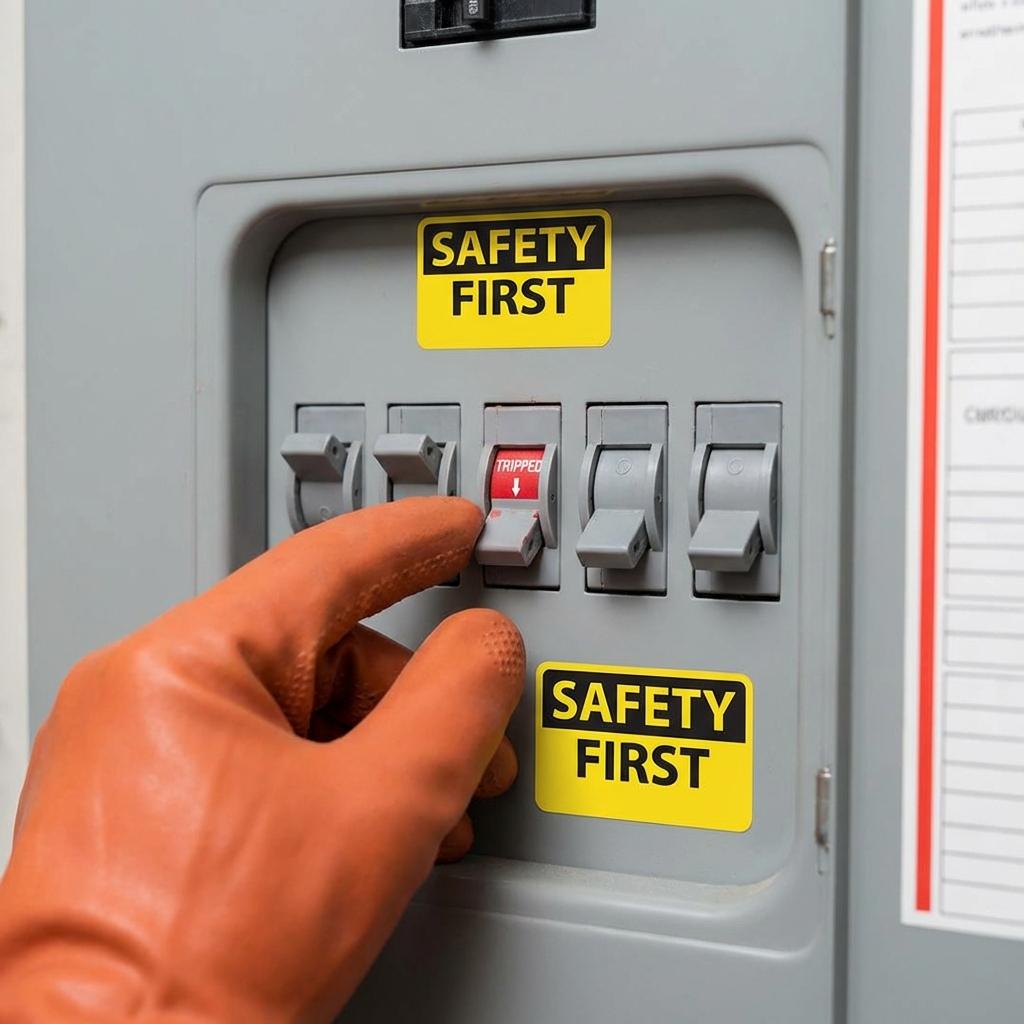
Go to your electrical panel. A tripped breaker will be in one of these positions:

  • Middle position: Between ON and OFF
  • OFF position: Fully switched to OFF
  • Loose feel: May wiggle or feel different from other breakers

Check the breaker label to identify which circuit tripped. If your panel isn't labeled, this is a good time to create a circuit directory.

Step 3: Unplug All Devices on the Circuit

Before resetting the breaker, unplug every device connected to that circuit:

  • Unplug all appliances and electronics
  • Turn off all light switches on the circuit
  • Check both obvious and non-obvious devices (clocks, chargers, nightlights, etc.)

This step prevents an overloaded circuit or faulty device from immediately tripping the breaker again.

Step 4: Reset the Circuit Breaker

To properly reset a tripped breaker:

  1. Push the breaker handle firmly to the full OFF position
  2. Then push it to the ON position
  3. You should hear and feel a solid "click"
  4. The handle should stay firmly in the ON position

What happens next determines your next step:

  • Breaker stays on: Proceed to Step 5
  • Breaker trips immediately: Stop. You likely have a short circuit or ground fault. Call a professional electrician—do not keep resetting the breaker
  • Breaker won't reset or feels loose: The breaker may be defective. Call an electrician for replacement

Step 5: Test Circuit Load Systematically

If the breaker stays on with everything unplugged, gradually add devices back to identify the problem:

  1. Turn on lights first: Light fixtures typically don't cause tripping
  2. Plug in one device at a time: Wait a minute after each to ensure the breaker stays on
  3. Operate each device: Turn it on and run it for a minute
  4. Note what causes tripping: If a specific device trips the breaker, you've found your culprit

Step 6: Calculate Total Circuit Load

If the breaker trips when running multiple devices but not individual ones, calculate the total wattage:

  1. Check the wattage of each device (usually on a label or nameplate)
  2. Add up the watts of everything you're running simultaneously
  3. Compare to your circuit's maximum safe load:
    • 15-amp circuit: 1,440 watts (continuous use)
    • 20-amp circuit: 1,920 watts (continuous use)

If you're exceeding the circuit capacity, you have an overload situation requiring either load redistribution or a new dedicated circuit.

Step 7: Check for Damaged Cords and Plugs

Inspect the devices and cords you use on the tripped circuit:

  • Frayed or damaged power cords
  • Cracked or broken plugs
  • Exposed wiring
  • Melted or discolored plugs or cords
  • Bent or damaged prongs

Replace any damaged cords or devices immediately—they're fire hazards.

Step 8: Inspect Outlets and Switches

Check outlets and switches on the affected circuit for:

  • Scorch marks or discoloration
  • Burning smell
  • Warm or hot covers
  • Buzzing or crackling sounds
  • Loose or damaged covers
  • Outlets that hold plugs loosely

Any of these signs indicate a problem requiring professional repair.

When Circuit Breaker Tripping is Dangerous: Call a Professional Immediately

While occasional tripping from a legitimate overload isn't necessarily dangerous, certain situations require immediate professional attention:

Emergency Warning Signs

Call AJ Long Electric immediately (703-997-0026) if you experience:

  • Burning smell: From breaker, outlets, walls, or appliances
  • Visible smoke or flames: Any sign of fire
  • Sparking: At outlets, breakers, or when plugging in devices
  • Sizzling or buzzing sounds: From walls, outlets, or breaker panel
  • Hot breaker: Breaker that's hot to the touch (even when not tripped)
  • Scorch marks: Black or brown marks on outlets, switches, or panel
  • Breaker won't stay reset: Trips immediately every time
  • Multiple breakers tripping: Indicates major electrical issue
  • Electric shock: Any shock sensation when touching appliances or switches
  • Melted wire insulation: Visible damage to wiring

Situations Requiring Professional Diagnosis

Call an electrician even without emergency signs if:

  • Breaker trips frequently (more than once per month)
  • Breaker trips without identifiable cause
  • AFCI breaker trips constantly (may indicate hidden wiring damage)
  • Circuit is overloaded and you can't reduce load
  • Breaker is old or from problematic brands (Federal Pacific, Zinsco)
  • You have an outdated electrical panel needing upgrade
  • You're experiencing flickering lights throughout house
  • Outlets show any signs of damage or overheating

Why Repeated Resetting is Dangerous

If a breaker keeps tripping, never repeatedly reset it hoping the problem goes away. Here's why:

  • Bypasses safety protection: The breaker is preventing damage or fire
  • Damages the breaker: Repeated tripping can wear out the mechanism
  • Increases fire risk: Overheated wiring continues to deteriorate
  • May damage appliances: Power fluctuations can harm electronics
  • Creates shock hazard: Especially with ground fault situations
Old electrical panel Northern Virginia - circuit breaker problems

Older electrical panels in Northern Virginia homes may have worn breakers or outdated safety features requiring professional attention.

Understanding Different Breaker Types and Their Tripping Characteristics

Different breaker types trip under different conditions. Understanding this helps identify the problem:

Standard Circuit Breakers

Basic overcurrent protection breakers trip when:

  • Circuit draws more current than rated amperage
  • Short circuit occurs (instant trip)
  • Sustained overload causes thermal trip (delayed)

Common trip causes: Too many devices, short circuits, faulty appliances

GFCI (Ground Fault Circuit Interrupter) Breakers

GFCI breakers trip when:

  • Current imbalance between hot and neutral exceeds 4-6 milliamps
  • Electricity is leaking to ground through water, person, or damaged equipment
  • Moisture affects the circuit

Common trip causes:

  • Wet conditions (rain, humidity, splashing water)
  • Faulty appliances with internal shorts to ground
  • Damaged extension cords used outdoors
  • Moisture in outdoor outlet boxes
  • Worn GFCI breaker (they should be tested monthly and replaced every 10 years)

Learn more in our comprehensive GFCI safety guide.

AFCI (Arc Fault Circuit Interrupter) Breakers

AFCI breakers trip when:

  • Dangerous arcing is detected in circuit wiring
  • Loose wire connections create sparking
  • Damaged wire insulation allows arcing

Common trip causes:

  • Damaged wiring in walls or ceilings
  • Loose connections in outlets, switches, or junction boxes
  • Pinched or nailed wires
  • Old vacuum cleaners or power tools with worn brushes (can create nuisance tripping)
  • Certain LED bulbs or dimmer combinations

Note on AFCI nuisance tripping: While AFCI breakers do an excellent job preventing fires, they can sometimes trip unnecessarily with certain devices. If your AFCI breaker trips with a specific tool or appliance but works fine with everything else, the device may be creating harmless arcing that the breaker detects. However, always have an electrician verify this—never assume all AFCI trips are nuisance trips.

Dual-Function AFCI/GFCI Breakers

These modern breakers provide both arc fault and ground fault protection. They trip when:

  • Any AFCI condition occurs
  • Any GFCI condition occurs
  • Standard overcurrent condition exists

This comprehensive protection is increasingly required by code for kitchen and bathroom circuits in Northern Virginia.

Cost to Fix Circuit Breaker Problems in Northern Virginia

Understanding typical costs helps you budget for necessary electrical repairs:

Diagnostic Service Call

  • Basic troubleshooting: $125-200
  • Comprehensive electrical inspection: $200-400

At AJ Long Electric, we offer free diagnostic consultations to help you understand the problem before committing to repairs.

Circuit Breaker Replacement

  • Standard breaker replacement: $150-300 per breaker
  • GFCI breaker replacement: $200-350 per breaker
  • AFCI breaker replacement: $200-350 per breaker
  • Dual-function AFCI/GFCI: $250-400 per breaker
  • Double-pole (240V) breaker: $200-450 per breaker

Short Circuit or Ground Fault Repair

  • Simple outlet or switch replacement: $150-300
  • Wire repair in accessible location: $200-500
  • Wire repair in walls/ceilings: $400-1,000+ (depending on access)
  • Circuit rewiring: $500-2,500 (depends on circuit length and access)

Adding New Circuit

  • New 15 or 20-amp circuit: $300-800
  • New 240-volt circuit: $500-1,500
  • Dedicated appliance circuit: $400-1,200

Learn more about when you need dedicated circuits.

Electrical Panel Upgrade

If your panel is outdated or doesn't have capacity for additional circuits:

  • 100-amp to 200-amp upgrade: $2,000-4,000
  • Federal Pacific or Zinsco panel replacement: $2,500-5,000
  • Subpanel installation: $1,000-2,500

See our detailed panel upgrade cost guide.

For accurate pricing specific to your situation, contact AJ Long Electric for a free estimate.

Preventing Future Circuit Breaker Trips

Once you've resolved a tripping breaker issue, take these steps to prevent future problems:

Distribute Electrical Load Properly

  • Identify high-draw appliances: Space heaters, hair dryers, microwaves, power tools
  • Spread them across different circuits: Don't run multiple high-draw devices on one circuit
  • Use the right circuit for the job: Check which outlets are on which circuits
  • Consider usage patterns: Plan which devices you use simultaneously

Upgrade Your Electrical System When Needed

Modern homes need modern electrical capacity:

  • Add dedicated circuits for major appliances
  • Upgrade to 200-amp service if you have 100 amps or less
  • Install additional circuits in heavily used areas (home office, workshop, kitchen)
  • Consider whole-house electrical audit to identify capacity issues

Replace Outdated Equipment

  • Circuit breakers over 15-20 years old: Should be inspected and possibly replaced
  • Federal Pacific or Zinsco breakers: Known safety hazards, replace immediately
  • Old aluminum wiring: Should be evaluated and possibly replaced
  • Worn outlets: Replace outlets that don't grip plugs firmly

Maintain Your Electrical System

  • Test GFCI breakers monthly: Push test button to ensure proper function
  • Keep panel area clear: Maintain 3 feet of clearance around electrical panel
  • Update circuit directory: Label all breakers clearly
  • Schedule periodic inspections: Professional electrician every 3-5 years
  • Address problems promptly: Don't ignore flickering lights, warm outlets, or other warning signs

Use Appliances Safely

  • Choose energy-efficient appliances: Draw less current while providing same performance
  • Avoid extension cord overuse: Have permanent outlets installed where needed
  • Don't daisy-chain power strips: Dangerous and can overload circuits
  • Unplug unused devices: Reduces phantom load and fire risk
  • Replace damaged cords immediately: Frayed cords are fire hazards

Special Considerations for Northern Virginia Homes

Older Homes in Historic Areas

Many Northern Virginia communities—particularly Old Town Alexandria, historic Vienna, and older neighborhoods in Arlington—have unique electrical challenges:

  • Undersized electrical service: Many older homes have 60 or 100-amp service inadequate for modern needs
  • Knob and tube wiring: Found in homes built before 1950, should be replaced. See our knob and tube guide
  • Aluminum wiring: Common in 1960s-70s homes, can be a fire hazard
  • Ungrounded circuits: Older two-prong outlets without safety ground
  • Shared neutral circuits: Outdated wiring practice that can cause problems

Townhomes and Condos

Northern Virginia townhome and condo owners face unique situations:

  • Shared electrical services: May have limited capacity for upgrades
  • HOA restrictions: May need approval for electrical work
  • Limited panel space: Smaller panels with fewer breaker slots
  • Shared walls: Running new circuits can be challenging

Seasonal Considerations

Northern Virginia's climate creates seasonal electrical demands:

  • Summer: Air conditioning load can trip breakers, especially in older homes
  • Winter: Space heater use often overloads circuits
  • Spring/Fall: Outdoor GFCI circuits may trip from moisture
  • Holiday season: Decorative lighting can overload circuits

Home Office and Remote Work Demands

With increased remote work in Northern Virginia, home offices now need robust electrical systems:

  • Multiple monitors and computers
  • Printers, scanners, and other peripherals
  • Video conferencing equipment and lighting
  • Phone chargers and other devices

Many homes built before the remote work era don't have adequate circuits for these demands. Consider our home office electrical planning guide.

When Panel Upgrade is Necessary

Sometimes frequent breaker tripping indicates your electrical panel simply can't meet your home's demands. Consider a panel upgrade if:

Signs You Need a Panel Upgrade

  • Frequent tripping: Multiple circuits trip regularly
  • No available breaker spaces: Can't add circuits for new needs
  • 100-amp or smaller service: Inadequate for modern homes
  • Fuse box instead of breakers: Outdated technology
  • Problematic brands: Federal Pacific or Zinsco panels (known fire hazards)
  • Rust or corrosion: Water damage to panel
  • Warm panel: Panel should never feel warm
  • Flickering lights throughout home: Indicates electrical capacity issues
  • Adding major appliances: EV charger, pool equipment, workshop tools, etc.

Benefits of Panel Upgrade

  • Increased capacity: Typically upgrade from 100 to 200 amps
  • More circuit spaces: Room for expansion
  • Modern safety features: AFCI and GFCI protection
  • Reduced insurance costs: Some insurers offer discounts for updated panels
  • Increased home value: Electrical upgrades boost resale value
  • Peace of mind: Knowing your system is safe and adequate

Learn more in our comprehensive panel upgrade guide.

DIY vs. Professional Electrical Work: What's Safe?

While some electrical troubleshooting is safe for homeowners, professional work is essential for repairs:

Safe DIY Tasks

  • Resetting tripped breakers (following proper procedures)
  • Testing GFCI outlets and breakers
  • Unplugging devices and redistributing load
  • Inspecting cords and plugs for damage
  • Labeling circuit breakers (with power on, carefully)
  • Replacing light bulbs and obvious blown fuses

Requires Licensed Electrician

  • Replacing circuit breakers
  • Working inside electrical panel
  • Repairing outlets or switches
  • Any work involving wiring
  • Adding new circuits
  • Panel upgrades or replacements
  • Troubleshooting short circuits or ground faults
  • Any work requiring permits (most electrical work in Northern Virginia)

Why Professional Work Matters

  • Safety: Electricity can kill; improper work creates serious hazards
  • Code compliance: Virginia requires licensed electricians for permitted work
  • Insurance: DIY electrical work may void insurance or create liability
  • Permits and inspections: Required for most electrical work
  • Proper diagnosis: Professionals have tools and expertise to find problems
  • Warranty protection: Professional work includes warranties

Frequently Asked Questions About Circuit Breaker Tripping

Why does my circuit breaker keep tripping at night?

Night-time tripping often occurs when automatic systems kick on (like refrigerators, sump pumps, or HVAC systems) while other devices are still running. The combined load exceeds circuit capacity. It can also indicate a ground fault in outdoor circuits affected by evening moisture or temperature changes. If this happens regularly, have an electrician evaluate your circuit load and capacity.

Can I just replace a 15-amp breaker with a 20-amp breaker to stop tripping?

Never do this! This is extremely dangerous. Circuit breakers must match the wire gauge on the circuit. 15-amp circuits use 14-gauge wire that can safely carry 15 amps. Putting a 20-amp breaker on 14-gauge wire means the wire can overheat and start a fire before the breaker trips. The correct solution is to reduce load, add a new circuit, or have an electrician rewire with proper gauge wire.

How many times can I reset a breaker before it needs replacement?

Circuit breakers are designed to trip and reset thousands of times during their lifespan. However, the real question is why it's tripping. If it trips frequently, the breaker isn't the problem—it's doing its job protecting your home from an underlying issue that needs to be diagnosed and fixed.

My breaker trips when it rains—is this normal?

This typically indicates a ground fault in an outdoor circuit. Moisture is getting into an outlet box, light fixture, or damaged wire insulation, creating a path to ground. GFCI breakers correctly detect this and trip. While rain-related tripping is common, it's not "normal" and should be addressed. Have an electrician inspect and seal your outdoor electrical components properly.

Should I be concerned if my breaker trips once?

A single trip from a legitimate overload (like running too many appliances) isn't necessarily concerning. However, if it happens without clear cause, happens frequently, or the breaker trips immediately when reset, have it professionally evaluated. Don't ignore electrical warning signs.

Can temperature affect circuit breaker tripping?

Yes. Circuit breakers trip partly by thermal mechanism—they heat up as current flows. In hot environments (like attics or garages in Northern Virginia summers), breakers may trip at lower current levels than their rating. Similarly, circuits carrying near-maximum load for extended periods build up heat that can cause tripping. This is why circuits should only be loaded to 80% of capacity for continuous use.

What's the difference between a tripped breaker and a blown fuse?

Circuit breakers trip and can be reset; fuses blow and must be replaced. Modern homes use breakers because they're reusable and provide better protection. If you still have a fuse box, consider upgrading to a breaker panel for safety and convenience. See our fuse box upgrade guide.

Why Choose AJ Long Electric for Circuit Breaker Problems in Northern Virginia?

When you're dealing with tripping breakers, you need experienced professionals who can quickly diagnose and safely resolve the issue:

  • Licensed & Insured: Fully licensed in Virginia, Maryland, and DC with comprehensive insurance
  • Experienced Diagnostics: We've solved thousands of circuit breaker issues across Northern Virginia
  • Same-Day Service Available: Because electrical problems can't always wait
  • Free Consultations: We'll diagnose the problem before recommending solutions
  • Transparent Pricing: Detailed estimates with no hidden fees
  • Code Expertise: Deep knowledge of Virginia electrical codes and permit requirements
  • Quality Workmanship: We stand behind our work with comprehensive warranties
  • Customer Satisfaction: Over 1,200 five-star reviews from satisfied customers
  • Local Experts: Serving Fairfax, Arlington, Alexandria, and all of Northern Virginia since 1996

See examples of our electrical work in our , and read what customers say in our testimonials.

Don't Let Circuit Breaker Problems Compromise Your Northern Virginia Home's Safety

Circuit breakers tripping is your electrical system's way of protecting your home. While occasional trips from legitimate overloads are normal, frequent or unexplained tripping indicates a problem that needs professional attention.

Understanding how breakers work, what causes tripping, and when to call a professional helps you maintain a safe, functional electrical system. Whether you're dealing with an overloaded circuit in your McLean home, a short circuit in Reston, or need a panel upgrade in Springfield, AJ Long Electric has the expertise to diagnose and resolve your circuit breaker issues safely and efficiently.

Don't gamble with your family's safety by ignoring circuit breaker problems or attempting complex electrical repairs yourself. Trust Northern Virginia's experienced electrical professionals to provide fast, reliable solutions that protect your home and give you peace of mind.

Get Your Free Circuit Breaker Diagnostic Today!

Or call us at 703-997-0026

Serving All of Northern Virginia

AJ Long Electric provides expert circuit breaker troubleshooting and electrical repair services throughout the region, including:

Fairfax, Arlington, Alexandria, Vienna, McLean, Ashburn, Reston, Burke, Springfield, Annandale, Herndon, Chantilly, Centreville, and surrounding communities. We also serve Washington DC and parts of Maryland.