If you're still using traditional incandescent or even compact fluorescent (CFL) bulbs in your Northern Virginia home, you're literally watching money burn away with every hour they're on. LED lighting technology has revolutionized home lighting, offering energy savings of up to 90%, lifespans measured in decades rather than months, and environmental benefits that reduce your carbon footprint significantly.
Homeowners throughout Fairfax, Arlington, Alexandria, and surrounding communities are making the switch to LED lighting and seeing dramatic reductions in their electricity bills. Whether you live in a historic home in Old Town Alexandria, a modern townhouse in Reston, or a single-family residence in McLean, LED retrofits deliver exceptional value.
At AJ Long Electric, we've helped hundreds of Northern Virginia homeowners complete LED lighting conversions, from simple bulb replacements to comprehensive whole-home retrofits. This guide will walk you through everything you need to know about LED conversions, including costs, savings calculations, available rebates, and when professional installation makes sense.
Understanding LED Lighting Technology
Before diving into costs and conversions, it's important to understand what makes LED (Light Emitting Diode) technology so superior to traditional lighting options.
How LED Lights Work
Unlike incandescent bulbs that produce light by heating a filament, or CFLs that use gas and mercury, LEDs generate light through electroluminescence. When electrical current passes through a semiconductor material, it produces visible light with minimal heat generation. This fundamental difference explains why LEDs are dramatically more efficient.
LED vs. Traditional Lighting: The Numbers
Here's how LED lighting compares to older technologies:
- Incandescent bulbs: 750-2,000 hour lifespan, 90% of energy wasted as heat
- CFL bulbs: 8,000-15,000 hour lifespan, contains mercury, slow warm-up time
- LED bulbs: 25,000-50,000+ hour lifespan, 75-90% less energy than incandescent, instant full brightness
For a typical Northern Virginia household using lights 5 hours per day, an LED bulb can last 13-27 years. That's potentially replacing just one LED bulb in your child's lifetime compared to 25-50 incandescent bulbs in the same period.
The Compelling Benefits of LED Lighting Conversion
Converting to LED lighting delivers multiple advantages that go far beyond simple energy savings.
1. Dramatic Energy Savings
LED bulbs use approximately 75-90% less energy than incandescent bulbs for the same light output. For a typical Northern Virginia home with 40-50 light bulbs:
- Replacing 60-watt incandescent bulbs with 10-watt LED equivalents
- Average use of 3-5 hours per day per bulb
- Dominion Energy rates around $0.12-0.14 per kWh
- Annual savings: $200-$400 or more
Over a 25-year LED lifespan, that's $5,000-$10,000 in electricity savings for an average home.
2. Exceptional Longevity
Quality LED bulbs last 15-25 times longer than incandescent bulbs and 3-5 times longer than CFLs. This means:
- Fewer ladder trips to change hard-to-reach bulbs
- Reduced maintenance costs
- Less hassle and interruption
- Fewer bulbs ending up in landfills
For Northern Virginia homes with high ceilings or outdoor fixtures requiring ladders, this benefit alone can justify the conversion.
3. Heat Reduction
Incandescent bulbs waste 90% of their energy as heat. In contrast, LEDs produce minimal heat, which means:
- Reduced cooling costs during hot Northern Virginia summers
- Safer operation (reduced fire risk)
- Can be used in enclosed fixtures without overheating
- More comfortable work areas (desk lamps, workshops)
For homes with extensive recessed lighting, switching to LED can noticeably reduce air conditioning loads.
4. Environmental Benefits
LED lighting is the most environmentally friendly lighting option:
- Reduced electricity demand means fewer carbon emissions from power plants
- No mercury or hazardous materials (unlike CFLs)
- Extremely long lifespan reduces waste
- Many LED components are recyclable
A typical Northern Virginia home converting to LED can reduce carbon emissions by 1,000-2,000 pounds annually.
5. Superior Light Quality and Control
Modern LED technology offers lighting quality and flexibility that traditional bulbs simply cannot match:
- Instant full brightness: No warm-up time like CFLs
- Excellent color rendering: High CRI (Color Rendering Index) options show true colors
- Dimmable options: Smooth dimming from 100% to 0% (with compatible dimmers)
- Color temperature choices: From warm white (2700K) to daylight (5000K+)
- Directional lighting: Focuses light where needed without light loss

LED recessed lighting provides beautiful, energy-efficient illumination for Northern Virginia homes.
Types of LED Lighting Retrofits
There are several approaches to converting your Northern Virginia home to LED lighting, each with different costs, benefits, and complexity levels.
1. Direct Bulb Replacement (Retrofit Bulbs)
The simplest and most common LED conversion method:
- How it works: Replace existing bulbs with LED equivalents in existing fixtures
- Best for: Standard fixtures with good condition sockets
- Pros: Lowest cost, DIY-friendly, immediate results
- Cons: Limited by existing fixture design, quality varies by bulb
- Cost per bulb: $3-$15 for quality LEDs
Available styles include:
- Standard A19 bulbs (most common household size)
- Globe bulbs for bathroom vanities
- Candelabra bulbs for chandeliers
- BR30/BR40 flood bulbs for recessed cans
- PAR bulbs for track lighting and outdoor floods
2. LED Retrofit Kits for Recessed Lighting
Upgrade existing recessed can lights without replacing the entire housing:
- How it works: LED disc or module installs into existing recessed housing
- Best for: Dated recessed cans with worn sockets or trim
- Pros: Modernizes appearance, excellent efficiency, easy installation
- Cons: Requires some electrical work, slightly higher cost
- Cost per fixture: $15-$40 per retrofit kit
These kits are extremely popular in Northern Virginia because they update old recessed lighting to modern, efficient LED technology without the expense of replacing entire fixtures. Learn more in our recessed lighting guide.
3. Complete Fixture Replacement
Replace old fixtures with new LED-integrated fixtures:
- How it works: Remove old fixture, install new LED fixture
- Best for: Dated fixtures, kitchen/bath remodels, new construction
- Pros: Best efficiency, integrated design, modern aesthetics
- Cons: Highest cost, requires electrician, longer installation time
- Cost per fixture: $75-$400+ depending on style and quality
Common applications include:
- Under-cabinet LED strips or puck lights
- LED recessed can housings (new construction)
- LED flush-mount ceiling fixtures
- LED pendant lights
- LED outdoor wall sconces and landscape lights
4. LED Track Lighting Conversion
Track lighting is common in Northern Virginia homes built in the 1980s-2000s:
- Option A: Replace halogen bulbs with LED track heads (if compatible)
- Option B: Replace entire track system with modern LED track lighting
- Benefits: Eliminate extremely hot halogen bulbs, reduce energy by 80-90%
- Cost: $10-$30 per LED track head, or $200-$600 for complete new track systems
5. Outdoor LED Upgrades
Outdoor lighting benefits tremendously from LED conversion:
- Landscape lighting: LED path lights, spotlights, and well lights use 1-3 watts vs. 20-50 watts for halogen
- Security lighting: LED flood lights provide bright illumination with 75% less energy
- Porch and entry lights: LEDs withstand cold Northern Virginia winters better than CFLs
- Deck and patio lighting: LED strips and post cap lights for entertaining spaces
For comprehensive outdoor lighting guidance, see our landscape lighting guide.
LED Lighting Conversion Cost Analysis for Northern Virginia Homes
Understanding the costs and return on investment helps you plan your LED conversion strategically.
Whole-Home LED Conversion Cost Estimates
Small Home or Condo (20-30 bulbs)
- DIY bulb replacement: $60-$300 (materials only)
- Professional installation: $200-$500 (including bulbs and labor)
- Annual energy savings: $80-$150
- Payback period: 1-3 years
Average Home (40-50 bulbs)
- DIY bulb replacement: $120-$500 (materials only)
- Professional retrofit: $400-$1,200 (mix of bulbs and retrofit kits)
- Annual energy savings: $200-$400
- Payback period: 1-3 years
Large Home (60-80+ bulbs)
- DIY bulb replacement: $180-$800 (materials only)
- Professional comprehensive retrofit: $800-$2,500
- Annual energy savings: $400-$700+
- Payback period: 2-4 years
Luxury Home with Extensive Lighting (100+ fixtures)
- Complete LED conversion: $2,000-$5,000+
- Including fixture replacements and controls: $5,000-$15,000+
- Annual energy savings: $700-$1,500+
- Payback period: 3-7 years (faster with rebates)
Return on Investment (ROI) Calculations
Let's look at a specific example for a typical Fairfax County home:
Scenario: 45 bulbs throughout home, average 4 hours use per day
- Old setup: 60-watt incandescent bulbs
- New setup: 10-watt LED equivalent bulbs
- Energy rate: $0.13 per kWh (Dominion Energy average)
Annual Cost Comparison:
- Incandescent: 45 bulbs × 60W × 4 hrs × 365 days ÷ 1000 = 3,942 kWh × $0.13 = $512.46/year
- LED: 45 bulbs × 10W × 4 hrs × 365 days ÷ 1000 = 657 kWh × $0.13 = $85.41/year
- Annual savings: $427.05
Investment: $450 for quality LED bulbs professionally installed
Payback period: 1.05 years (about 13 months)
Over 25 years (average LED lifespan), total savings would exceed $10,000 compared to continuing with incandescent bulbs.
Color Temperature Selection Guide
One of the most important decisions in LED conversion is choosing the right color temperature for each space. This is measured in Kelvin (K) and dramatically affects the feel of a room.
Understanding Color Temperature
- 2700K - Warm White: Most similar to traditional incandescent bulbs, cozy and relaxing
- 3000K - Soft White: Slightly crisper than warm white, still inviting
- 3500K - Neutral White: Balanced between warm and cool, versatile
- 4000K - Cool White: Clean, modern appearance
- 5000K+ - Daylight: Bright, energizing, excellent color accuracy
Recommended Color Temperatures by Room
- Living rooms, bedrooms, dining rooms: 2700K-3000K (warm, relaxing)
- Kitchens: 3000K-4000K (functional but inviting)
- Bathrooms: 3000K-5000K (3000K for relaxing baths, 4000K+ for makeup/shaving)
- Home offices: 4000K-5000K (reduces eye strain, improves focus)
- Garages and workshops: 5000K+ (excellent visibility and color accuracy)
- Outdoor lighting: 3000K (warm, inviting) or 5000K (security, visibility)
Pro tip: Stay consistent with color temperature throughout open-concept spaces. Mixing 2700K and 5000K in the same sightline looks jarring.
Dimming Considerations for LED Lights
LED dimming is more complex than traditional incandescent dimming, and compatibility issues are common.
LED Dimmer Compatibility
Not all LED bulbs work with all dimmer switches. For proper LED dimming:
- Verify LED bulbs are labeled "dimmable" (not all LEDs can dim)
- Use LED-compatible dimmer switches (older incandescent dimmers may cause flickering, buzzing, or limited range)
- Check manufacturer compatibility lists when possible
- Consider replacing old dimmer switches with modern LED dimmers during conversion
Common LED Dimming Issues
- Flickering: Usually caused by incompatible dimmer or minimum load not met
- Buzzing: Electrical noise from incompatible dimmer-bulb pairing
- Limited dimming range: Won't dim below 20-30% or strobing at low levels
- Dead front: Dimmer's indicator light doesn't illuminate properly
At AJ Long Electric, we test dimmer compatibility and can upgrade your dimmer switches to ensure smooth, quiet LED dimming throughout your home. Learn more in our dimmer switch guide.
Quality vs. Cheap LEDs: Why It Matters
Not all LED bulbs are created equal. The LED lighting market includes everything from premium products to bargain-basement options that barely function.
Indicators of Quality LED Bulbs
- Established brands: Philips, GE, Cree, TCP, Feit Electric
- Long warranties: 3-5 year warranties indicate manufacturer confidence
- High CRI rating: 90+ CRI for accurate color rendering (80+ is acceptable)
- Energy Star certification: Meets efficiency and quality standards
- Lumen output specified: Tells you actual brightness, not just wattage equivalents
- Smooth dimming capability: If dimmable, it dims smoothly across full range
Problems with Cheap LED Bulbs
- Short lifespan: May fail in 1-2 years instead of promised 15-25 years
- Poor color quality: Low CRI makes colors look washed out or inaccurate
- Inconsistent output: Bulbs from same package have different brightness or color
- Dimming problems: Severe flickering, buzzing, or won't dim smoothly
- Early failures: Some DOA (dead on arrival) or fail within weeks
Our recommendation: Invest in quality LEDs from reputable brands. The few extra dollars per bulb pays for itself in reliability, performance, and longevity. When we install LEDs for Northern Virginia customers, we use only quality products with proven track records.
Northern Virginia Utility Rebates for LED Lighting
Several Northern Virginia utility providers offer rebates and incentives for LED lighting upgrades.
Dominion Energy Virginia
Dominion Energy serves most of Northern Virginia and offers periodic rebates for energy efficiency upgrades:
- LED bulb packs often discounted at participating retailers
- Energy efficiency programs for qualifying customers
- Check DominionEnergy.com for current residential LED incentives
NOVEC (Northern Virginia Electric Cooperative)
NOVEC serves parts of Fairfax, Loudoun, Prince William, and surrounding areas:
- Energy efficiency rebate programs
- Discounted LED bulbs through partnerships
- Visit NOVEC.com for details on current LED rebate programs
Federal Tax Credits
While LED bulbs themselves typically don't qualify for federal tax credits, comprehensive home energy improvements may qualify under certain conditions. Consult with your tax advisor about energy efficiency tax credits available in 2025.
How to Maximize Rebates
- Check utility website before purchasing bulbs
- Buy from participating retailers when instant rebates available
- Save receipts for mail-in rebates
- Complete full-home conversion to maximize savings
- Combine LED conversion with other efficiency upgrades (smart thermostats, insulation)
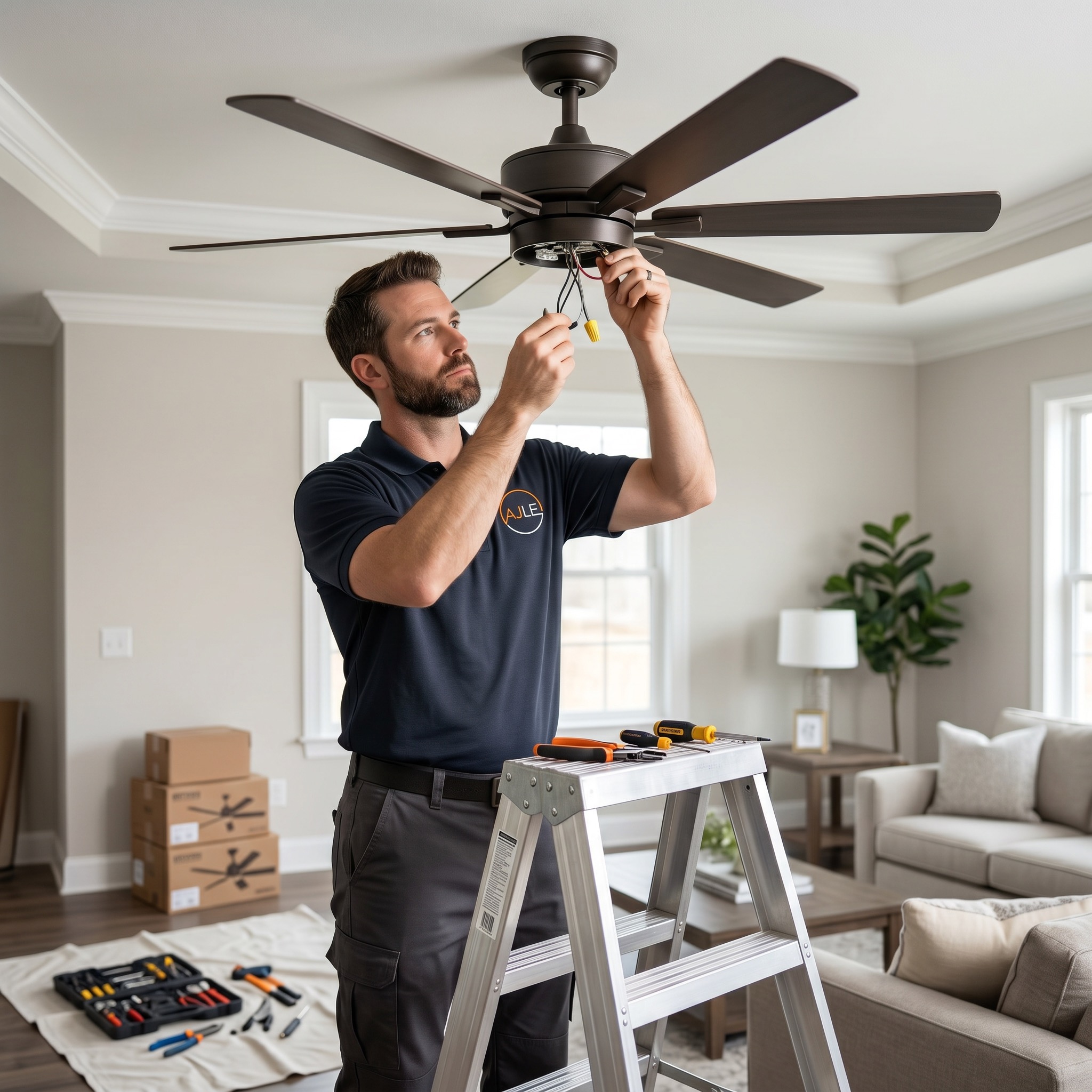
Professional LED lighting upgrades enhance both energy efficiency and aesthetics in Northern Virginia homes.
When to Hire a Professional Electrician for LED Conversion
While simple bulb replacement is DIY-friendly, many LED conversion projects benefit from professional installation.
DIY-Appropriate LED Projects
- Replacing standard bulbs in table lamps and floor lamps
- Swapping out ceiling fixture bulbs (if easily accessible)
- Updating outdoor fixture bulbs
- Plug-in LED solutions (under-cabinet lights, LED strips with adapters)
When Professional Installation is Recommended
- Recessed can retrofits: Requires working with wiring in ceiling cavity
- Fixture replacements: Safely connecting new fixtures to existing wiring
- Dimmer switch upgrades: Replacing old dimmers with LED-compatible models
- High or difficult-to-access locations: Vaulted ceilings, stairwells, outdoor fixtures requiring ladders
- Hardwired LED installations: Under-cabinet lighting, LED strips, landscape lighting transformers
- Large-scale conversions: 50+ fixtures updated efficiently and correctly
- Smart LED integration: Connecting LED fixtures to home automation systems
- Troubleshooting issues: Flickering, compatibility problems, dimming issues
Benefits of Professional LED Installation
- Safety: No risk of electrical shock or falls from ladders
- Correct product selection: Electricians know which products work best for specific applications
- Proper installation: Ensures optimal performance and longevity
- Time savings: What might take a homeowner 2-3 days takes professionals hours
- Warranty protection: Professional installation often required for warranty coverage
- Dimmer compatibility: We ensure dimmers and bulbs work together perfectly
- Code compliance: Professional installations meet electrical code requirements
LED Conversion Project Planning Timeline
Here's what to expect when planning your LED lighting conversion:
Phase 1: Assessment and Planning (1-2 days)
- Inventory all existing light fixtures and bulbs
- Identify fixtures needing replacement vs. retrofit
- Determine color temperature preferences for each space
- Note which lights are on dimmers
- Check for utility rebate programs
- Obtain quotes from electricians if needed
Phase 2: Product Selection and Purchase (1-3 days)
- Research and select quality LED bulbs and fixtures
- Verify dimmer compatibility for dimmable locations
- Purchase LED-compatible dimmers if needed
- Order any specialty items (retrofit kits, fixtures)
Phase 3: Installation (1-3 days for DIY, hours for professionals)
- Start with easily accessible bulbs
- Test dimmers as you go
- Install retrofit kits and new fixtures
- Upgrade dimmer switches if needed
- Properly dispose of old bulbs (especially CFLs)
Phase 4: Testing and Adjustment (ongoing)
- Verify all lights work properly
- Test dimming functionality
- Adjust color temperatures if some rooms feel too warm or cool
- Address any flickering or compatibility issues
LED Lighting Conversion FAQs
Do LED bulbs really last 25,000 hours or more?
Quality LED bulbs from reputable manufacturers typically do achieve their rated lifespan when used properly. However, cheap LEDs may fail much sooner. Factors affecting LED lifespan include heat exposure, power quality, and usage patterns. Enclosed fixtures and hot environments can reduce lifespan.
Can I use LED bulbs in fully enclosed fixtures?
Only if the LED bulb is specifically rated for enclosed fixtures. LEDs need heat dissipation, and fully enclosed fixtures trap heat. Using non-rated LEDs in enclosed fixtures can significantly reduce lifespan. Look for "enclosed fixture rated" on the packaging.
Why do my LED lights flicker?
Common causes include incompatible dimmer switches, loose connections, low-quality LED bulbs, or electrical issues in your home's wiring. If flickering occurs on non-dimmed lights or affects multiple fixtures, contact AJ Long Electric to diagnose the issue.
Can I put LED bulbs on a three-way switch?
Yes, LED bulbs work fine with three-way switches (switches controlling the same light from two locations). Just ensure you're using quality LED bulbs. If the lights flicker or behave oddly, there may be a wiring issue that needs professional attention.
Do LED bulbs work with timers and motion sensors?
Most LED bulbs work well with timers and motion sensors, but compatibility varies. LED bulbs typically draw so little power that some older motion sensors may not detect them properly. Look for LED-compatible sensors or consult an electrician if you experience issues.
Should I replace all my bulbs at once or gradually?
Both approaches work. Replacing all at once maximizes immediate energy savings and ensures consistent color temperature throughout your home. Gradual replacement is less expensive upfront and allows you to experiment with different brands and color temperatures. Many homeowners replace bulbs as they burn out, but with LEDs lasting so long, this means living with incandescent bulbs for years.
Are smart LED bulbs worth it?
Smart LED bulbs (Philips Hue, LIFX, etc.) offer color-changing, dimming, and remote control capabilities. They're excellent for specific applications like accent lighting or mood lighting but are overkill for most general lighting needs. Standard LED bulbs with smart switches offer more cost-effective control. Learn more in our smart home wiring guide.
Why Choose AJ Long Electric for Your LED Lighting Conversion
When you're ready to convert your Northern Virginia home to efficient LED lighting, partner with professionals who understand both the technology and your needs:
- Lighting expertise: We've completed thousands of LED retrofits throughout Northern Virginia
- Product knowledge: We recommend quality LED products that deliver on their promises
- Compatibility testing: We ensure dimmers and bulbs work together perfectly
- Comprehensive service: From simple bulb upgrades to complete lighting redesigns
- Rebate assistance: We help you navigate utility rebate programs
- Licensed & insured: Fully licensed electricians serving all of Northern Virginia
- Satisfaction guaranteed: We stand behind our work with comprehensive warranties
See examples of our lighting installations in our , and read what customers say in our testimonials.
Start Saving with LED Lighting Today
Converting to LED lighting is one of the simplest and most cost-effective upgrades you can make to your Northern Virginia home. With energy savings of 75-90%, lifespans measured in decades, reduced maintenance, and environmental benefits, LED retrofits deliver value from day one.
Whether you're considering a complete whole-home LED conversion or want to start with high-use areas like kitchens and living rooms, the investment pays for itself quickly through reduced electricity bills.
Don't continue wasting money on outdated, inefficient lighting technology. Partner with Northern Virginia's trusted electrical professionals who have the experience, knowledge, and commitment to help you maximize your LED lighting investment.
Get Your Free LED Lighting Consultation!
Or call us at 703-997-0026
Serving All of Northern Virginia
AJ Long Electric provides expert LED lighting conversion services throughout the region, including:
Fairfax, Arlington, Alexandria, Vienna, McLean, Ashburn, Reston, Burke, Springfield, Annandale, Great Falls, Herndon, Chantilly, and surrounding communities. We also serve Washington DC and parts of Maryland.