Per-fixture cost by ceiling type
Recessed lighting install cost in Northern Virginia is mostly driven by ceiling type — specifically how hard it is to run wire to the fixture location and cut the can/disc hole.
The per-fixture range is wide ($110–$425) because the work is genuinely different across ceiling types. A finished cathedral ceiling with no attic above takes hours per fixture; an open-joist basement ceiling takes minutes.
| Ceiling Type | Per Fixture | Why |
|---|---|---|
| Open-joist basement | $110 – $180 | Direct wire access from below; no patching |
| Single-story drywall (attic above) | $175 – $250 | Cable routed through attic; minimal wall work |
| Multi-story drywall | $225 – $300 | Fishing through ceiling joist bays; some patching |
| Cathedral / sloped ceiling | $275 – $425 | No attic; cable routed through finished ceiling; significant patching |
Typical project costs
Most residential recessed-lighting projects fall into 3 patterns:
• Kitchen (6–10 fixtures over the work area): $1,200–$3,000 typical. Drywall single-story is most common; multi-story adds.
• Finished basement (8–14 fixtures): $900–$2,500. Open-joist installs are the cheapest per-fixture work we do.
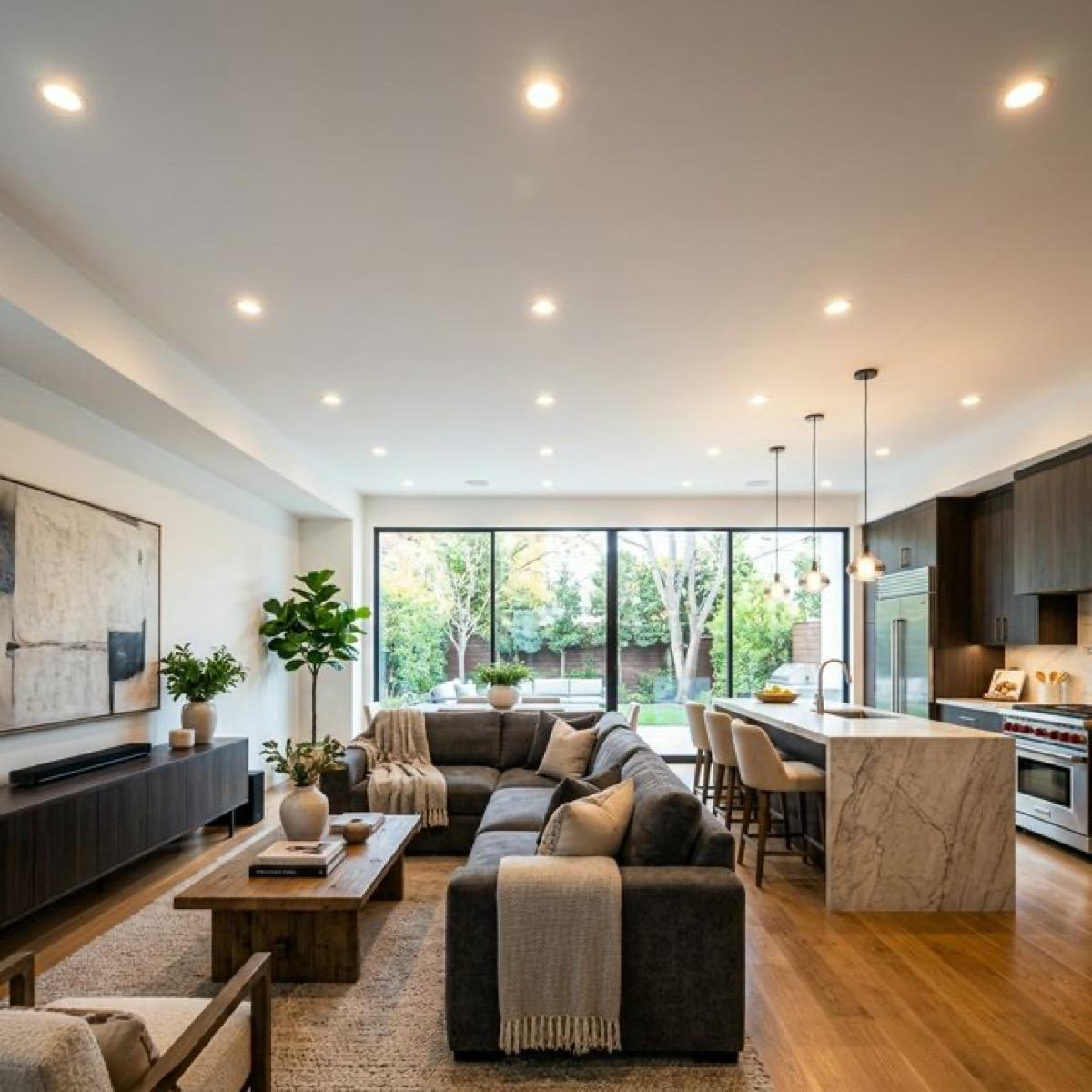
• Living room / great room (6–12 fixtures): $1,400–$3,800. Cathedral or coffered ceilings push to the upper end; standard drywall sits in the middle.
• Whole-house retrofit (30+ fixtures across multiple rooms): $5,500–$10,500. Bulk discount applies past 20 fixtures.
All prices include LED-rated fixtures (3000K or 3500K Kelvin standard, dimmable), dedicated dimmer switch wiring, switch installation, and full cleanup. Fixture brand selection (Halo, Lithonia, Juno, Lotus) doesn't change the price meaningfully.
How many fixtures do I need?
The rule of thumb for general ambient lighting: divide the ceiling height by 2 to get the maximum fixture spacing in feet. An 8-foot ceiling = 4-foot spacing = roughly 1 fixture per 16 sq ft of floor area for even coverage.
Kitchen task lighting needs tighter spacing — typically 1 fixture per 12 sq ft of work area, often supplemented by under-cabinet LED strips.
A 200 sq ft kitchen: 10–14 fixtures. A 400 sq ft finished basement: 14–18 fixtures. A 250 sq ft living room: 8–12 fixtures. A 600 sq ft great room with cathedral ceiling: 12–16 fixtures (higher because of the volume).
We map the layout during the in-home assessment and walk through trim color (white, brushed nickel, oil-rubbed bronze), beam angle (typically 35° for general ambient, 50° for high-ceiling), and dimming approach.
LED + dimmer compatibility
LED recessed fixtures need LED-compatible dimmers. Generic dimmers (from the wall plate aisle at a big-box store) often produce flicker, buzz, or limited dimming range with modern LED loads.
Lutron Caseta or Maestro dimmers are the standard for residential LED recessed in Northern Virginia. Smart Caseta dimmers ($65–$85 each) add app + voice control without extra wiring. Standard Maestro dimmers ($35–$50) are the wired-only option.
We configure the dimmer match to the fixture during the install. If the homeowner has existing dimmers that aren't LED-compatible, replacement is included in the quote when a recessed-lighting project is happening.
Permits, code, and Dominion rebates
Recessed-lighting work that adds new circuits requires a permit in Fairfax County, Arlington, Alexandria, Loudoun, and Prince William. Replacing existing fixtures on existing circuits is permit-exempt in most jurisdictions but we pull when in doubt.
NEC 210.71 requires bathrooms with showers/tubs to have at least one wall-mounted light controlled by a switch outside the wet area. NEC 410.10(D) requires IC (insulation-contact) rated cans in insulated ceilings — relevant for any installation in attic space.
Dominion Energy occasionally offers LED rebates as part of broader efficiency programs. Check current programs at dominionenergy.com/virginia/save-energy. Most Northern Virginia cooperatives offer similar.
Northern Virginia Considerations
Code Requirements
NEC 410.10(D) IC-rated cans in insulated ceilings; NEC 210.71 bathroom-specific switch rules.
Permit Information
Permit required for new-circuit work. Existing-circuit fixture replacement typically permit-exempt.
Typical Costs
$110–$425 per fixture by ceiling type
Local Tips
Most Northern Virginia homes from 1970s-80s have insulated attics requiring IC-rated cans. Cathedral ceilings common in 1990s+ construction add cost.
Frequently Asked Questions (5)
Why is cathedral-ceiling install so much more?
No attic above the fixture means we have to route the cable through finished ceiling space and patch back. The labor is 2-3x what an attic-accessible install takes.
Should I get smart dimmers?
Worth it if you already have a smart-home ecosystem (Lutron Caseta, Apple HomeKit, Alexa). Otherwise standard Maestro dimmers work fine and cost less.
How long does a kitchen retrofit take?
The work window depends on fixture count, ceiling construction, access, wiring condition, equipment, permit or inspection requirements, patching scope, and site conditions. The written proposal identifies the planned schedule without a categorical one-day promise.
Can recessed lights replace existing flush-mount fixtures?
Often yes. The existing fixture's wiring is the cleanest place to tap for the new dimmer circuit. We add additional cans around it for full coverage.
Do recessed lights add home value?
Modest but real. Real-estate appraisers consistently note "updated lighting" as a positive feature, especially in kitchens and finished basements. The ~$2,500 spend on a kitchen retrofit typically returns most of its cost at resale.
Authoritative Sources
- NFPA 70: National Electrical Code (NEC)The NEC is the foundational safety standard for electrical wiring and installation in the U.S.
- Fairfax County: Residential Electrical PermitsCounty electrical permit guidance for single-family homes and townhouses; verify the authority from the project address.
- Electrical Safety Foundation International (ESFI)Nonprofit dedicated to promoting electrical safety in the home and workplace.
- ENERGY STAREPA program identifying energy-efficient products and practices.