Loading services…

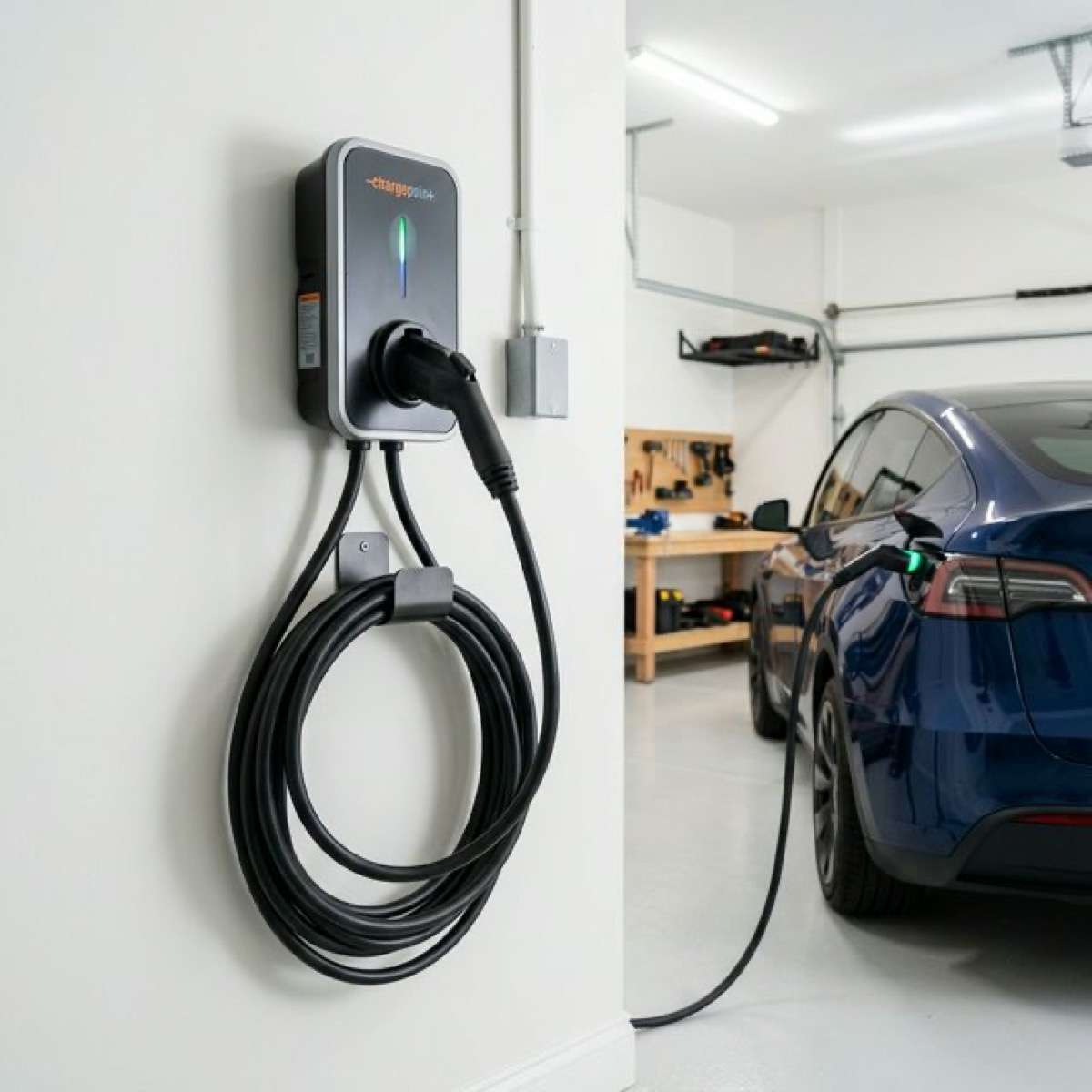
Level 2 Commercial EV Charging
Commercial EV Charger Installation in Northern Virginia
Level 2 commercial EV charging for offices, retail, restaurants, and property managers across Northern Virginia. Single stations or small networked banks. ChargePoint, Tesla Wall Connector Commercial, EvoCharge, Wallbox. We handle the load calc, conduit, panel capacity, permit, and utility coordination. Not DC fast charging.
Virginia Class B #2705031092 · Licensed electrical team led by John Long, Master Electrician · Permit + utility coordination
Commercial Level 2 EV charging in the DMV
Workplace and tenant-facing EV charging can support employee, resident, or customer charging at offices, retail properties, and managed buildings. Commercial Level 2 designs may use single pedestal mounts, multi-station banks with load management, or small parking-lot deployments. What we don't do is DC fast charging (Level 3), which needs utility-scale service and specialty contractor experience and is better suited to a dedicated infrastructure contractor.
The commercial EV design follows the electrical code adopted for the project and the listed equipment instructions. NEC Article 625 addresses circuit sizing, continuous loads, protection, disconnects, and energy-management systems. The written scope identifies the circuit, overcurrent protection, controls, and permit path; the local authority having jurisdiction independently controls review, inspection, correction notices, and final approval. You can review federal program guidance at the U.S. Department of Energy's Alternative Fuels Data Center.
The single most common reason a commercial EV project stalls is panel capacity. Many older Northern Virginia office and retail buildings were never wired with spare amperage for a row of 40-to-80-amp continuous loads, so the first thing we do on a walkthrough is a load calculation against the existing service. If the panel has headroom, we land the new circuits and move on. If it doesn't, the fix is usually a subpanel fed from the main, a dedicated EV distribution panel, or — for larger banks — an energy-management system that caps the aggregate draw so eight stations can live behind a single 100-amp feeder without tripping. We scope that decision up front so the written quote reflects the real cost, not a number that balloons mid-project. When a service upgrade is genuinely required, our commercial panel upgrade crew handles it on the same project so you have one contractor, one permit set, and one schedule.
Networked hardware is where most of the brand decisions happen. ChargePoint, EvoCharge, and Wallbox commercial units add access control, RFID or app-based authorization, usage reporting, and — when you want it — billing so employees or customers pay for the energy they draw. The wiring scope is identical to a non-networked station; the difference is the back-office configuration, which your facilities team or the network provider handles after we energize the unit. We'll spec a single hardware family across a portfolio so a property manager isn't juggling three apps and three warranty processes. Manufacturer warranty terms and commissioning steps come straight from the maker — for example, ChargePoint's commercial charging documentation covers network plans and station management in detail.
For the full commercial offering set, see our commercial electrical hub. For residential EV charger installs, the residential EV charging page has detail on Tesla Wall Connector, NEMA 14-50, hardwired setups, and home-charging considerations. If your project is really a service-capacity question, start with commercial panel upgrades; for branch-circuit or fixture issues uncovered during the walkthrough, our commercial electrical repair team can fold those into the same visit.
Commercial EV charging specs at a glance
Level 2 commercial charging configurations and common circuit-design starting points. The final design and schedule come from the site walk, load calculation, route, equipment, utility needs, and permit authority.
| Configuration | Power / circuit | Typical use | Schedule basis |
|---|---|---|---|
| Single station | 7.7-11.5 kW · dedicated 240V 40-60A circuit | Small office or retail tenant; one EV at a time | Confirmed after route, access, permit, and equipment review |
| 2-4 station bank | Shared 100A feeder with load management | Employee charging at an office property | Depends on feeder, controls, access, and inspection scheduling |
| 4-8 station bank | Subpanel + energy-management system (EMS) | Retail center, restaurant, or larger workplace | Depends on distribution equipment, controls, and utility needs |
| Pedestal / parking-lot | Underground conduit · concrete base · area lighting tie-in | Customer-facing lot or portfolio rollout | Depends on trenching, concrete, restoration, permit, and inspection |
| DC fast charging (L3) | 480V 3-phase · 50 kW+ · referred out | Highway / fleet plazas — not our scope | Referred to a specialist |
Circuit sizes shown reflect the NEC Article 625 continuous-load rules and are confirmed against your actual panel before installation. Charging infrastructure planning guidance: DOE Alternative Fuels Data Center.
Typical commercial EV charging projects
Single station for a small office
One Level 2 pedestal or wall-mounted unit at a small office or retail tenant property. The scope documents the dedicated 240V circuit, outdoor requirements, permit, commissioning responsibilities, and project-specific schedule.
2-4 station employee bank
Small bank of chargers at an office property for employee charging. Load management on shared 100A circuit. ChargePoint or EvoCharge networked controls for access if needed.
Retail customer charging
Customer-facing chargers at a retail center or restaurant. Networked billing through ChargePoint or Wallbox; signage handled separately by the property manager.
Property-manager portfolio add
Adding chargers across a multi-property portfolio. Spec a common hardware family, install one property at a time, document for the property manager.
Where we fit — and where we don't
Honest scope on commercial EV charging.
Best fit
- ·Single Level 2 commercial stations
- ·Small banks (2-8) with load management
- ·Networked chargers (ChargePoint, EvoCharge, Wallbox)
- ·Tesla Wall Connector Commercial
- ·Pedestal-mounted parking-lot installs
- ·Property-manager portfolio rollouts
Not the right fit
- ·DC fast charging (Level 3, 50kW+)
- ·Utility-scale charging plazas
- ·Hydrogen fuel-cell integration
- ·Specialty fleet-electrification consulting
Frequently asked questions
What kinds of commercial EV installs do you handle?
Level 2 (240V, 30-80A) commercial EV chargers — single stations for small offices or retail, small networked banks (2-8 stations) for properties offering employee or customer charging, and pedestal-mounted parking-lot stations. We install Tesla Wall Connector (Commercial), ChargePoint, EvoCharge, Wallbox, and similar major brands.
Do you install DC fast chargers (Level 3)?
No. DC fast charging requires utility-scale service (often 480V 3-phase, sometimes a dedicated transformer) and specialty contractor experience. We refer those projects to commercial EV-infrastructure specialists. Our scope is Level 2 commercial charging.
Can you handle networked charging with billing?
Yes. We install ChargePoint, EvoCharge, and other networked systems that support tenant or employee billing, access control, and usage reporting. The hardware install is the same wiring scope; the network setup is configured by you or the property's facilities team after install.
What about utility rebates and federal tax credits?
The federal Section 30C credit is unavailable for property placed in service after June 30, 2026. Utility programs can also change. Review current IRS and utility guidance with a qualified tax professional; AJ Long Electric does not provide tax advice. We provide the invoice and project documentation for your records.
How much does commercial EV charging cost?
Commercial EV charging is quoted per project after a property walk. Station count, circuit routing, trenching, pedestal work, networking, load management, panel capacity, and utility coordination determine the written scope.
Adding commercial EV charging to your property?
Send us your address, the number of stations you want, and any preferred hardware brand. We'll walk the panel, check load capacity, and provide a written quote with utility-coordination timeline.
See also: commercial electrical hub·commercial panel upgrades·residential EV charging →
Authoritative Sources
- NFPA 70: National Electrical Code (NEC)The NEC is the foundational safety standard for electrical wiring and installation in the U.S.
- OSHA: Electrical Safety StandardsFederal workplace electrical-safety regulations and guidance.
- Fairfax County: Commercial Electrical PermitsCounty electrical permit guidance for commercial buildings, apartments, and condominiums.
Federal tax timing: see the IRS Alternative Fuel Vehicle Refueling Property Credit guidance. AJ Long Electric does not provide tax advice.