Loading services…

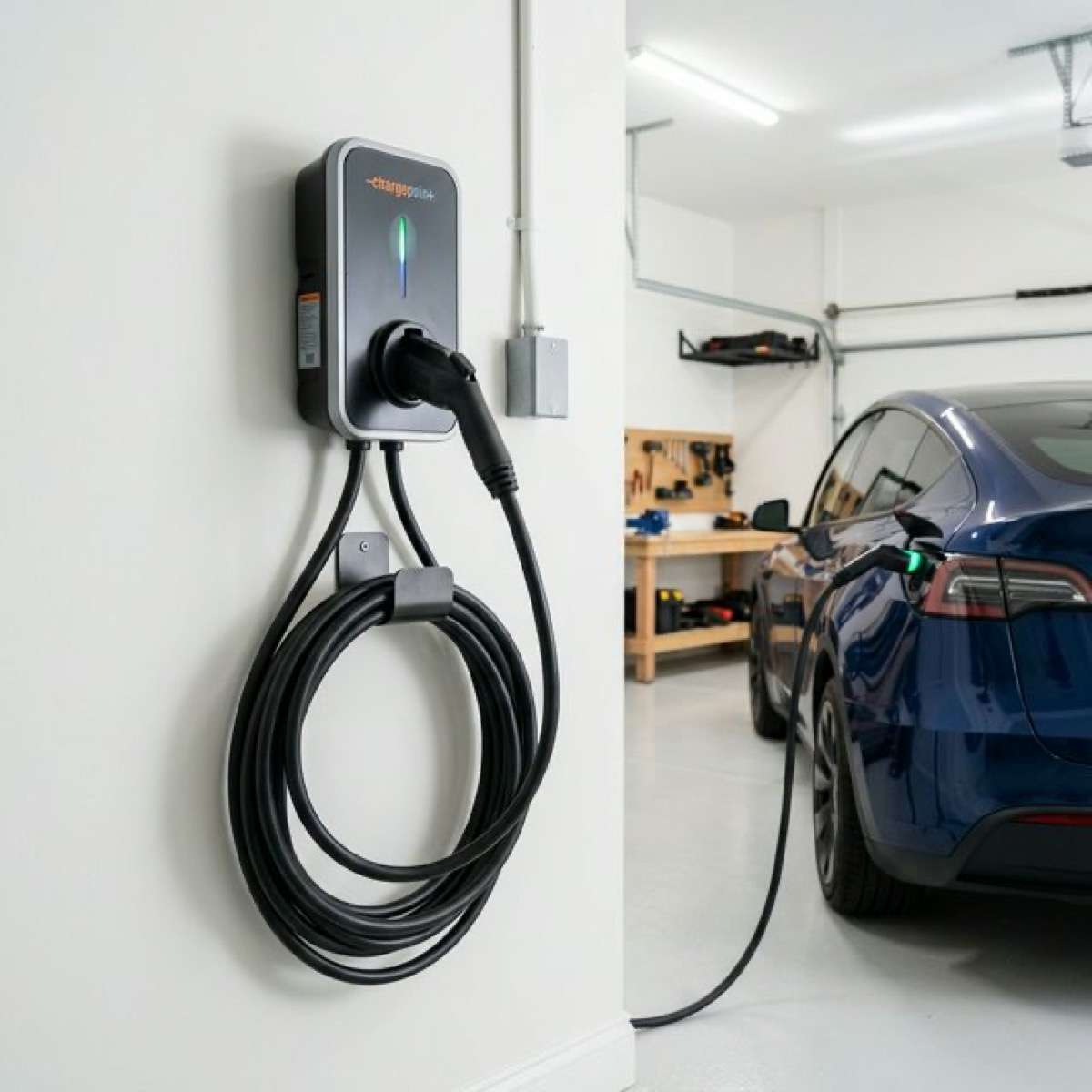
Tesla Hardwired Install
Tesla Wall Connector Installation in Northern Virginia
Hardwired Wall Connector installs across Northern Virginia, DC, and Maryland. $1,200–$3,500 typical for a garage run; $1,200–$4,500 for long or detached runs. Address-specific load calculations and panel-upgrade coordination when needed.
Hardwired Wall Connector vs. NEMA 14-50
Tesla's Wall Connector can be installed two ways: hardwired directly to a dedicated circuit, or via a plug into a NEMA 14-50 outlet. Both work — but the differences matter.
| Factor | Hardwired | NEMA 14-50 |
|---|---|---|
| Maximum charge rate | 48 amps (44 mi/hr Tesla) | 32 amps (30 mi/hr Tesla) |
| Circuit size required | 60-amp dedicated | 50-amp dedicated |
| Failure mode | Very low (direct termination) | Outlet contact overheating common with continuous EV load |
| Cost premium | Scope-dependent | Baseline |
| Use case | Permanent Tesla install | Rental / RV / welder / hedging |
Our recommendation: hardwired Wall Connector for most permanent installs. It supports the higher charge rate and eliminates the receptacle contact interface from the continuous-load path.
Multi-EV households: verify the listed design
Some current Wall Connector configurations include manufacturer-defined power-management features. Whether those features fit a particular home depends on the exact equipment, current instructions, load calculation, service capacity, and desired charging behavior.
- Start with the load calculation. Available service capacity and the rest of the household loads determine the permitted design.
- Identify the exact equipment. Model, firmware, vehicle compatibility, and listed manufacturer instructions control available power-management features.
- Define the intended behavior. The written scope states circuit sizing, conductor route, commissioning responsibilities, and expected charging behavior.
- Document any service work. If the load calculation does not support the selected design, panel, service, or compatible load-management work is quoted separately.
When manufacturer-supported power management is part of the approved design, commissioning follows the current listed equipment instructions. Additional equipment, circuit routing, and mounting locations are priced in the written project scope.
What's included in the install
- Property-specific estimate + NEC 220 load calculation to confirm your panel supports the install
- Tesla Wall Connector hardware (Gen 3) — included or homeowner-supplied
- Dedicated circuit sized from the load calculation, selected equipment, and current listed instructions
- Run from panel to install location: indoor conduit on finished walls, attic/basement runs, exterior conduit on stucco/brick where needed
- Wall mount with proper backing and termination
- Local jurisdiction permit (Fairfax County, Arlington, Alexandria, Loudoun, Prince William, Bowie, Bethesda, DC)
- Final inspection scheduled and met by our team
- Commissioning under current listed equipment instructions when included in the written scope
- Workmanship covered under AJ Long Electric's current written warranty terms
Frequently asked questions
Hardwired Tesla Wall Connector vs. NEMA 14-50 — which should I install?
Hardwired Wall Connector is the better choice for permanent installations. It delivers 48 amps (vs. 32 amps on a NEMA 14-50 outlet limited by code for continuous loads), and the hardwired connection eliminates the failure mode where a 14-50 outlet's contacts overheat from EV charging's continuous current. The NEMA 14-50 makes sense only when you want the receptacle for other uses (RV, welder) or you're renting. For dedicated Tesla charging in a home you own, hardwired Wall Connector is the cleaner, faster, safer install.
What does a Tesla Wall Connector install cost?
Typical garage runs land in $1,200-$3,500. The full band for long, outdoor, or detached-garage runs is $1,200–$4,500. Permit and inspection are included when they apply to the defined scope. Tesla Wall Connector hardware is purchased separately or included in the quote depending on your preference.
Do I need a panel upgrade to install a Wall Connector?
Depends on your existing electrical service. If you have a 200-amp panel with at least 30 amps of spare capacity (per the NEC 220 load calculation we run as part of every assessment), no — we add the 60-amp dedicated circuit for the Wall Connector without upgrading the panel. If your existing service is 100A or 150A, or your 200A panel is already running close to capacity, we recommend a panel upgrade in conjunction with the EV install. Most often we quote both options so you can see the math.
What about multiple Teslas — can the Wall Connectors share capacity?
Some current listed Wall Connector configurations support manufacturer-defined power-management features. Compatibility, unit count, circuit design, networking, and commissioning requirements depend on the exact equipment, firmware, current manufacturer instructions, and the address-specific load calculation. We document the approved design rather than promising a fixed circuit or charging split.
Is AJ Long a Tesla Certified Installer?
Tesla maintains a Certified Installer network mainly for commercial and fleet work. For a residential Wall Connector, Tesla recommends a licensed electrician who will follow the equipment instructions — that is the work AJ Long Electric performs. We are not advertising a Tesla Certified Installer credential. If you need Tesla's commercial referral network, contact Tesla directly.
How long does the install take?
The on-site schedule depends on circuit length, wiring method, access, outdoor or trench work, panel capacity, equipment, and whether separate panel or service work is required. Permit, inspection, and utility timing follow the current address-specific process; the written proposal identifies those dependencies.
What about the Tesla Adapter for non-Tesla EVs?
Adapter and vehicle compatibility can vary by Wall Connector model, vehicle inlet, firmware, and current manufacturer instructions. For a mixed-vehicle household, provide the exact vehicles and equipment so the written design can identify a currently listed, manufacturer-supported connection; AJ Long Electric does not claim a fixed compatibility result or installation volume.
Get a Wall Connector quote
Written project scope, site-specific field schedule, and applicable warranty terms documented with the proposal. Led by John Long, Master Electrician.
Authoritative Sources
- U.S. DOE: Electric Vehicle ChargingFederal reference on EV charging levels and equipment for homes, workplaces, and public sites.
- NFPA 70: National Electrical Code (NEC)The NEC is the foundational safety standard for electrical wiring and installation in the U.S.
- ENERGY STAREPA program identifying energy-efficient products and practices.