
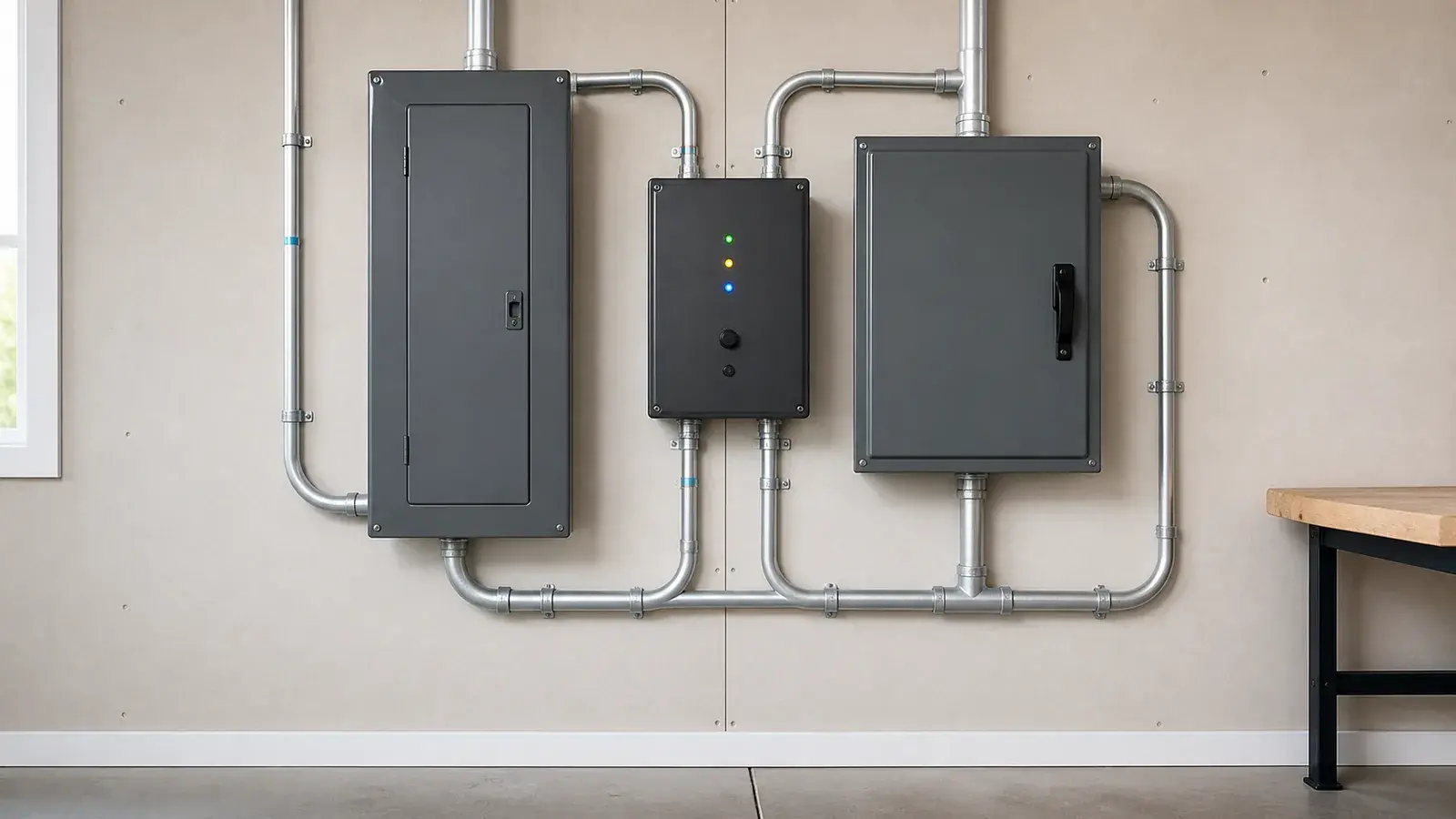
Load Management vs 200-Amp Upgrade for an EV Charger
Compare EV load management with a service upgrade: charging needs, panel condition, available spaces, complete...
4 min read
Read 
Premium Electrical Service
Last Updated: October 2026
Property-specific electrical panel replacement and service-capacity planning, with load calculations, utility coordination, labeling, and permit-path confirmation.
AJ Long Electric provides free estimates for electrical panel replacement and service upgrades. The scope follows equipment condition, existing and planned loads, circuit space, and utility and permit requirements. Our quoted electrical installations include a five-year workmanship warranty from completion. Parts and equipment carry their manufacturer warranties.
Overview
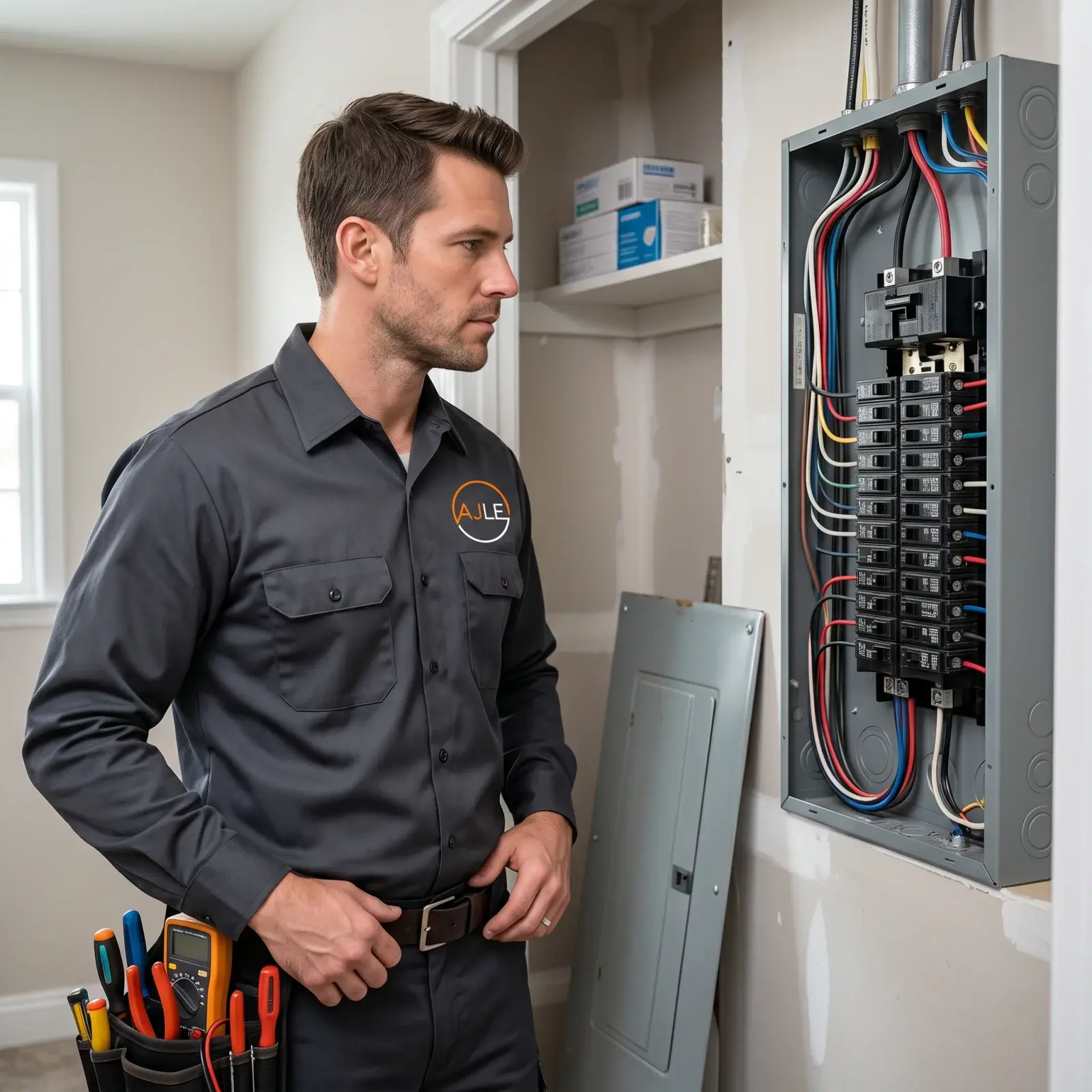
Replacing a worn or unsuitable panel, adding circuit spaces, and increasing the electrical service are different projects. AJ Long Electric evaluates the existing equipment and the loads your home needs before recommending one of them. We review the panel and service ratings, breaker compatibility, grounding and bonding, access, and visible damage. A load calculation helps determine whether a planned EV charger, kitchen appliance, HVAC change, or addition fits the existing service. The free written estimate identifies the equipment and work included, any required utility interruption, permits and inspections, and separate items such as branch-circuit corrections, relocation, or finish repairs.
The proposed panel and service size follow a load calculation and the home's planned electrical use.
Circuit organization and labeling make the system easier to operate and maintain.
Visible damage, incompatible components, crowded wiring, grounding, and service-equipment conditions are addressed in the proposal.
Utility, permit, inspection, and outage requirements are confirmed for the address and defined work.
Future EV charging, HVAC, kitchen, or addition loads can be considered during design.
Send the project details for staff review. We will discuss the scope and next step before confirming a visit.
Request QuoteServing Fairfax, Vienna, McLean, Oakton, Burke, Annandale, Falls Church, Arlington & Alexandria.
Scope and pricing depend on the equipment, access, and conditions documented for the property.
How project costs are evaluatedLocal Expertise
Fairfax, Arlington, Alexandria, Loudoun & Prince William Counties
Homes across the DMV can have overhead or underground services, interior or exterior panels, finished spaces around the equipment, multiple subpanels, and changing loads from HVAC, EV charging, kitchens, and additions. Those conditions drive a property-specific panel plan.
How It Works
The documented process moves from assessment and scope definition through authorized work, testing, and closeout. Timing and coordination are confirmed for the property and approved scope.
We document the panel, service equipment, loads, grounding, breaker configuration, and visible conditions.
The recommended capacity and equipment follow the existing and planned electrical demand.
The estimate identifies included equipment, corrections, coordination, access, and exclusions.
Permit, inspection, outage, and utility requirements are confirmed for the address.
The approved equipment is installed, terminated, grounded, bonded, and labeled to the defined scope.
Connections and operation are checked, the directory is reviewed, and applicable closeout steps are completed.
FAQs
Get answers to common questions about our panel replacements & upgrades services.
The written quote defines the actual work: panel and breakers, any service or meter changes, grounding and bonding corrections, labeling, permits, inspection coordination, and any included utility work. A panel replacement does not automatically include a service-capacity increase, every branch-circuit repair, relocation, or finish restoration.
We use the home's existing and planned loads, equipment ratings, service configuration, and the applicable calculation method. A larger rating is not automatically the correct answer for every property.
Brand and age alone do not describe the complete condition. A licensed electrician should identify the exact equipment and evaluate damage, breaker compatibility, service capacity, grounding, and the homeowner's planned loads before recommending a scope.
That depends on the service configuration and work boundary. When utility disconnect, meter, or service-entrance coordination is needed, it is identified and scheduled as part of the project plan.
Permit and inspection requirements depend on the address and defined scope. AJ Long Electric confirms the authority and coordination path before work begins.
Only the insurer can determine eligibility, coverage, or premium effects. We can provide factual project documentation for the homeowner to share with the carrier.
The authority serving the property checks the installed equipment, grounding and bonding, working clearances, labeling, and any service or meter work in the permit scope. AJ Long Electric confirms the inspection path before work begins and is present for the inspection when the jurisdiction requires it.
Future solar requires a separate review of the generation equipment, panel and bus ratings, connection arrangement, utility requirements, and adopted rules. An empty breaker space or a new 200-amp panel does not guarantee every future system will fit. Tell us about planned equipment so the current proposal can document what has been considered and what remains undecided.
Not necessarily. Circuit space and electrical capacity are different limits. A suitable subpanel or other approved distribution arrangement may add spaces, but it does not increase service capacity. We evaluate both limits before recommending the work.
Yes. A tripping circuit can need diagnosis of the circuit, connected equipment, or protective device rather than a complete panel replacement. Choose troubleshooting for an existing fault; diagnostic and repair work uses our published time-based rates. A planned panel installation receives a separate project quote.
Send the address, photos of the closed panel and accessible labels, any inspection report, and the equipment you want to add. Tell us about access restrictions and where the meter is located. Leave covers in place and do not touch damaged equipment.
Our published 200-amp planning range is $3,500–$7,500; 400-amp work is quoted per project. The final scope depends on service and meter conditions, access, required corrections, utility coordination, and finish work. Ask the written estimate to identify included work and exclusions.
Staff review the request and discuss the project before a date is confirmed. A required utility disconnect, permit, equipment availability, site access, and inspection sequence can affect timing. Tell us about essential equipment that depends on power so the planned interruption can be discussed in advance.
Estimates are free for every service. Scheduled estimate visits and written project prices are free. Diagnostic and repair work is a separately priced service. Our quoted electrical installations include a five-year workmanship warranty from completion. Parts and equipment carry their manufacturer warranties.
Pricing
Every home is different. Here are the factors that influence pricing for panel replacements & upgrades services.
Project-specific after service, utility, access, and permit review
$3,500-$7,500 (200A); 400A quoted per project
Our quoted electrical installations include a five-year workmanship warranty from completion. Parts and equipment carry their manufacturer warranties.
At a Glance
Review the documented pricing, timeline, and project requirements for panel replacements & upgrades in Northern Virginia.
| Detail | Specification |
|---|---|
| Typical price range | $3,500-$7,500 (200A); 400A quoted per project |
| Typical timeline | Project-specific after service, utility, access, and permit review |
| Permits & code | Performed to applicable code requirements: Equipment, conductor, grounding, bonding, and overcurrent requirements follow the adopted electrical code and listed product instructions; Service capacity is based on an applicable load calculation; Permit, inspection, and utility requirements are confirmed for the property and scope |
| Warranty | Our quoted electrical installations include a five-year workmanship warranty from completion. Parts and equipment carry their manufacturer warranties. |
Related Services
Explore other electrical services that complement panel replacements & upgrades.
Home Level 2 EV charger installation with panel-capacity review, circuit planning, equipment connection, testing, and permit coordination for the defined scope.
Property-specific branch-circuit installation for appliances, workshops, offices, and specialty equipment, sized to the connected load and existing panel.
Panel-mounted surge protective device installation with equipment compatibility, conductor path, grounding, bonding, and status-indicator review.
Upgrade your home's electrical service from the utility meter to the main panel.
Smart panel and smart-breaker installation for circuit-level monitoring, load management, and battery or EV coordination.
Project Approach
AJ Long Electric documents the existing system before recommending panel capacity or equipment. The written scope distinguishes confirmed work from conditions that require access, utility input, or authority review, giving the homeowner a clearer basis for the decision.
Company credentials
Regional service history
Defined work and exclusions
Quoted electrical installations
Service Areas
We proudly provide panel replacements & upgrades services across Northern Virginia, Washington DC, and Maryland. Click on your area to learn more.
Common Problems
Learn about common electrical issues and when to call a professional.
A burning smell from an electrical outlet is a serious warning sign that requires immediate attention. This odor typically indicates overheating due to loose connections, overloaded circuits, or failing components.
Learn MoreAn outlet that feels warm or hot to the touch indicates electrical resistance and overheating. While dimmer switches can feel slightly warm normally, standard outlets should always be cool to the touch.
Learn MoreA circuit breaker that keeps tripping is doing its job protecting you from overloads or faults. However, repeated tripping indicates an underlying problem that needs to be identified and resolved.
Learn MorePartial power loss — some outlets dead, or 240V loads weak — usually means a broken neutral, a hidden breaker trip, or a single-leg service failure. A broken neutral in particular is dangerous: it lets line voltage swing far above or below 120V, damaging every electronic device in the affected part of the home within seconds.
Learn MoreLegacy Panels
Review condition-based planning information for two legacy panel types. Equipment identification, observed condition, replacement boundaries, and property requirements guide the recommendation.
A focused guide to identifying Federal Pacific equipment, documenting accessible conditions, and defining a property-specific replacement scope.
Learn moreA focused guide to identifying Zinsco equipment, reviewing accessible components, and planning the electrical and coordination scope for replacement.
Learn morePanel capacity, backfeed space, and grounding for the solar install AJ Long Electric also performs — planned with EV and battery loads.
Learn moreGuides
Expert electrical guides to help you make informed decisions.
A comprehensive guide to electrical panel upgrades covering signs you need an upgrade, the process, costs, and what to expect.
A solar-ready panel is documented busbar capacity, backfeed space, and grounding — not modules on the roof. Plan it with EV and battery loads so you do not replace the panel twice.
Essential tips for maintaining your electrical panel, including what homeowners can safely inspect and when professional service is needed.
Expert Resources
Explore practical guides for planning panel replacements & upgrades and understanding the available options.
Compare EV load management with a service upgrade: charging needs, panel condition, available spaces, complete...
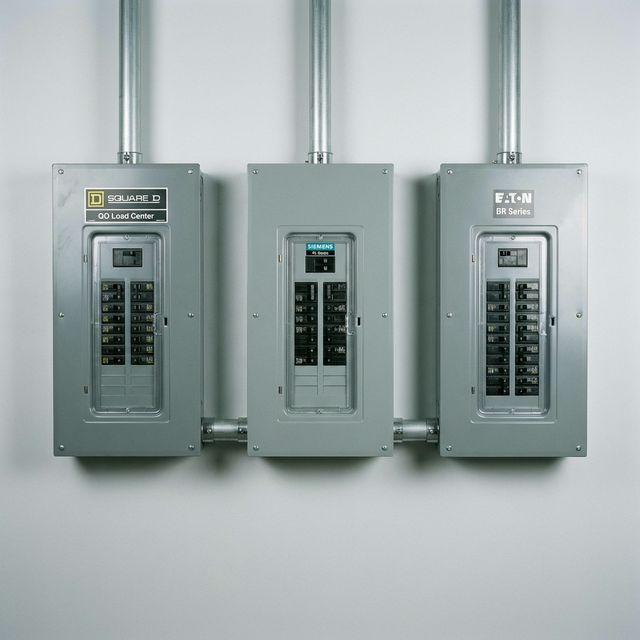
Not all electrical panels are created equal. Compare top panel brands including Square D, Siemens, Eaton, and more to...
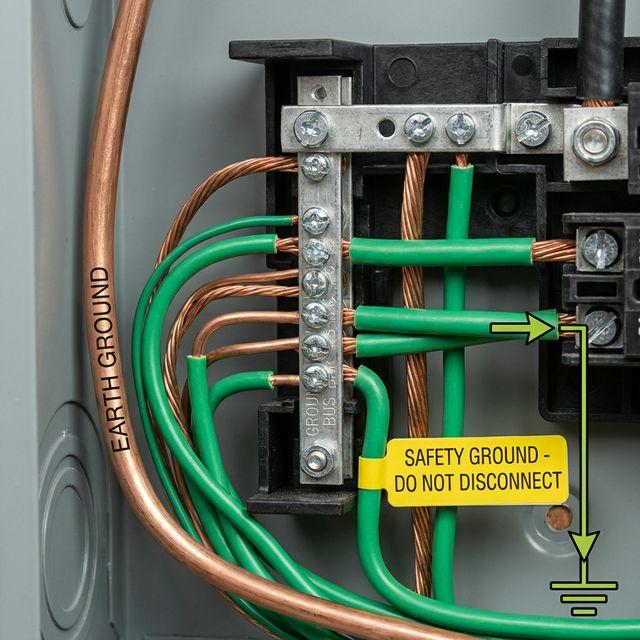
Learn how panel grounding and bonding differ, where neutral and ground connect, and what to include in a professional...
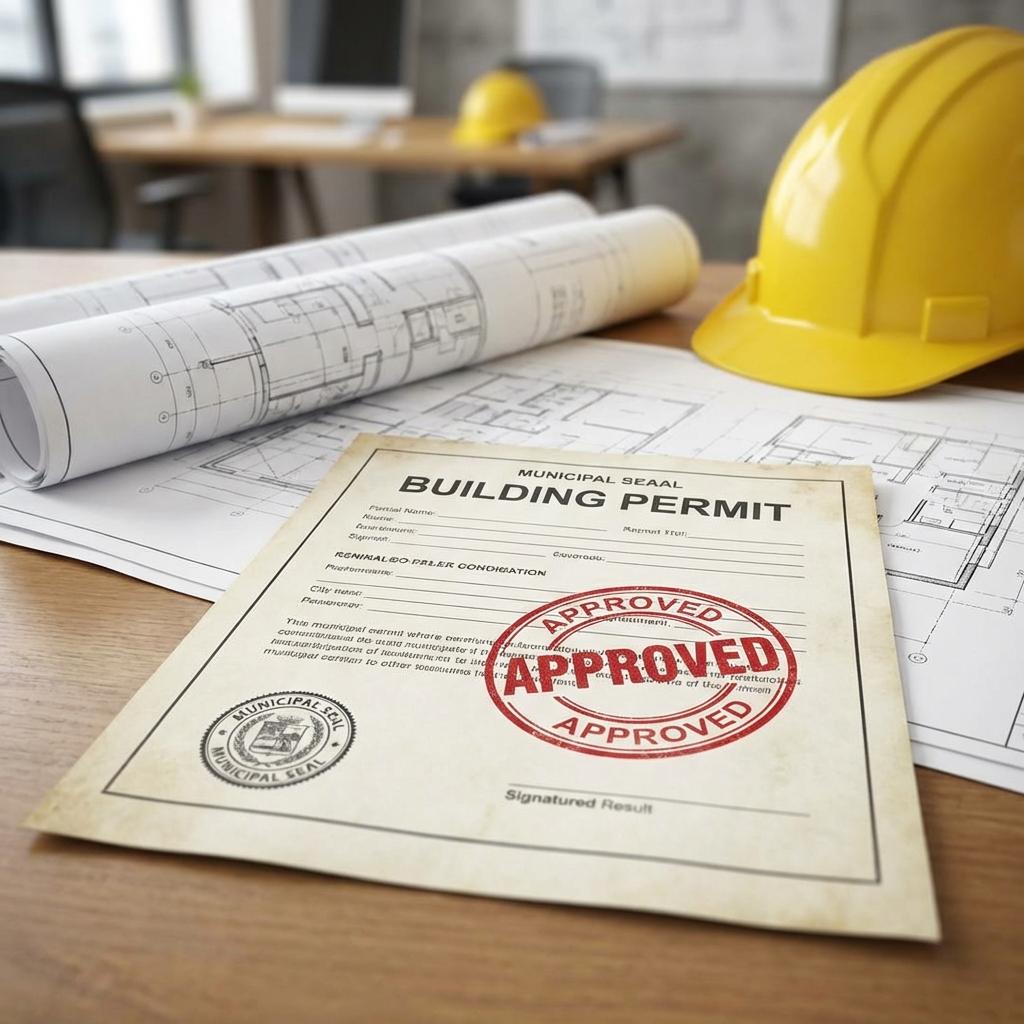
Virginia electrical permits explained: ordinary-repair exemptions, new wiring, owner applications, inspections, and...