
Compatible listed transfer equipment isolates a home from utility power before an approved backup source supplies selected circuits. A portable-generator hookup is normally manual. Some battery systems support automatic transfer or load management, but detection, timing, restart behavior, and circuit control depend on the exact listed equipment, settings, connected loads, and approved design.
Key Takeaways
- Compatible listed transfer equipment isolates the approved backup source from utility power and prevents backfeed when installed and operated correctly.
- A portable-generator hookup is normally manual: start the customer-provided generator outdoors and operate the listed transfer equipment according to the commissioned sequence.
- Some listed battery systems support automatic transfer or circuit-level load management; detection, delay, transfer time, restart behavior, and supported circuits vary by exact equipment and settings.
- Product examples do not establish universal functions, compatibility, certification, or a product relationship.
What Is a Transfer Switch?
A compatible listed transfer switch or interlock controls the approved connection between utility and backup sources so they are not connected in a way that can backfeed. A portable-generator hookup is normally manual. Some battery equipment supports automatic transfer, but the actual sequence, timing, selected circuits, and restart behavior follow the listing, manufacturer instructions, settings, and approved design.
Need a Panel Upgrade?
Outdated or overloaded electrical panels can present safety and capacity concerns. Our team evaluates 200-amp upgrades throughout Northern Virginia and confirms scheduling after reviewing the property. Call (571) 444-6886 to get started.
Key Functions
- Source isolation: Safely disconnects the utility and connects your backup source - never both at once
- Backfeed prevention: Keeps generator or battery power off the utility lines
- Transfer switching: Routes power to your selected circuits
- Retransfer: Switches back to utility when stable power returns (automatic models)
- Load management (smart panels): Prioritizes which circuits to power from a battery
Critical Safety Function: A transfer switch or interlock kit is not optional -- it is the device that prevents backfeed to utility lines, which can electrocute workers repairing downed power lines. Never plug a generator into a wall outlet or bypass the transfer switch.
How the Transfer Process Works
Manual Transfer (Portable Generator)
With a portable generator, you start the engine outdoors, let it stabilize, then flip the manual transfer switch or interlock so the generator feeds your selected circuits. When the utility returns, you switch back and shut the generator down. It takes a few minutes and requires you to be present.
Automatic Transfer (Battery / Smart Home Panel)
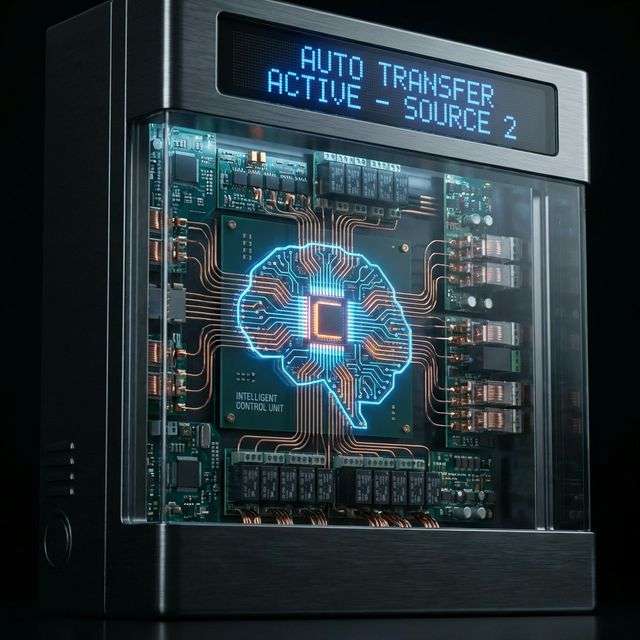
A compatible automatic transfer system monitors utility power and follows its programmed sensing and transfer sequence. Detection thresholds, delay, transfer time, supported circuits, and restart behavior vary by the exact listed equipment, manufacturer settings, load-management design, and connected loads; verify those specifications instead of assuming a universal changeover time.
Break-Before-Make
Whether manual or automatic, a proper transfer switch uses a "break before make" design so the utility and your backup source are never connected at the same time. This is what protects line workers and your equipment.
Utility Restoration
Transfer-back and recharge behavior depend on the exact listed equipment, programmed thresholds and delays, connected-load restart behavior, manufacturer settings, and approved design. A manual portable-generator hookup follows its commissioned manual sequence.
Types of Transfer Switches
Manual Transfer Switch (Portable Generator)
The most common choice for a portable generator hookup. A manual switch (or a generator interlock kit on a compatible panel) lets you safely route generator power to selected circuits. Benefits:
- Lower cost than an automatic switch
- Pairs with an exterior generator inlet box
- Prevents backfeed onto the utility lines
- Requires you to start the generator and flip the switch
Critical-Loads Subpanel
For a smaller portable generator or battery that can't power everything. A subpanel holds selected essential circuits that transfer to backup power:
- Lower cost option
- Works with smaller generators and battery stations
- Requires deciding which circuits to include
- May require re-running wires to the critical-loads panel
Battery Smart Home Panel (Automatic)
Some compatible listed smart-home-panel systems may support automatic transfer and circuit-level load management when those functions are documented for the exact product and approved design:
- Transfers supported circuits according to the exact equipment specification and approved settings
- Lets a battery cover more by prioritizing essential loads
- Sheds non-critical loads to extend runtime
- App control and monitoring of every managed circuit
ATS Features to Consider
Amperage Rating
Your ATS must be rated for at least your home's electrical service:
- 100-amp service: Common in older homes
- 200-amp service: Standard in modern homes
- 400-amp service: Large homes, may need special ATS
Open vs Closed Transition
- Open transition: Brief power interruption during transfer (standard)
- Closed transition: Specialized controlled transition that may momentarily parallel sources when the exact equipment, utility rules, and approved design allow
Most residential applications use open transition. Transfer duration and connected-load restart behavior follow the exact equipment specification and approved design.
Voltage Sensing (Automatic Switches)
Look for adjustable voltage sensing that initiates transfer:
- Undervoltage threshold (typically 80-85% of nominal)
- Overvoltage protection
- Single-phase and three-phase monitoring
App Monitoring and Control
Battery smart home panels add app-based visibility - showing battery state of charge, which circuits are running, and how much runtime remains - and let you adjust circuit priorities from your phone.
Installation Requirements
Location
A transfer switch or smart home panel is typically installed:
- Adjacent to or integrated with the main electrical panel
- Indoors in a utility room, basement, or garage
- With the generator inlet box mounted on an exterior wall
Code Requirements
National Electrical Code (NEC) and Virginia code require:
- Listed and approved transfer equipment
- Proper neutral-ground bonding
- Compliance with NEC 702 for optional standby systems (this covers battery + transfer-switch installs too)
- Electrical permit and inspection
Common Transfer Switch Problems and Solutions
Switch Won't Transfer
- Check control power / backup battery on automatic units
- Verify the backup source is producing power
- Check voltage sensing adjustment
- Inspect the transfer mechanism for obstructions
Switch Transfers Unnecessarily
- Voltage sensing may be set too sensitive
- Utility power quality issues (sags, brownouts)
- Adjust delay timers if nuisance transfers are common
Backup Source Active But No Transfer
- Output voltage may be out of spec
- Automatic switch waiting through a programmed delay
- Transfer mechanism may need service
Professional Installation Is Essential
Transfer switch and smart home panel installation involves working with your main electrical service - this is not a DIY project. Improper installation can result in:
- Dangerous backfeed to utility lines
- Damage to your generator, battery, or home electrical system
- Code violations and permit issues
- Voided warranties
- Insurance problems
At AJ Long Electric, we install manual transfer switches and listed interlock kits for customer-provided portable generators. Battery integration products homeowners may compare include the EcoFlow Smart Home Panel and Bluetti EP900. We can include compatible listed battery equipment in an approved scope or connect customer-selected listed equipment; the written proposal identifies exact equipment, programming scope, and responsibility boundaries. Brand examples do not imply certification or a product relationship. Contact us to discuss your backup power needs.