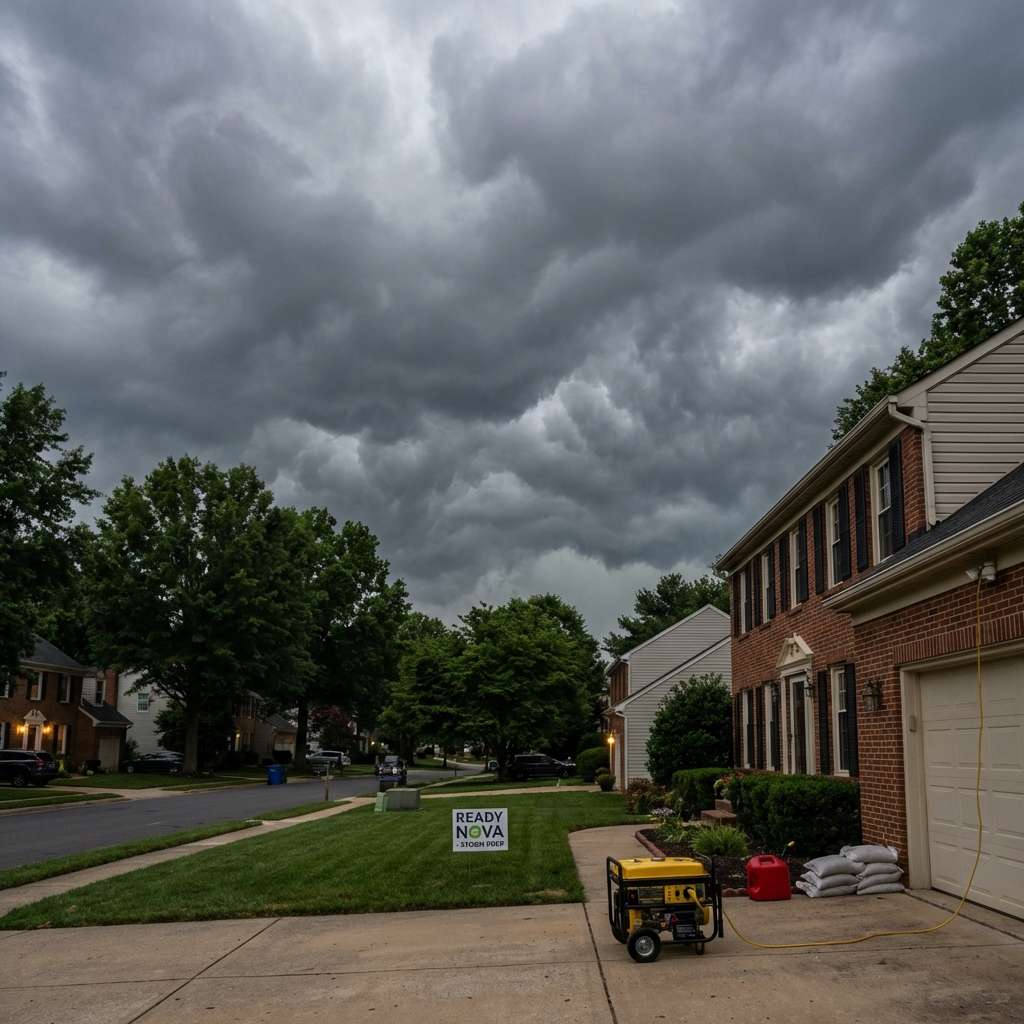
Northern Virginia's lush tree canopy, rolling terrain, and proximity to major weather systems moving up the East Coast create a perfect storm, quite literally, for power outages that can last anywhere from a few hours to well over a week. The devastating derecho of June 2012 left more than a million Dominion Energy customers without power, with some Northern Virginia homes dark for ten days or more. Since then, summer thunderstorms, remnants of tropical systems, winter ice storms, and even the occasional northeaster have repeatedly demonstrated that extended power outages are not rare events but a regular feature of life in the DMV region. For Northern Virginia homeowners, storm preparedness is not just about flashlights and bottled water; it is about having a comprehensive electrical strategy that protects your family, your home, and your investment through battery power stations, code-compliant portable-generator hookups, whole-home surge protection, and proper maintenance of your electrical infrastructure.
Key Takeaways
- Northern Virginia homeowners experience an average of two to four significant power outages per year, with some storms causing outages lasting days or even weeks.
- Battery systems are sized in kilowatt-hours and watts; placement, clearance, operating conditions, transfer behavior, recharge inputs, and supported loads follow the exact listing, manufacturer instructions, and approved design.
- A portable-generator hookup, using a listed manual transfer switch or interlock plus an exterior inlet, prevents backfeed when installed and operated correctly; the customer-provided generator runs outdoors.
- Whole-home surge protection helps reduce damage risk from voltage spikes caused by lightning strikes and utility switching during storms.
- Battery and transfer-switch installations require an electrical permit from your local jurisdiction (Fairfax County, Loudoun County, Arlington County, etc.) under NEC 702, but no gas permit.
Understanding Northern Virginia's Storm Risk
Northern Virginia sits at the intersection of several weather patterns that produce frequent and sometimes severe storm events. Understanding these risks helps homeowners make informed decisions about backup power investments.
Planning Backup Power for Your Home?
Plan for the next outage with a listed portable-generator hookup or a compatible battery-backup installation. We evaluate the panel, selected loads, equipment, and transfer method before quoting the electrical scope. Call (571) 444-6886 to request an in-home assessment.
Summer Thunderstorms and Derechos
The warm, humid summer months from June through September produce frequent thunderstorms that can generate high winds, heavy rain, and lightning. Most of these storms cause brief outages lasting minutes to hours, but occasionally a severe thunderstorm complex or derecho produces straight-line winds exceeding 70 miles per hour that topple trees across power lines throughout the region. The 2012 derecho remains the benchmark event, but smaller-scale storms cause multi-day outages in Northern Virginia neighborhoods with regularity every summer.
Tropical Storm Remnants
The remnants of tropical systems that move up the East Coast periodically affect Northern Virginia with sustained heavy rain and wind. While Northern Virginia rarely experiences full hurricane-force conditions, tropical storm-strength winds combined with saturated soil cause extensive tree damage and prolonged outages. These events are particularly dangerous because they often arrive when the ground is already saturated from earlier rainfall, making trees more susceptible to uprooting.
Winter Ice Storms
Ice storms are among the most destructive events for Northern Virginia's power infrastructure. Even a quarter inch of ice accumulation adds enormous weight to trees and power lines, causing branches to snap and lines to sag or break. Ice storm outages can be especially prolonged because the same conditions that cause the damage also make repair work dangerous and slow. Winter outages add the urgency of heating, making backup power even more critical than during summer events.
Portable Generator Hookups
The most affordable way to keep your home powered during a long outage is a permanent, code-compliant connection point for a portable generator. AJ Long Electric installs the electrical infrastructure that lets you do this safely; you supply and store the portable inverter generator and run it outdoors during an outage.
How a Portable Generator Hookup Works
A portable-generator hookup uses compatible listed connection and transfer equipment selected for the panel, source, conductors, and supported loads. The commissioned operating sequence keeps the backup source isolated from utility power and prevents backfeed when the equipment is installed and operated correctly. The customer-provided generator must operate outdoors under manufacturer and public-safety separation guidance.
Sizing and Cost
Portable inverter generators are sized in watts rather than the kW genset ratings used for permanent installs. The selected loads and generator output determine which circuits can be included. A complete hookup for a customer-provided portable generator includes the inlet plus a listed manual transfer switch or interlock and typically runs $900–$2,500; the generator is separate. Because there is no permanent fuel line, the work needs an electrical permit but no gas permit.
Carbon monoxide safety is non-negotiable. A portable generator must always run outdoors, well away from doors, windows, vents, and air intakes, and never inside a garage, basement, carport, or enclosed porch, even with the door open. Portable generators produce carbon monoxide, an odorless, colorless gas that is deadly within minutes in an enclosed space. Use a battery-powered CO alarm in your home as a backup. This is the single most important rule of portable-generator use.
Battery Power Stations
Battery power stations are one option for Northern Virginia homeowners planning backup power. AJ Long Electric can include compatible listed battery equipment in an approved scope or connect customer-selected listed equipment. The written proposal identifies the exact equipment, integration method, location requirements, and responsibility boundaries.
Brands and How They Work
Product families homeowners may compare include EcoFlow Delta and Smart Home Panel equipment, Bluetti AC and EP equipment, and Anker SOLIX equipment; brand examples do not imply certification or a product relationship. Smaller units can serve a defined set of loads, while larger systems may integrate selected circuits through compatible listed transfer equipment or a smart panel when the listing, manufacturer instructions, load calculation, and approved design allow. Location, clearance, operating, and recharge requirements follow the selected equipment documentation.
Capacity, Sizing, and Cost
Battery planning uses both output in watts and usable capacity in kilowatt-hours. Supported loads and duration depend on measured or documented loads, starting surge, duty cycle, conversion losses, temperature, battery condition, reserve settings, transfer behavior, and recharge inputs. Expansion or solar recharge contributes only when supported by the exact listed equipment, available generation, and approved design. A portable-unit setup remains within the published $2,500 to $6,000 range, and whole-home integration within $6,000 to $15,000 or more.
Solar Integration
Northern Virginia homeowners with existing or planned rooftop solar panels should strongly consider a battery power station as a complement to their solar investment. Without battery storage, grid-tied solar systems shut down during power outages as a safety requirement, meaning your solar panels produce zero power precisely when you need it most. Adding a battery with islanding capability allows the solar system to keep generating and storing electricity during outages, creating a self-sustaining power island that can maintain essential loads for extended periods.
The federal Residential Clean Energy Credit under Section 25D does not apply to systems installed after December 31, 2025. See IRS guidance and verify any current state or utility program directly with its administrator. AJ Long Electric does not provide tax advice.
Whole-Home Surge Protection
Storms do not just cause outages; they also produce voltage surges that can damage or destroy electronics and appliances. Lightning strikes, even those hitting power lines miles from your home, can send voltage spikes through the electrical system that overwhelm the delicate circuits in modern electronics. Utility switching during and after storms creates additional surge events as sections of the power grid are energized and de-energized.
How Whole-Home Surge Protection Works
A whole-home surge protection device is installed at the main electrical panel and monitors the incoming power for voltage spikes. When a surge is detected, the device diverts the excess energy to ground before it can reach your home's branch circuits. Quality surge protection devices from manufacturers like Eaton, Siemens, and Leviton provide protection levels measured in thousands of joules of surge absorption capacity and can handle multiple surge events before replacement is needed.
Layered Protection
For maximum protection, combine whole-home surge protection at the panel with point-of-use surge protectors at sensitive equipment locations. The panel-mounted device handles the large surges, while point-of-use devices provide additional filtering for the smaller surges and electrical noise that can degrade electronics performance over time. This layered approach provides comprehensive protection for everything from your HVAC system to your home theater equipment.
Permit Requirements Across Northern Virginia Jurisdictions
Both battery backup installations and portable-generator hookups require an electrical permit from the jurisdiction where the property is located, covering the hardwired transfer switch, interlock kit, smart home panel, or inlet box. Fairfax County, Loudoun County, Arlington County, the City of Alexandria, and other jurisdictions each have their own permit processes. These systems are governed by NEC 702, which covers optional standby systems, and because neither involves a permanent fuel line, no gas permit is required. Our team handles all permit applications and coordination for every Northern Virginia jurisdiction we serve, ensuring full compliance and smooth project execution.
AJ Long Electric: Your Northern Virginia Storm Preparedness Partner
AJ Long Electric helps Northern Virginia homeowners compare battery power stations, portable-generator hookups, surge protection, and electrical maintenance before storm season. The right scope depends on the loads to be supported, runtime goals, panel configuration, selected equipment, and local permit requirements. Contact AJ Long Electric to request a storm-preparedness assessment.