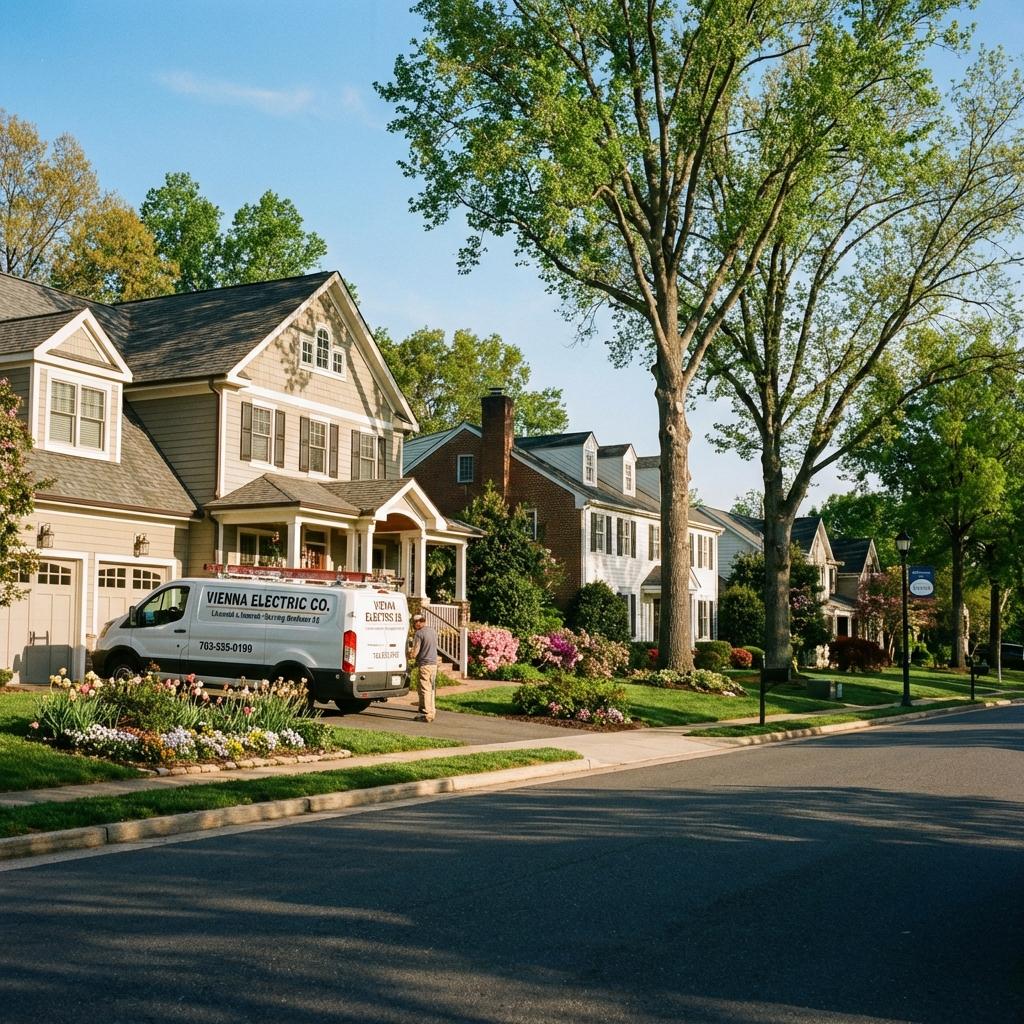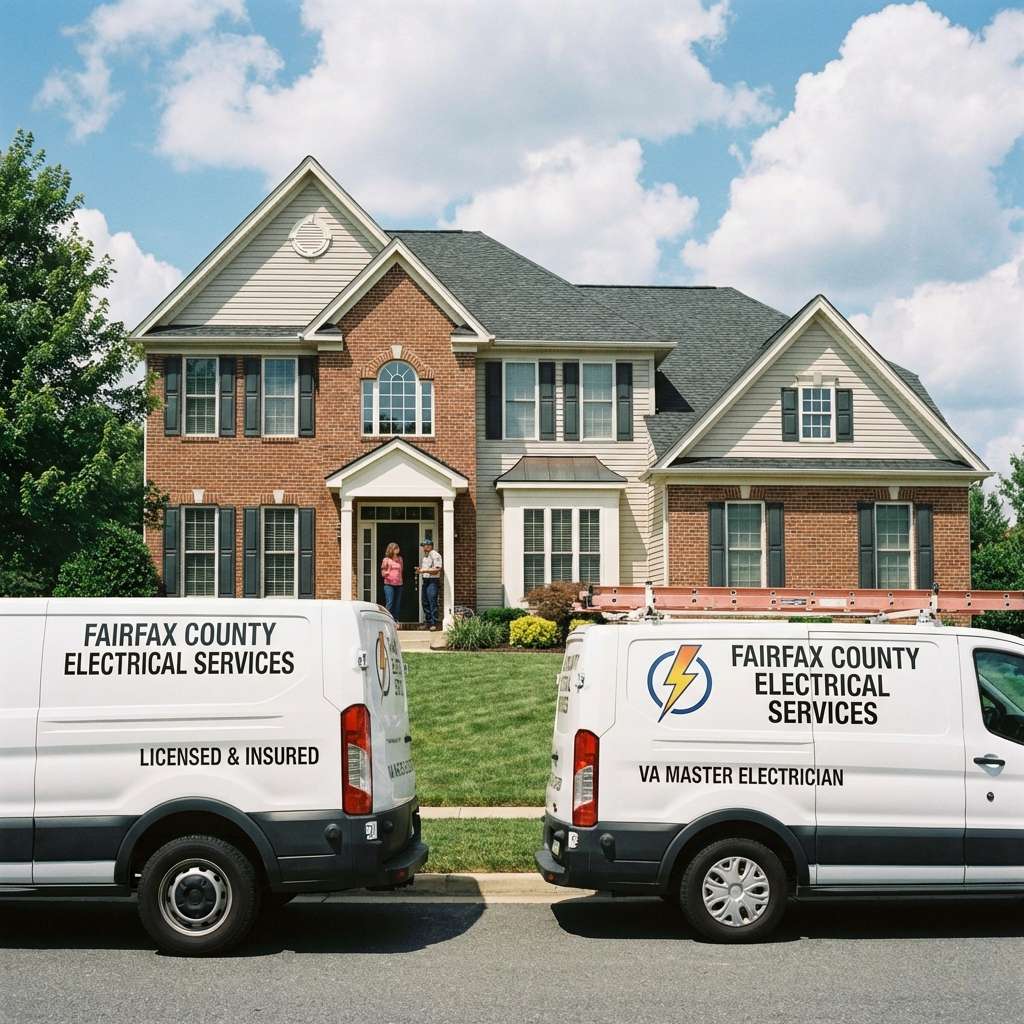
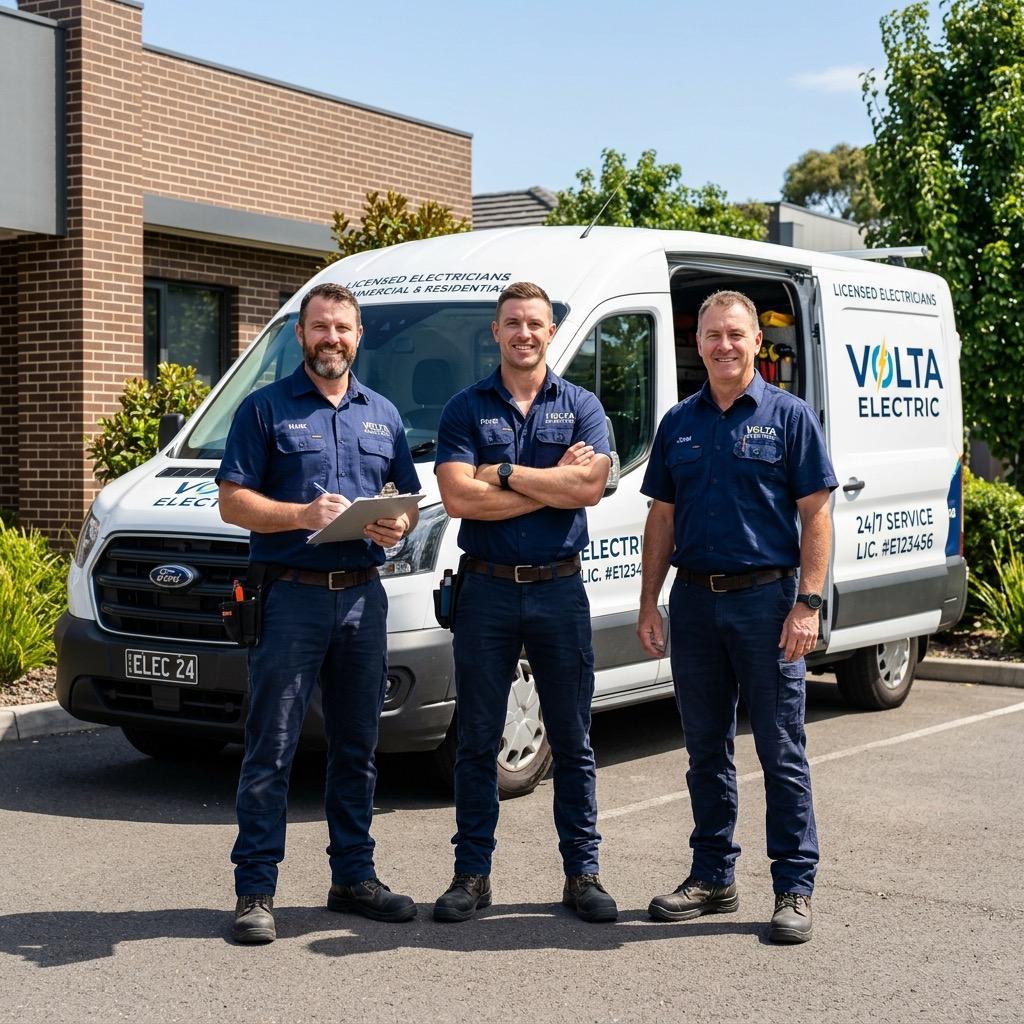
Fairfax, Virginia is one of the most dynamic and diverse communities in the entire Washington, D.C. metropolitan area, and its electrical infrastructure reflects that variety. From the tree-lined streets of historic Fairfax City near the Old Town Hall to the sprawling subdivisions of Fairfax County stretching toward Centreville and Burke, homeowners face a wide range of electrical challenges shaped by decades of housing development, evolving technology, and increasingly demanding energy needs. Whether you live in a 1960s-era split-level near Fairfax Circle or a newly built colonial in Fair Oaks, understanding your home's electrical system is the first step toward a safer, more efficient living environment.
Key Takeaways
- Many Fairfax homes built between the 1960s and 1980s still operate on outdated 100-amp panels that cannot support modern electrical loads like EV chargers and heat pumps.
- Fairfax County requires permits for nearly all electrical work beyond simple fixture swaps, and inspections are mandatory for code compliance.
- Panel upgrades, EV charger installations, and portable-generator hookups and battery backup power stations are among the most requested services by Fairfax homeowners.
- Working with a locally licensed electrician ensures familiarity with Fairfax County codes, Dominion Energy coordination, and neighborhood-specific wiring configurations.
Understanding Fairfax's Electrical Infrastructure
Fairfax County is the most populous jurisdiction in Virginia, and its housing stock spans more than six decades of construction. Neighborhoods like Mantua, Mosby Woods, and Fairfax Villa were largely built during the 1960s and 1970s, a time when 100-amp electrical panels were standard and homes had far fewer circuits than today's code requires. These panels were perfectly adequate when they were installed, but they were never designed to handle the electrical loads of modern life: multiple large-screen televisions, home office equipment, electric vehicle chargers, heat pumps, and smart home systems.
Request an Estimate from AJ Long Electric
Whether it is a simple repair or a major electrical project, our licensed team is ready to help. Serving all of Northern Virginia with transparent pricing and expert workmanship. Call (571) 444-6886 today.
On the other hand, newer developments in areas like Fair Lakes, Penderbrook, and the redeveloped Fairfax City neighborhoods often come equipped with 200-amp panels and more robust wiring. However, even these relatively modern homes may need upgrades as homeowners add EV chargers, hot tubs, or home additions that push beyond the original electrical design.
Common Wiring Issues in Older Fairfax Homes
Homes built before the mid-1970s in Fairfax may contain aluminum branch circuit wiring, which was used as a cost-effective alternative to copper during that era. Aluminum wiring is not inherently dangerous, but it does require special connectors and receptacles rated for aluminum use. When improperly connected to copper-rated devices, aluminum wiring can create loose connections that overheat and potentially cause fires. If your Fairfax home was built between 1965 and 1975, it is worth having a licensed electrician inspect for aluminum wiring and recommend remediation options such as COPALUM crimps or AlumiConn connectors.
Another common issue in older Fairfax homes is ungrounded two-prong outlets. While these were code-compliant when installed, they do not provide the grounding protection required for modern electronics and appliances. Upgrading to grounded three-prong outlets or installing GFCI protection on ungrounded circuits is an important safety improvement.
Panel Upgrades: The Foundation of Electrical Modernization
The most impactful electrical upgrade for most Fairfax homeowners is a panel upgrade from 100-amp to 200-amp service. This upgrade provides the capacity needed for modern electrical demands and is often a prerequisite for adding an EV charger, heat pump, or other high-draw equipment.
What a Panel Upgrade Involves
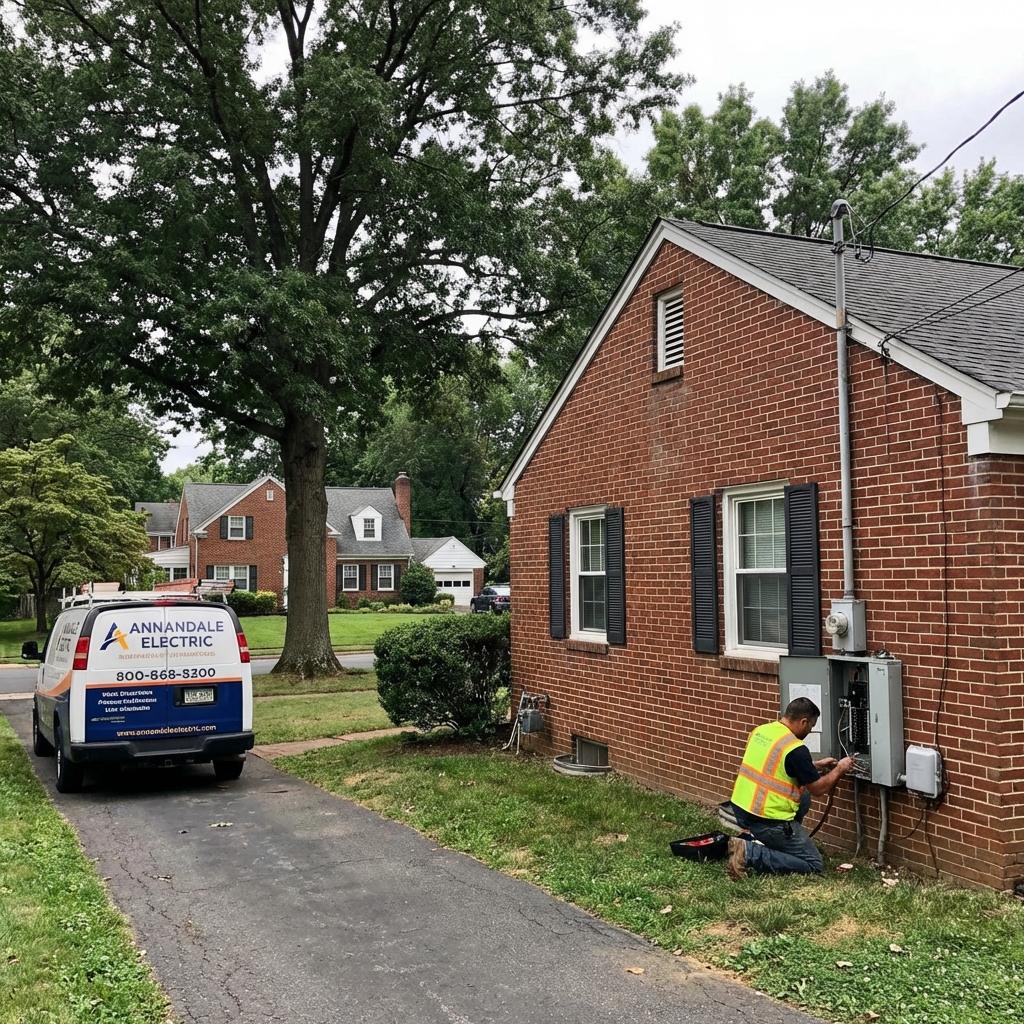
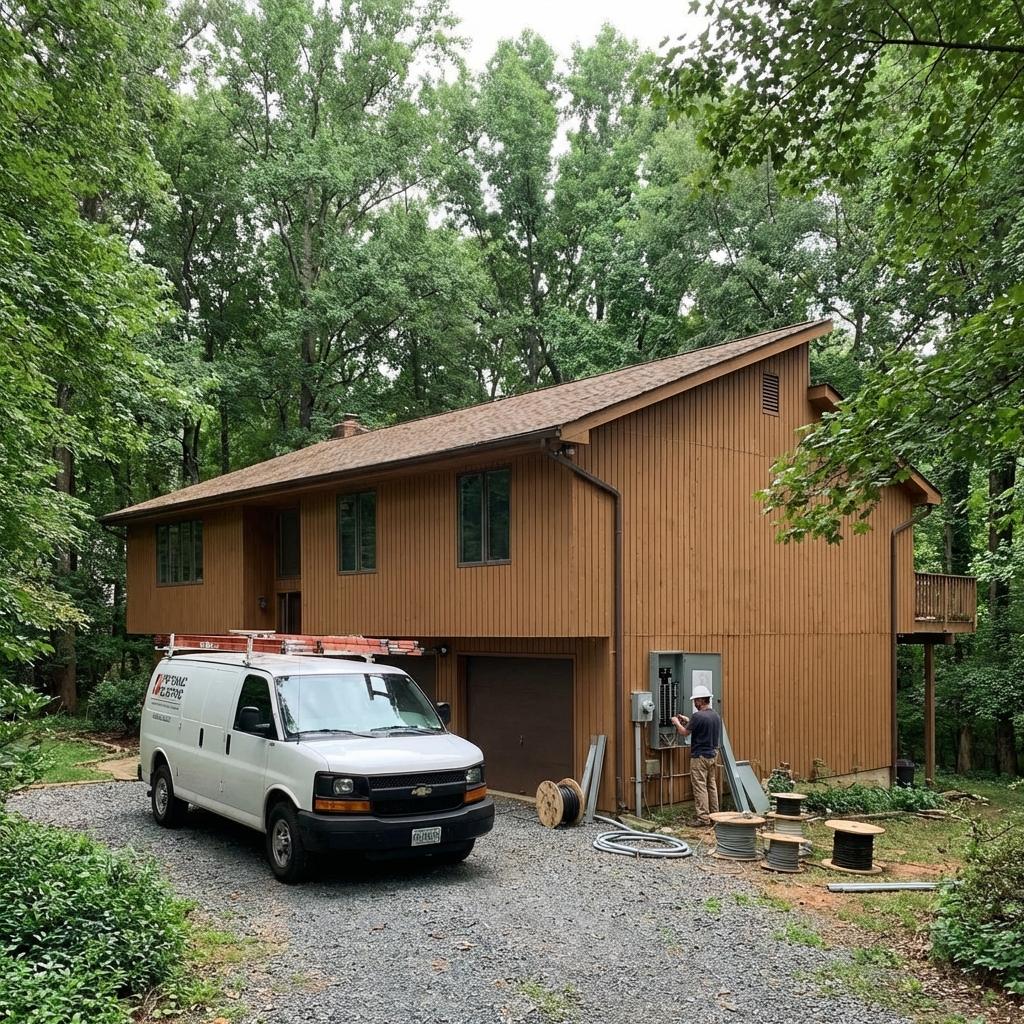
A panel project in Fairfax begins with a site assessment of the existing panel, service entrance, meter equipment, grounding and bonding, planned loads, and serving-utility boundary. Field duration, outage time, permit review, inspection sequence, and any utility work depend on the address, approved scope, access, equipment, corrections, and current AHJ and utility schedules.
Fairfax County requires a permit for all panel upgrades, and a county inspector must verify the work before the permit is closed. Our team handles the entire permit process, from application through final inspection, so homeowners do not have to navigate the county's building department on their own.
If you are planning to add an EV charger, heat pump, or major appliance in the near future, consider upgrading your panel now rather than doing multiple projects. Combining work saves on labor costs and avoids multiple permit cycles.
EV Charger Installation for Fairfax Homeowners
Electric vehicle adoption is surging across Fairfax County, and home charging is the most convenient and cost-effective way to keep your EV powered. A Level 2 home charger provides 25 to 30 miles of range per hour of charging, meaning an overnight charge fully replenishes most EVs.
Choosing the Right Charger
Popular Level 2 chargers for Fairfax homes include the Tesla Wall Connector, ChargePoint Home Flex, JuiceBox 40, and Grizzl-E Classic. The choice depends on your vehicle, desired features such as Wi-Fi connectivity and energy monitoring, and whether you prefer a hardwired installation or a NEMA 14-50 plug-in setup.
Installation requires a dedicated 240-volt circuit, typically 50 amps for a 40-amp charger or 60 amps for a 48-amp charger. Your electrician will assess panel capacity, determine the most efficient route for the circuit, and install the charger in your garage or on an exterior wall near your parking area. A Fairfax County permit is required for all hardwired EV charger installations.
Fairfax County EV Charger Incentives
Virginia offers a state rebate program for residential EV charger installations, and some utility programs through Dominion Energy provide additional incentives. Check current program availability, as these incentives can offset a significant portion of installation costs.
Backup Power for Storm Preparedness
Fairfax County storms can interrupt utility power. AJ Long Electric installs code-compliant connection equipment for customer-provided portable generators and integrates compatible listed battery equipment. Battery systems have no combustion exhaust, but sound, placement, clearance, transfer behavior, supported loads, duration, and maintenance depend on the exact equipment and approved design.
Portable Generator Hookups
A permanent connection point lets a customer-provided portable generator power selected home circuits while preventing backfeed when the equipment is installed and operated correctly. We install the inlet plus a listed manual transfer switch or interlock. A complete portable-generator hookup typically runs $900–$2,500; the generator is separate. Fairfax County requires an electrical permit for this work, but because there is no permanent fuel line, no gas permit is needed.
Carbon monoxide safety: a portable generator must always run outdoors, well away from doors, windows, and air intakes, and never inside a garage, basement, or enclosed porch. Portable generators produce carbon monoxide, which is odorless and deadly.
Battery Power Stations
For battery projects, AJ Long Electric can include compatible listed equipment in an approved scope or connect customer-selected listed equipment. Product families homeowners may compare include EcoFlow Delta, Bluetti AC and EP, and Anker SOLIX equipment; brand examples do not imply certification or a product relationship. The written proposal identifies the exact equipment, selected circuits, integration method, and responsibility boundaries. Battery systems are sized in kilowatt-hours of capacity and watts of output. A portable-unit setup typically runs about $2,500 to $6,000 installed; whole-home battery integration runs about $6,000 to $15,000 or more depending on capacity and the number of circuits. Battery installs need an electrical permit for the hardwired transfer-switch or smart-panel work, but no gas permit.
Battery equipment has no combustion exhaust, but permitted location, clearance, ventilation, temperature, fire separation, sound, transfer timing, restart behavior, supported loads, charging, inspection, firmware, and maintenance follow the exact listing, manufacturer instructions, and approved design. A compatible design may pair battery storage with a customer-provided portable generator, but runtime and recharge behavior remain equipment- and condition-dependent.
Smart Home Wiring and Automation
Fairfax homeowners are increasingly embracing smart home technology, from automated lighting and thermostats to comprehensive whole-home control systems. Whether you want simple smart switches compatible with Alexa or Google Home, or a professional Lutron RadioRA 3 system with centralized control, proper electrical infrastructure is essential.
Smart Switches and Dimmers
Smart switches require a neutral wire in the switch box, which many older Fairfax homes lack. A licensed electrician can run neutral wires to switch locations or recommend smart switches designed to work without a neutral, though options are more limited. Lutron Caseta is a popular choice for Fairfax homeowners wanting reliable smart lighting without the complexity of a full automation system.
Structured Wiring for Connectivity
For homeowners planning renovations or building additions, structured wiring provides the backbone for reliable smart home systems. This includes Cat6 Ethernet to key locations, coaxial cable for television, and centralized wiring panels that make future upgrades straightforward.
Fairfax County Permit Requirements and Process
Fairfax County requires permits for most electrical work beyond simple fixture replacements and outlet swaps. This includes panel upgrades, new circuits, generator hookups and battery backup installations, EV charger installations, and rewiring projects. The permit process involves submitting an application through the county's online portal, scheduling inspections after work is complete, and obtaining final approval from a county inspector.
Why Permits Matter
Unpermitted electrical work in Fairfax County creates real problems. Home sales often require disclosure of all work performed, and unpermitted work can delay or derail a transaction. Insurance companies may deny claims for damage caused by unpermitted work. Most importantly, the inspection process exists to verify that electrical work is safe and code-compliant.
Why Fairfax Homeowners Choose AJ Long Electric
AJ Long Electric has served Fairfax County homeowners for years, building familiarity with the area's housing stock, electrical infrastructure, and local requirements. Founder John Long holds the Virginia master electrician license that supports our permitted work, while our licensed team coordinates projects from initial assessment through required inspections. If you are a Fairfax homeowner considering an electrical upgrade, contact AJ Long Electric for an evaluation and recommendation tailored to your home's specific needs.