
Urgent$100 - $30030 minutes - 1 hour
Electrical Outlet Feels Hot or Warm
An outlet that feels warm or hot to the touch indicates electrical resistance and overheating. While dimmer switches can feel slightly warm normally, standard outlets should always be cool to the touch.
Need Help With This Problem?
Our licensed electricians can diagnose and fix this issue quickly and safely.
(571) 444-688624/7 Emergency Service Available
Common Symptoms
- Outlet cover or plate feels warm or hot to touch
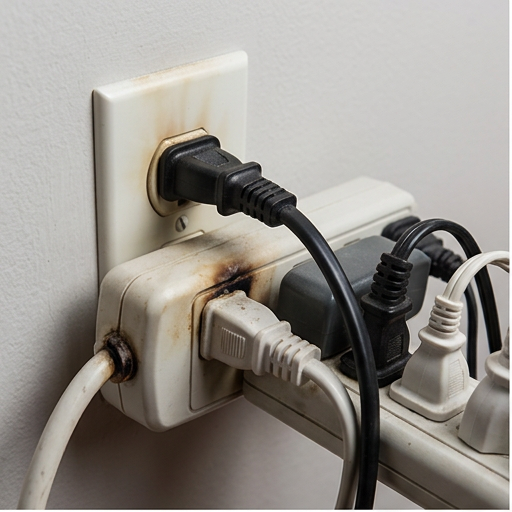
- Discoloration around the outlet (yellowing or browning)
- Melted or warped outlet cover
- Slight buzzing sound from the outlet
- Intermittent power or flickering from connected devices
Common Causes
- Loose wire connections causing resistance heating
- Overloaded circuit with too many devices
- Undersized wiring for the electrical load
- Failing outlet with worn internal contacts
- Backstabbed wire connections (push-in connections)
Safe DIY Checks
These checks are safe for homeowners to perform before calling an electrician:
- Unplug all devices from the outlet
- Check if the outlet cools down after unplugging
- Test if specific devices cause the heating
- Feel adjacent outlets for similar warmth
- Look for visible damage or discoloration
When to Call an Electrician
Call a licensed electrician immediately if:
- Outlet remains warm with nothing plugged in
- Any discoloration, melting, or burning smell
- Multiple outlets on the same circuit are warm
- Hot outlet combined with flickering lights
- Immediately if you smell burning
Understanding This Problem
Standard electrical outlets should never feel warm. If an outlet is noticeably warm or hot to the touch, this indicates a serious problem that needs professional attention.
The warmth comes from electrical resistance. When electricity flows through a poor connection, resistance converts electrical energy into heat. This is the same principle that makes toaster elements glow, but in an outlet, this heat is dangerous and unintended.
The most common cause is loose wire connections. Wires should be tightly secured under screw terminals. Loose connections create resistance and generate heat. Many outlets use "backstab" connections where wires push into holes in the back of the outlet. These connections often fail over time and are a leading cause of hot outlets.
Overloaded circuits also cause outlet heating. When too many devices draw power through a single outlet, the wiring and connections heat up. This is especially common when using adapters or power strips to add more devices.
Don't ignore a hot outlet. While it may not immediately cause a fire, the underlying problem will worsen over time. The heat degrades wire insulation, loosens connections further, and creates increasingly dangerous conditions. Call an electrician to diagnose and repair the issue before it becomes an emergency.
Prevention Tips
Don't overload outlets with high-draw devices
Use dedicated circuits for space heaters and AC units
Have outlets with backstab connections upgraded
Schedule regular electrical inspections
Replace old or damaged outlets promptly
Frequently Asked Questions
Why is my electrical outlet warm?
A warm outlet indicates electrical resistance, typically from loose connections, worn contacts, or overloaded circuits. The resistance converts electricity to heat. This is a serious issue requiring professional repair.
Is a warm outlet dangerous?
Yes. A warm outlet indicates a problem that will worsen over time. The heat can melt wire insulation, damage components, and eventually cause electrical fires. Have it inspected promptly.
Can I still use a warm outlet?
You should minimize use and call an electrician soon. Unplug high-draw devices immediately. If the outlet is hot, smells, or shows damage, stop using it entirely and turn off the circuit.
Is it normal for dimmer switches to be warm?
Unlike outlets, dimmer switches normally generate some warmth as part of their operation. Slight warmth is acceptable, but hot dimmers or dimmers with burning smells need attention.
How do I fix a hot outlet?
Hot outlets require professional diagnosis and repair. Typically, the electrician will check and tighten all connections, may replace the outlet, and will verify the circuit isn't overloaded.
Related Services
Electrical Troubleshooting
Diagnostic service for power loss, flickering, dead outlets, repeated tripping, heat, noise, and other residential electrical symptoms.
Learn MoreElectrical Inspections
Accessible residential electrical-system review with a written, photo-supported record of observed conditions and clearly stated inspection limits.
Learn MorePanel Replacements & Upgrades
Property-specific electrical panel replacement and service-capacity planning, with load calculations, utility coordination, labeling, and permit-path confirmation.
Learn MoreRepair vs. Replace Decision
Hot-outlet repair vs. replace matrix by cause. Per NEC 110.14, terminations must be torqued to spec — most warm outlets trace back to a loose or back-stabbed connection. Unplug everything and feel the outlet before deciding.
| Condition | Try Repair First | Replace When | Typical Cost |
|---|---|---|---|
| Warm only while a high-draw device runs | Move the load to a dedicated circuit | Outlet stays warm after the load is removed | $185 – $350 |
| Back-stabbed outlet (wires push-in, not on screws) | Re-terminate wires on the screw terminals | Receptacle contacts worn or discolored | $185 – $300 |
| Loose screw-terminal connection | Torque connections to NEC 110.14 spec | Conductor insulation heat-damaged at the terminal | $185 – $350 |
| Discoloration or melted faceplate | Not repairable — heat damage is done | Always — replace outlet and inspect the box | $250 – $500 |
| Multiple warm outlets on one circuit | Re-terminate the daisy-chained outlets | Undersized conductor for the load — re-wire the run | $450 – $1,100 |
| Aluminum branch wiring at the outlet | Add AL-rated CO/ALR device or COPALUM/AlumiConn pigtail | Always pigtail — bare aluminum-to-brass is a fire risk | $300 – $700 |
Related Problems
Emergency
Burning Smell from Outlet
A burning smell from an electrical outlet is a serious warning sign that requires immediate attention. This odor typically indicates overheating due to loose connections, overloaded circuits, or failing components.
Learn More UrgentSparking Outlet
While a small blue spark when plugging in is normal, large sparks, yellow/orange sparks, or sparking accompanied by sounds or smells indicates a serious electrical problem requiring professional attention.
Learn More UrgentTripping Breakers
A circuit breaker that keeps tripping is doing its job protecting you from overloads or faults. However, repeated tripping indicates an underlying problem that needs to be identified and resolved.
Learn MoreGuides
Related Guides
Expert electrical guides to help you make informed decisions.
Beginner
Home Electrical Safety Inspection Checklist
A comprehensive room-by-room electrical safety checklist every homeowner should review regularly to identify potential hazards.
10 min read
Read GuideIntermediate
Understanding Electrical Permits in Northern Virginia
Navigate the electrical permit process in Northern Virginia with confidence. Learn requirements for Fairfax County, Arlington, Alexandria, and surrounding areas.
12 min read
Read GuideAdvanced
Complete Guide to Electrical Panel Upgrades
A comprehensive guide to electrical panel upgrades covering signs you need an upgrade, the process, costs, and what to expect.
15 min read
Read GuideCode & Safety References
All repairs are performed to the National Electrical Code (NFPA 70) adopted by your local Northern Virginia jurisdiction. For independent, authoritative guidance on the hazards behind this problem, see:
Let Us Fix This Problem for You
Our licensed electricians have the expertise to diagnose and repair hot outlet problems quickly and safely.