
Backup-power planning starts with documented loads, desired duration, site conditions, fuel or stored capacity, placement, transfer behavior, maintenance, and operating limits. These five questions help identify the consequences of an outage; they do not guarantee a financial payback or make one equipment type universally appropriate.
Key Takeaways
- Medical equipment, sump pumps, and home-based work can raise the consequences of an outage.
- Medical equipment requires device-manufacturer compatibility, device-specific backup, and an emergency plan; no home source promises uninterrupted power.
- Generator runtime depends on fuel supply, duty limits, maintenance, load, and operating conditions.
- Battery output, duration, placement, transfer behavior, noise, and supported loads follow the exact listed equipment and approved design.
- Renters and condo residents need owner or association approval for hardwired work and must follow the exact portable equipment's listing and manufacturer instructions.
Question 1: Does Anyone in Your Home Depend on Powered Medical Equipment?
If your household uses powered medical equipment, ask the device manufacturer about compatible power sources, waveform, transfer tolerance, restart behavior, output, and duration. Battery equipment has no combustion exhaust, but its placement and operation follow the exact listing. Maintain device-specific backup and a separate emergency plan; no battery, transfer system, or generator guarantees uninterrupted medical power.
Planning Backup Power for Your Home?
Plan for the next outage with a listed portable-generator hookup or a compatible battery-backup installation. We evaluate the panel, selected loads, equipment, and transfer method before quoting the electrical scope. Call (571) 444-6886 to request an in-home assessment.
Utility medical-priority programs may help with notifications or restoration priority, but confirm their current terms directly and do not treat enrollment as a power guarantee. Home backup equipment also has capacity, transfer, maintenance, and operating limits. Generator-to-battery recharging is appropriate only when the exact manufacturer instructions and approved design support it.
CPAP and Other Medical Devices: Runtime and compatibility vary by exact device, accessories, settings, battery condition, and power source. Follow the device manufacturer's backup-power instructions, keep device-specific backup charged, and maintain an emergency plan. Do not rely on a home battery or transfer setting as a promise of uninterrupted operation.
Question 2: Do You Work from Home More Than 3 Days Per Week?
For remote work, an outage may interrupt internet, computers, calls, and billable time. Estimate the value of those consequences from your own records, then compare it with the quoted project cost, supported duration, equipment life, maintenance, and operating costs. Financial value is household-specific.
The math sharpens if you have clients who require uptime or an employer that tracks availability. Many Northern Virginia federal contractors must demonstrate reasonable business continuity, and documented backup power can support that. Section 25D does not apply to systems installed after December 31, 2025; see IRS guidance. AJ Long Electric does not provide tax advice.
Question 3: Does Your Home Have a Sump Pump?
If yes, backup power moves from "nice to have" to "strongly recommended." The Piedmont region of Northern Virginia — large portions of Fairfax, Prince William, and Loudoun counties — has significant groundwater pressure, especially in low-lying areas near the Occoquan, Bull Run, and Goose Creek watersheds. When power fails during heavy rain (the scenario that causes most basements to flood), a sump pump without backup power is effectively no sump pump.
A sump-pump outage can cause costly water damage, but supported duration must be calculated from the pump's running and starting load, duty cycle, usable stored capacity or fuel, transfer behavior, recharge inputs, and operating conditions. Compare that documented design and quoted cost with the property's own water-risk history; neither continuous operation nor a financial payback is guaranteed.
Check Your Outage History Before Deciding: Use outage records available from your utility account and your own notes to estimate frequency, duration, and household consequences. That evidence supports a load and cost comparison; it does not establish a universal ROI threshold.
Question 4: Do You Have Elderly Parents or Young Children in Your Household?
Temperature management during extended outages is a real health concern, not mere discomfort. Northern Virginia's climate creates risk at both extremes. Summer: the DC metro averages 37 days above 90°F per year, and a home without AC can reach dangerous indoor temperatures within 24–36 hours for elderly residents. Winter: ice-storm outages can push unheated homes below 50°F within 24 hours, posing hypothermia risk for infants and elderly adults.
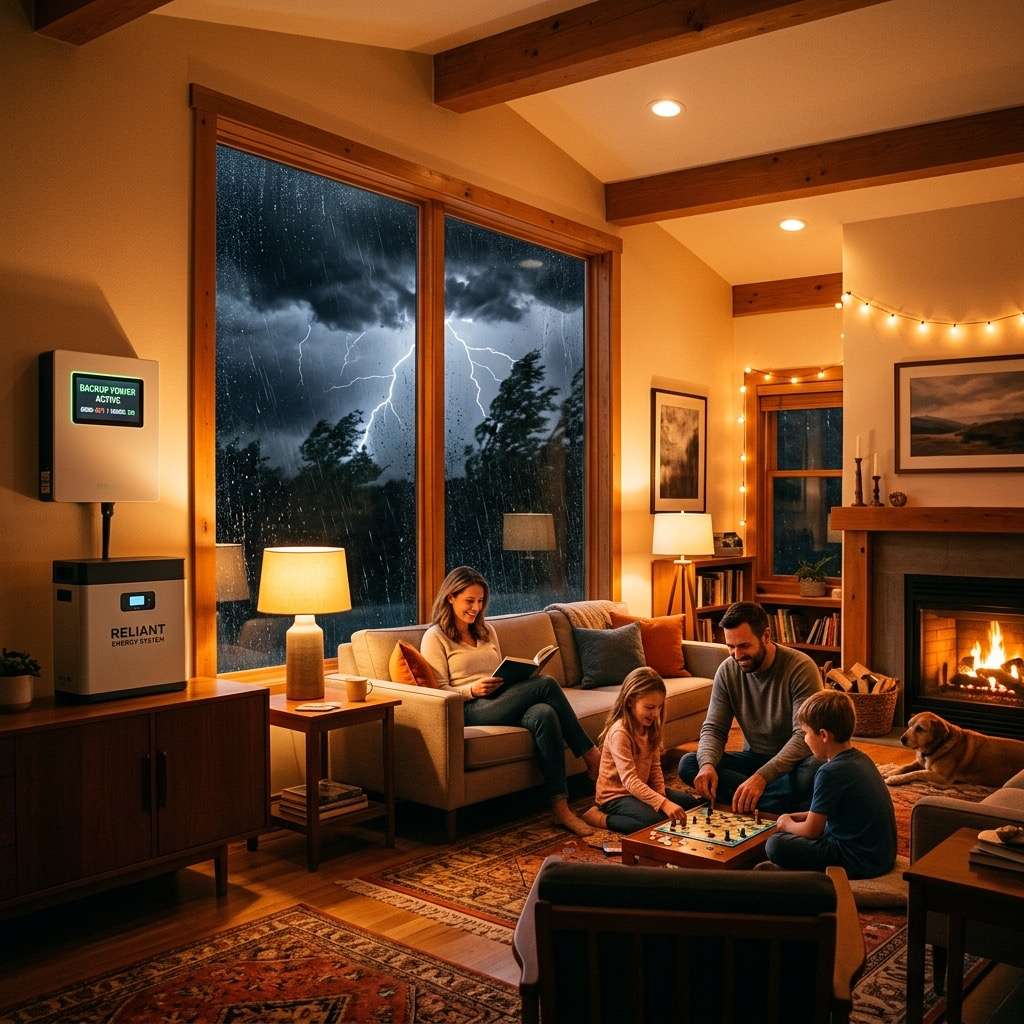
For people with temperature-sensitive health conditions, coordinate an outage and relocation plan with appropriate medical guidance. HVAC support depends on the exact starting load, continuous load, stored capacity or fuel, transfer design, duty limits, maintenance, and operating conditions; no home backup source guarantees climate control for an entire outage.
Question 5: What Are the Household-Specific Consequences of an Extended Outage?
Use your own records to identify potential food loss, temporary lodging, meals, missed work, water damage, accessibility needs, and other consequences. Duration and cost vary by household and event, so a generic break-even amount is not evidence of project value.
A portable-generator hookup runs $900–$2,500 (generator separate), and a battery power station runs $2,500–$6,000 for a portable setup. Compare the written project scope with household-specific outage consequences, supported duration, equipment life, capacity loss, fuel or recharge cost, maintenance, and replacement planning. The financial result varies by property and usage.
Use a Project-Specific Comparison: Backup power is not insurance and does not prevent every outage loss. Compare documented loads, supported duration, equipment and operating limits, quoted cost, and your household's actual outage consequences.
Which Option Is Right for Me?
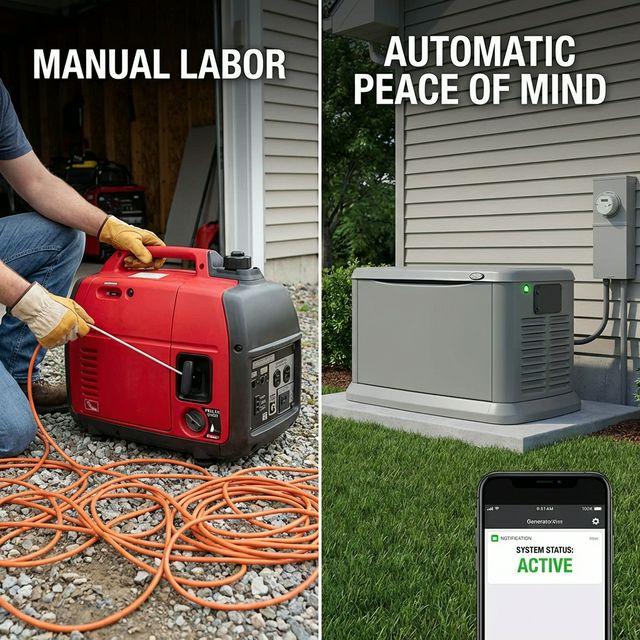
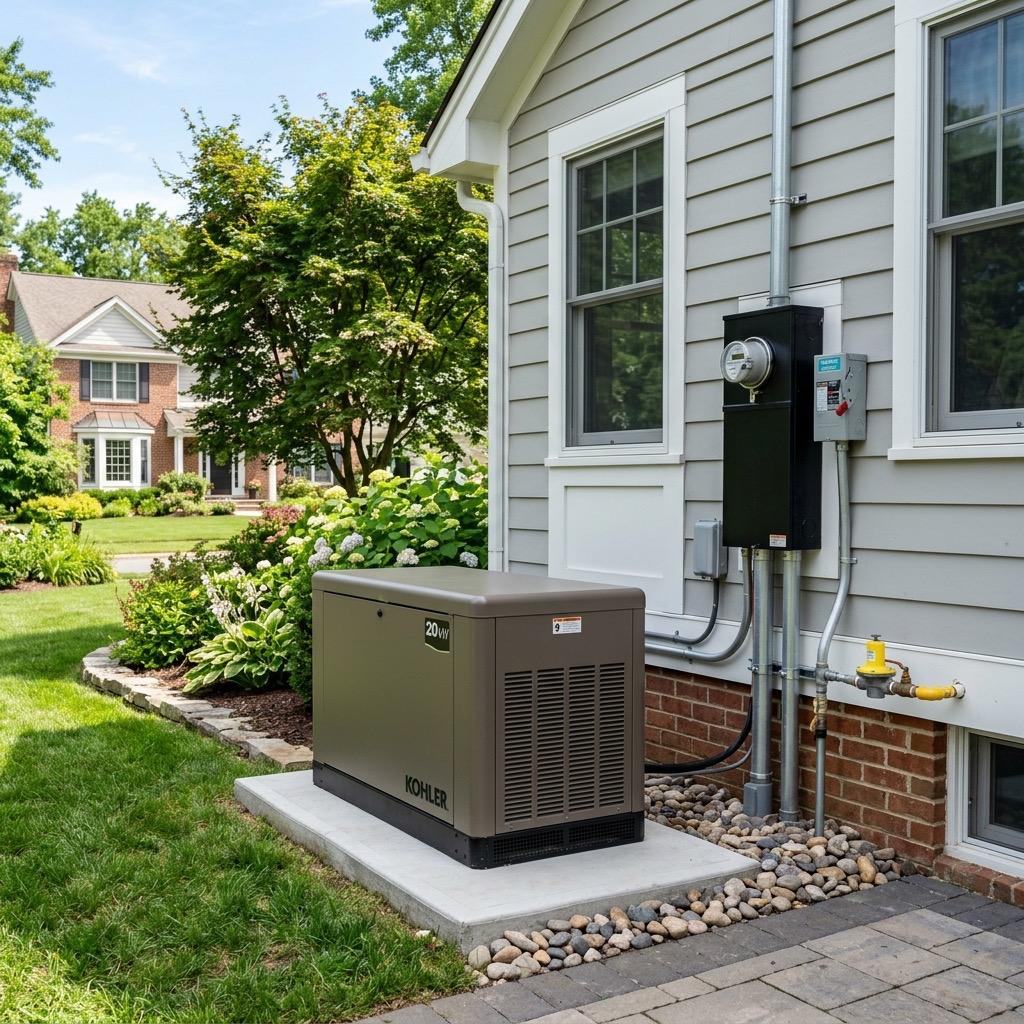
Compare documented loads and duration, fuel or stored capacity, exact listed-equipment placement, transfer behavior, noise, maintenance, duty limits, and operating conditions. A compatible design may combine battery storage with a customer-provided portable generator. Medical equipment also requires device-manufacturer compatibility, device-specific backup, and an emergency plan.
What If I'm Not Sure Yet?
An on-site assessment from AJ Long Electric documents your electrical panel, potential equipment placement, battery-capacity needs, and portable-generator hookup scope before a written itemized proposal. Estimates are free. The $99 dispatch fee applies only when we arrive prepared to complete a project, provide the price on site, and you decline the work. It covers travel and preparation. It is waived when you accept the on-site quote and for active members. It is not charged for a scheduled estimate visit. If backup power does not fit the documented needs or site conditions, the proposal will explain the alternatives.
If you answered "yes" to three or more of the questions above, call us at (571) 444-6886 to schedule a free on-site estimate. We serve all of Northern Virginia — Fairfax County (Burke, Reston, McLean, Herndon, Centreville, Springfield, Great Falls), Loudoun County (Ashburn, Leesburg, Purcellville, Sterling), Arlington, Alexandria, and Prince William County.