
Compare a code-compliant hookup for a customer-provided portable generator with compatible listed battery equipment based on documented loads, duration, site conditions, placement, transfer behavior, sound, maintenance, and budget. Battery equipment has no combustion exhaust, but fan and inverter sound and every other operating limit vary by exact equipment and design.
Key Takeaways
- A portable-generator hookup is a lower-cost route to high wattage, but the generator must run outdoors and runtime depends on fuel supply, duty limits, maintenance, load, and operating conditions.
- A battery system has no combustion exhaust, but output, stored capacity, placement, clearance, transfer behavior, and supported loads follow the exact listing and approved design.
- Both connect through compatible listed transfer equipment that prevents backfeed when installed and operated correctly.
- Transfer behavior varies by equipment and design; a portable-generator hookup is normally operated manually.
Understanding the Basics
Portable Generators
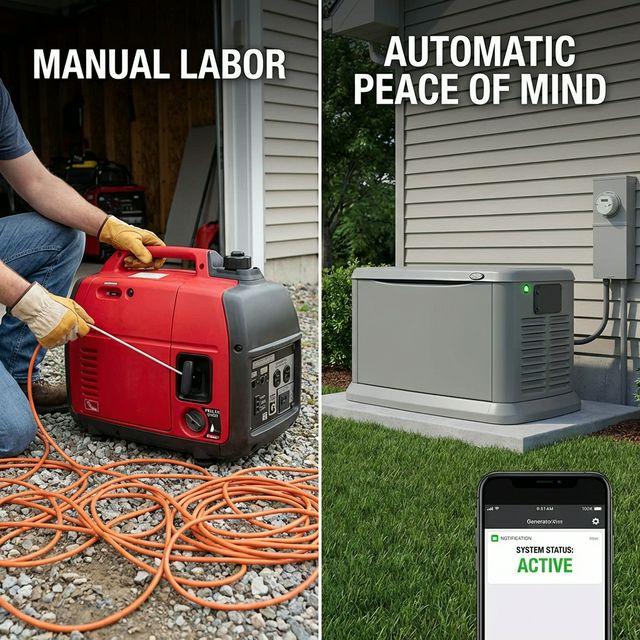
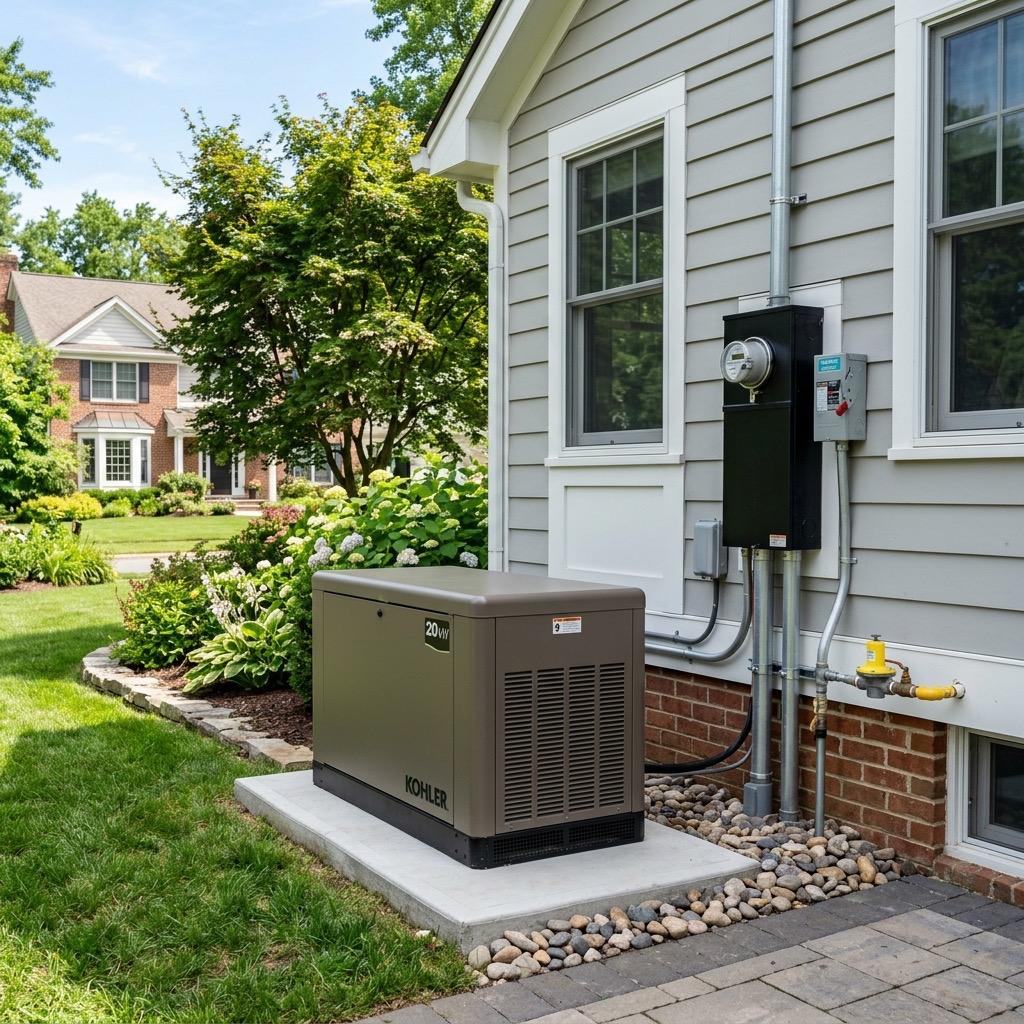
Portable generators are standalone units that run on gasoline (some on propane). You run them outdoors during an outage, start them, and feed your home's circuits safely through a manual transfer switch or interlock kit and an exterior inlet box.
Planning Backup Power for Your Home?
Plan for the next outage with a listed portable-generator hookup or a compatible battery-backup installation. We evaluate the panel, selected loads, equipment, and transfer method before quoting the electrical scope. Call (571) 444-6886 to request an in-home assessment.
Battery Power Stations
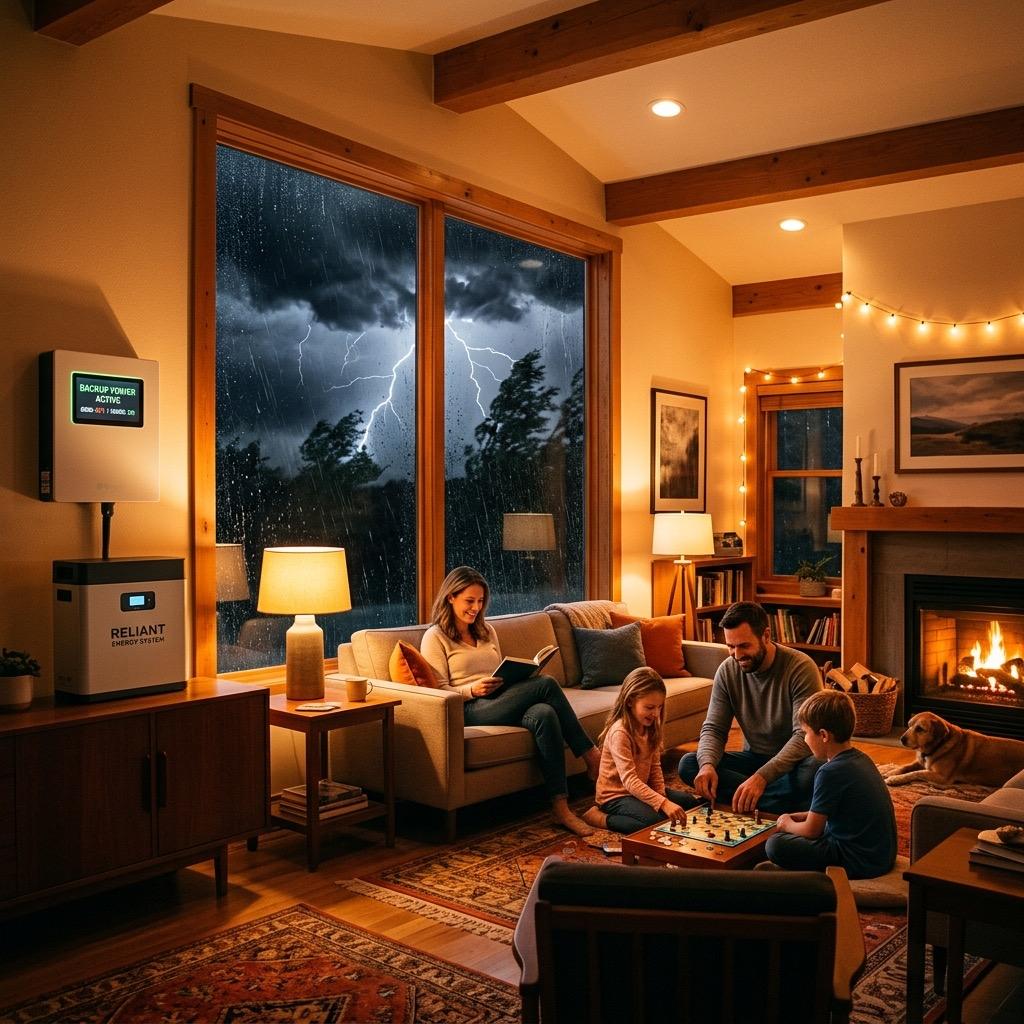
Battery power stations store energy for use when the grid fails. Product families homeowners may compare include EcoFlow Delta, Bluetti AC and EP, and Anker SOLIX equipment. AJ Long Electric can include compatible listed battery equipment in an approved scope or connect customer-selected listed equipment; the written proposal identifies exact equipment, circuit integration, and responsibility boundaries. Brand examples do not imply certification or a product relationship.
Medical Equipment: Verify device-manufacturer compatibility, required waveform, restart behavior, output, and runtime before including a medical load. Maintain a separate emergency plan and device-specific backup; no battery, transfer system, or generator promises uninterrupted power.
Power and Runtime Comparison
Portable Generator
- Typical output: 3,000-12,000 watts
- Runtime: depends on fuel supply, duty limits, maintenance, load, and operating conditions
- Best for: long outages, large loads, lowest cost per watt
Battery Power Station
- Typical output: 3,600-5,000+ watts continuous depending on unit
- Capacity: ~3.6 kWh (EcoFlow Delta Pro) to 6 kWh per battery (Delta Pro Ultra), expandable by stacking
- Best fit: documented loads and duration within the exact battery's output, usable capacity, sound, placement, and supported recharge limits
Convenience and Automation
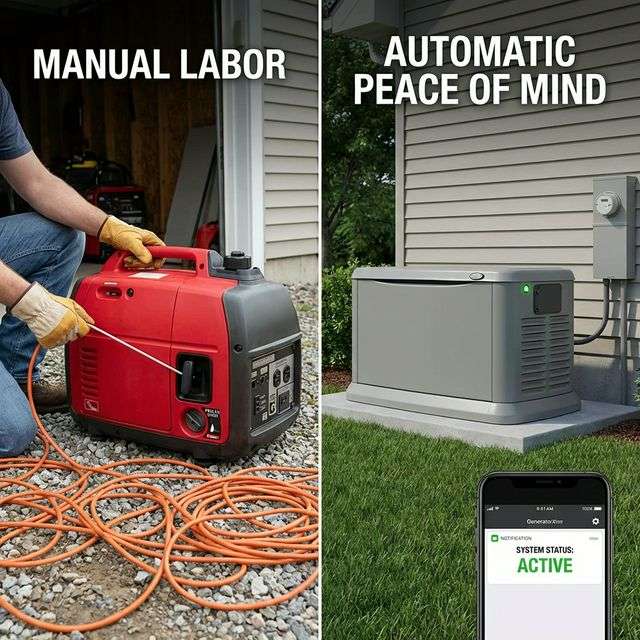
Portable Generator Operation
When the power goes out, you must:
- Go outside (in any weather)
- Position the generator safely away from the home
- Ensure you have fresh gasoline
- Start the generator manually
- Plug into the inlet box and flip the transfer switch or interlock
- Shut down, cool, and refuel only as the exact generator manual allows; the interval depends on tank size, load, fuel, duty limits, and operating conditions
- Secure the generator from theft
Battery Power Station Operation
When the power goes out:
- Detection thresholds, delays, transfer time, and supported circuits follow the exact listed equipment and approved settings
- Connected loads may restart or require manual action according to their own instructions
- Remote or unattended behavior depends on the commissioned equipment and communications available
- Runs until the stored kWh is depleted, then recharges from grid or solar
- Transfer-back behavior follows the exact listed equipment, programmed settings, connected loads, and approved sequence
Safety Considerations
Portable Generator Risks
- Carbon monoxide poisoning: the leading cause of generator-related deaths. Must run outdoors, never in a garage or near windows, doors, or vents
- Backfeed danger: improper connection can electrocute utility workers - always use a transfer switch or interlock
- Fuel handling: storing gasoline, refueling a hot generator
- Theft: portable units are targets during extended outages
Battery Power Station Safety
- No combustion exhaust: placement, clearance, ventilation, and operating conditions still follow the exact listing and manufacturer instructions
- Transfer switch / smart panel: prevents backfeed when compatible listed equipment is installed and operated correctly
- No fuel handling: nothing to store or pour
- Noise: no combustion engine, but fan and inverter noise vary by model, load, and temperature
Cost Comparison
Portable Generator Hookup Costs
- Portable generator hookup: $900–$2,500 for an inlet plus listed transfer or interlock equipment
- Portable generator (homeowner purchase): varies by size
- Fuel and storage: separate homeowner responsibility under the generator manual and applicable fire-safety rules
Battery Power Station Costs
- Portable-unit setup + install: $2,500–$6,000
- Whole-home integration: $6,000–$15,000+
- Optional solar input: priced separately
Long-Term Costs
- Portable maintenance: oil changes, fuel stabilizer, carburetor care
- Battery maintenance: follow model-specific inspection, storage-charge, temperature, firmware, and testing instructions
- Portable fuel: gasoline degrades, requires stabilizer
- Battery recharge: grid-energy cost or compatible onsite solar input, accounting for equipment cost and conversion losses
Noise and Lifespan
Portable Generator
- Noise: roughly 55-70 dB while running
- Lifespan: several years with proper engine maintenance
- Common issues: stale fuel, carburetor problems
Battery Power Station
- Noise: fan and inverter noise vary by model, load, and temperature
- Usable life: cycle rating, retained-capacity threshold, storage state, temperature, load, and warranty terms vary by exact model
- Care: follow the exact charging, storage, firmware, inspection, connection, transfer-testing, ventilation, and capacity-check requirements
When a Portable Generator Makes Sense
- You want a lower cost per watt and can plan around fuel supply, duty limits, maintenance, and outdoor operation
- Your outages can be long (multi-day)
- You need to run large loads like central AC
- You're comfortable storing fuel and operating it outdoors
When a Battery Power Station Is the Better Choice
- You want stored-energy backup with no combustion exhaust and can follow the listed placement and clearance requirements
- For medical needs, you have verified device-manufacturer compatibility and maintain an emergency plan
- You want transfer behavior documented by compatible listed equipment and the approved design
- You have solar or want the option to add it
- The documented load, duration, sound, placement, inspection, storage, firmware, and maintenance requirements fit your outage plan
Make the Right Choice (or Combine Them)
Both options have their place, and some Northern Virginia homeowners combine a battery system with a customer-provided portable generator to address different outage loads and runtime goals. AJ Long Electric installs transfer switches, listed interlock kits, and inlet boxes for portable-generator hookups. For battery projects, we can include compatible listed equipment in an approved scope or connect customer-selected listed equipment, with exact equipment and responsibility boundaries documented in the written proposal. Brand examples do not imply certification or a product relationship.
Contact us to request a site assessment and compare compatible backup-power options for your panel, loads, and runtime goals.