Key Takeaways
- Use the county's electrical-code page and amendments, not an assumed statewide NEC cycle.
- A Rockville or Gaithersburg mailing address does not by itself establish whether the property is inside city limits.
- The county publishes a homeowner exam route, but also notes that the exam is being revised; confirm current availability with DPS.
- Electrical permits with and without a parent building permit follow different application instructions.
Which electrical code does Montgomery County list?
As checked October 8, 2026, the DPS electrical and mechanical code page points to Executive Regulation 23-19, which adopts the 2017 National Electrical Code with local amendments. The separate adoption of 2021 International building codes does not mean “2021 NEC,” and it does not establish that every electrical project follows a newer NEC edition.
Concerned About Your Home's Electrical Safety?
A professional electrical inspection identifies hidden hazards before they become emergencies. Our licensed electricians provide thorough safety inspections throughout Northern Virginia. Call (571) 444-6886 to schedule yours.
Use the current DPS documents when preparing an application, and ask the reviewer about transition or scope questions. A national summary or a neighboring county's requirements can be useful background but does not replace Montgomery County's adopted amendments. The authority for the actual property and permit determines what applies.
County jurisdiction versus Rockville and Gaithersburg
DPS's stand-alone electrical permit guidance says the incorporated cities of Rockville and Gaithersburg process permits within their city limits outside the county's permitting jurisdiction. Check the parcel and municipal boundary before applying. A postal address using one of those city names can be outside the incorporated city.
This matters for the application portal, fees, adopted provisions and inspection scheduling. County homeowner-exam eligibility also excludes properties inside those two cities. If the authority is unclear, resolve it before the contractor submits or you pay an application fee.
County amendments that can change a residential design
Local rules contain practical differences. Regulation 23-19 adds an individual-branch-circuit requirement for fixed appliances, with specified exceptions. It also addresses individual circuits for wall ovens and counter-mounted cooking units, limits on certain receptacle and lighting circuits, and grounding electrodes for new buildings. These provisions are a reason to review the actual scope rather than copy a Virginia kitchen or basement layout.
For a kitchen project, provide the exact appliance models and locations before planning circuits. For an addition, discuss the new foundation and grounding requirements before concrete is placed. The purpose of these examples is to identify design questions; they are not a substitute for applying the complete amendment and equipment instructions.
Can homeowners obtain electrical permits?
The county's Homeowner Electrical Exam License process describes a route for qualifying occupants of single-family detached homes. Listed criteria include ownership or an eligible immediate-family relationship to the owner, use as the applicant's primary residence, location outside incorporated Rockville and Gaithersburg, and an issued building permit when relevant structural work is occurring.
This is not the ordinary contractor online application. DPS describes staff assistance, an affidavit, an examination, and permit payment after passing for a limited scope of work. The separate code page currently says the exam is being revised. Contact DPS about availability, eligibility and the allowed project before planning around this option. Do not interpret a published process as confirmation that an exam date is available.
Contractor applications require the current Maryland master-electrician credential and the county's account setup. Licensing eligibility, permit issuance and technical competence are distinct. Complex service work and unfamiliar electrical conditions warrant qualified professional assessment even where an owner pathway exists.
With or without a parent building permit
A renovation requiring a building permit can require the electrical application to reference that issued parent permit. DPS's electrical permit with parent building permit instructions explains the required relationship. Stand-alone electrical work uses a different process. Check the specific directions for decks, pools, low voltage and other special scopes instead of guessing from a project label.
Confirm that the property has no unresolved notice that prevents issuance, that the work description matches the intended project, and that the applicant's licensing/account information is current. Use the published fee schedule for the actual work. A general statement about online issuance does not guarantee timing for an incomplete, disputed or unusual application.
Inspections and existing conditions
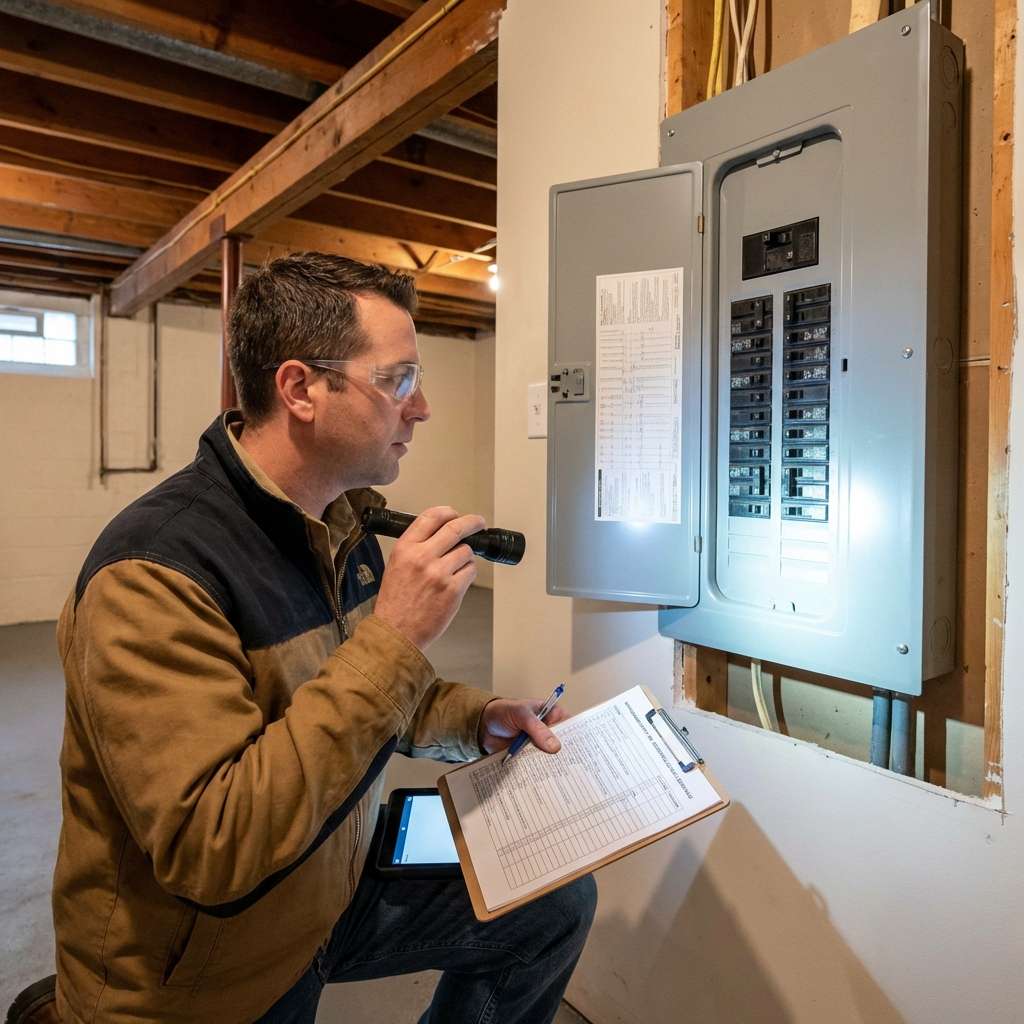
The county's residential electrical inspection guide distinguishes inspection types. Coordinate required inspections before work is concealed; plan access to the panel, equipment and applicable wiring. Keep approved plans and the permit available and retain final approval records.
An older home is not automatically subject to a complete rewire whenever a device is replaced. New work, replacement provisions, alterations and hazardous existing conditions can have different correction requirements. Ask the electrician to identify required work separately from recommended modernization, and let DPS resolve disputed code scope.
GFCI, AFCI, alarms, pools and EV charging
These topics have equipment- and project-specific rules. GFCI and AFCI protection serve different functions; a Virginia exception should not be copied into a Maryland design. Smoke and carbon-monoxide alarm requirements can depend on the building, existing system and project scope. Do not replace hardwired equipment with battery-only units based on a general blog summary.
Pools and spas require early coordination of bonding, equipment locations, disconnects and protection. EV charging needs charger instructions, supply capacity, routing and any building-management permissions. Solar or battery work can involve additional approvals and utility requirements. Identify the actual utility rather than assuming every Montgomery County property has the same provider.
Prepare a useful request
Include the service address, project description, equipment models, existing permit or inspection records, and photos taken without removing electrical covers. Request a free project estimate from AJ Long Electric and ask the written scope to identify jurisdiction, permit responsibility and required inspections. Staff review the request; the county or city independently determines code approval.