Loading services…

Home battery backup
Home Battery Backup Installation
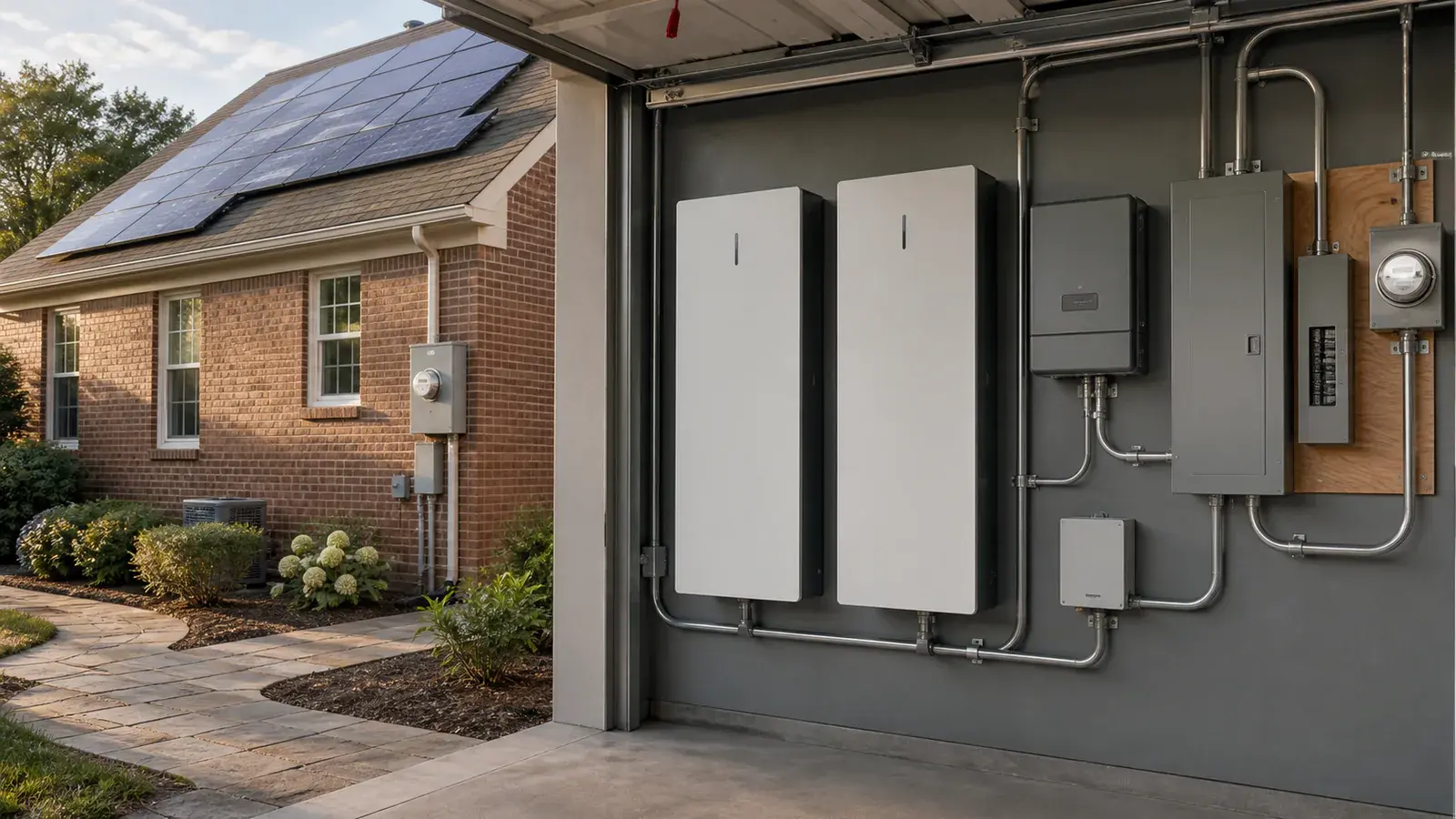
Whole-home and portable battery backup installed by the electricians who already do your panel, EV charger, and solar. Backup circuits, battery capacity, and transfer equipment are designed together for your home.
$2,500–$6,000 for a portable power-station setup and $6,000–$15,000+ for whole-home battery integration, installed. Free quote from AJ Long Electric.
Content reviewed 2026-09-02
Google reviews
1,463 across four profiles
Family-owned
Since 1996
Licensed and insured
VA 2705031092
On every install
Licensed electricians, since 1996
Before work
Written scope and price
Answer first
The direct answer
AJ Long Electric installs home battery backup in Northern Virginia, Maryland, and DC. We size the battery to the circuits you want to keep on, install the transfer equipment and the backed-up-load panel, pull the permit, and commission the system. A portable power-station setup installs for $2,500–$6,000 and whole-home battery integration for $6,000–$15,000+.
- Portable battery or power-station setup: $2,500–$6,000 installed.
- Whole-home battery integration: $6,000–$15,000+. The battery, the transfer equipment, and the electrical work are itemized on the proposal.
- A standard grid-tied solar array shuts off in an outage. Add a battery and transfer equipment and the circuits you choose stay on while the array keeps charging the battery, which is why we quote the two together.
Cost
What a home battery costs
A portable power-station setup installs for $2,500–$6,000. Whole-home battery integration installs for $6,000–$15,000+, and capacity, the number of backed-up circuits, and the transfer equipment set where you land in that band. The proposal identifies the equipment and installation scope handled by AJ Long Electric.
The written proposal itemizes the battery, the transfer equipment or backed-up-load panel, the electrical work, and the permit. A panel upgrade, when the house needs one, is priced at the published $3,500–$7,500 range in the same proposal.
Portable battery or power-station setup
Listed portable battery or power-station setup with electrical installation.
$2,500–$6,000
Whole-home battery integration
Whole-home battery integration with the required electrical equipment.
$6,000–$15,000+
Why an electrician
Why hire an electrician for your battery
A battery is a panel job. Here is what that changes.
- 01 / panel
We already do the panel
A whole-home battery lands in your main panel or a new backed-up-load panel. That is our core trade, and when the house needs a heavy-up first it is priced in the same proposal at the published $3,500–$7,500 range, not as a change order.
- 02 / circuits
We start with the circuits, not the box
Fridge, furnace blower, well pump, internet, and a few lights are the usual list. We size the battery to that list and the starting loads behind it, so you are not paying for capacity you will never use.
- 03 / loads
We design the battery with the solar and the EV charger
The battery, the array, and the charger share one panel and one load calculation. We install all three, so the battery charges from the roof when you want it to and the charger load is planned into the backup instead of bolted on later.
- 04 / permit
Permit, inspection, and interconnection, handled
Hardwired battery equipment needs an electrical permit. We pull it and meet the inspector, and when the battery is paired with solar we file the Dominion or NOVEC interconnection with the battery on the application.
Equipment
Batteries we design around
Listed equipment with manufacturer warranties and local support. The final platform is set in your written proposal.
- Whole-home
- Listed battery storage matched to your existing solar and backup circuits. Models are specified in the proposal.
- Backup panel
- SPAN Panel, or a conventional backed-up-load panel with listed transfer equipment.
- Portable
- Listed power stations with a transfer switch or inlet, for homes that want the simpler setup.
Backup plan
Which circuits to back up
Most homes do not need every circuit on the battery. This is the list we start from. Add or remove to fit how you live.
- 01
Refrigerator and freezer
First on every list. Once they are cold they draw very little, so they are cheap to keep on.
- 02
Furnace blower or heat pump
A gas furnace only needs the blower and the controls. A heat pump is a bigger load, and we size for its starting current.
- 03
Well pump or sump pump
Water and a dry basement. Both have starting surges we plan around.
- 04
Internet and modem
Router, modem, and the home office. Small loads that matter most during a storm.
- 05
A few lights and outlets
Kitchen, one bathroom, a bedroom, and the outlets that charge phones.
System sequence
One electrical design
- 01BatterySized to the circuits you back up and the starting loads behind them.
- 02TransferListed transfer equipment or a backed-up-load panel keeps the battery and the grid separate.
- 03PanelCapacity and breaker space checked, upgraded when the house needs it.Review
- 04SolarOptional array that charges the battery by day.
- 05EV circuitOptional charger load planned into the backup.Review
Incentives
2026 battery programs in Virginia
The federal residential credit is gone. Dominion's new Virtual Power Plant pilot can pay battery owners to help the grid, and we design for it.
- Dominion's Virtual Power Plant pilot launches in 2026 and runs through July 2028. A listed home battery may qualify, and Dominion says most customers join free and can earn credits or payments for letting the battery help the grid during peak events.
- The federal residential credit, Section 25D, does not apply to batteries installed after December 31, 2025. Our pricing does not assume it.
- Pair the battery with solar and Dominion's one-to-one net metering, preserved by the State Corporation Commission on April 30, 2026, still credits every kilowatt-hour the array sends back.
How it works
From your outage list to a commissioned battery
Five steps. We handle the permit, the inspection, and the app setup.
- 01
Free quote from your outage list
Tell us the circuits you want on and send a photo of your panel to get a preliminary battery size and price range.
- 02
Site and electrical review
A licensed electrician checks the panel, the service size, the battery location, the route, and equipment compatibility with the manufacturer instructions.
- 03
Written proposal
Battery, transfer equipment, backed-up circuits, and price in writing, with any panel, solar, or EV work itemized.
- 04
Permit and installation
We pull the permit, install the battery and the transfer equipment, and label every circuit.
- 05
Inspection and commissioning
We meet the inspector, test the switching, set the charging, and walk you through the app.
Straight answers
Frequently asked questions
What home batteries does AJ Long Electric install?
Whole-home backup is designed around Tesla Powerwall 3, FranklinWH aPower, and Enphase IQ Battery 5P. A portable setup uses a listed power station with a transfer switch or inlet. The final platform is set in your written proposal.
How much does a home battery install cost?
$2,500-$6,000 portable; $6,000-$15,000+ whole-home. Capacity, the number of backed-up circuits, and whether the battery lands in a smart panel or a backed-up-load panel set the number. The battery, the transfer equipment, and the electrical work are itemized on the written proposal.
Which circuits should I back up?
Start with the refrigerator, the furnace blower or heat pump, the well or sump pump, the internet, and a few lights and outlets. We size the battery to that list and the starting loads behind it, and most homes do not need every circuit on the battery.
Will a battery work with a future solar array?
Yes. We install the array and the battery, so the inverter and the interconnection are designed for the battery from the start. A standard grid-tied array shuts off in an outage, and a battery with transfer equipment is what keeps your circuits on while the roof recharges it. Quote both in the same visit.
Can my battery join Dominion's Virtual Power Plant?
Dominion's Virtual Power Plant pilot launches in 2026 and runs through July 2028. Any Dominion Energy Virginia customer with an eligible device can enroll, most customers join free, and Dominion says participants may earn credits or payments for letting the battery help the grid. We install listed batteries and set up the app so you are ready when enrollment opens.
Do you still install portable generator hookups?
Yes. Inlet boxes, manual transfer switches, and listed interlocks are on the portable generator hookups page. This page is for home batteries.
Does battery backup require a permit?
Yes. Hardwired transfer equipment and backed-up-load panels need an electrical permit. We pull it and meet the inspector.
Authoritative sources
Sources reviewed 2026-09-02
- Dominion Energy Virginia: Virtual Power PlantOfficial pilot page. Filed December 1, 2025, launching in 2026 and running through July 2028; home batteries are eligible devices and most customers join free.Reviewed 2026-09-02
- IRS: Residential Clean Energy CreditOfficial federal guidance. Section 25D does not apply to systems installed after December 31, 2025; AJ Long Electric does not provide tax advice.Reviewed 2026-09-01
- U.S. Department of Energy: Solar and resilience basicsFederal guidance explaining the separate roles of generation, storage, and outage planning.Reviewed 2026-08-26
- Fairfax County electrical permitsOfficial county permit guidance; the actual authority is confirmed from the project address.Reviewed 2026-08-26
- NFPA 70: National Electrical CodeThe nationally recognized electrical installation and safety standard.Reviewed 2026-08-26
Next step
Start with the circuits you want on
Tell us what has to stay on and send a photo of your panel. A preliminary battery size and price range comes back first, then a site visit turns it into a written proposal.