
When planning backup power for a Northern Virginia home, compare a code-compliant hookup for a customer-provided portable generator with compatible listed battery equipment. A generator uses fuel and must operate outdoors. A battery has no combustion exhaust, but sound, placement, clearance, output, duration, transfer behavior, and maintenance depend on the exact equipment and approved design.
Key Takeaways
- A portable-generator hookup is a lower-cost path to high wattage, but the generator must run outdoors and runtime depends on fuel supply, duty limits, maintenance, load, and operating conditions.
- A battery system has no combustion exhaust, but its output, stored capacity, placement, clearance, transfer behavior, and supported loads follow the exact listing and approved design.
- Both connect to home circuits through compatible listed transfer equipment that prevents backfeed when installed and operated correctly.
- The best choice depends on supported loads, outage goals, site conditions, fuel handling, and budget.
How Each Option Works
Portable Generator Hookup
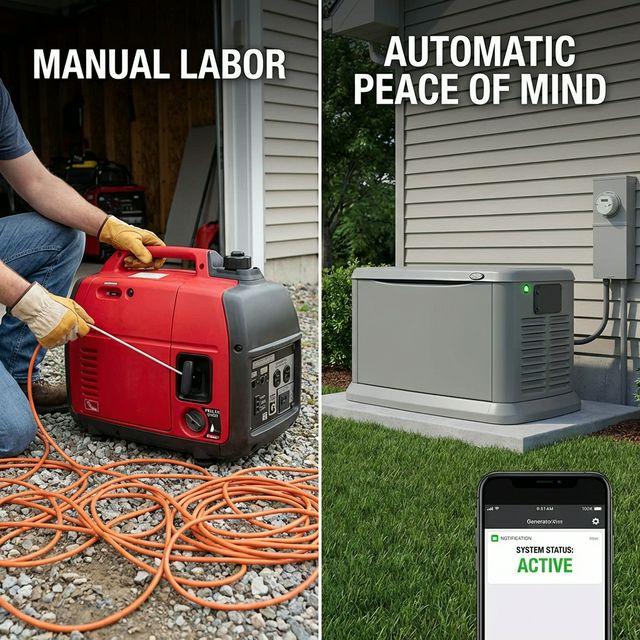
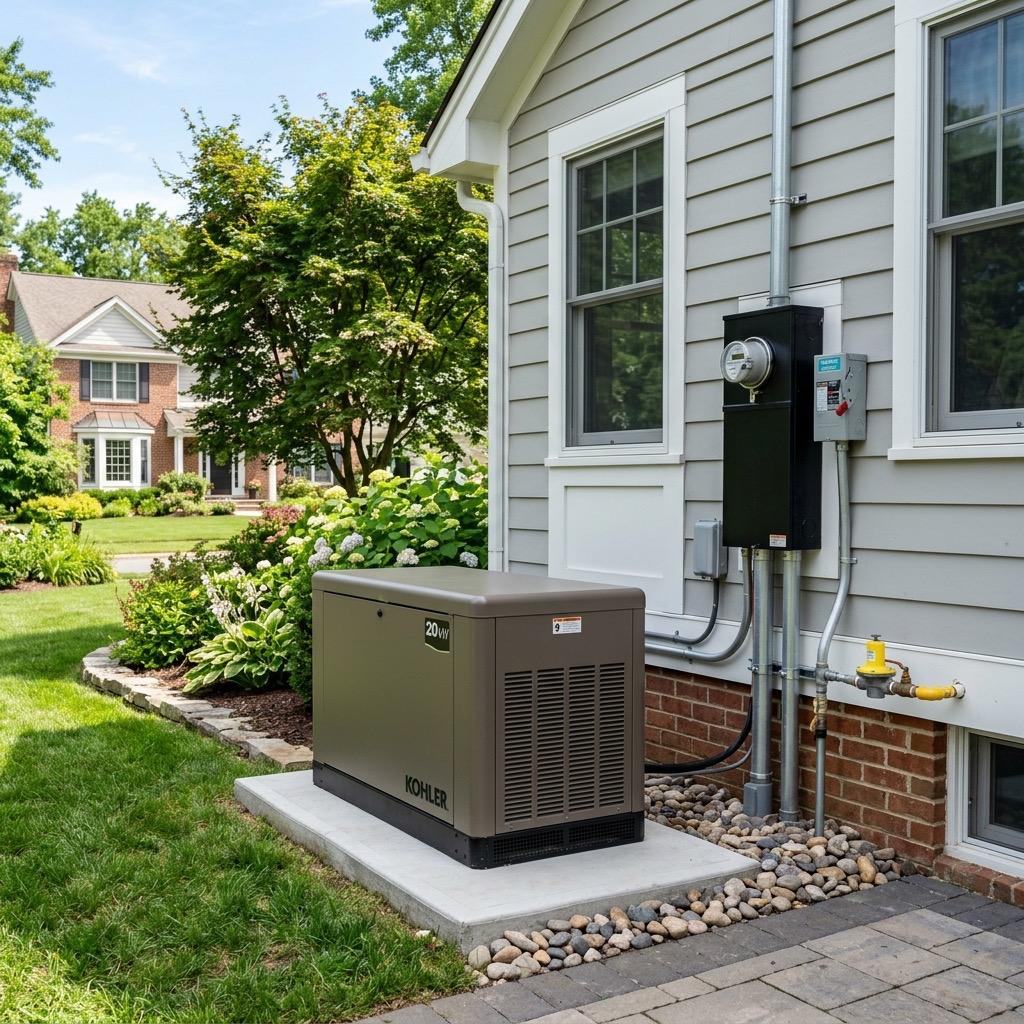
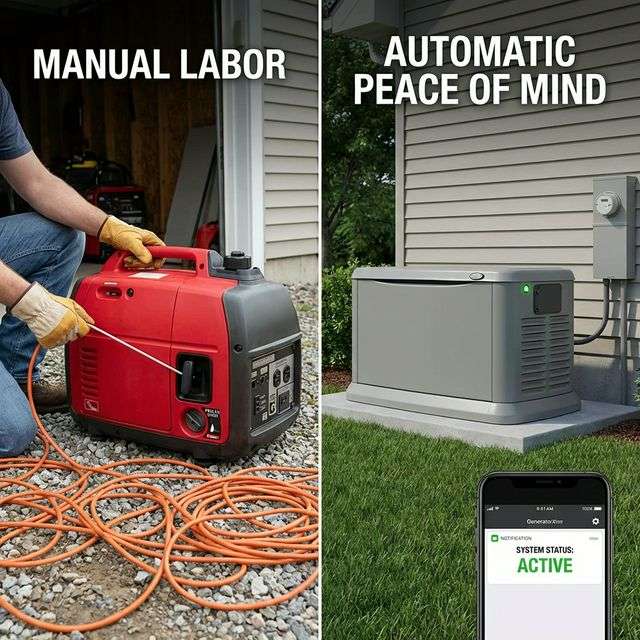
AJL installs the electrical infrastructure that lets you safely power your home from a portable generator: a manual transfer switch or a generator interlock kit at the panel, plus an exterior generator inlet box (power inlet). During an outage you run a portable inverter generator outdoors, plug it into the inlet, and flip the transfer switch or interlock so the generator feeds selected circuits. The transfer switch/interlock is what prevents dangerous backfeed onto the utility lines.
Planning Backup Power for Your Home?
Plan for the next outage with a listed portable-generator hookup or a compatible battery-backup installation. We evaluate the panel, selected loads, equipment, and transfer method before quoting the electrical scope. Call (571) 444-6886 to request an in-home assessment.
Battery Power Station
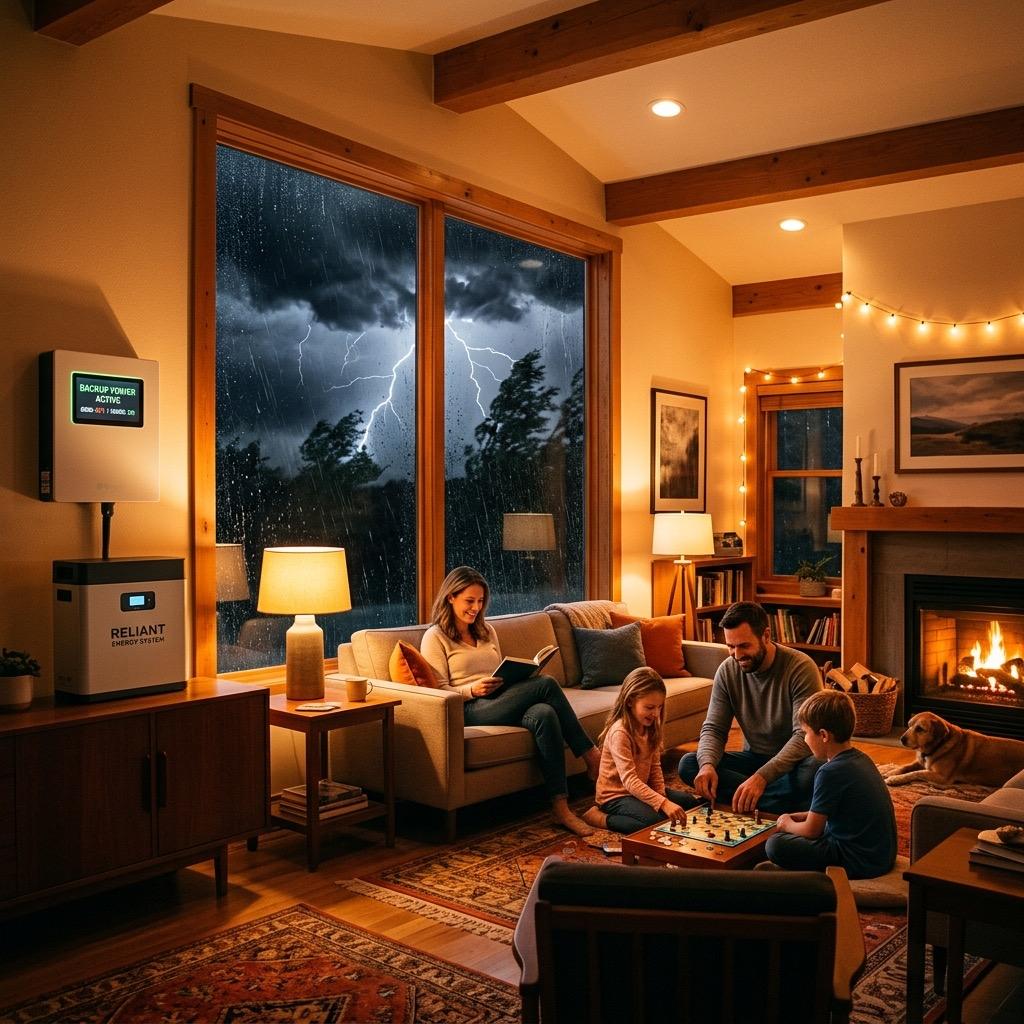
A battery power station stores energy for use when the grid fails. Product families homeowners may compare include EcoFlow Delta, Bluetti AC and EP, and Anker SOLIX equipment. AJ Long Electric can include compatible listed battery equipment in an approved scope or connect customer-selected listed equipment; the written proposal identifies the exact equipment, circuit integration, and responsibility boundaries. Brand examples do not imply certification or a product relationship.
Key Difference: A generator converts fuel to electricity, with runtime determined by fuel supply, duty limits, maintenance, load, and operating conditions. A battery stores a fixed amount of energy, with output and duration limited by its ratings, supported loads, and recharge inputs. Fan, inverter, and generator noise vary by equipment and load.
Runtime and Capacity
Portable Generator
- Runtime depends on fuel supply, duty limits, maintenance, load, and operating conditions
- Typical output 3,500-12,000 watts depending on the unit
- Refueling interval depends on the exact unit, tank, load, duty limits, fuel, maintenance, and operating conditions; follow the manufacturer instructions and never refuel a hot generator
- Best when outages are long and fuel is available
Battery Power Station
- Runtime limited by capacity: roughly 3.6 kWh (EcoFlow Delta Pro) to 6 kWh per battery (Delta Pro Ultra), and expandable by stacking batteries
- Bluetti AC500 pairs ~3 kWh batteries; EP900 scales for whole-home circuits
- Recharges from the grid (when power returns) or from solar during the outage
- Best for quiet overnight coverage and short-to-medium outages
Power Quality and Transfer
Power quality and transfer specifications vary by source and model. Confirm voltage, frequency, waveform, transfer behavior, and supported loads from the exact listing and manufacturer instructions. Medical equipment requires device-manufacturer compatibility and a separate emergency plan; no backup source promises uninterrupted power. A portable generator is started and transferred manually unless an approved design states otherwise.
Safety Comparison
- Carbon monoxide and placement: A portable generator produces lethal exhaust and must run outdoors, away from openings. Battery equipment has no combustion exhaust, but placement, clearance, ventilation, and operating conditions follow the exact listing and manufacturer instructions.
- Backfeed: Both must connect through a code-compliant transfer switch or interlock kit; never plug a generator into a wall outlet.
- Fuel handling: Generators require storing and pouring gasoline; batteries have no fuel to handle.
Noise and Maintenance
- Generator: Runs at roughly 55-70 dB and needs oil changes, fuel stabilizer, and periodic engine maintenance.
- Battery station: No combustion engine; fan and inverter noise, inspection, firmware, and maintenance requirements vary by model and operating conditions.
Cost Comparison
| Item | Typical Cost (Northern Virginia) |
|---|---|
| Portable generator hookup (inlet + listed transfer/interlock) | $900–$2,500 |
| Battery power station + install (portable-unit setup) | $2,500–$6,000 |
| Whole-home battery integration (Smart Home Panel / EP900) | $6,000–$15,000+ |
These are typical estimates, not guarantees. The portable generator itself is a separate homeowner purchase. Actual costs vary by home, panel, and capacity.
Our Recommendation
Choose a Portable Generator Hookup If:
- You want a lower-cost path to high wattage and can plan around fuel supply, duty limits, maintenance, and outdoor operation
- You're comfortable storing fuel and starting the unit outdoors
- Your outages are sometimes long (multi-day) and you need to run large loads
- Noise during an outage isn't a dealbreaker
Choose a Battery Power Station If:
- You want stored-energy backup with no combustion exhaust and can follow the equipment's placement and clearance requirements
- You want transfer behavior documented by compatible listed equipment and the approved design
- You have solar, or want the option to add it, for recharging
- Your documented loads and duration fit the battery, and its inspection, firmware, storage, testing, and maintenance requirements fit your plan
The Bottom Line
Some Northern Virginia homeowners combine a battery system with a customer-provided portable generator to address different outage loads and runtime goals. AJ Long Electric installs transfer switches, listed interlock kits, and inlet boxes for portable-generator hookups. For battery projects, we can include compatible listed equipment in an approved scope or connect customer-selected listed equipment, with exact equipment and responsibility boundaries documented in the written proposal. Brand examples do not imply certification or a product relationship.
Contact us to request a backup-power assessment. We will document the loads, panel, transfer method, selected equipment, and runtime goals before recommending an electrical scope.