
Northern Virginia experiences severe weather from summer derechos and hurricane remnants to winter ice storms and nor'easters. Backup planning can use a customer-provided portable generator through listed transfer equipment, a compatible listed battery system, or both. Each option must be sized and operated within its documented limits.
Key Takeaways
- Northern Virginia storms can cause extended power outages.
- Match the plan to supported loads, stored capacity or fuel, placement, transfer behavior, duty limits, maintenance, and operating conditions.
- Test the commissioned setup before each storm season and maintain a separate outage plan.
- Medical equipment requires device-manufacturer compatibility, verified restart and transfer behavior, and an emergency plan; no source promises uninterrupted power.
Northern Virginia Storm Threats
Summer Storms
- Derechos: Straight-line wind storms that can topple trees and power lines across wide areas. The 2012 derecho left millions without power for up to a week.
- Hurricanes: Remnants from coastal storms often bring sustained high winds and heavy rain.
- Severe thunderstorms: Lightning, wind, and hail can damage power infrastructure.
Winter Storms
- Ice storms: Heavy ice accumulation on trees and power lines causes widespread outages.
- Nor'easters: Can bring heavy snow, ice, and high winds.
- Heavy snow: Wet snow accumulation on lines and trees.
Other Threats
- Falling trees from saturated ground
- Vehicle accidents damaging utility poles
- Transformer failures during high-demand periods
- Grid instability during extreme heat or cold
Pre-Season Test: Before each storm season, run a full test of your backup power. For a portable generator, start it and confirm it connects through the transfer switch or interlock and inlet box. For a battery, confirm it's charged and the smart home panel transfers your critical circuits. Fix any issues before storms arrive.
Planning Backup Power for Your Home?
Plan for the next outage with a listed portable-generator hookup or a compatible battery-backup installation. We evaluate the panel, selected loads, equipment, and transfer method before quoting the electrical scope. Call (571) 444-6886 to request an in-home assessment.
What's at Risk During Extended Outages
Summer Outage Risks
- Food spoilage: Refrigerator contents can spoil within 4-6 hours. A freezer may last 24-48 hours if full and unopened.
- Heat exposure: Dangerous for elderly, young children, and those with health conditions. Homes can reach 90°F+ without AC.
- Sump pump failure: Summer storms often bring heavy rain. No power means no sump pump protection.
- Medical equipment: CPAP machines, nebulizers, oxygen concentrators, and medication refrigeration all need power.
- Work disruption: Remote workers cannot function without power and internet.
Winter Outage Risks
- Frozen pipes: Without heat, pipes can freeze and burst within hours in severe cold.
- Hypothermia risk: Home temperatures can drop below 50°F within hours, dangerous for vulnerable family members.
- Well pump failure: No power means no water for homes on well systems.
- Food spoilage: Even in winter, refrigerators can warm up faster than you'd think.
How Backup Power Protects You
Battery Power Station: Stored-Energy Coverage
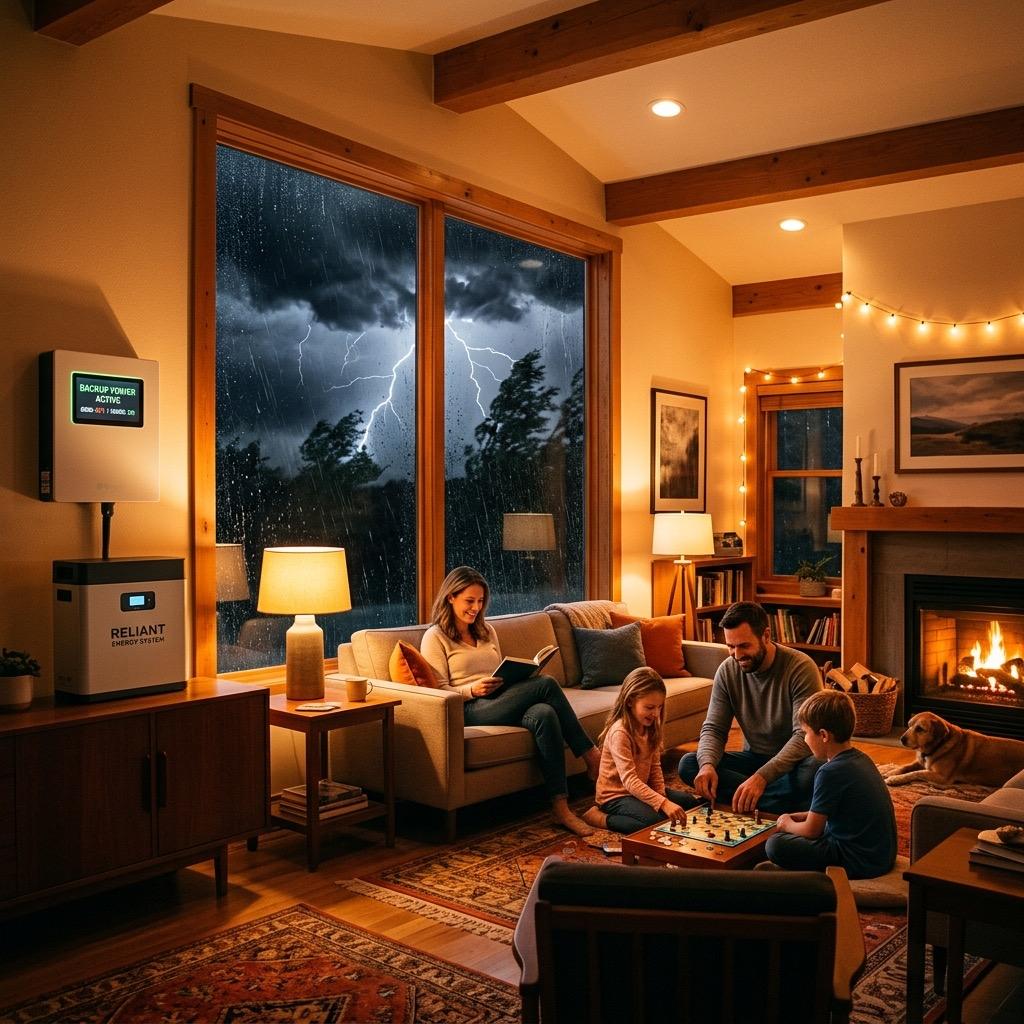
When the power fails, a battery power station with a smart home panel:
- Follows the detection thresholds and delay programmed for the exact listed transfer equipment
- Supports only the circuits and loads documented in the approved design
- Has no combustion exhaust; placement, clearance, operating conditions, and fan or inverter noise follow the manufacturer instructions
- Recharges from the grid when power returns, or from solar during the outage
- Remote or unattended behavior depends on the commissioned equipment, settings, and communications available
Portable Generator: Fuel-Dependent Runtime
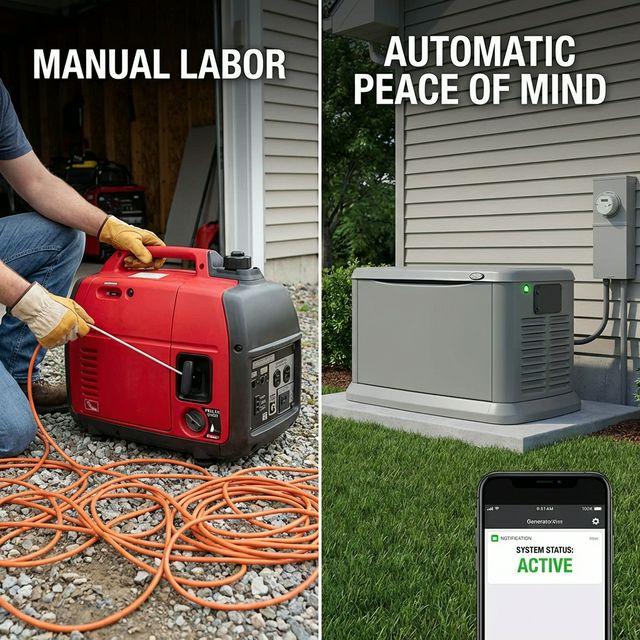
For a longer outage, a customer-provided portable generator can run outdoors and connect through listed transfer equipment. Runtime and supported loads depend on fuel supply, duty limits, maintenance, load, and operating conditions. Recharging battery equipment is allowed only when the exact manufacturer instructions and approved design support it.
Essential Systems Protected
- HVAC: heat in winter, cooling in summer (sized appropriately)
- Refrigeration: food stays safe, medications stay cold
- Sump pump: basement stays dry during storms
- Well pump: water keeps flowing
- Lighting: safety and convenience
- Communications: Wi-Fi router, phones charged
- Security: alarm systems, cameras, door locks
- Medical equipment: only when device-manufacturer compatibility, transfer and restart behavior, capacity, and an emergency plan are verified; uninterrupted power is not promised
Before the Storm: Preparation Checklist
Backup Power Readiness
- Battery: confirm it's fully charged and the smart home panel is set
- Portable generator: ensure you have fresh gasoline and the unit starts
- Clear the path to where you'll run the generator outdoors
- Verify your transfer switch / interlock connection works
- Check that a working CO alarm is in the home
Home Preparation
- Charge all devices and small battery packs
- Fill bathtubs with water (for flushing if on municipal water)
- Keep flashlights accessible
- Prepare non-perishable food
- Know how to manually operate garage doors
- Have your electrician's number handy
During the Storm
Operating Tips
- Portable generator: run it OUTDOORS only - never in a garage, shed, or near windows, doors, or vents. Exhaust is lethal.
- Refuel a portable generator only after it has cooled
- Battery: watch your state of charge in the app; shed non-essential loads to extend runtime
- Recharge a battery from a portable generator or solar during daylight to keep it going
What to Expect
- Battery fan or inverter noise and portable-generator engine noise vary by model, load, temperature, and operating conditions
- A battery's runtime is set by its kWh capacity - plan to recharge during long outages
- A smart home panel may shed non-critical loads to stretch battery runtime
After the Storm
Post-Storm Check
- Portable generator: check oil after extended operation and schedule service if it ran more than 24 hours
- Battery: recharge it fully so it's ready for the next event
- Inspect the inlet box, transfer switch, and any outdoor equipment for damage
- Restock fuel and replace any used fuel stabilizer
Real Peace of Mind
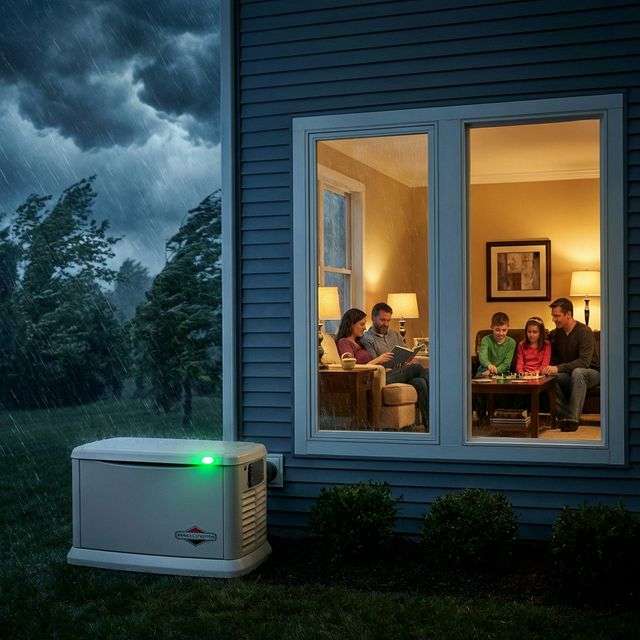
The true value of backup power becomes clear when severe weather hits. While neighbors scramble for flashlights and worry about frozen pipes or spoiled food, you can focus on your family's safety and comfort.
AJ Long Electric installs complete hookups for customer-provided portable generators. For battery projects, we can include compatible listed equipment in an approved scope or connect customer-selected listed equipment, with exact equipment and responsibility boundaries documented in the written proposal. Brand examples do not imply certification or a product relationship.