
Key Takeaways
- Suspected fire takes priority over troubleshooting or booking an electrician.
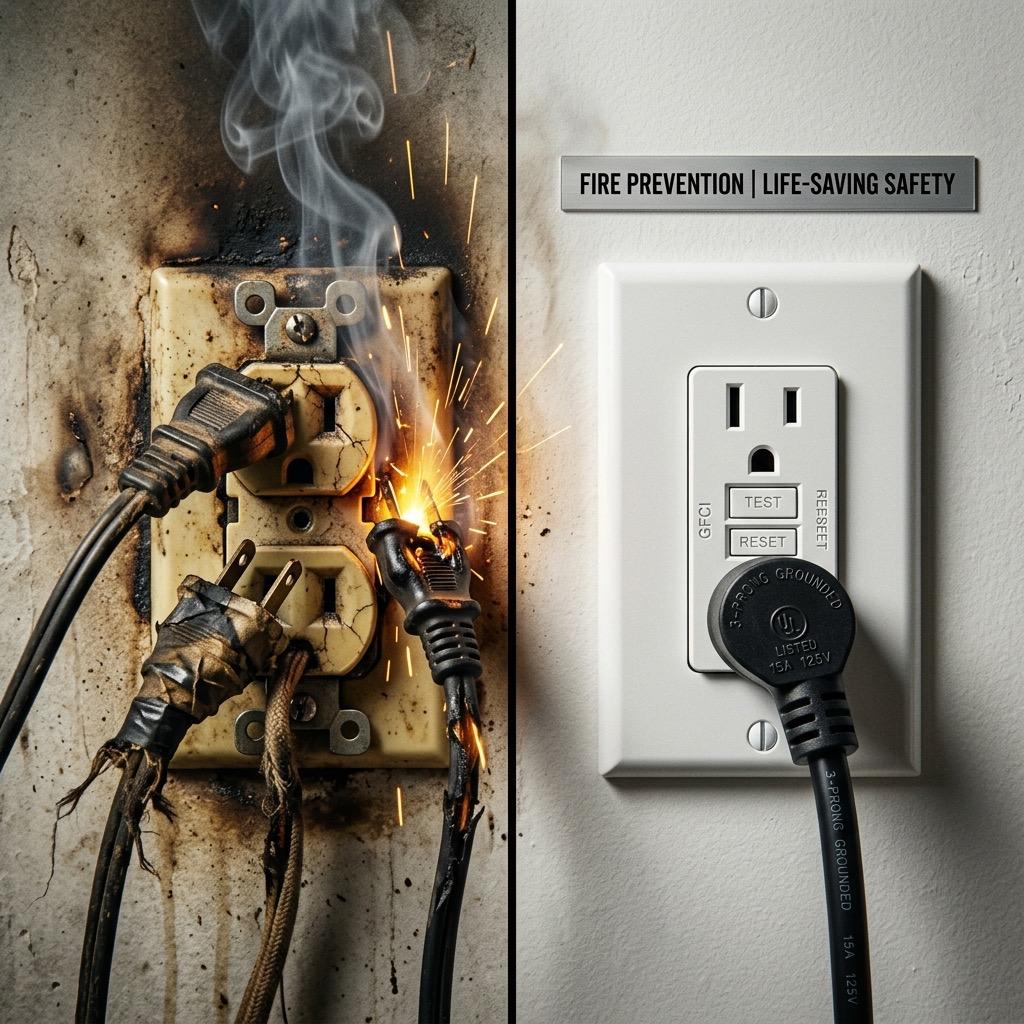
- Do not touch a hot or damaged outlet, plug, or wall to test it.
- Only switch off an affected breaker when there is no suspected fire and you can do so without exposure or delay.
- A smell that fades or a breaker that stays on does not prove the wiring is safe.
- Leave the affected circuit out of service until the cause has been assessed and corrected.
First decide whether this may be a fire
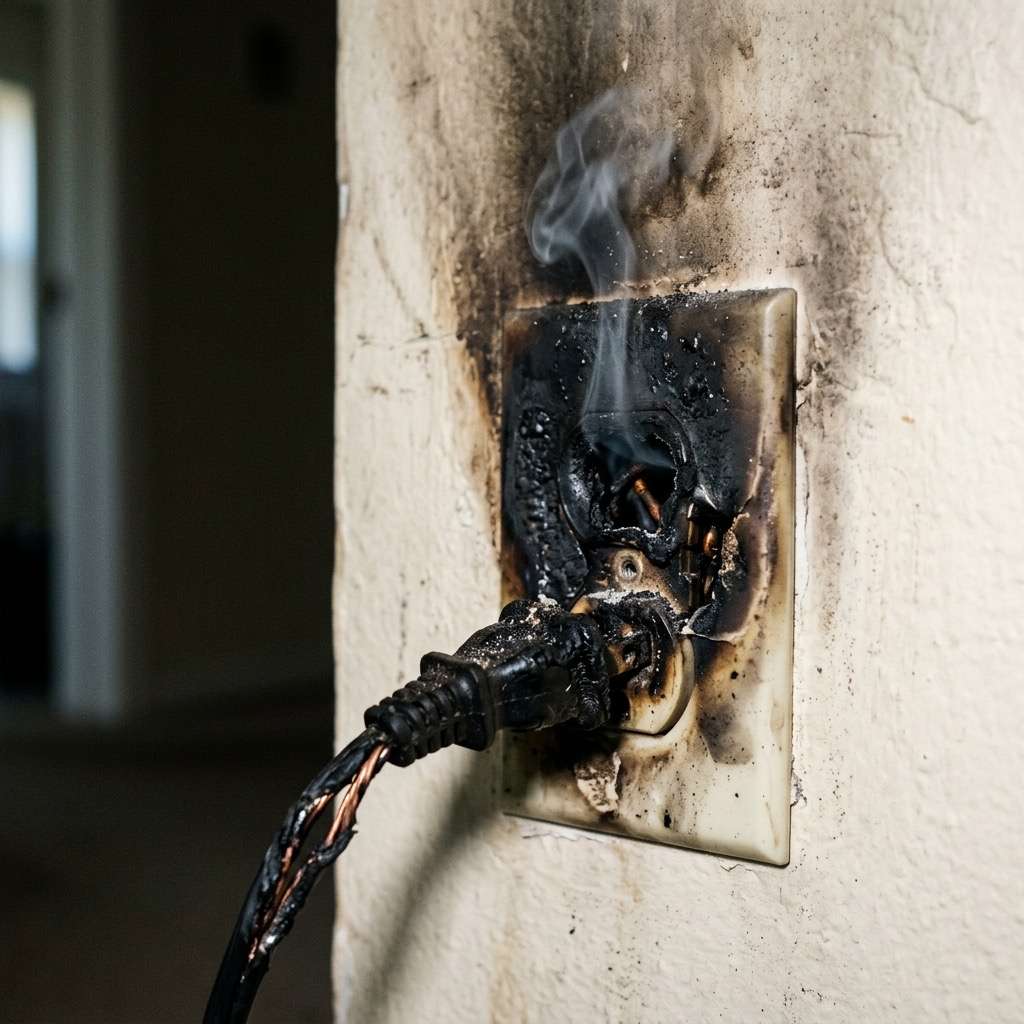
Smoke, flame, active arcing, spreading heat, or a strong or unexplained burning odor can require emergency response. You do not need to find the exact source before leaving. The U.S. Fire Administration's home fire escape guidance emphasizes getting out and staying out. Call 911 from a safe place outside when fire is suspected.
Do not spend time removing faceplates, feeling along a wall, locating every breaker, or unplugging a damaged connection before evacuating. Do not re-enter to check whether the odor stopped. Follow emergency responders' instructions about when it is safe to return and what equipment can be used.
If there is no suspected fire and you can act safely
Stop using the affected outlet or equipment. Keep people away from it. If the panel is safely accessible and there is no smoke, heat, water, arcing, or other hazard at it, switching off the clearly identified affected breaker may reduce further energization. Do not approach a hazardous panel or delay leaving in order to do this. If you are unsure, step away and seek help.
Do not pull a hot, melted, sparking, or damaged plug out of an outlet. Do not touch the receptacle or insert a tester to investigate the smell. Keep the affected circuit off and avoid resetting it to see whether the problem returns. A different outlet on the same circuit may share the damaged connection upstream.
Turning off a breaker does not establish that exposed wiring is safe to handle. Labels can be wrong and some equipment has more than one source. Leave covers in place and let a qualified electrician verify conditions before opening or working on the installation.
Why an outlet can smell burned without tripping a breaker
A loose or deteriorated connection can create concentrated heating at the contact. A damaged receptacle, worn plug, overloaded power strip, faulty appliance, or problem in a nearby connection can also produce an odor. The visible outlet is not necessarily the only damaged point or even the original source.
A conventional breaker responds to its designed overcurrent conditions; a localized high-resistance connection can overheat without drawing enough current to trip it. AFCI and GFCI protection address particular hazards, but neither guarantees that every overheating condition will be detected. A breaker remaining on is not a safety clearance.
The U.S. Fire Administration electrical fire guidance recommends attention to damaged cords, overloaded outlets, and appliance safety. Avoid extension cords or power strips as a workaround for an outlet that appears damaged or cannot safely serve the equipment.
What the electrician needs to assess
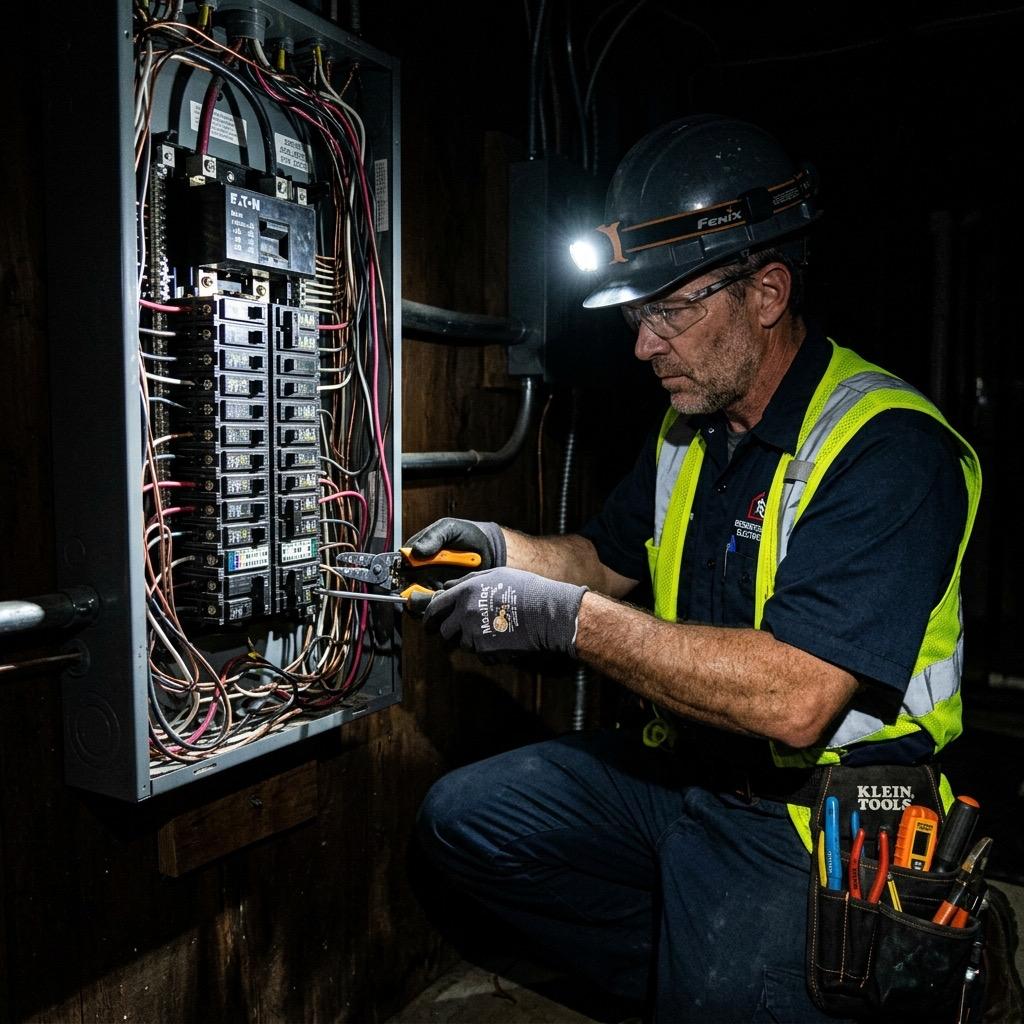
The investigation should follow the evidence rather than assume that changing the faceplate or receptacle is enough. Relevant checks can include the connected appliance and plug, receptacle contacts, conductor terminations, insulation damage, box conditions, upstream connections, circuit loading, and protective devices. Heat-damaged wiring may require more repair than replacing the visible device.
Existing aluminum branch-circuit conductors, incompatible devices, previous splices, and concealed damage can affect the repair method. The electrician must select methods and components appropriate to the conductors and equipment. Do not reuse visibly damaged equipment or improvise an adapter to get the appliance running again.
Ask what failed, which parts of the circuit were checked, what was repaired, and whether any further inspection or opening of finished surfaces is needed. If a plug or appliance is damaged, the circuit repair alone may not make that appliance suitable to use.
What information helps after the immediate hazard is addressed?
- Where the smell was noticed and whether smoke, discoloration, noise, or visible damage occurred.
- Which appliance or equipment was operating and whether the problem happened before.
- Whether a breaker tripped, was switched off, or emergency responders attended.
- Whether other rooms, outlets, or appliances were affected.
- Photos already available or safely taken from a distance after the area has been cleared; do not approach damaged equipment to obtain them.
A photo can help staff understand the request but cannot establish that wiring behind the wall is safe. Do not restore power or recreate the symptom for a better description. Make clear which circuit remains out of service.
Arranging diagnostic and repair work
After any immediate emergency is handled, submit a troubleshooting and power-loss request or call AJ Long Electric to discuss the situation and availability. Online requests receive staff review and do not confirm an appointment or summon emergency responders. Do not wait for a website response if a fire may be developing.
Diagnostics and repairs cost $195 for the first 30 minutes, then $60 for each additional 15 minutes. Many common issues can be diagnosed and resolved within 30–60 minutes, but heat damage, concealed faults, or parts requirements can extend the work. Staff can explain the visit and next steps without promising a specific arrival time or repair duration.
For related background, see when a dedicated circuit is appropriate. Adding a circuit can address some load issues, but it does not substitute for finding and correcting an existing overheated connection.