
Installing a home EV charger is the single best upgrade for electric vehicle owners in Northern Virginia. With EV adoption surging across Fairfax, Arlington, Loudoun, and Prince William counties, thousands of homeowners are discovering that home Level 2 charging transforms the ownership experience. Instead of hunting for public stations or waiting in line at the mall, you simply plug in at night and wake up to a full battery every morning. This comprehensive guide covers everything you need to know about installing an EV charger at your Northern Virginia home, from choosing the right equipment to understanding permit requirements and electrical panel considerations.
Key Takeaways
- Level 2 home charging adds 25-40 miles of range per hour, fully charging most EVs overnight in 6-10 hours.
- Most modern 200-amp panels can support EV charger installation without a costly panel upgrade.
- All EV charger installations in Northern Virginia require electrical permits and professional inspection.
- Home charging costs approximately 50-70% less per mile than public DC fast charging stations.
- A licensed electrician ensures code compliance, proper grounding, and safe circuit sizing for your specific vehicle.
Why Home EV Charging Matters for Northern Virginia Drivers
Northern Virginia drivers face some of the longest commutes in the nation. Whether you are traveling I-66 from Centreville to Tysons, navigating Route 28 through Loudoun County, or making the trek down I-95 from Woodbridge, your EV needs to be ready every morning. Public charging stations are growing across the DMV, but relying on them for daily charging means detours, wait times, and higher per-kilowatt costs.
Ready to Install a Home EV Charger?
Our licensed electricians have installed hundreds of EV chargers across Northern Virginia. We handle everything from panel evaluation to permit filing. Call (703) 997-0026 or request your free estimate online.
Home charging eliminates all of that friction. Plug in when you arrive home, and your vehicle charges during off-peak hours when electricity rates are lowest. For Dominion Energy customers in the NoVA region, off-peak rates can be significantly cheaper than daytime rates, translating to real savings over the life of your vehicle.
The Convenience Factor
Think of home EV charging like having a gas station in your garage. You never start the day with an empty tank. For families with multiple drivers or busy schedules, this reliability is invaluable. No more planning routes around charging stops or worrying about station availability during peak hours at places like Tysons Corner or Reston Town Center.
Types of EV Chargers Explained
Level 1 Charging (120V)
Level 1 charging uses the standard 120-volt household outlet that is already in your garage. Every EV comes with a Level 1 portable charger (often called an EVSE). It plugs into any standard outlet and adds approximately 3-5 miles of range per hour. For a vehicle with a 60 kWh battery, a full charge from empty takes 40-50 hours. Level 1 charging is practical only for plug-in hybrids with small batteries or drivers who cover fewer than 20 miles per day.
Level 2 Charging (240V)
Level 2 charging uses a dedicated 240-volt circuit, the same type of circuit that powers your electric dryer or oven. A Level 2 charger adds 25-40 miles of range per hour, meaning most EVs can fully charge overnight in 6-10 hours. This is the standard recommendation for home EV charging. Available models range from basic 32-amp units to premium 48-amp smart chargers with WiFi connectivity and app control.
DC Fast Charging (Level 3)
DC fast charging is only available at commercial installations and is not suitable for residential use. These stations deliver 50-350 kW and can charge most EVs to 80% in 20-45 minutes. They are excellent for road trips but are not a practical daily charging solution due to cost and availability.
Good to know: Level 2 charging is the sweet spot for home use. It provides the best balance of speed, cost, and convenience, and every EV on the market supports it. Even if you own a Tesla, you can use a standard J1772 Level 2 charger with the included adapter, or install a Tesla Wall Connector for the fastest speeds.
Electrical Requirements for EV Charger Installation
Proper electrical infrastructure is the foundation of a safe and effective EV charger installation. Here is what your electrician will evaluate during the site assessment.
Dedicated Circuit
EV chargers require a dedicated 240-volt circuit, meaning no other appliances or outlets share the same breaker. Most Level 2 chargers need a 40-amp or 50-amp circuit breaker. For maximum-speed 48-amp chargers, a 60-amp breaker is required to satisfy the National Electrical Code's 80% continuous load rule.
Wire Gauge and Run Length
The wire gauge depends on the amperage and the distance from your electrical panel to the charger location. A 50-amp circuit typically uses 6-gauge copper wire for runs under 50 feet. Longer runs may require 4-gauge wire to prevent voltage drop. In Northern Virginia homes where the panel is in the basement and the charger is in a detached garage, runs of 75-100 feet are common and require careful wire sizing.
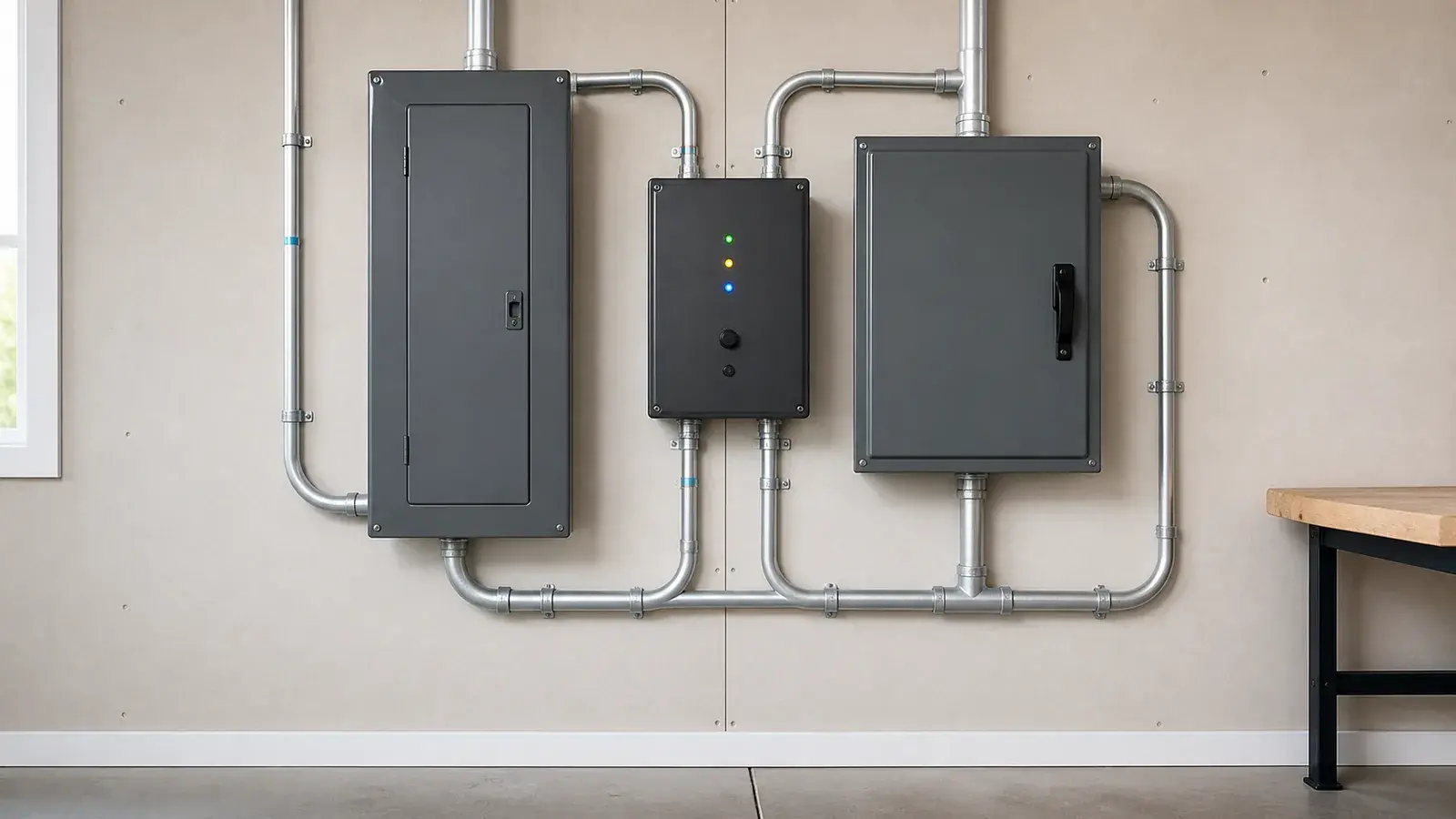
Electrical Panel Capacity
Your panel must have both available breaker slots and sufficient amperage capacity. Most homes built after 2000 in Fairfax and Loudoun counties have 200-amp panels, which can typically accommodate a 50-amp EV charger circuit. Older homes, particularly those in established Arlington neighborhoods or historic areas of Prince William County, may have 100-amp or 150-amp panels that require an upgrade.
- Dedicated 240V circuit rated for 40-60 amps depending on charger specifications
- Electrical panel with available capacity confirmed through load calculation
- Proper wiring gauge matched to circuit length and amperage
- NEMA 14-50 outlet for plug-in chargers or direct hardwired connection
- Ground fault protection as required by current NEC code
Choosing the Right EV Charger for Your Home
The EV charger market offers dozens of options at varying price points. Here are the key factors to consider when selecting a charger for your Northern Virginia home.
Amperage and Charging Speed
Higher amperage means faster charging. A 32-amp charger adds about 25 miles of range per hour, while a 48-amp charger adds approximately 37 miles per hour. If your panel can support it, we recommend a 48-amp charger to maximize flexibility for current and future vehicles.
Smart Features vs. Basic Units
Smart chargers with WiFi connectivity cost $100-$300 more but offer app-based scheduling, energy monitoring, and integration with utility time-of-use rate programs. For Dominion Energy customers who can take advantage of off-peak rates, the scheduling feature alone can pay for the premium within a year or two.
Plug-In vs. Hardwired
Plug-in chargers connect to a NEMA 14-50 or 6-50 outlet and can be unplugged and taken with you if you move. Hardwired chargers are permanently connected and offer a cleaner installation. Chargers drawing more than 40 amps continuously must be hardwired per NEC code.
Pro tip from our team: If you are considering a home purchase in the next 5 years, a plug-in charger with a NEMA 14-50 outlet gives you the flexibility to take your charger with you. The outlet also serves as a pre-installed selling point for the next buyer. Many homebuyers in the Ashburn, Brambleton, and South Riding communities now specifically look for EV-ready homes.
Permit Requirements in Northern Virginia
Every EV charger installation in Northern Virginia requires an electrical permit. This is not optional, it is a legal requirement that protects you and your property. Here is how the process works across local jurisdictions.
Fairfax County
Fairfax County requires an electrical permit for all new 240V circuits. The permit application includes a description of the work, circuit specifications, and panel details. Inspections are typically scheduled within 2-3 business days of completion.
Arlington County
Arlington has a streamlined process for residential EV charger permits. Applications can be submitted online, and most are approved within 1-2 business days.
Loudoun County
Loudoun County requires permits for all EV charger installations. Given the rapid residential growth in areas like Ashburn and Leesburg, the county has become very familiar with these installations and processes them efficiently.
Prince William County
Prince William County follows standard Virginia electrical permitting requirements. Permits are required for all new 240V circuits, and inspections are scheduled after installation is complete.
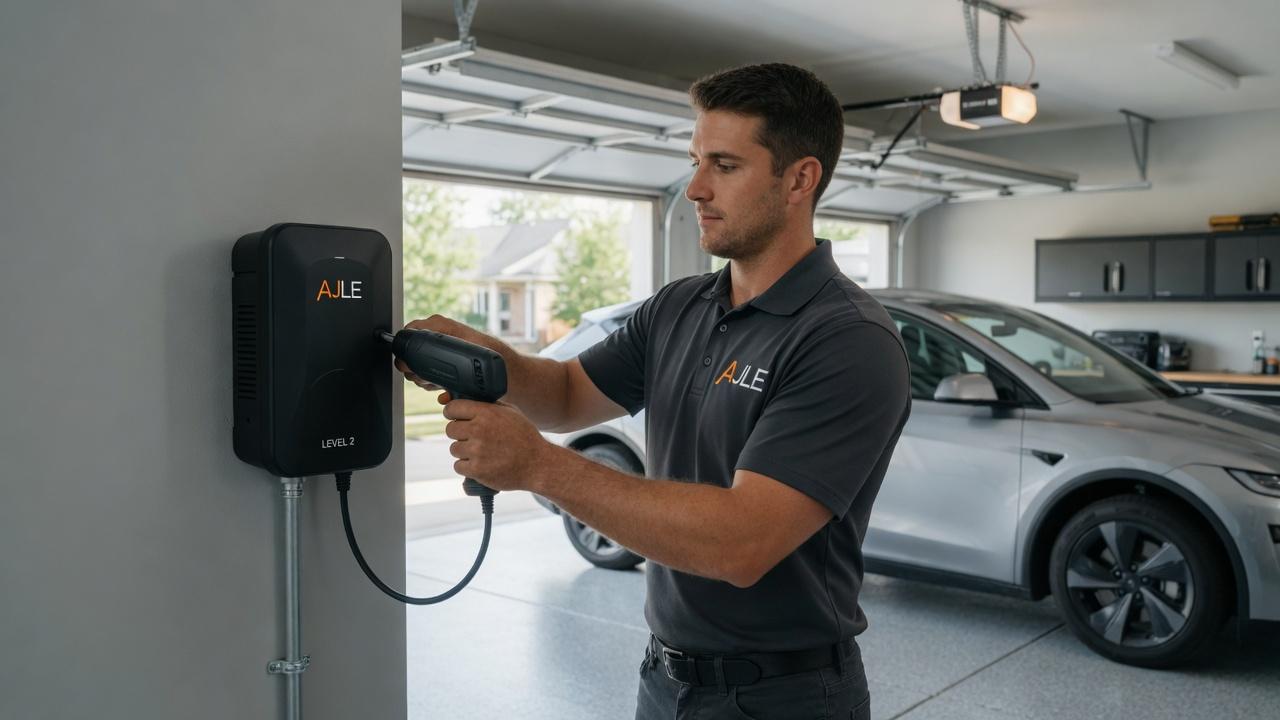
AJ Long Electric handles all permit applications and inspections as part of our standard installation service. We have long-standing relationships with inspectors across all Northern Virginia jurisdictions, ensuring a smooth process from start to finish.
What Does EV Charger Installation Cost in Northern Virginia?
Installation costs vary based on several factors, but here are typical ranges for the Northern Virginia area.
- Basic installation (panel in garage, short run): $800-$1,200
- Standard installation (basement panel, garage charger): $1,200-$2,000
- Complex installation (panel upgrade, long run, outdoor): $2,000-$4,000+
These costs include the dedicated circuit, wiring, outlet or hardwired connection, permit fees, and labor. The charger unit itself is purchased separately and typically costs $300-$700 depending on features.
Schedule Your EV Charger Installation
AJ Long Electric has been serving Northern Virginia homeowners since 1996, and EV charger installation has become one of our most popular services. Our master electricians perform a thorough site assessment, recommend the optimal charger and circuit configuration for your vehicle and home, handle all permitting, and ensure your installation passes inspection the first time. Whether you live in a single-family home in Fairfax Station, a townhouse in Reston, or a newer construction in Aldie, we have the experience to get the job done right. Contact AJ Long Electric today at (703) 481-3732 to schedule your free EV charger installation assessment.