
If you have never hired an electrician for a major project, the EV charger installation process can feel like a mystery. What happens during the site assessment? How long does the actual installation take? What is involved in the permit and inspection process? For Northern Virginia homeowners in Fairfax, Arlington, Loudoun, and Prince William counties, understanding each step removes uncertainty and helps you plan for a smooth experience. This step-by-step guide walks you through the entire process, from your first phone call to the moment you plug in your vehicle for the first time.
Key Takeaways
- The end-to-end schedule depends on the site, equipment, utility, permit, inspection, correction cycle, weather, and access.
- The assessment documents panel and service capacity, selected EVSE, route, mounting, and authority inputs.
- The electrician confirms the applicable permit and inspection path for the address.
- The written scope identifies a project-specific work window rather than a categorical installation-time promise.
- The authority having jurisdiction makes the final inspection decision.
Step 1: Initial Contact and Consultation
The process begins when you reach out to a licensed electrician. During the initial phone call or online inquiry, you will be asked basic questions to help the electrician prepare for the site assessment.
Ready to Install a Home EV Charger?
Our licensed electricians evaluate panel capacity, circuit routing, equipment requirements, and permit needs for home EV charging. Call (571) 444-6886 or request an estimate online.
Information to Have Ready
When you contact an electrician for an EV charger installation, having the following information available helps streamline the process. Your vehicle make, model, and year determines the charging specifications and optimal charger recommendation. Your home's age and electrical panel size (100, 150, or 200 amps) provides a starting point for capacity evaluation. The desired charger location (garage, driveway, carport) affects the scope of work. Your preferred charger brand and model, if you have one in mind, or a request for recommendations guides the conversation.
What to Expect
A site review is often needed before a final electrical proposal because the panel and service, load calculation, selected EVSE, route, permit, inspection, utility, and access inputs affect scope. Assessment scheduling follows current crew availability and site access; no fixed turnaround is promised.
Step 2: Site Assessment
The site assessment is the most important step in the process. Your electrician visits your home, evaluates the electrical infrastructure, and designs the installation plan.
Electrical Panel Evaluation
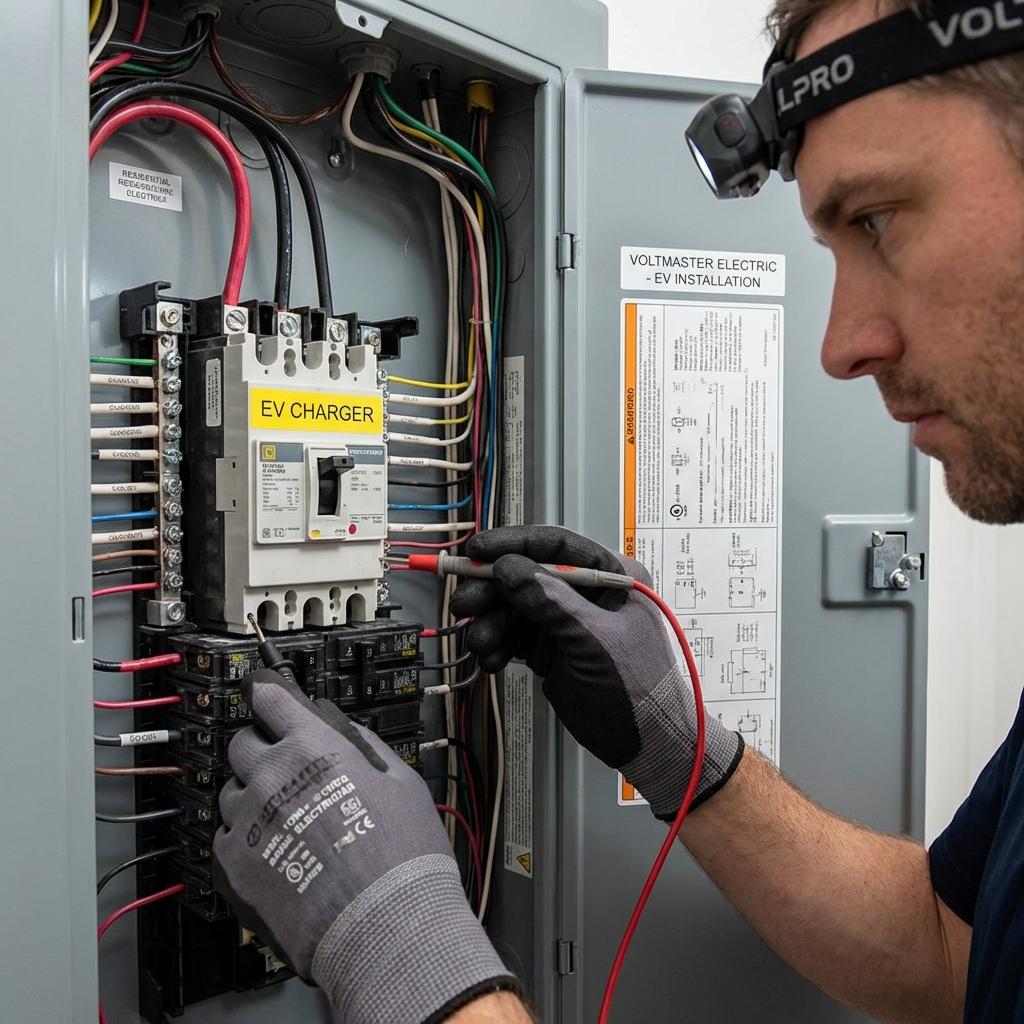
The electrician opens your panel cover and examines the panel's amperage rating and manufacturer, the number of available breaker slots, the condition of existing wiring and connections, the panel's overall age and condition, and any signs of previous unpermitted work. They may perform a load calculation (either on-site or back at the office) to confirm your panel can support the additional EV charger circuit without exceeding safe capacity.
Route Planning
The electrician traces the path from your panel to the proposed charger location, noting the total distance (which determines wire gauge and cost), obstructions that require routing around such as HVAC ducts, plumbing, or framing members, whether the route passes through finished or unfinished spaces (finished spaces require more careful routing), whether underground conduit is needed for outdoor runs, and any fire-rated assemblies that require special penetration methods. This route planning determines the majority of the installation's cost and complexity.
Charger Location Discussion
Your electrician reviews charger placement based on the vehicle charge port, practical route, wall and mounting surface, cable reach, working clearances, weather exposure, and parking position. Assessment length depends on the service, route, equipment, access, and questions that must be resolved.
Good to know: During the site assessment, point out anything unusual about your home's electrical system, including known issues, previous work by other contractors, or upcoming renovation plans that might affect the installation route. The more information your electrician has, the more accurate and efficient the installation plan will be.
Step 3: Detailed Quote
After the site and design review, you receive a written proposal covering the documented electrical scope, separately priced EVSE hardware, permit coordination, and identified dependencies. Proposal timing depends on design questions, utility or authority input, equipment, and scope complexity.
What the Quote Should Include
A professional quote itemizes the dedicated circuit installation including breaker, wire, and conduit, the outlet or hardwired connection at the charger location, any panel work needed such as adding a sub-panel or upgrading breakers, materials and hardware, electrical permit fees for your jurisdiction, labor costs, and the total project price. The quote should clearly state what is included and what is not. For example, the charger unit itself is often purchased separately by the homeowner, unless the electrician offers it as part of a package.
Typical Cost Ranges for Northern Virginia
A typical Level 2 circuit and hookup is $1,200–$3,500; only long, detached, outdoor, trenched, or otherwise complex routes extend to the $1,200–$4,500 total band. EVSE hardware is separate. If a 200-amp panel upgrade is required, the published panel range is $3,500–$7,500. The written proposal identifies permit fees, routing, trenching, wall access, load management, and other documented extras.
Step 4: Permit Application
Every EV charger installation in Northern Virginia requires an electrical permit. Your electrician handles this process as part of the project.
Permit Process by Jurisdiction
Each Northern Virginia jurisdiction controls its own application, review, and inspection systems. Timing depends on the current queue, completeness of the submission, scope, correction requests, and local requirements. The electrician confirms the current process for the address when filing.
What the Permit Covers
The electrical permit authorizes the specific work described in the application, including new circuit installation, charger connection, and any panel modifications. The permit also triggers a required inspection after the work is complete, providing an independent verification that the installation meets code.
Step 5: Installation Day
This is the day your home gains EV charging capability. Here is what happens, step by step.
Pre-Work Setup
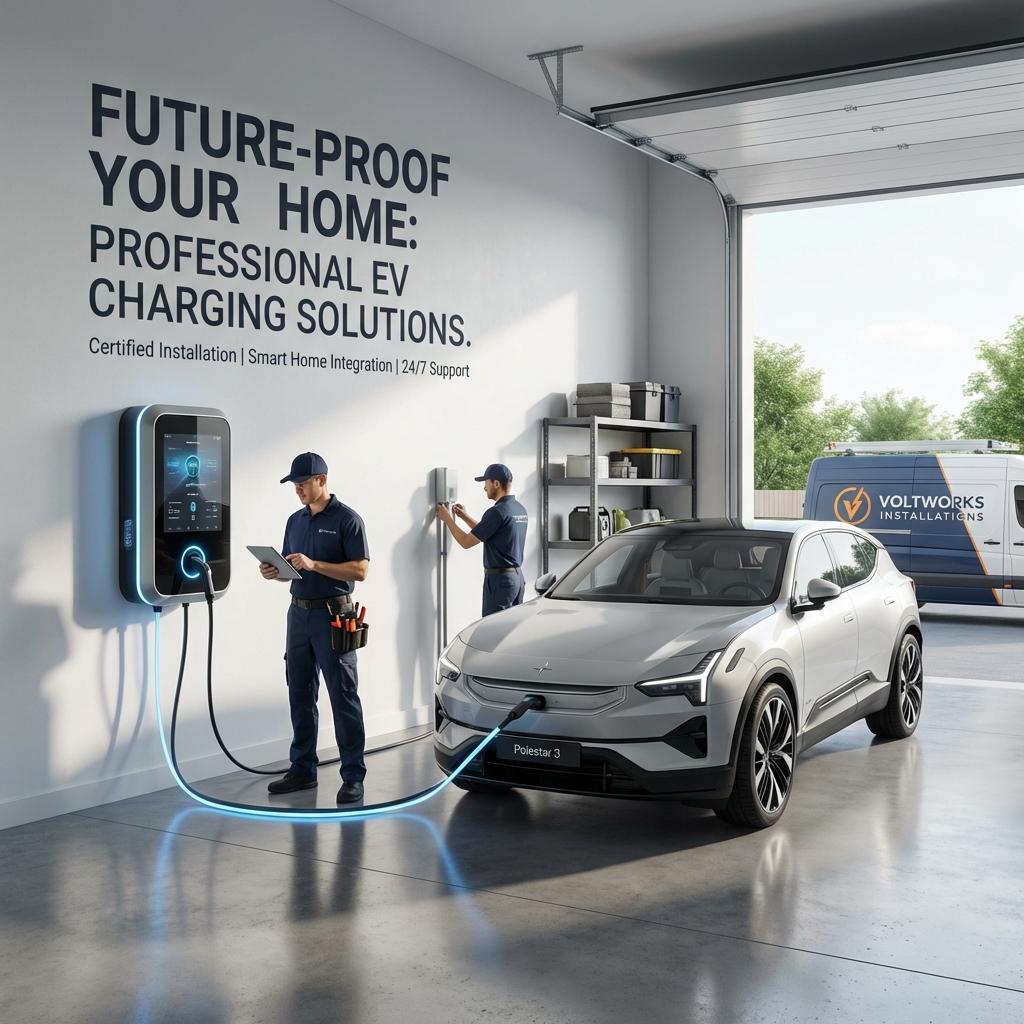
The electrician arrives, reviews the installation plan, lays out materials, and prepares the work area. They turn off power to the panel if needed (expect a brief power interruption during breaker installation).
Circuit Installation
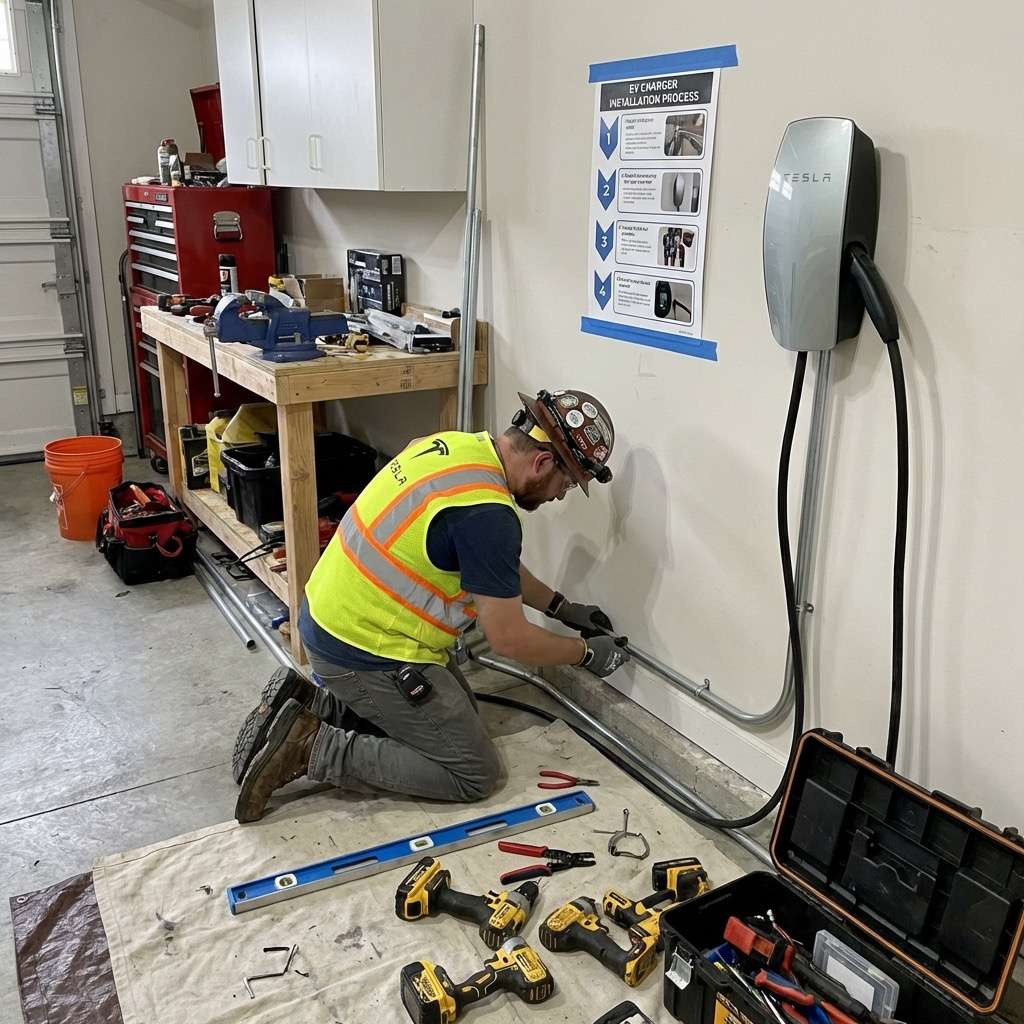
The electrician installs the new circuit breaker in your panel, runs conduit from the panel along the planned route to the charger location, and pulls the appropriately sized wire through the conduit. This is the most time-intensive part of the installation, especially for longer runs or routes that require drilling through framing or foundation walls.
Charger or Outlet Installation
At the charger location, the electrician installs either a NEMA 14-50 outlet (for plug-in chargers) or the hardwired junction box connection. If the charger is being hardwired, they mount the charger on the wall and make the terminal connections inside the unit. Mounting involves securing the charger bracket with lag bolts or appropriate fasteners for the wall surface.
Testing and Verification
With the installation complete, the electrician restores power, tests the circuit for proper voltage (240V between hot legs), verifies ground continuity, confirms the breaker is properly sized and labeled, and tests the charger with your vehicle to verify successful charging. This verification ensures everything works before the electrician leaves.
Cleanup and Review
The electrician cleans the work area, removes any debris, and walks you through the installation. They explain the charger operation, show you the new breaker in your panel, and answer any remaining questions. You receive documentation of the work performed for your records.
Pro tip from our team: Be home during the installation so the electrician can show you the completed work and test with your vehicle. If you cannot be present, ensure the electrician has access to the panel and installation area, and schedule a brief walkthrough at your earliest convenience. Understanding your installation helps you troubleshoot minor issues and communicate effectively if you ever need service.
Step 6: Inspection
The final step is the county electrical inspection, which verifies that the installation meets all applicable code requirements.
Scheduling the Inspection
Your electrician requests the inspection through the local building department's current system. The authority controls the appointment window and final decision. Required access arrangements are confirmed for the address.
What the Inspector Checks
The electrical inspector verifies proper breaker sizing for the circuit load, correct wire gauge for the circuit amperage and length, code-compliant conduit installation and connections, proper grounding throughout the circuit, correct outlet type or hardwired connection, compliance with NEC requirements for EV charging installations, and that the work matches what was described on the permit application.
Inspection Results
The inspector independently determines approval. If the authority identifies an issue, it provides a correction notice describing the required changes; the electrician addresses in-scope corrections and schedules re-inspection as needed.
Timeline Summary
The sequence is consistent, but the calendar is project-specific:
- Assessment: Scheduled around crew and site access
- Proposal: Issued after design questions and documented inputs are resolved
- Permit: Follows the jurisdiction's current review queue
- Installation: Work window set from scope, equipment, route, permit, utility, and access
- Inspection: Requested through the authority's current scheduling system
Total elapsed time and on-site duration depend on the panel and service, selected EVSE, route, equipment, permit, inspection, utility, correction cycle, weather, and access. The written proposal identifies the planned sequence without guaranteeing a categorical turnaround.
Schedule Your EV Charger Installation
AJ Long Electric coordinates the EV charger project from assessment through the required inspection. If an inspector requests a correction, we review the notice, address any correction attributable to our work under the written scope, and coordinate re-inspection; the authority having jurisdiction makes the final inspection decision. Call (571) 444-6886 to begin the site-specific installation process.