
The federal Section 30C credit is unavailable for EV charging property placed in service after June 30, 2026. Prior property may be subject to different rules, eligibility requirements, and filing deadlines. Review the current IRS guidance and consult a qualified tax professional. Utility rewards and rate plans can also change and do not guarantee a savings result. AJ Long Electric provides electrical proposals, not tax advice.
Key Takeaways
- Section 30C is unavailable for charging property placed in service after June 30, 2026.
- For earlier property, use current IRS guidance and a qualified tax professional to determine eligibility and filing treatment.
- Verify live utility-program eligibility, equipment lists, enrollment windows, reward amounts, event controls, and rate-plan compatibility before purchasing.
- Utility rates and vehicle usage determine operating cost; no savings or payback outcome is guaranteed.
- Confirm current Virginia and association requirements for an HOA or condominium installation.
The Federal EV Charger Tax Credit Ended June 30, 2026
The Alternative Fuel Vehicle Refueling Property Credit under Section 30C had applied to some charging-property costs, subject to eligibility limits. It is unavailable for property placed in service after June 30, 2026. Because prior-year eligibility and filing treatment are tax questions, review the IRS Alternative Fuel Vehicle Refueling Property Credit guidance and a qualified tax professional.
Ready to Install a Home EV Charger?
Our licensed electricians evaluate panel capacity, circuit routing, equipment requirements, and permit needs for home EV charging. Call (571) 444-6886 or request an estimate online.
If Property Was Placed in Service On or Before June 30, 2026
Earlier property may be subject to the rules that applied for that tax year, including location and other eligibility requirements. An installation date alone does not establish eligibility. Keep the itemized invoice and permit record, then use current IRS instructions and a qualified tax professional to determine whether and how a prior-year claim applies. AJ Long Electric does not provide tax advice or promise a credit.
Installing After June 30, 2026
Section 30C is unavailable for property placed in service after June 30, 2026. A typical Level 2 circuit and hookup is $1,200–$3,500; only long, detached, outdoor, trenched, or otherwise complex routes extend to the $1,200–$4,500 total band, with EVSE hardware separate. Verify current utility-program terms directly before purchasing equipment.
Check Current Dominion Residential EV Programs
Dominion Energy publishes residential charging, rate-plan, and managed-charging options, but program availability, eligibility, approved equipment, enrollment windows, pricing, rewards, event controls, and participation terms can change. Review Dominion's current Virginia electric-vehicle programs before selecting equipment or relying on a financial benefit.
Some utility options may be mutually exclusive or limited by account type, home type, panel capacity, equipment, or enrollment status. AJ Long Electric is not the program administrator and does not promise eligibility, a reward, a rate result, or acceptance. The electrical proposal identifies AJLE's project scope separately from any utility program.
Verify before purchasing: Save the current program page and written terms that apply to your account, then confirm the eligible equipment and application sequence directly with Dominion. Do not rely on an older dollar amount, charger list, or deadline.
Dominion Time-of-Use Rates: The Ongoing Discount
A time-of-use plan can price energy differently by time, but enrollment does not guarantee a lower total bill. Compare the live tariff, whole-home usage, charging schedule, event controls, vehicle efficiency, charging losses, and mileage before choosing a plan. Confirm current terms directly with Dominion; AJ Long Electric does not guarantee an annual savings amount.
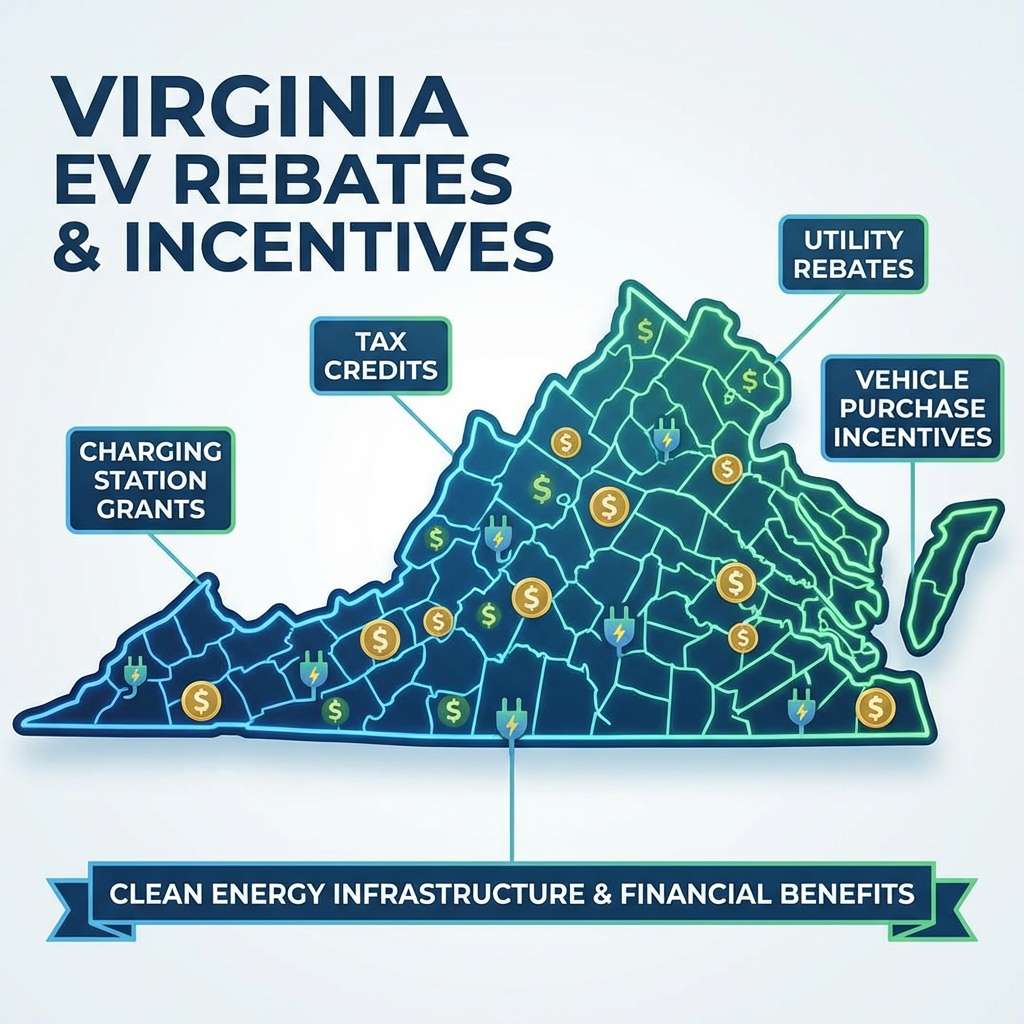
Virginia State Incentives: What Exists and What Does Not
Verify Current Virginia Programs
Do not assume a statewide rebate, credit, or exemption applies. Funding and program status can change. Check current information from Virginia Energy, the serving utility, and the relevant program administrator before purchasing equipment or including an incentive in a budget.
HOA Protections (Virginia Code Section 55.1-1823.1)
Virginia Code § 55.1-1823.1 limits some property-owners' association prohibitions for a station on property owned by the lot owner, subject to the declaration or other recorded governing documents. The statute allows reasonable restrictions and separately addresses common areas, insurance, indemnity, and related responsibilities. Review the current statute, governing documents, parking ownership, and qualified legal advice for the specific property; AJ Long Electric does not provide legal advice.
Virginia Clean Economy Act
Virginia statutes, utility filings, and customer programs can change independently. A broad energy policy does not establish that a particular residential charger, property, or customer receives a rebate or preferred rate. Use the current program documents for the account and project.
Employer and Workplace Incentives
Some Northern Virginia employers, particularly in the Tysons, Reston, and Dulles technology corridors, offer EV-related benefits: subsidies for home charger installation, free or discounted workplace charging, or commuter benefits that include charging costs. Check with your benefits department — these programs are easy to miss and can be worth more than any public incentive still standing.
Documentation Best Practices
Good records still matter for any current utility-program application, historical Form 8911 question, permit record, and future property documentation. Keep the following on file.
- Charger purchase receipt: Keep the original receipt showing the make, model, and price of your charging unit.
- Itemized installation invoice: Your electrician's invoice should separately list equipment, materials, labor, and permit fees.
- Permit documentation: Keep copies of your electrical permit application and any final approval record issued by the authority.
- Utility correspondence: Save the program terms, application, approval or denial, and any account-specific notices.
- Photos: Take before and after photos of the installation, including the electrical panel, wiring route, and mounted charger.
Document the Electrical Scope
AJ Long Electric provides a written installation scope and itemized invoice for its electrical work. Customers must verify live utility-program eligibility and use IRS guidance and a qualified tax professional for tax questions. We do not promise a rebate, credit, savings amount, or payback period. Call (571) 444-6886 to request a project-specific proposal.