
Planning to add backup power in Fairfax County, Virginia - a battery power station or a portable generator hookup? Hardwiring a transfer switch, interlock kit, or smart home panel into your electrical service generally requires an electrical permit and inspection. This offer has no permanent fuel-line scope; the AHJ determines the permit types required for the verified design.
Key Takeaways
- Hardwired transfer, interlock, and battery-integration work generally requires an electrical permit; this offer includes no permanent fuel-line work.
- The AHJ determines the permit types and inspections required for the verified equipment, location, and design.
- Permits document review of the adopted electrical requirements, grounding, bonding, and backfeed prevention.
- The written proposal identifies AJ Long Electric's permit and inspection responsibilities.
Why Permits Are Required
Backup power permits exist to protect you and your neighbors:
Planning Backup Power for Your Home?
Plan for the next outage with a listed portable-generator hookup or a compatible battery-backup installation. We evaluate the panel, selected loads, equipment, and transfer method before quoting the electrical scope. Call (571) 444-6886 to request an in-home assessment.
- Ensure electrical work meets the National Electrical Code (NEC), including NEC 702 for optional standby systems
- Confirm the transfer switch or interlock prevents backfeed onto utility lines
- Verify proper grounding and bonding
- Confirm battery placement and mounting follow the exact listing, manufacturer instructions, adopted code, and approved design
- Document the installation for insurance purposes
Permit Process: Your licensed installer should handle all permit applications and schedule the required inspection. This is a standard part of a professional backup power installation and should be included in your quote.
Permits Typically Required
A backup power installation in Fairfax County usually requires:
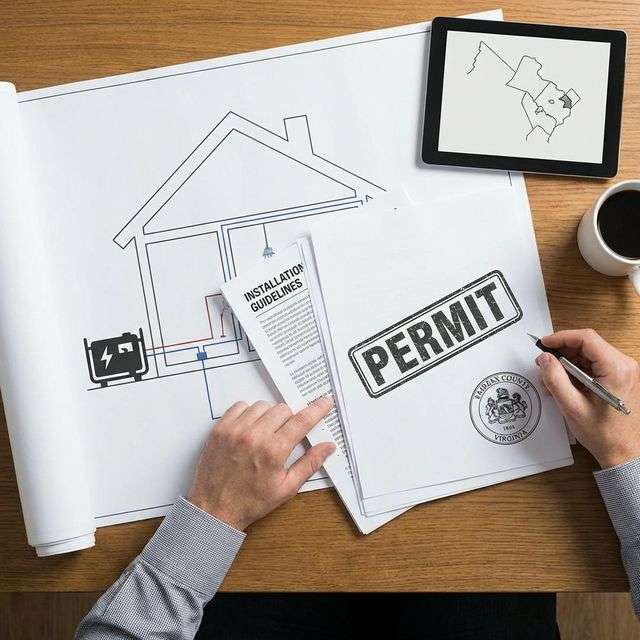
1. Electrical Permit (required)
Required for:
- Transfer switch or interlock kit installation
- Generator inlet box wiring
- Battery power station hardwiring and smart home panel installation
- Any modifications to the electrical panel
2. No Permanent Fuel Scope
A battery project or portable-generator hookup in this offer does not include a permanent fuel line, gas meter, or fuel tank. The portable generator is customer-provided and operates outdoors. The AHJ determines the permit types required for the verified electrical and mounting scope.
3. Additional Review
Structural, exterior, service, or mounting scope may trigger additional review. The exact equipment, proposed location, adopted code, and AHJ-approved design determine what applies.
Placement Requirements
Placement is determined from the exact equipment listing, manufacturer instructions, required clearances and operating conditions, adopted code, site conditions, and AHJ-approved design.
Battery Power Station
- Use only a location permitted by the exact listing and manufacturer instructions
- Meet documented clearance, ventilation, protection, temperature, and operating requirements
- Maintain required working space and follow the AHJ-approved design
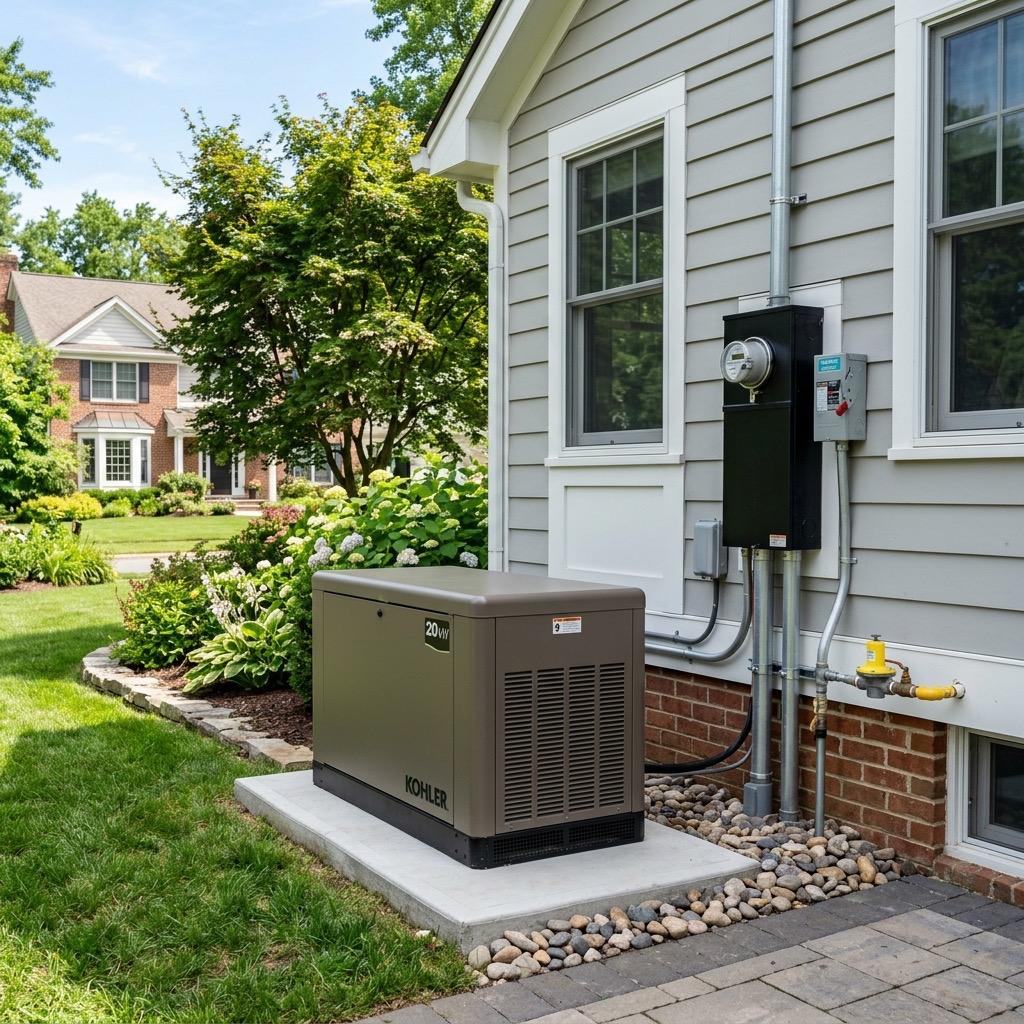
Portable Generator Inlet Box
- Locate the inlet as allowed by the equipment listing, adopted code, site conditions, and AHJ-approved design
- The generator itself is operated outdoors only, away from windows, doors, and vents (carbon-monoxide safety)
HOA Restrictions
HOA rules may apply based on the exact equipment and proposed location. Confirm community requirements before assuming that an interior or exterior location is exempt:
- Architectural review approval for visible exterior equipment
- Screening requirements
Check with your HOA before planning installation.
The Permit Application Process
Step 1: Documentation
Gather required documents:
- Equipment specifications (transfer switch, interlock, or battery/smart home panel model)
- One-line diagram of the connection
- Electrical load calculations
- Licensed electrician's Virginia contractor number
Step 2: Application Submission
Applications can be submitted:
- Online through the Fairfax County PLUS portal
- In person at the Permit Application Center
- By a licensed contractor on your behalf (most common)
Step 3: Review
Permit-review timing is set by the AHJ and can change with application completeness, required plan review, corrections, and agency workload. The project schedule is updated when the AHJ provides its current status.
Step 4: Permit Issuance
Once approved:
- Permit must be available at the job site
- Work must follow approved plans
- The final inspection must be scheduled
Required Inspection
Fairfax County typically requires a final electrical inspection covering:
- Transfer switch / interlock / smart home panel installation and operation
- Proper grounding and bonding
- Backfeed prevention verified
- Battery hardwiring and connections properly made
Permit Fees
Fairfax County sets the current permit classification, valuation method, filing charges, technology or other fees, and payment timing for the accepted application. Confirm the official fee record for the exact address and scope rather than relying on a fixed public band. This AJ Long Electric offer includes no permanent fuel-line work; the AHJ determines every permit type and fee.
What Happens Without Permits?
Installing without permits creates serious problems:
- Safety risks: no verification of proper installation
- Insurance issues: claims may be denied
- Home sale complications: unpermitted work must be disclosed
- Fines: the county can require permits after the fact plus penalties
Other Northern Virginia Jurisdictions
Requirements vary by locality, but all require an electrical permit for hardwired backup power:
Loudoun County
- Electrical permit through the Permit Loudoun online portal
Arlington County
- Electrical permit via Permit Arlington; stricter rules on exterior equipment due to density
Prince William County
- Electrical permit online through the county system; generally lower fees than Fairfax
We Handle the Permits
At AJ Long Electric, we manage the entire permit process for your backup power installation:
- Prepare all required documentation
- Submit applications on your behalf
- Coordinate the inspection
- Address any inspector requests
- Obtain final approval
You do not have to navigate the electrical permit process alone. Contact us to request an assessment; the written scope identifies permit responsibility and required inspections.