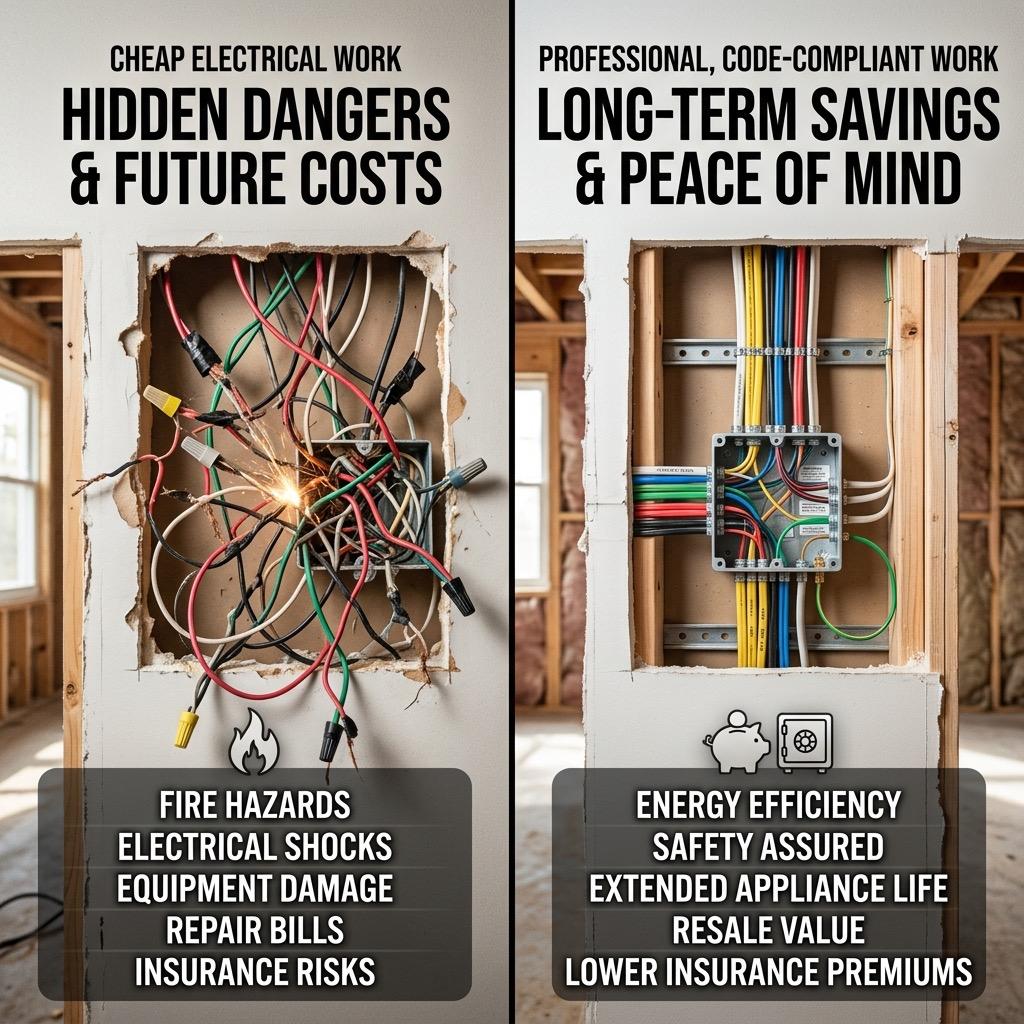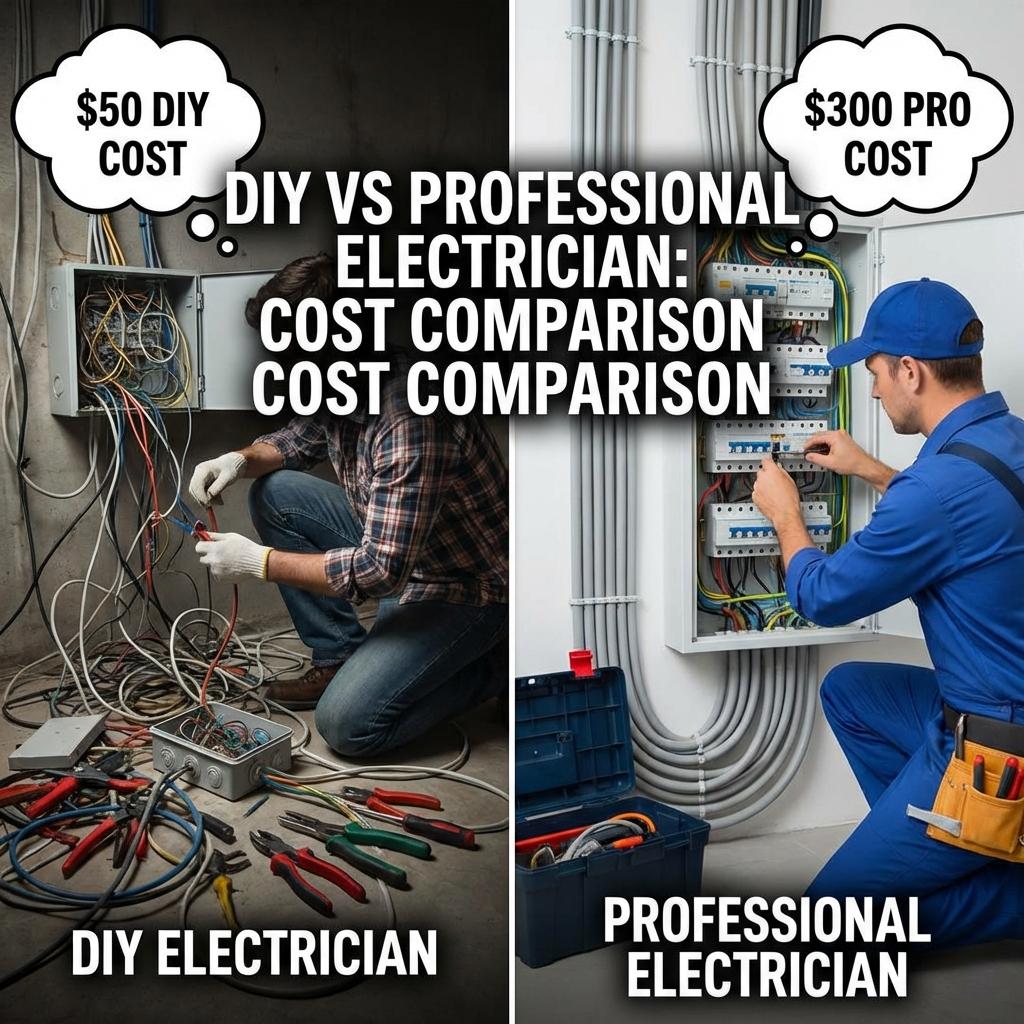

A quote can grow when conditions behind walls or at the service turn up during the work. Understanding these potential additions helps you budget accurately and avoid the frustrating surprises that turn a straightforward project into an over-budget headache. Northern Virginia homeowners, particularly those in older homes across Fairfax, Arlington, and Falls Church, often meet discovery costs once work begins. This guide covers the common ones and the quote language that keeps them visible before you sign.
Key Takeaways
- A quote can grow when conditions behind walls or at the service turn up during the work
- Typical sources of added cost are discovery issues behind walls, code upgrade requirements, and excluded permit fees
- Set any contingency from the concealed conditions the contractor names, not from a fixed percentage
- Drywall repair, painting, and cleanup are frequently excluded from electrical quotes
- Getting detailed written quotes that address potential additional costs is your best protection
Common Hidden Costs in Electrical Projects
Discovery Issues Behind Walls
Concealed conditions are a frequent source of added cost in electrical work. When an electrician opens a wall, ceiling, or junction box, they may discover conditions that were invisible before work began. Common discoveries in Northern Virginia homes include:
Request an Estimate from AJ Long Electric
Whether it is a simple repair or a major electrical project, our licensed team is ready to help. Serving all of Northern Virginia with transparent pricing and expert workmanship. Call (571) 444-6886 today.
- Outdated wiring: Cloth-covered wiring, knob-and-tube wiring, or deteriorated insulation that must be replaced for safety. This is especially common in homes built before 1960 in Arlington, Falls Church, and older Fairfax County neighborhoods.
- Improper previous work: Earlier work by previous homeowners or handymen may not meet code. Improper wire splices, missing junction box covers, undersized wiring, and makeshift connections must be corrected when discovered.
- Water damage: Moisture damage to wiring, junction boxes, or panels from roof leaks, plumbing issues, or basement moisture. Corroded connections and damaged insulation cannot be left in place.
- Pest damage: Rodents can chew through wire insulation in attics and crawl spaces. Damaged sections must be replaced to prevent arcing and fire hazards.
- Missing or inadequate grounding: Older homes may have ungrounded circuits that must be updated when new work is performed on those circuits.
Quality contractors acknowledge the possibility of discovery issues in their estimates. Look for language such as "Quote is based on visible conditions. Additional costs may apply if concealed conditions require remediation." This honest disclosure is a sign of a professional contractor who has experience with older homes.
Code Upgrade Requirements
When updating electrical systems, current National Electrical Code (NEC) requirements apply to the new work. This can trigger additional costs that were not part of the original project scope. Common code-driven additions include:
- AFCI breakers: Arc-fault circuit interrupters are now required for bedrooms, living rooms, dining rooms, hallways, and most other living spaces. At $30-$50 per breaker, adding AFCI protection to multiple circuits can add $200-$500 to a project.
- GFCI protection: Ground-fault circuit interrupter outlets or breakers are required in kitchens, bathrooms, garages, outdoor areas, laundry rooms, and within 6 feet of sinks. Upgrading existing standard outlets to GFCI adds $100-$200 per location.
- Tamper-resistant receptacles: All new or replaced outlets must be tamper-resistant, which costs slightly more than standard outlets.
- Additional grounding: Current code requires two ground rods for the grounding electrode system. If your home has only one or none, adding grounding adds $150-$400.
- Smoke and CO detector requirements: Some jurisdictions require updated smoke and carbon monoxide detection when electrical permits are pulled, especially during panel upgrades and rewiring projects.
Good to Know: Ask the electrician to list each code-required item in the quote, with a price, so it is part of the agreed scope rather than a mid-job addition.
Permit Costs
Some contractors deliberately exclude permit fees from their quotes to appear less expensive when compared to competitors who include them. This practice is misleading and should be considered a red flag. In Northern Virginia, electrical permits for common projects cost $75-$300 depending on the jurisdiction and project scope. When comparing quotes, always confirm whether permit fees are included. The electrical permit fees by county guide explains how the local fees work.
Beyond the permit fee itself, some contractors cut corners by not pulling permits at all. This creates enormous risk for homeowners. Unpermitted work can lead an insurer to dispute or deny a claim, complicate a home sale, and result in fines if the county finds it. Always insist on permitted work and verify that the permit has been pulled before work begins.
Drywall Repair and Patching
Electrical work frequently requires opening walls and ceilings to route wiring. While experienced electricians minimize damage by using strategic access points and fishing wires through cavities, some drywall cuts are unavoidable, particularly for rewiring projects and long circuit runs through finished spaces.
Clarify whether your electrical quote includes drywall repair, taping, mudding, sanding, and painting, or whether that work is excluded and must be handled separately. Many electrical contractors do not perform drywall and painting work, so this cost must be budgeted separately. Depending on the extent of access holes, drywall repair can add $200-$1,000 or more to the total project cost. In homes with textured ceilings or specialty wall finishes, matching the existing texture adds further expense.
Cleanup and Debris Removal
Most reputable electricians include basic cleanup in their service, but verify this in writing. Removing old panels, scrap wire, packaging, and construction debris should be the contractor's responsibility. Some less professional operators leave behind a mess that requires your time and effort to clean up.
Less Obvious Hidden Costs
Temporary Power Arrangements
Major electrical work like panel upgrades and rewiring requires your power to be shut off for extended periods. If you need temporary power for work, a sump pump, or medical equipment, discuss the load and outage plan during the planning phase. For medical equipment, confirm compatibility with the device manufacturer and maintain the emergency plan recommended by the care team; temporary or optional backup power does not guarantee uninterrupted operation.
Follow-Up Visits
Some projects require multiple visits. An initial inspection may reveal the need for materials that must be ordered, or a follow-up may be needed after the county inspection identifies corrections. Quality contractors include reasonable follow-up visits in their project pricing, but clarify this expectation upfront.
Landscaping Restoration
Projects involving underground wiring (outdoor lighting, detached garage circuits, EV charger runs to a driveway) require trenching that disrupts landscaping. The cost to restore grass, mulch beds, and walkways may or may not be included in the electrical quote. In Prince William and Loudoun County homes with extensive landscaping, this can be a meaningful additional expense.
HOA Approval Requirements
If you live in a community with a homeowner's association, exterior electrical work such as a generator inlet box, outdoor lighting, and EV charger mounting may require HOA approval. While there is no direct cost for the approval process, delays can impact project scheduling and potentially increase costs if labor rates change or equipment prices fluctuate during the waiting period.
Tip: Before signing a contract for any electrical project over $1,000, ask your electrician this question: "What are the most common additional costs you encounter on projects like this?" An experienced, honest electrician will share the realistic possibilities based on their experience with similar homes in your area.
How to Protect Yourself from Hidden Costs
You cannot eliminate every possible surprise, but you can minimize their impact with proactive planning.
- Get detailed written quotes: The more specific the quote, the less room for surprise charges. Every line item should be clearly defined.
- Ask about potential additional costs: Have an explicit conversation about what could increase the price and under what circumstances.
- Request a not-to-exceed price: For defined projects, ask if the contractor will cap the total price. Many will agree to a maximum for straightforward work.
- Set a contingency from named allowances: Ask the contractor which concealed conditions are likely in your house and how each would be priced if found. Base your reserve on those answers rather than a fixed percentage.
- Get change orders in writing: If additional work is discovered during the project, insist on a written change order describing the additional scope and cost before the work is performed. Never authorize verbal additions.
For the Northern Virginia factors that add cost, such as the permit jurisdiction, utility coordination, the age of the house, condo building rules and underground runs, see hidden costs of electrical work in Northern Virginia.
How AJ Long Electric Handles Added Work
AJ Long Electric is a family-owned electrical contractor serving Northern Virginia since 1996. Our written estimates list the scope, exclusions and permit responsibility. If we find a concealed condition during the work, we stop, show you what we found and give you a written change order before doing any added work. Estimates are free for every service. Scheduled estimate visits and written project prices are free. Diagnostic and repair work is a separately priced service. Call (571) 444-6886 to request an estimate. We serve homeowners throughout Fairfax, Arlington, Loudoun, and Prince William counties.