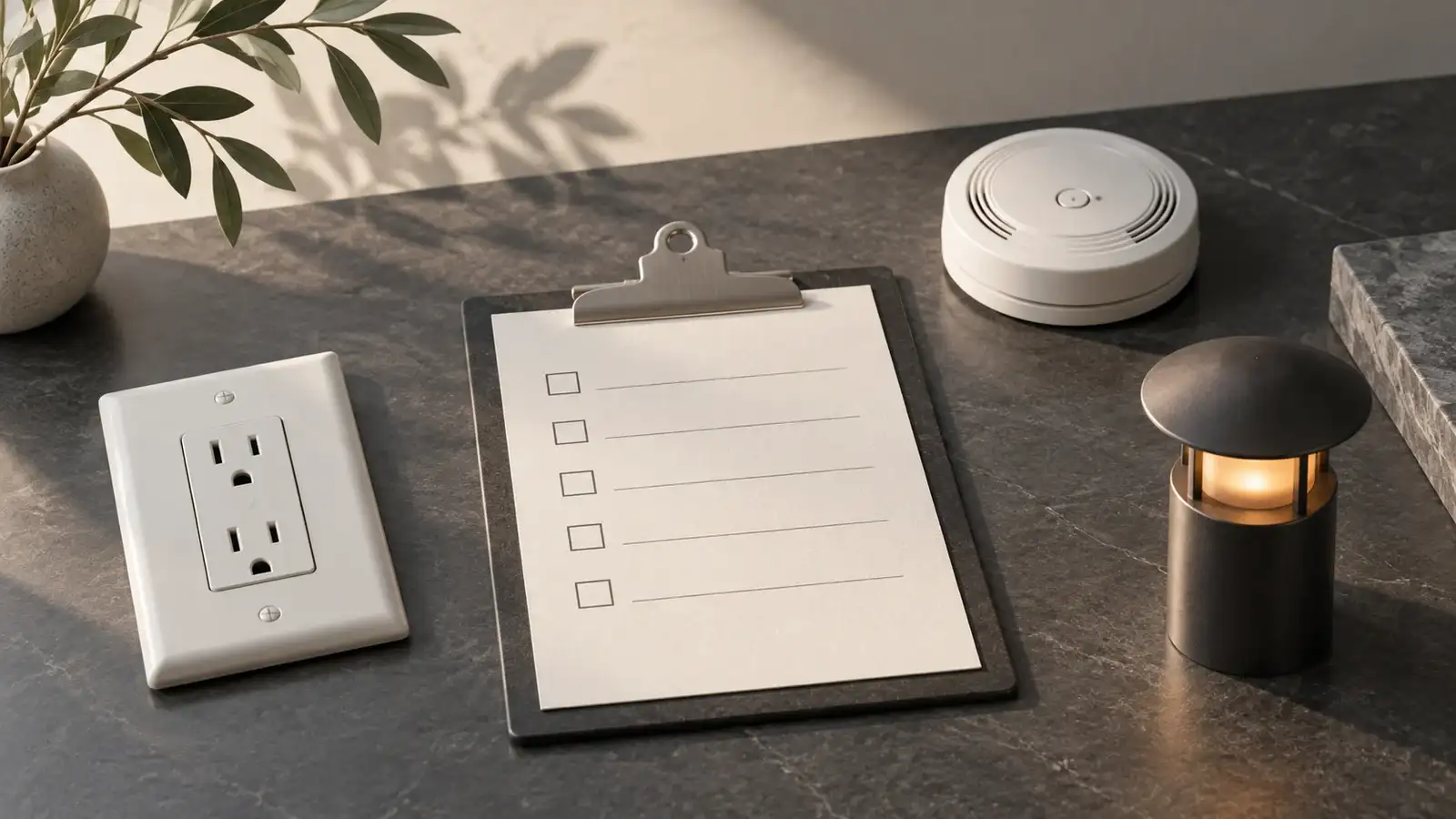

Spring is a useful time to collect the electrical issues you noticed over winter and review equipment before outdoor use increases. The goal is a clear record: what you saw, where it happened and what needs attention. A seasonal checklist cannot certify concealed wiring or establish that every circuit is safe.
Use an observation log, not a pass-or-fail house inspection
Walk accessible areas in daylight. Leave electrical enclosures closed and do not touch damaged or wet equipment. Record a room or outdoor location for every finding so another person can locate it. Note whether a problem is new, intermittent or associated with a particular appliance or weather event.
| Area | What to record | Next action |
|---|---|---|
| Outlets and switches | Cracked covers, discoloration, unusual noise or loose-fitting plugs | Stop using affected equipment and request evaluation |
| Protective devices | Model, instructed test and actual result | Arrange help for an unexpected result |
| Smoke and CO alarms | Model, replacement marking and test result | Follow that alarm’s maintenance instructions |
| Outdoor equipment | Visible damage, water exposure or disturbed cable routes | Resolve the condition before seasonal reuse |
| Planned improvements | Desired location, equipment and access constraints | Group items into a project-estimate request |
Record everyday warning signs without provoking them
If you have noticed buzzing, burning smells, intermittent power or repeated trips, write down when they occurred. Do not recreate the fault for a video. Keep away from smoke, arcing or water-exposed electrical equipment and contact emergency services when there is immediate danger.
Concerned About Your Home's Electrical Safety?
A professional electrical inspection identifies hidden hazards before they become emergencies. Our licensed electricians provide thorough safety inspections throughout Northern Virginia. Call (571) 444-6886 to schedule yours.
Look at accessible cord and plug condition with portable equipment unplugged. Do not move heavy appliances or remove fixed covers for this checklist. The CPSC home checklist identifies damaged cords, loose plugs and obstructed cord routes as items needing attention. A normal-looking exterior does not rule out an internal defect.
Use the actual GFCI and AFCI instructions
Identify the protective devices you have and keep their manufacturer instructions. Leviton’s GFCI test guidance calls for monthly manual tests. Follow your device’s procedure and prepare for connected equipment to lose power during a test. For AFCI or dual-function breakers, use their own instructions rather than cycling every breaker as a generic maintenance exercise.
A GFCI that will not reset is not automatically defective: lack of incoming power or another condition can prevent reset. Do not hold the button in or bypass it. Stop using the affected circuit and have an unexpected result evaluated. A plain outlet may be protected by another device upstream.
A plug-in tester can show some conditions, but it cannot verify the entire wiring system. Treat an unexpected indication as information for an electrician, not as permission to make a repair or assume every unflagged outlet is safe.
Check alarm markings rather than applying one replacement age
Record the smoke and carbon-monoxide alarm models and their replacement dates. Kidde explains that alarm life varies by product. Follow the model’s test, cleaning, battery and end-of-life instructions. A sealed-battery alarm and a replaceable-battery alarm require different maintenance.
If dates or instructions are missing, identify the model before deciding what to buy. For interconnected alarms, replacement compatibility also matters. Record a chirp pattern if safely possible; do not disable an alarm merely to silence an unresolved warning.
Review outdoor readiness and HVAC access
Look for broken weather covers, damaged fixture lenses and equipment affected by winter water or yard work. Do not open landscape-lighting connections or electrical disconnects as a homeowner inspection. Leave damaged items unused until they are assessed.
Keep HVAC maintenance with the appropriate professional and follow the equipment’s access and clearance instructions. An exterior glance at a disconnect does not verify its internal connections or guarantee protection against compressor failure. If cooling causes repeated trips or power fluctuations, use our AC symptom guide to describe the issue.
Separate necessary repairs from desired upgrades
Make one list of active problems and another of improvements such as a fan, lighting or a better outdoor outlet location. Home age alone does not establish that every device needs replacement. Prior alterations, known defects, water damage and planned loads provide a more useful starting point for professional review.
Send the location log, safe photos and any previous findings with your service request. Select troubleshooting for faults and a free project estimate for installation work. For new backyard work, the spring project brief helps define equipment, routing and restoration before an estimate.