
When the power goes out in Northern Virginia, having the right amount of backup power can mean the difference between comfort and chaos. But how do you know what size you actually need? This comprehensive guide walks you through sizing both options AJ Long Electric supports: a portable generator (sized in watts) connected through a transfer switch or interlock, and a battery power station (sized in kilowatt-hours of capacity plus its watt output).
Key Takeaways
- Sizing a portable generator means matching its running watts and surge (starting) watts to the loads you want to run.
- Sizing a battery power station means matching both its continuous watt output AND its kilowatt-hour (kWh) capacity to how much energy you need to store.
- Most essential-circuit setups in Northern Virginia homes are covered by a 3,500-7,500 watt portable generator or a 3.6-7.2 kWh battery station; whole-home battery integration scales to 10-30+ kWh.
- A safe portable-generator connection always runs through a manual transfer switch or interlock kit and an exterior inlet box - never a backfeed cord.
Two Numbers That Matter: Watts vs. kWh
Power is measured in watts (W) and kilowatts (kW); energy storage is measured in kilowatt-hours (kWh). A portable generator is rated by how many watts it can deliver at once (and how much fuel it burns to do so). A battery power station has two ratings that both matter: its continuous output in watts (how much it can power at any moment) and its capacity in kWh (how long it can run that load before it is empty). Get either number wrong and the system either overloads or runs out.
Planning Backup Power for Your Home?
Plan for the next outage with a listed portable-generator hookup or a compatible battery-backup installation. We evaluate the panel, selected loads, equipment, and transfer method before quoting the electrical scope. Call (571) 444-6886 to request an in-home assessment.
Sizing Rule of Thumb: A portable generator must handle the largest motor starting surge plus all running loads at the same time. A battery station must both supply enough continuous watts AND store enough kWh to ride out the outage - or be recharged from the grid or a portable generator during the event.
Step 1: Calculate Your Essential Power Needs
Start by identifying which systems and appliances you actually need during an outage. These watt figures apply to both a generator and a battery station:
HVAC Systems
- Central air conditioning: 3,500-5,000 starting watts, 2,000-4,000 running watts
- Heat pump: 4,500-6,000 starting watts, 3,000-4,500 running watts
- Furnace blower: 1,200-2,000 starting watts, 500-1,000 running watts
- Electric water heater: 4,000-4,500 running watts (no significant surge)
Kitchen Appliances
- Refrigerator: 1,200-2,000 starting watts, 100-400 running watts
- Electric range/oven: 2,000-5,000 running watts
- Microwave: 1,000-1,800 running watts
- Dishwasher: 1,800 starting watts, 1,200-1,500 running watts
Other Essential Systems
- Sump pump: 2,150 starting watts, 800-1,050 running watts
- Well pump: 2,000-4,000 starting watts, 750-1,500 running watts
- Security system: 100-500 running watts
- Lighting (LED): 5-15 watts per bulb
Step 2: Account for Starting Surge (Watts)
Motors and compressors require significantly more power to start than to run. This is called "starting surge" or "inrush current." A portable generator must handle these surges, and a battery station's inverter must be rated for them too.
The general rule: your backup source should handle the largest starting surge plus all running loads simultaneously. This is why a home running 5,000 continuous watts of essentials may need a 7,500-watt portable generator, or a battery station with at least a 5,000-7,000 watt surge-capable inverter.
Step 3: Size the Energy You Need to Store (kWh)
Battery sizing starts with measured or nameplate load, duty cycle, desired duration, starting surge, usable capacity, conversion losses, temperature, battery condition, reserve settings, and recharge inputs. Multiply documented energy use by the desired hours, then apply the equipment's usable-capacity and derating guidance. Product capacity alone does not promise a runtime or recharge outcome.
- EcoFlow Delta Pro: 3.6 kWh per unit, expandable; 3,600 W output (4,500 W surge)
- EcoFlow Delta Pro Ultra: 6 kWh per battery, stackable to large whole-home capacities, with the EcoFlow Smart Home Panel
- Bluetti AC500 / B300S: ~3 kWh per battery, expandable; 5,000 W output
- Bluetti EP900: home-integration system that hardwires to the panel for whole-home circuit coverage
- Anker SOLIX: portable stations and expansion batteries for essentials and devices
Step 4: Match the Approach to the Job
Essential-circuit backup
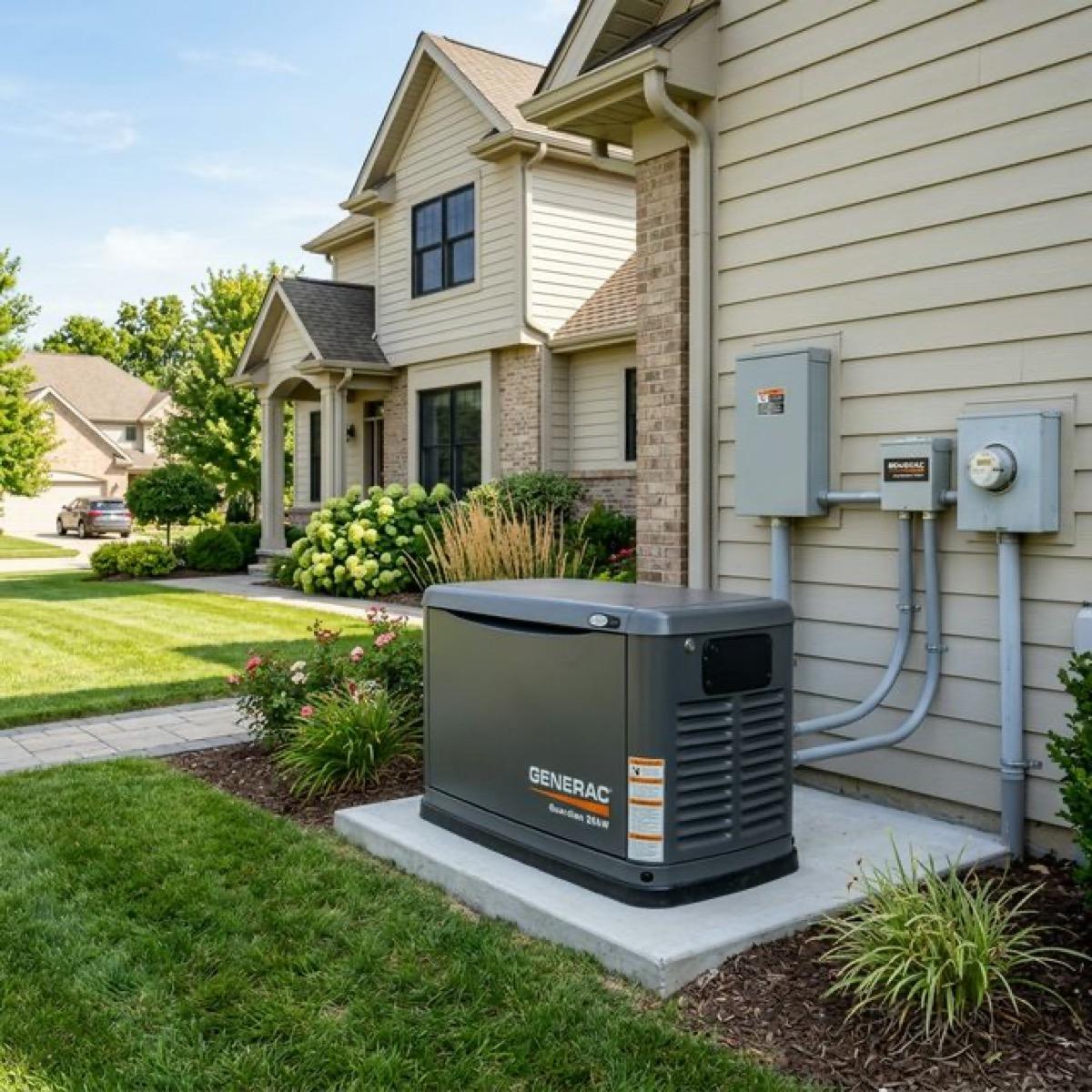
- Portable generator: a 3,500-7,500 W portable inverter generator connected through a manual transfer switch or interlock kit and an exterior inlet box.
- Battery station: a 3.6-7.2 kWh unit sized to the supported loads; placement, clearance, operating conditions, and transfer behavior follow the exact listing and approved design.
Whole-home or near-whole-home backup
- Portable generator: a larger 7,500-12,000 W portable through a transfer switch, with the understanding that you will manage which large loads (like central AC) run at once.
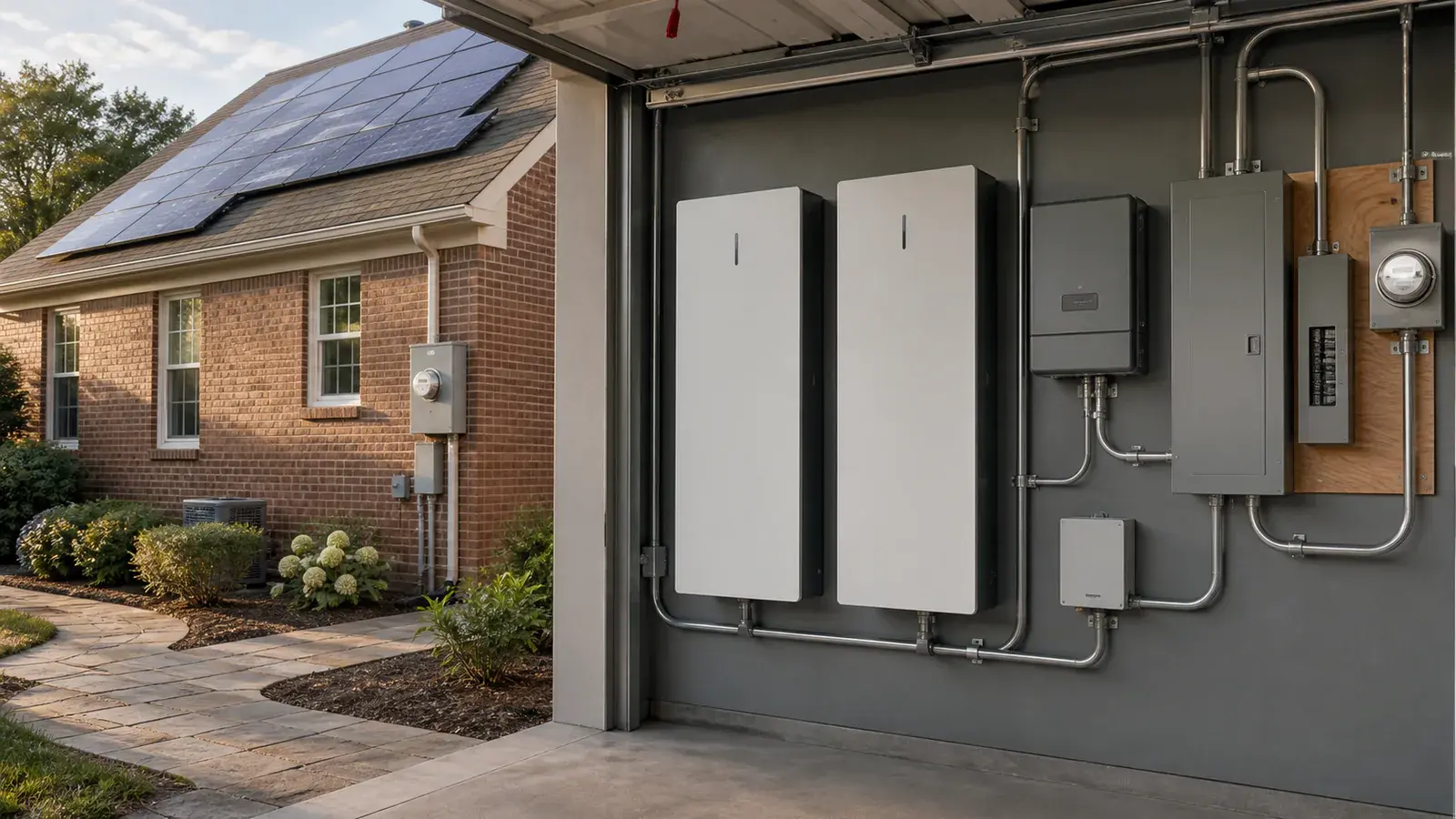
- Battery station: a compatible listed hardwired integration scaling to 10-30+ kWh, with selected circuits, transfer behavior, and recharge inputs documented by the manufacturer instructions and approved design.
Square footage is only a starting point. A 2,500 sq ft home with electric heat, a hot tub, and an EV charger needs far more capacity than a similar home with gas heat and no special loads. Decide which circuits truly matter during an outage - that list, not the size of the house, drives the right size.
Battery + Generator: The Hybrid Approach
Some Northern Virginia homeowners pair the two. A battery system can support selected loads within its output and stored capacity, while a customer-provided portable generator can recharge compatible equipment or support approved circuits during a longer event. Battery placement and transfer behavior follow the exact listing and design; generator runtime depends on fuel supply, duty limits, maintenance, and operating conditions.
Professional Sizing Is Essential
While these guidelines help you understand the process, professional sizing matters. At AJ Long Electric, we perform a detailed load analysis of your home, considering:
- Your electrical panel and service capacity
- Actual nameplate ratings of your equipment
- Your family's specific needs and priorities
- Which transfer switch, interlock kit, or smart home panel fits your panel
- Local code requirements in Fairfax County, Loudoun County, and surrounding areas
Future-Proofing: EV charging alone adds 7,200-11,500 watts. If you plan to back up an EV charger, finish a basement, or switch from gas to electric appliances, size your battery capacity and inverter output - or your portable generator wattage - with that headroom in mind.
Request a Backup Power Sizing Assessment
Don't guess. An undersized portable generator overloads and shuts down when you need it most, and an undersized battery runs out before the lights come back. An oversized setup wastes money.
Contact AJ Long Electric to request an on-site backup power sizing assessment. Estimates are free. The $99 dispatch fee applies only when we arrive prepared to complete a project, provide the price on site, and you decline the work. It covers travel and preparation. It is waived when you accept the on-site quote and for active members. It is not charged for a scheduled estimate visit. We'll analyze your home's electrical system, discuss your priorities, and recommend a portable-generator hookup, battery power station, or hybrid combination based on your needs and budget. Serving all of Northern Virginia including Fairfax, Loudoun, Arlington, and Prince William counties.