Wall pack vs portable generator hookup
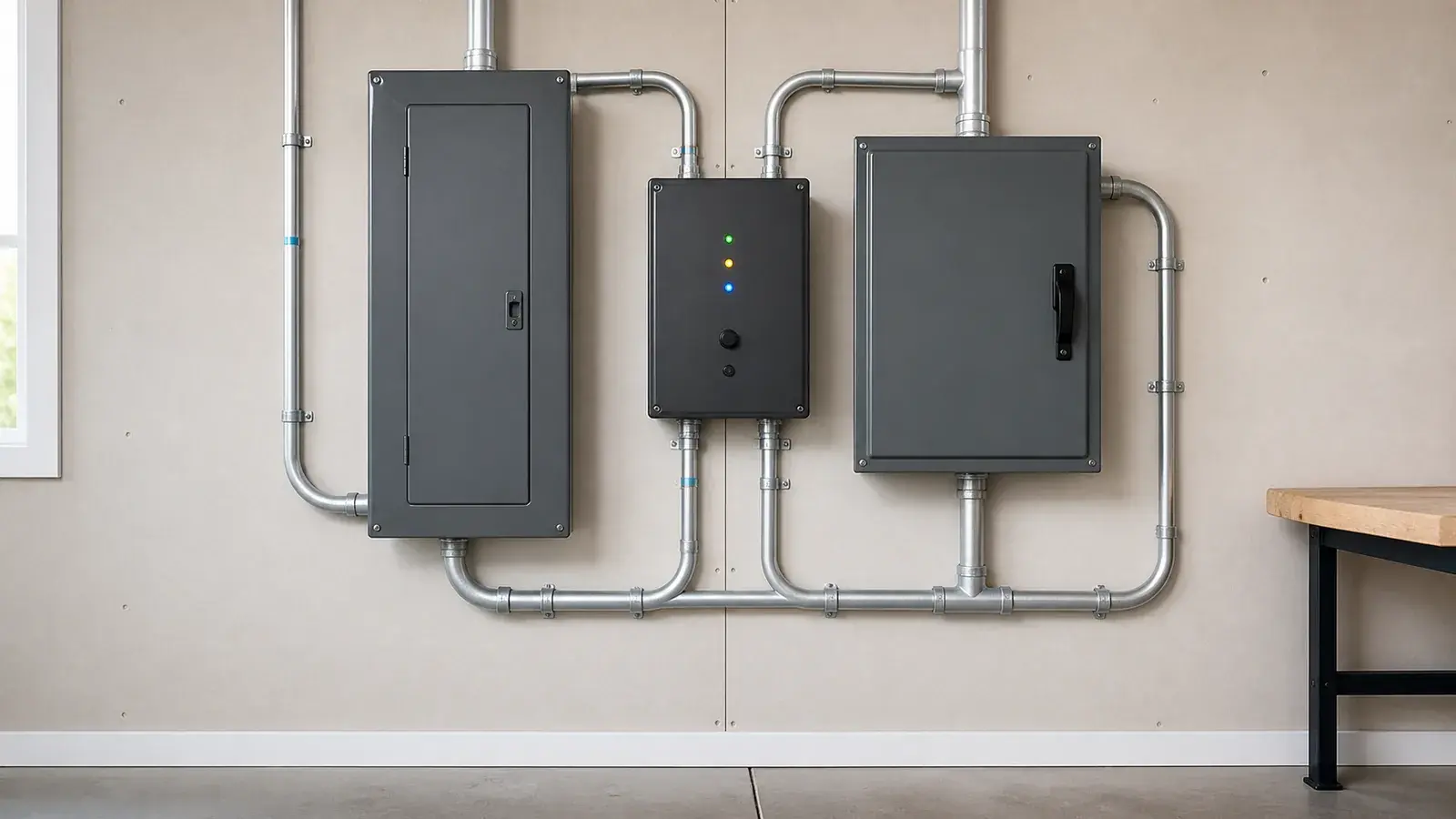
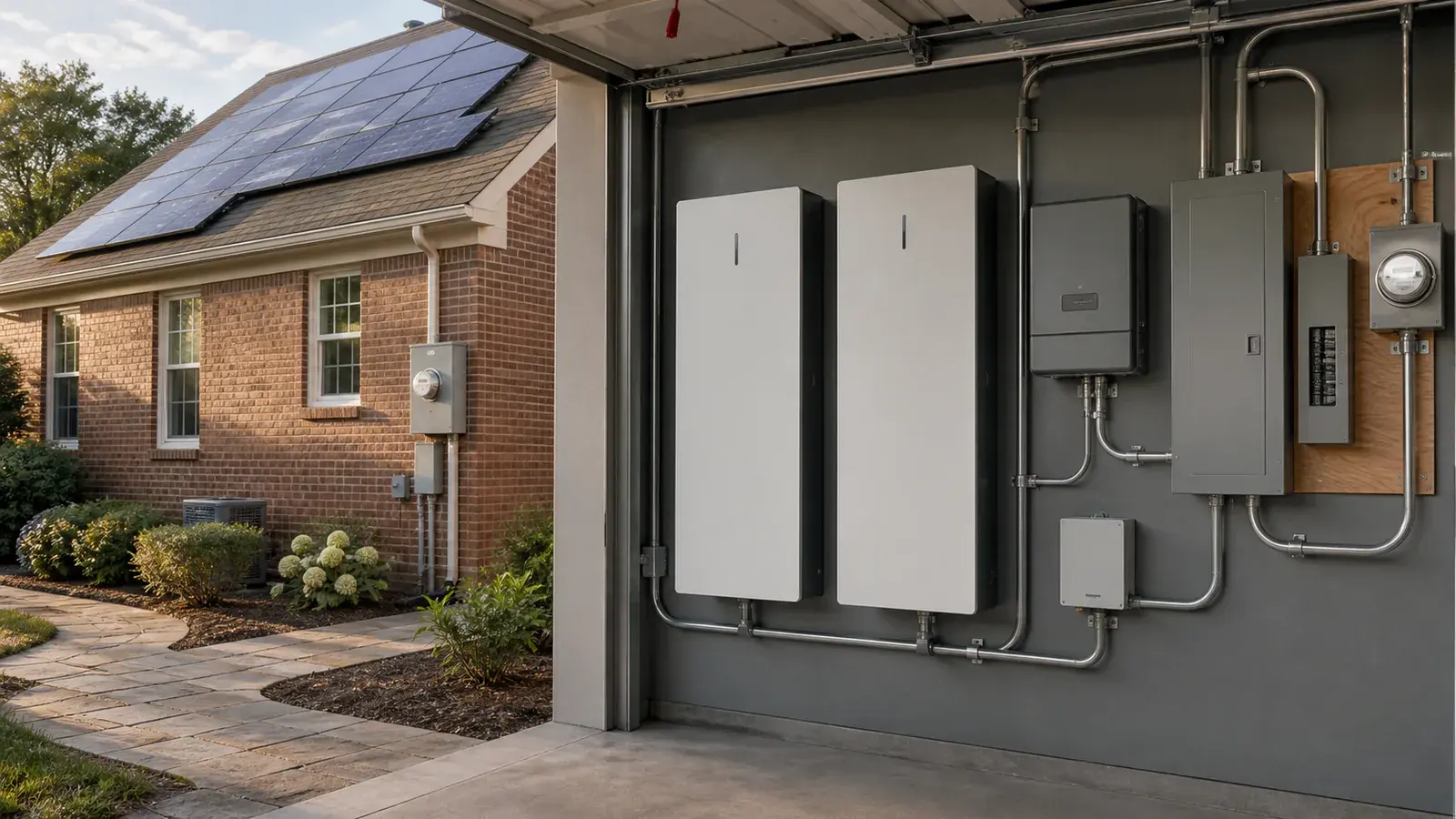
A listed wall pack or stationary battery system mounts in an equipment-approved location and can be commissioned to supply selected household circuits within its rated continuous and surge output. A portable generator needs an exterior power inlet, a listed mechanical interlock or manual transfer switch, and safe outdoor operation away from doors, windows, and vents.
AJ Long Electric can include compatible listed battery equipment in the approved scope or connect customer-selected listed equipment. Portable generators stay hookup-only — we do not sell generators or perform fuel work.
| Path | What we do | Typical range |
|---|---|---|
| Portable station + install | Supply listed unit or connect yours via listed transfer equipment | $2,500–$6,000 |
| Whole-home / smart-panel integration | Documented circuits and transfer behavior defined by the compatible listed design | $6,000–$15,000+ |
| Portable generator hookup | Inlet plus listed transfer switch or interlock; generator separate | $900–$2,500 |
Selecting Backed-Up Circuits: Power (kW) vs. Stored Energy (kWh)
Every battery integration design separates two engineering numbers: inverter output power (kilowatts, which determines which appliances can start and run at the same time) and usable storage capacity (kilowatt-hours, which determines how long those circuits can run before the battery depletes).
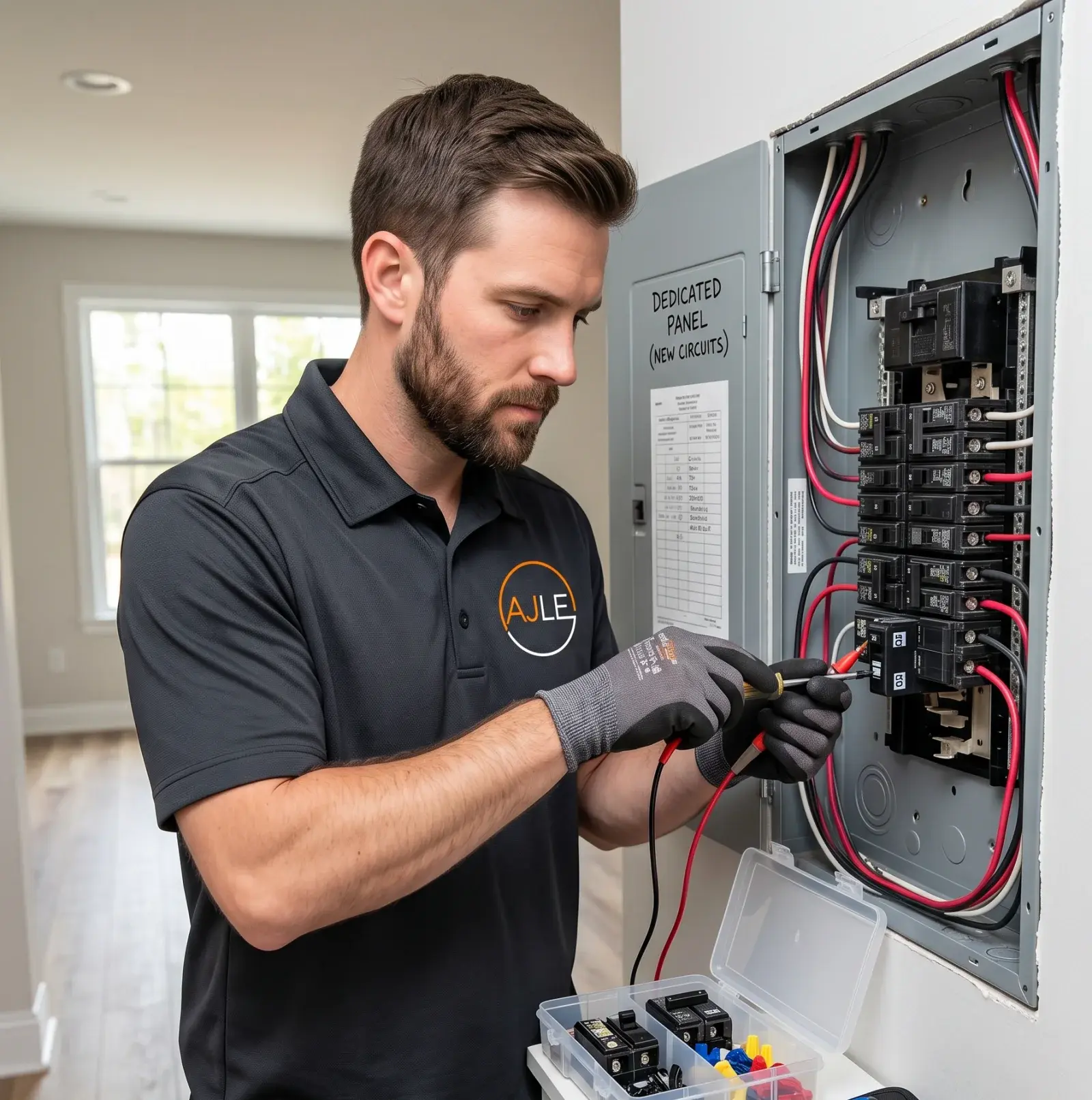
In a critical-loads subpanel configuration, we relocate priority 120-volt and 240-volt branch circuits—such as kitchen refrigeration, a basement sump pump, gas furnace or boiler controls, Wi-Fi/networking gear, and key lighting—into a dedicated backed-up panel. In a whole-home smart-panel configuration ($6,000–$15,000+), compatible listed load-shedding relays allow you to keep the main distribution bus organized while automatically shedding high-draw loads like EV chargers, electric ranges, or central air conditioners during a grid outage.
Placement, Mounting, and Code Clearances
Stationary energy storage systems are governed by NEC Article 706, Virginia Uniform Statewide Building Code provisions, local fire code clearances, and the exact manufacturer installation manual. Before choosing a wall in your garage, utility room, or exterior facade, the site assessment checks:
• Structural backing and weight support for floor-standing or wall-hung battery modules. • Required separation distances from doors, operable windows, means of egress, and gas or water appliances. • Vehicle impact protection (such as bollard or wheel-stop requirements) when mounted in a garage bay. • Ambient operating temperature ranges so cold winter mornings or hot summer garages do not throttle charging and discharging.
What the written electrical scope includes
The written proposal separates battery and inverter hardware, compatible transfer or load-management equipment, the feeder and branch-circuit conductor routes, overcurrent protection, code-mandated directory and rapid-shutdown/disconnect labeling, and the local permit path. Hardwired transfer equipment and stationary storage require an electrical permit in Fairfax County, Arlington, Alexandria, Loudoun, and Prince William County. We confirm the jurisdiction requirements for the exact address before scheduling installation. The proposal identifies the exact listed equipment without implying an unsupported manufacturer certification or product relationship.
Coordinating with a Panel Upgrade or EV Charger
If a $3,500–$7,500 panel upgrade or an EV circuit ($1,200–$3,500 typical; $1,200–$4,500 only for long, detached, outdoor, trenched, or otherwise complex routes; EVSE hardware separate) is already planned, coordinate the battery design on the same load calculation. Mapping backed-up circuits and EV load-shedding behavior during the panel replacement avoids re-routing branch circuits twice. Combined planning may reduce duplicate access and coordination, while each system remains clearly itemized within its applicable published range.
Step-by-Step Guide
List Priority Outage Loads
Identify the essential circuits you need during a grid outage—such as refrigerators, sump pumps, heating blowers, medical devices (which always require their own device-specific backup and emergency plan), and lighting.
Evaluate Main Panel & Transfer Architecture
Have a licensed electrician inspect your main service panel, busbar rating, grounding, and available wall space to compare a critical-loads subpanel, portable power-station transfer switch, or whole-home smart-panel integration.
Verify Equipment Listing & Placement Clearances
Confirm that the candidate battery and transfer hardware are UL-listed for the intended use and that the proposed mounting location meets manufacturer and local building/fire code clearances.
Review the Itemized Written Scope & Permit Path
Review the proposal covering equipment, transfer wiring, circuit relocation, permit filing, and any utility notification requirements before work begins.
Complete Installation, Inspection, and Walkthrough
After installation and circuit labeling, walk through normal vs. outage operating modes, manual bypass procedures, and final municipal inspection sign-off.
Northern Virginia Considerations
Code Requirements
Optional standby connections require listed equipment and a switching method that prevents backfeed.
Permit Information
Hardwired battery connections typically require an electrical permit. Portable generator hookups are a different permit scope.
Typical Costs
$2,500-$6,000 portable; $6,000-$15,000+ whole-home
Local Tips
Attached garages and townhomes often favor a wall pack over a portable generator because of placement and HOA rules.
Frequently Asked Questions (6)
Which home battery equipment can AJ Long Electric connect to my panel?
Listed battery equipment whose installation instructions fit your panel, your transfer or isolation hardware and the circuits you want backed up. It can be equipment we include in the approved scope or a listed system you have already chosen; either way we review the model spec sheet and installation manual before the proposal is written. We do not sell portable generators.
How much does a wall-pack install cost?
Portable station plus install typically $2,500–$6,000. Whole-home integration through a smart home panel typically $6,000–$15,000+.
Do I need a permit?
Hardwired transfer equipment and smart-panel connections typically need an electrical permit. We confirm the path for the address.
Will a battery work with solar?
Many listed systems recharge from the grid and can pair with solar when the inverter and interconnection are designed for it. AJ Long Electric installs residential solar and can quote the battery and the array together.
Why can’t a home battery simply plug into a regular wall outlet to power the house?
Backfeeding household circuits without listed transfer or isolation equipment is a life-safety hazard for utility lineworkers and can destroy the inverter when grid power returns. All backup systems must connect through listed transfer or isolation hardware that physically disconnects backed-up circuits from the utility grid during an outage.
How do I prevent my EV charger from draining my home battery during a power outage?
During design, the EV charger circuit is either landed on the non-backed-up side of the main panel ahead of the critical-loads subpanel, or controlled by a compatible listed smart panel or gateway that automatically sheds or limits EV charging when the grid is down.
Authoritative Sources
- NFPA 70: National Electrical Code (NEC)The NEC is the foundational safety standard for electrical wiring and installation in the U.S.
- Electrical Safety Foundation International (ESFI)Nonprofit dedicated to promoting electrical safety in the home and workplace.
- Fairfax County: Residential Electrical PermitsCounty electrical permit guidance for single-family homes and townhouses; verify the authority from the project address.