
The ChargePoint Home Flex offers adjustable amperage from 16 to 50 amps. A load calculation, equipment listing, service and panel review, circuit design, and manufacturer instructions determine whether and at what setting it can be installed at a specific Northern Virginia home. This guide covers features, electrical requirements, and the inputs to review before selecting it.
Key Takeaways
- The ChargePoint Home Flex offers adjustable amperage from 16 to 50 amps, making it compatible with a wide range of electrical panels.
- At maximum 50-amp output, it delivers up to 37 miles of range per hour to any J1772-compatible EV.
- Available as plug-in (NEMA 6-50 or 14-50) or hardwired, giving homeowners flexibility if they plan to move.
- Built-in WiFi enables app-based scheduling, energy tracking, and Alexa or Google Assistant voice control.
- UL Listed and ENERGY STAR certified with an indoor/outdoor NEMA 3R rating.
ChargePoint Home Flex Features and Specifications
ChargePoint is one of the largest EV charging networks in the world, and their home charging hardware benefits from that deep expertise. The Home Flex is their flagship residential product, designed to be the last home charger you will ever need.
Ready to Install a Home EV Charger?
Our licensed electricians evaluate panel capacity, circuit routing, equipment requirements, and permit needs for home EV charging. Call (571) 444-6886 or request an estimate online.
Adjustable Amperage: The Standout Feature
The defining feature of the Home Flex is its adjustable amperage, configurable through the ChargePoint app in increments from 16 to 50 amps. This is not just a gimmick; it solves a real problem. Many homes in the Northern Virginia area, particularly those built before 1990 in neighborhoods throughout Fairfax County, Springfield, and Burke, have 100-amp or 150-amp electrical panels that cannot support a dedicated 60-amp circuit for a 50-amp charger. With the Home Flex, you can install a smaller circuit (such as a 30-amp breaker) and set the charger to draw only 24 amps. As your electrical infrastructure is upgraded, you can increase the amperage through the app without replacing any hardware.
Charging Speed at Various Settings
At 50 amps (the maximum, requiring a 60-amp breaker), the Home Flex delivers approximately 37 miles of range per hour. At 40 amps (50-amp breaker), it adds about 30 miles per hour. Even at the minimum 16 amps (20-amp breaker), it provides roughly 12 miles per hour, which is still significantly faster than Level 1 charging. For most Northern Virginia commuters driving 30-50 miles round trip daily, even the mid-range settings replenish a full day's driving in 2-3 hours.
Universal J1772 Compatibility
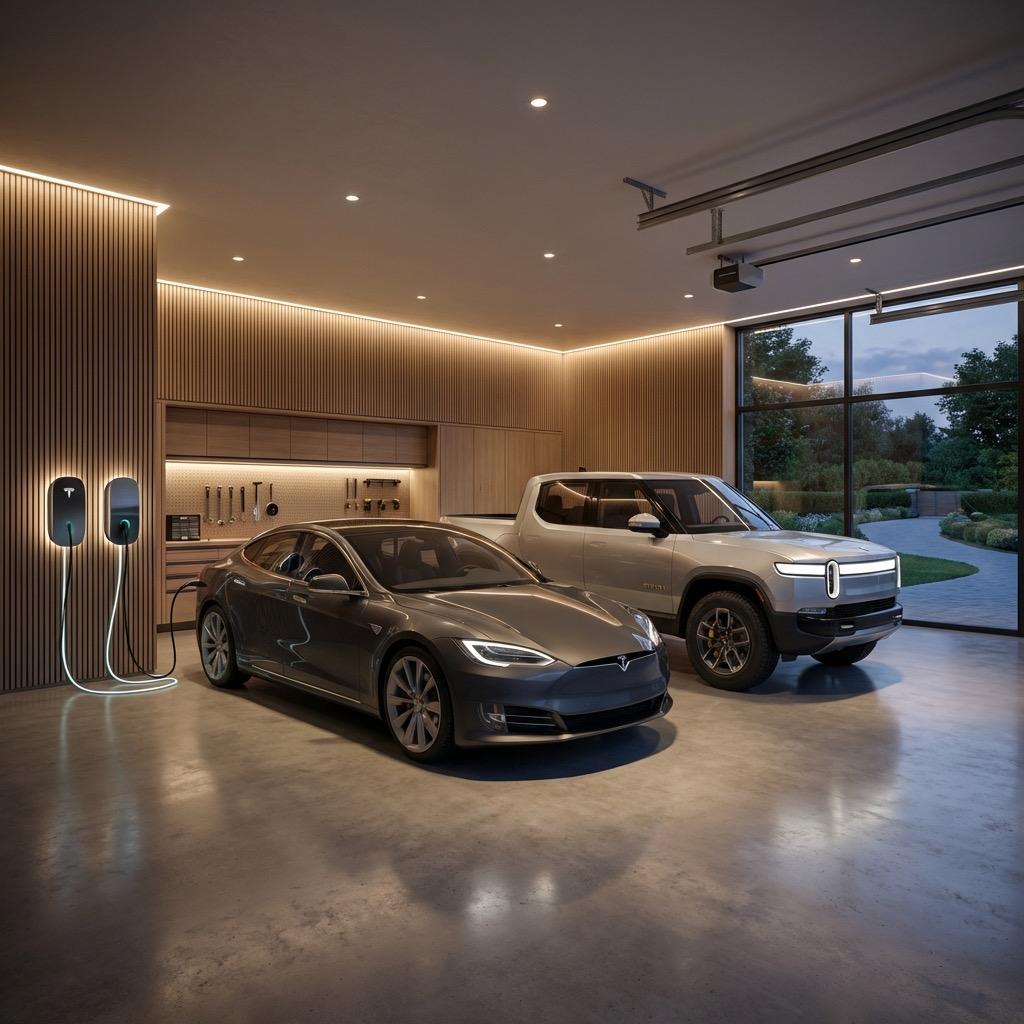
The Home Flex uses the standard J1772 connector, which is compatible with every non-Tesla EV sold in North America. This includes popular models like the Ford Mustang Mach-E, Chevrolet Bolt, Hyundai Ioniq 5, Kia EV6, Rivian R1T, BMW iX, and Volkswagen ID.4. Tesla owners can also use the Home Flex with a J1772-to-Tesla adapter, which Tesla includes with most vehicles.
Smart Features and App Integration
The ChargePoint app is one of the most polished in the home charging space. It provides real-time charging status and notifications, detailed energy usage history and cost tracking, scheduled charging to take advantage of off-peak Dominion Energy rates, reminders if you forget to plug in, and integration with Amazon Alexa and Google Assistant for voice commands. The app also tracks your lifetime charging statistics, showing total energy consumed, money saved compared to gasoline, and carbon emissions avoided.
Good to know: The ChargePoint Home Flex is ENERGY STAR certified, which may qualify for additional utility rebates. Check with Dominion Energy for current program availability in the Northern Virginia service area. The ENERGY STAR certification also means the charger meets strict efficiency standards, minimizing standby power draw when not actively charging.
Installation Options for Northern Virginia Homes
The Home Flex offers three installation configurations, each with distinct advantages depending on your situation.
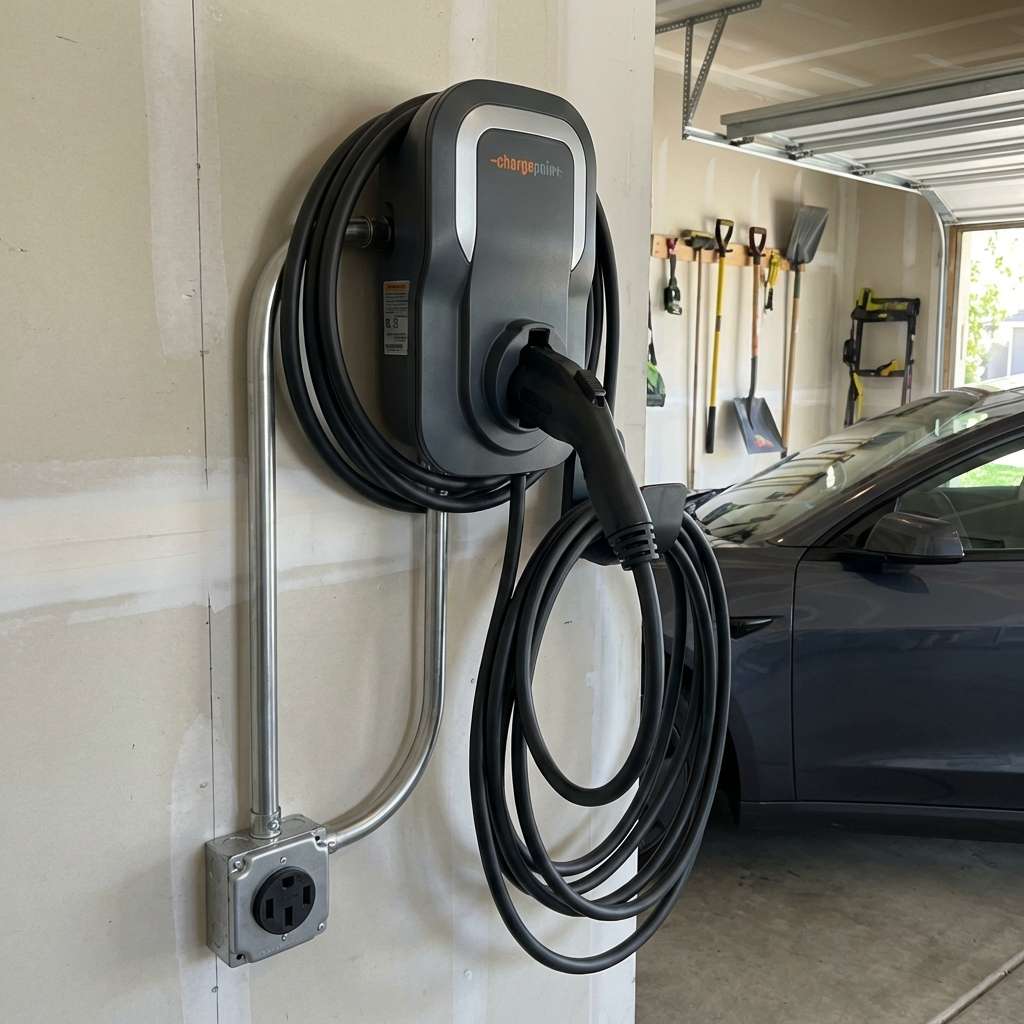
Plug-In with NEMA 14-50 Outlet
The NEMA 14-50 is used for some plug-in EVSE. A plug-in unit can be removed later, but the receptacle, circuit, GFCI, equipment listing, and manufacturer instructions must be evaluated for the selected installation. On a NEMA 14-50, the charger is limited to 40 amps continuous on a 50-amp circuit. Whether that output meets a driver's needs depends on the vehicle and charging window; no resale-value or charging-result outcome is guaranteed.
Plug-In with NEMA 6-50 Outlet
The NEMA 6-50 is a dedicated 240V outlet without the neutral conductor found in the 14-50. It supports the same 40-amp continuous load and is slightly less expensive to install since it requires three conductors instead of four. The tradeoff is less versatility, as fewer appliances use this outlet type.
Hardwired Installation
Hardwiring connects the charger directly to the circuit without an outlet. This is required for the full 50-amp output, as NEC code limits receptacle-connected equipment to 40 amps continuous on a 50-amp circuit. Hardwired installation also provides a cleaner appearance with no visible outlet. The downside is that the charger cannot be easily removed if you move. For homeowners settled in their forever home in communities like Great Falls, McLean, or Aldie, hardwired installation is often the preferred choice.
Electrical Requirements and Panel Considerations
Understanding the electrical requirements helps you plan your installation and budget accurately.
Circuit Breaker and Wire Sizing
For maximum 50-amp charging, install a 60-amp breaker with 6-gauge copper wire. For 40-amp charging (the plug-in maximum), a 50-amp breaker with 6-gauge wire is standard. For lower amperage settings, smaller circuits work fine: a 30-amp breaker with 10-gauge wire supports up to 24 amps of charging. Your electrician will recommend the appropriate setup based on your panel capacity and charging needs.
Panel Capacity Assessment
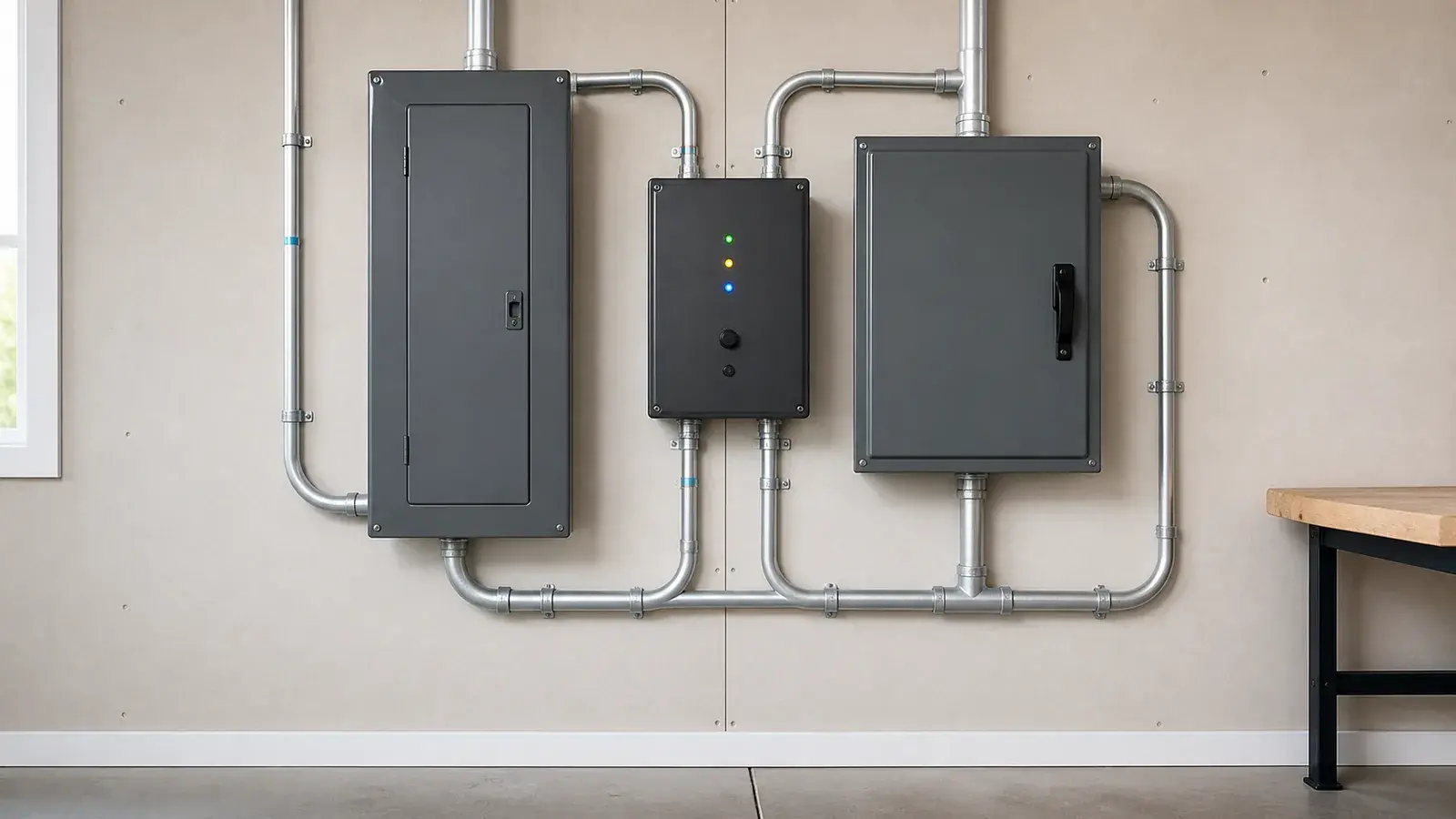
Before installation, a load calculation determines whether your panel can support the additional circuit. This is particularly important in older Northern Virginia homes. Many homes in established neighborhoods like Vienna, Falls Church, and Annandale have 100-amp or 150-amp panels that may be near capacity with existing loads. The Home Flex's adjustable amperage provides a solution: install a smaller circuit now and upgrade later if you add panel capacity.
Design note: Adjustable EVSE may support a lower configured output when the load calculation, listing, manufacturer instructions, and authority requirements allow it. That does not create a lower public installation band: a typical Level 2 circuit and hookup remains $1,200–$3,500, only long, detached, outdoor, trenched, or otherwise complex routes extend to the $1,200–$4,500 total band, and EVSE hardware is separate.
Real-World Performance and Reliability
The ChargePoint Home Flex is one equipment option for a listed Level 2 installation. Homeowners should compare the current connector, cable length, output settings, app features, network requirements, and manufacturer's written warranty before selecting it.
Cold Weather Performance
Northern Virginia winters bring temperatures into the 20s and occasionally into single digits. The Home Flex operates reliably in temperatures from -22 degrees F to 122 degrees F, well within our local climate range. During cold weather, the charger continues to deliver full power, though your vehicle's battery management system may reduce charging acceptance slightly to protect the battery cells.
Software Updates
Like a smartphone, the Home Flex receives periodic software updates over WiFi. These updates can add features, improve charging algorithms, and address any bugs. This is a significant advantage over basic chargers that remain frozen at their factory software forever.
ChargePoint Home Flex vs. Competitors
The Home Flex competes with several excellent chargers. Here is how it compares to the most popular alternatives.
- vs. Tesla Wall Connector: The Wall Connector is the best choice for Tesla-only households, but the Home Flex's J1772 connector works with every EV brand, making it more versatile for households that may own different brands over time.
- vs. Grizzl-E: The Grizzl-E is less expensive but lacks WiFi and smart features. If you want app control and scheduling, the Home Flex justifies its premium.
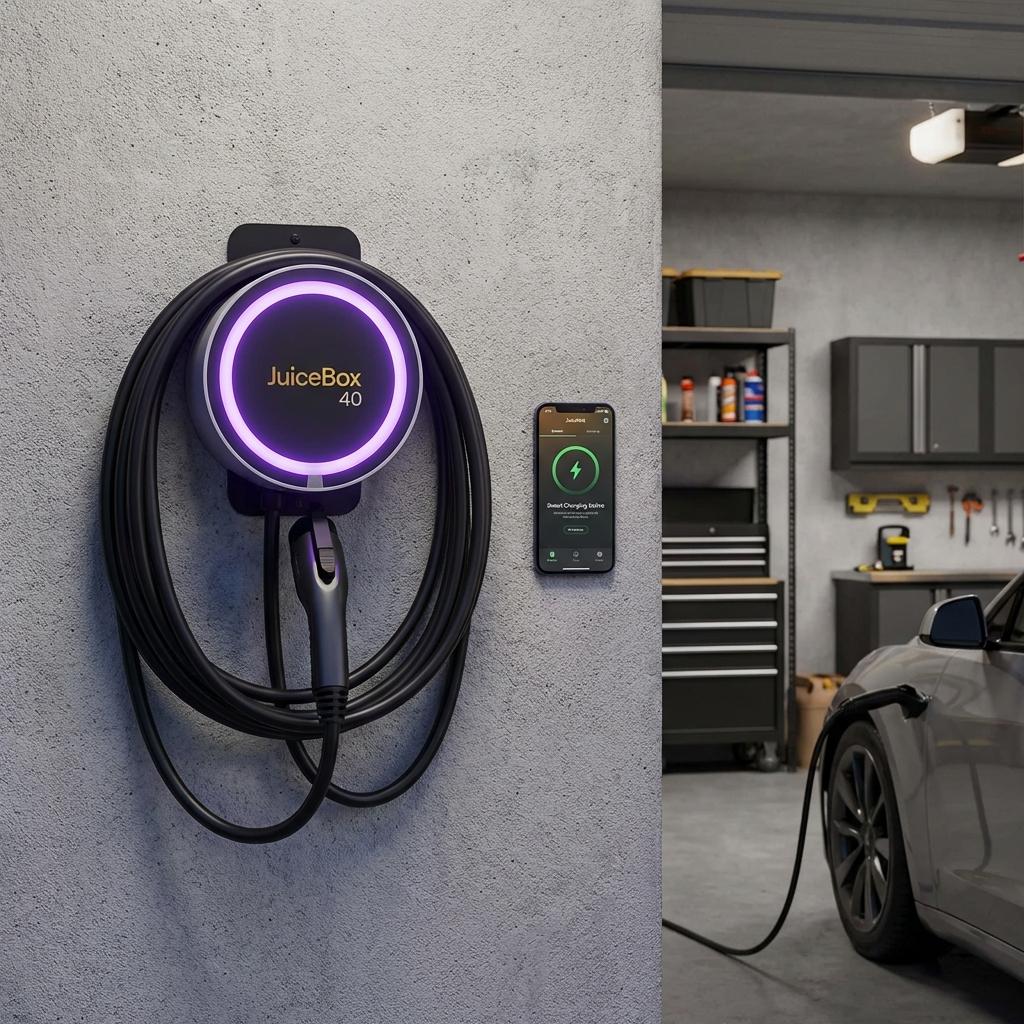
- vs. JuiceBox 40: Both offer strong smart features, but the Home Flex's adjustable amperage gives it an edge for homes with limited panel capacity.
Get Your ChargePoint Home Flex Installed
AJ Long Electric assesses the panel and service, load calculation, listed equipment, circuit route, permit, inspection, utility, and access inputs for proposed ChargePoint Home Flex installations. We define permitting and inspection coordination in the written scope; the authority having jurisdiction makes the final inspection decision. Contact (571) 444-6886 to request a project-specific proposal.