
Key Takeaways
- Plan for the combined daily energy need and both departure times.
- Two connectors do not necessarily mean twice the available charging power.
- Sharing between chargers is different from monitoring the whole house.
- The approved circuit arrangement depends on the exact equipment.
Start with two schedules, not two breaker sizes
Write down when each vehicle arrives, when it must leave, how much energy it usually needs, and where it parks. A household with two modest commutes and a long overnight window has a different charging problem from one with a late arrival and an early departure after a long drive.
Ready to Install a Home EV Charger?
Our licensed electricians evaluate panel capacity, circuit routing, equipment requirements, and permit needs for home EV charging. Call (571) 444-6886 or request an estimate online.
Use charging history or vehicle energy records where possible. Battery size alone is not the daily refill requirement. Also identify unusually demanding days and whether another charging option is acceptable for those exceptions. This makes the desired home setup concrete before electrical equipment is selected.
Compare three household arrangements
| Arrangement | Useful when | Tradeoff to consider |
|---|---|---|
| One charger used by each car in turn | Combined energy needs and parking access allow alternating sessions | Someone must move a car or connector at the right time |
| Two compatible coordinated chargers | Both cars should remain connected while sharing a defined charging allowance | Available power is divided or scheduled under the supported control system |
| Two independently supplied chargers | The electrical design supports the desired simultaneous outputs | Assess both charging loads and the complete circuit routes |
A second connector can improve convenience without doubling household charging capacity. Conversely, installing only one charger can work well electrically but fail in practice if parking and departure schedules make switching difficult. Decide which inconvenience matters before comparing hardware prices.
Use an energy budget to compare the options
As an illustration, two vehicles needing a combined 40 kilowatt-hours over a ten-hour window require an average of 4 kilowatts reaching their batteries. The supply must provide more to account for charging losses and any interruptions. This arithmetic is a planning example, not an installation size or a performance promise.
If one car needs most of that energy within the first two hours, the same ten-hour household average is insufficient to describe the problem. Ask how the proposed controls allocate power and whether priority or scheduling features meet that earlier departure. Maximum advertised charger output does not establish the energy each car will actually receive.
Group sharing and household monitoring are different
Group coordination allocates a defined allowance between supported charging units. Household monitoring responds to other electrical loads, such as cooking or heating, so the charging allowance can change. A product supporting one function does not necessarily support the other or both together.
For example, Tesla's current power-management documentation supports group management between compatible Gen 3 Wall Connectors, but says its dynamic management applies to one Wall Connector and cannot span multiple units. This is an equipment-specific limitation, not a rule for all charging systems. Confirm the capabilities of the proposed models before purchasing.
Also distinguish local charger communication from an internet connection. Ask what network or control connection is required, what happens if it fails, and whether the documented protective behavior remains available. Do not rely on a generic “smart charger” description.
Do two chargers always need two branch circuits?
No universal arrangement applies. Many installations use separate charger circuits, sometimes supplied through a suitable subpanel. Some exact equipment also supports another manufacturer-documented arrangement. The Tesla Universal Wall Connector group-management instructions describe separate-circuit configurations and a supported daisy-chain configuration with additional instructions.
That example is not permission to splice any two chargers onto an existing circuit. The selected units, conductor arrangement, protection, settings, communications, and instructions must all match the approved design. Leave the wiring and commissioning to a qualified electrician. Buying two matching-looking units does not establish compatibility.
Check the house and parking layout together
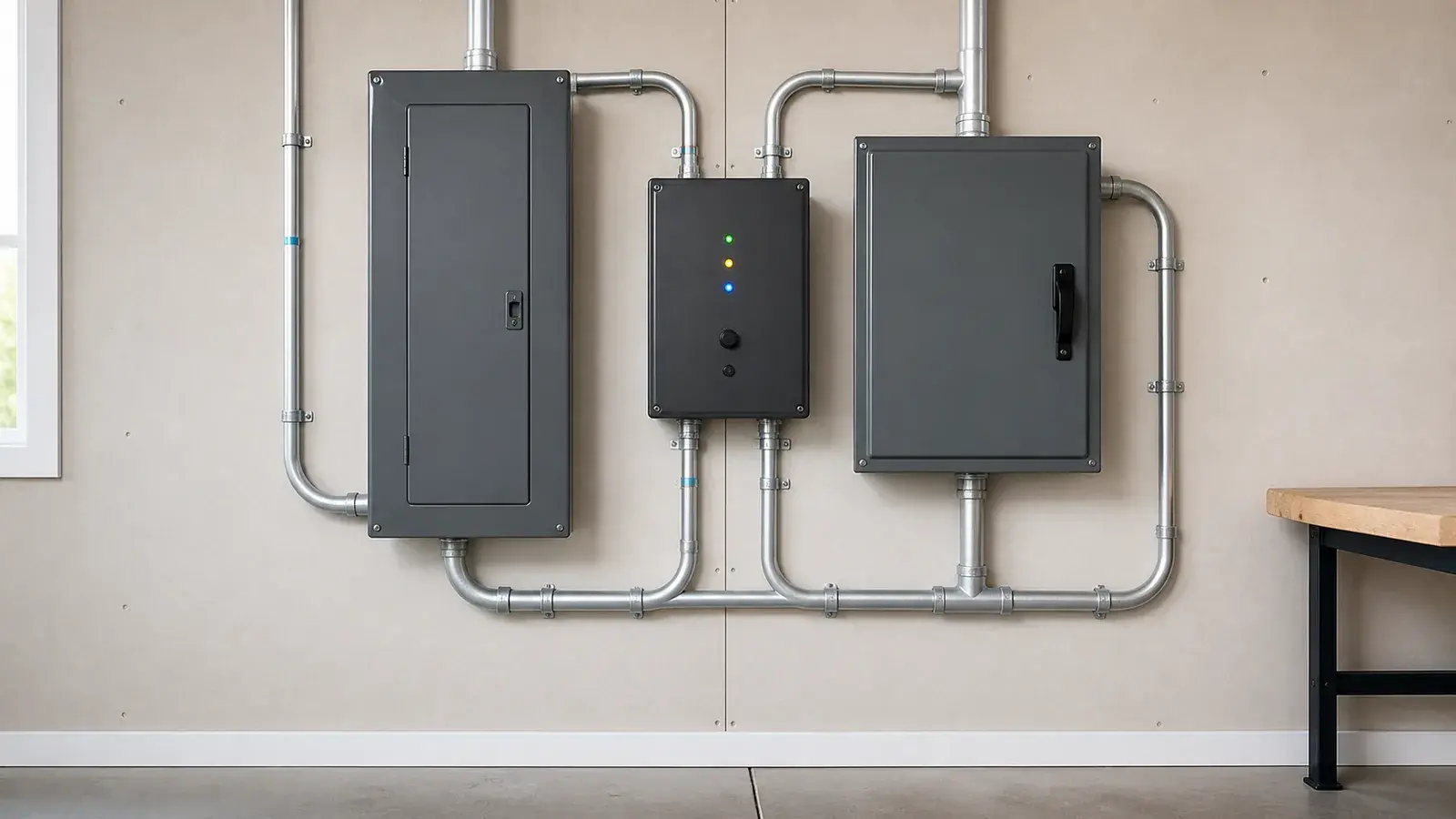
The electrician must evaluate service capacity, existing loads, panel condition, circuit positions, and the proposed charging design. A subpanel can add circuit positions but cannot create additional service capacity. An approved management system may be an option; a service upgrade is a separate scope if needed.
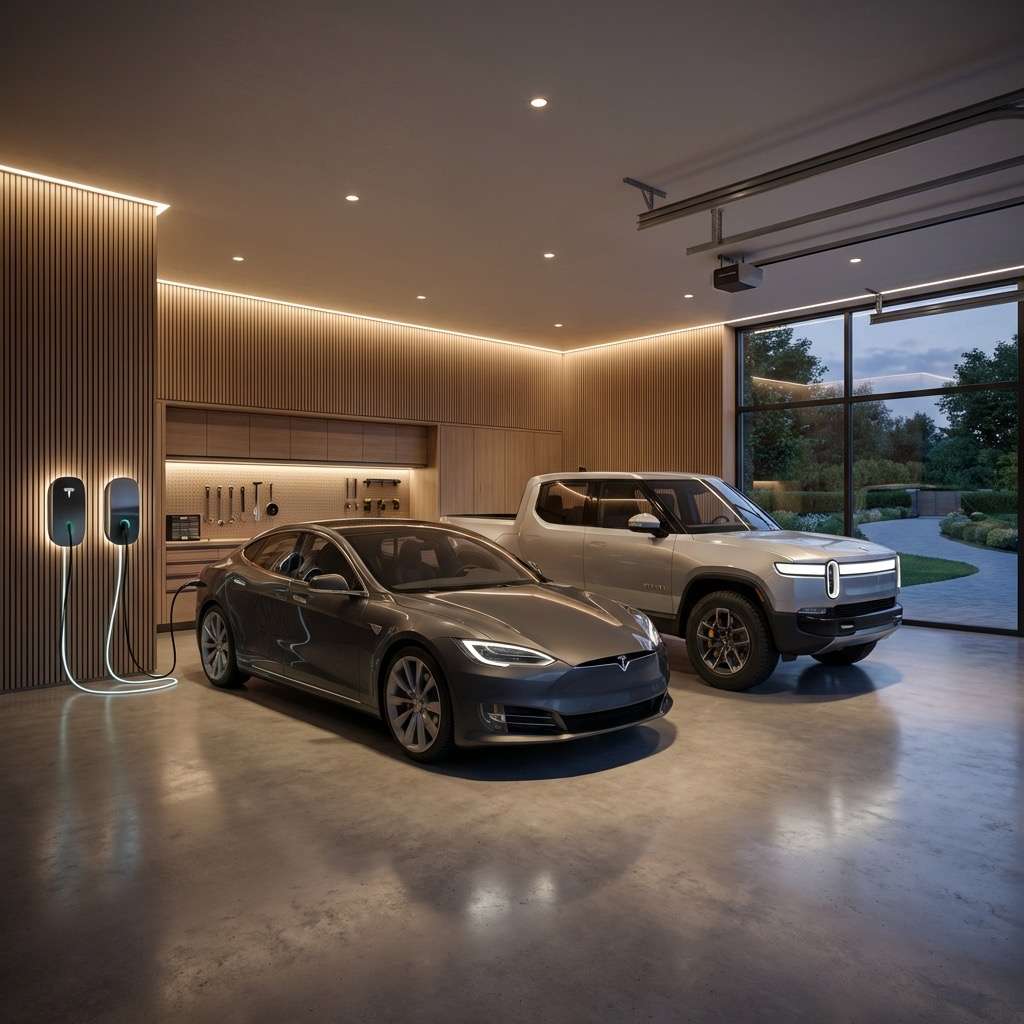
Walk through both parking positions before placing chargers. Consider which side of each vehicle contains its inlet, usable cable reach, door movement, storage, and outdoor exposure. Avoid planning around extension cords or loose cables across regular walking paths. Cable management and mounting location should follow the equipment instructions and suit normal household movement.
Ask for an expandable, documented proposal
If only one car is electric today, describe the expected second vehicle and parking location without pretending its final requirements are known. Ask which parts of the proposed installation can support expansion and which would require another review. Save equipment models, commissioned settings, permit records, and the agreed charging allowance.
Compare charger hardware, circuit routes, any subpanel, monitoring or coordination equipment, permits, commissioning, and finish repairs as separate scope items. A second ordinary circuit and a long exterior route to a detached structure are not interchangeable projects. Do not assume that buying two chargers makes the installed cost exactly twice one published example.
What to include in the request
Send both vehicle models if known, usual energy needs and departure times, parking photos, accessible closed-panel photos, and any planned major household loads. Our load-management comparison explains service options, and the EV charging service page describes installation work. Request a free project estimate for staff review and a discussion of next steps; the request itself is not a booked appointment.