Key Takeaways
- The newest national code edition is not automatically the edition adopted for your project.
- GFCI, AFCI, circuit capacity, grounding, and equipment instructions address different risks.
- A replacement, a new circuit, and a substantial renovation can trigger different requirements.
- Code examples help you prepare questions; they are not a complete installation design.
Which electrical code applies in Virginia?
The Virginia Department of Housing and Community Development identifies the 2021 Virginia codes, effective January 18, 2024, and their incorporated 2020 NEC. A home project may be governed by the Virginia Residential Code and its electrical provisions. The permit date, building classification, and project scope matter. Do not label this the “2021 NEC,” or assume that a newer model-code edition applies simply because it is available.
Concerned About Your Home's Electrical Safety?
A professional electrical inspection identifies hidden hazards before they become emergencies. Our licensed electricians provide thorough safety inspections throughout Northern Virginia. Call (571) 444-6886 to schedule yours.
Virginia uses a statewide building-code framework administered by local building departments. Local application procedures, required submissions, and inspection scheduling can differ. Those process differences are not a reason to invent a separate electrical code for every city. Confirm the actual authority from the property address: Fairfax County and the independent City of Fairfax, for example, are different jurisdictions.
GFCI and AFCI protect against different hazards
Ground-fault circuit-interrupter protection helps reduce electric-shock risk. Arc-fault circuit-interrupter protection addresses certain arcing conditions that can cause fires. Neither device replaces sound wiring, equipment grounding where required, or an appropriately sized circuit breaker. A protective device that trips repeatedly needs investigation, not bypassing.
GFCI requirements depend on location, equipment, and the applicable code provisions. Kitchens, bathrooms, garages, basements, and outdoor locations require particular attention; “anything near water” is not a precise rule. AFCI coverage likewise depends on the space and circuit scope. Virginia's residential amendment includes an exception to AFCI protection where GFCI protection is required under the specified residential and NEC provisions. See item 117 amending E3902.20 in the 2021 Virginia code amendments.
That exception does not mean a GFCI detects arc faults or that every circuit in a room is automatically exempt. The electrician must apply the adopted provisions to the actual outlets and work being performed. For a remodel, ask which existing circuits can remain and which new or extended wiring needs updated protection.
Kitchen, bathroom, and laundry circuit examples
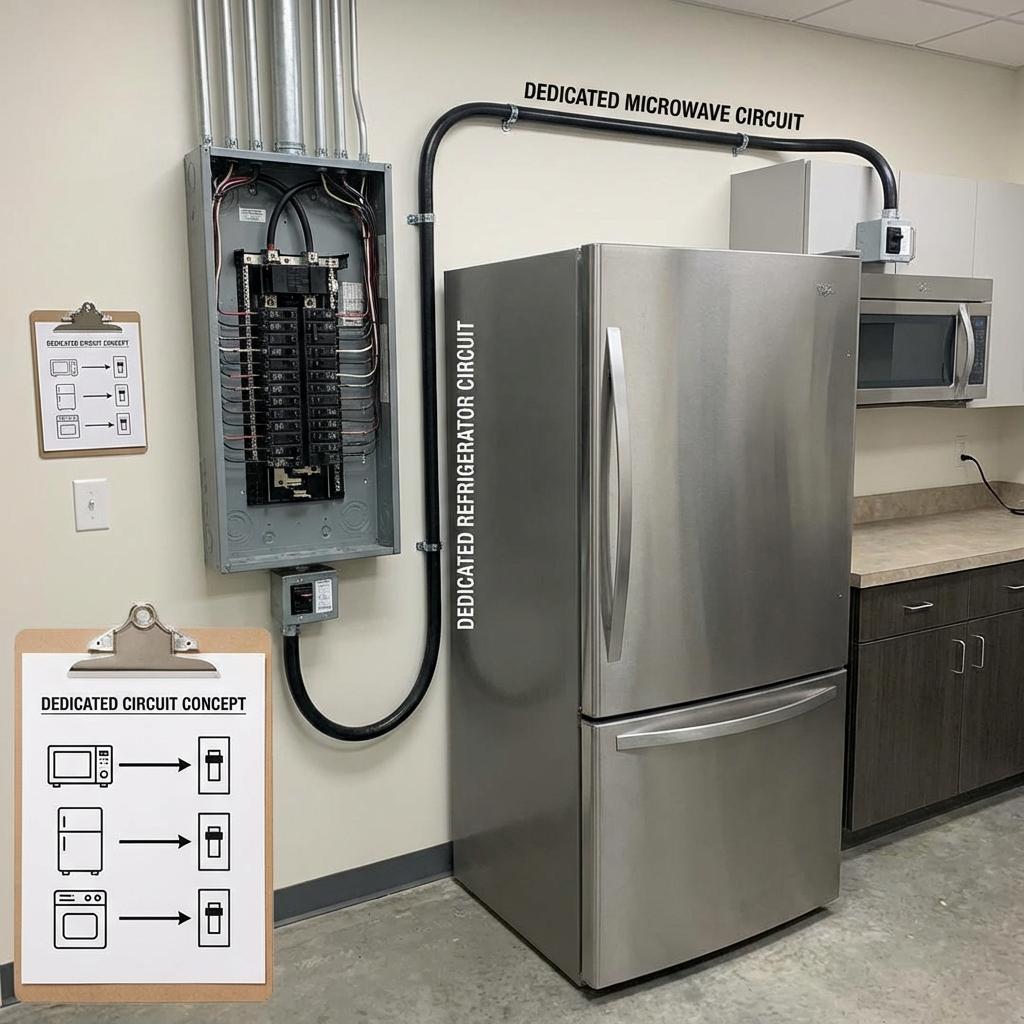
The Fairfax County typical finished-basement details provide useful residential examples: at least two 20-amp small-appliance circuits for kitchen and dining receptacles, a 20-amp bathroom receptacle supply, and a circuit reserved for laundry receptacles. The permitted outlets on each circuit and the selected equipment still matter. These examples do not mean every appliance is automatically entitled to share those circuits.
A dishwasher, microwave, disposal, refrigerator, or laundry appliance may need an individual circuit because of its load, its installation instructions, or a specific applicable rule. Read our dedicated-circuit explanation for the distinction between an individual appliance circuit and a circuit reserved for a room's permitted receptacles. Adding up breaker handles is not a service-load calculation.
Receptacle placement and usable panel space
Receptacle spacing rules are intended to make power accessible without relying on extension cords. The familiar six-foot reach along qualifying wall spaces is not a universal spacing rule for countertops, hallways, outdoor areas, or every room feature. Doors, fixed features, and the classification of the space affect the layout. Give the electrician a furniture and appliance plan before walls are closed.
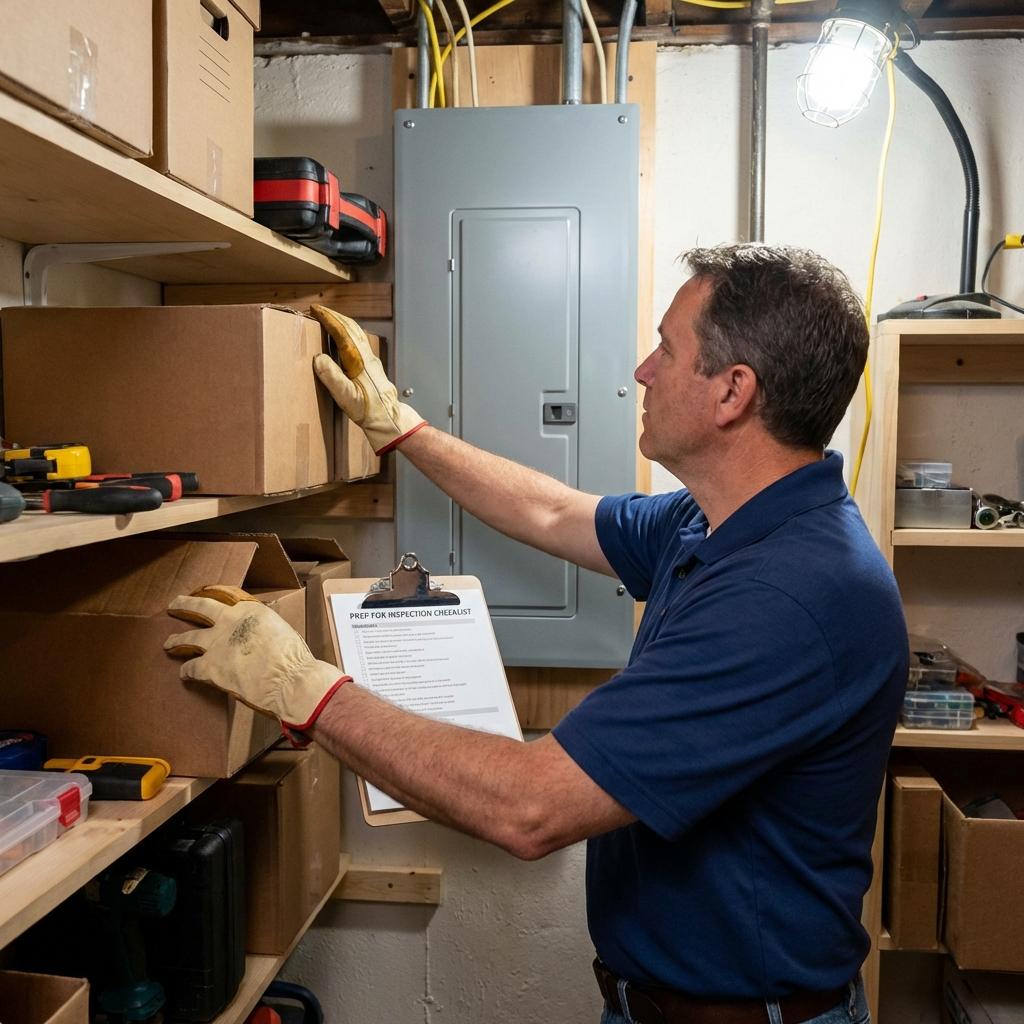
Electrical panels also need working access. The Fairfax residential guide illustrates a working space at least 30 inches wide, 36 inches deep, and 6 feet 6 inches high for its typical installation. Do not treat the panel face alone as the clearance area or plan shelving and storage in front of it. Doors must open sufficiently and the location must meet the applicable rules; clothes closets and bathrooms are unsuitable locations in the guide. Unusual equipment or existing conditions need a separate review.
Grounding, bonding, and old wiring
Grounding electrodes, equipment grounding conductors, and neutral-to-ground bonding have different jobs. A ground rod does not replace the grounding conductor for a new branch circuit. Neutral and grounding conductors must be arranged according to whether the equipment is service equipment or is supplied downstream. A panel described casually as the “main panel” may actually be downstream of an exterior service disconnect.
An older home is not automatically required to be completely rewired whenever one device is replaced, but “grandfathered” is not a blanket permission to leave hazardous conditions untouched. Repair, alteration, equipment replacement, and discovered hazards can require different corrections. Ask for a written scope explaining what must change for the proposed project and what is a separate recommendation.
Permits, inspections, and what to ask before work starts
Virginia Section 108 sets permit requirements and lists exemptions for certain ordinary repairs, including specified electrical device replacements. New wiring and service alterations are different scopes. Even permit-exempt work must satisfy the applicable code. A permit or an inspection is also distinct from the contractor's licensing and insurance.
- Which authority and adopted code apply to this address and project?
- What is required work, and what is an optional improvement?
- Who handles the permit, utility coordination, and required inspections?
- Which surfaces must stay open until inspection, and who restores finishes?
- Do the equipment instructions require a particular circuit, support, disconnect, or protection?
For a planned installation, request a free project estimate with the equipment model, a description of the work, and photos of accessible areas. Leave panel covers in place. AJ Long Electric's staff will review the request and discuss the scope and scheduling; submitting it does not confirm an appointment.