
Key Takeaways
- Use the code adopted for the property, not a generic “latest NEC” checklist.
- An ordinary-looking outlet may have upstream GFCI protection; confirm rather than assume.
- GFCI protection does not create an equipment ground or replace AFCI protection.
- Repeated trips, failed tests, moisture or damaged equipment need assessment.
What a GFCI does—and its limits
A ground-fault circuit interrupter monitors the balance of current in the conductors it protects. A qualifying imbalance can indicate current flowing through an unintended path. The device interrupts the circuit to reduce electric-shock risk. It does not make touching live wiring safe or prevent every possible shock.
Ready to Install a Home EV Charger?
Our licensed electricians evaluate panel capacity, circuit routing, equipment requirements, and permit needs for home EV charging. Call (571) 444-6886 or request an estimate online.
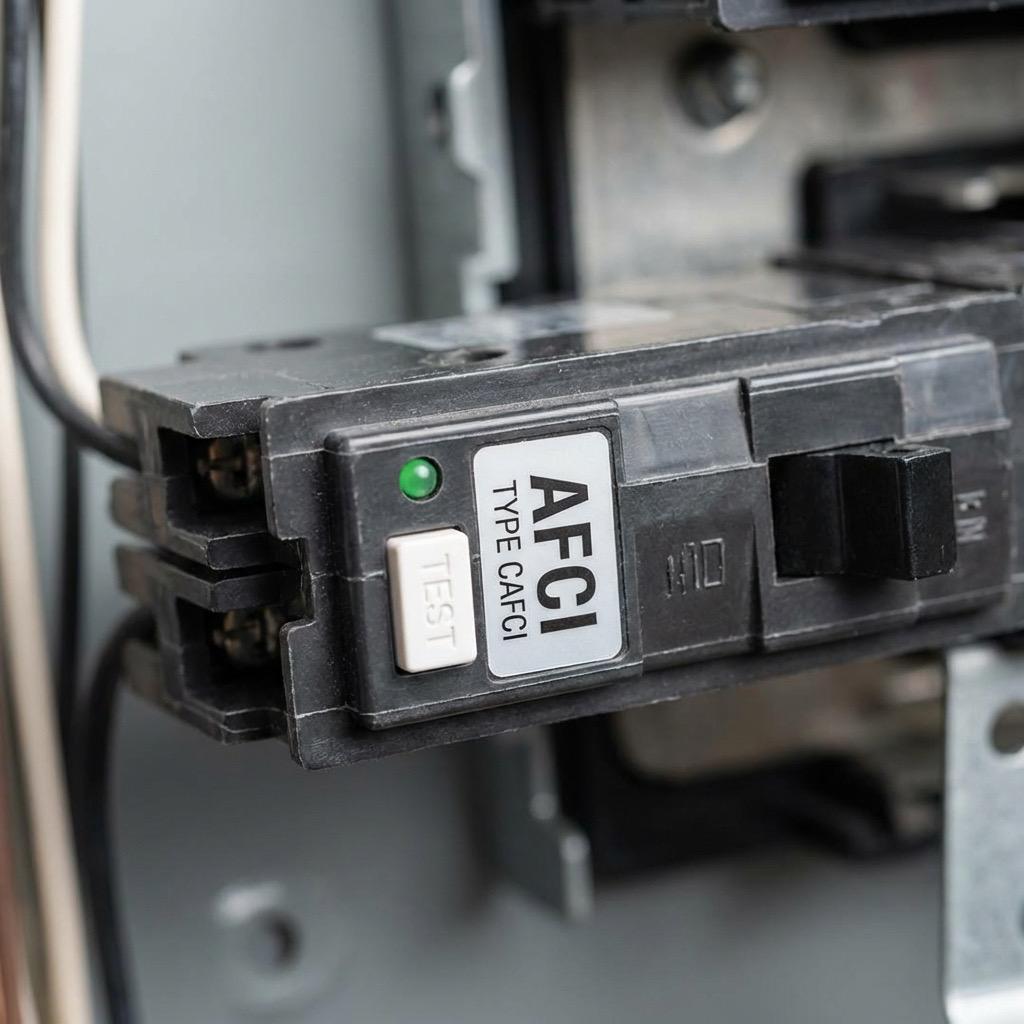
Ordinary overload and short-circuit protection, equipment grounding, and arc-fault protection perform different functions. A GFCI receptacle does not add capacity to an overloaded circuit. A dual-function breaker may combine protective functions, but its exact listing and compatibility still matter.
Which code applies to a Northern Virginia home?
The Virginia DHCD code page identifies the 2021 Virginia codes incorporating the 2020 NEC. Applicable residential provisions and Virginia amendments also matter. Neighboring Maryland and DC jurisdictions can have different adopted editions and amendments. Do not apply a 2023 national-code summary to every existing house as though it were automatically the local requirement.
Eaton's 2020 NEC changes guide explains expanded dwelling-unit GFCI coverage, including qualifying 125- through 250-volt receptacles on single-phase circuits rated 150 volts or less to ground. The requirements are not limited to familiar 15- and 20-amp 120-volt outlets. This is a code-edition example, not a complete installation checklist.
Common locations to review
| Area | Practical question for the electrician |
|---|---|
| Bathrooms and kitchens | Which receptacles and appliances require protection under the adopted provisions, including countertop and sink-related rules? |
| Garages and qualifying accessory buildings | Are the receptacles protected, including ceiling locations? Do not assume an old garage-door-opener exception applies. |
| Basements | The 2020 NEC expansion includes finished as well as unfinished dwelling basements. |
| Laundry areas | Do not limit the review to outlets near a laundry sink; evaluate the room and appliance supplies. |
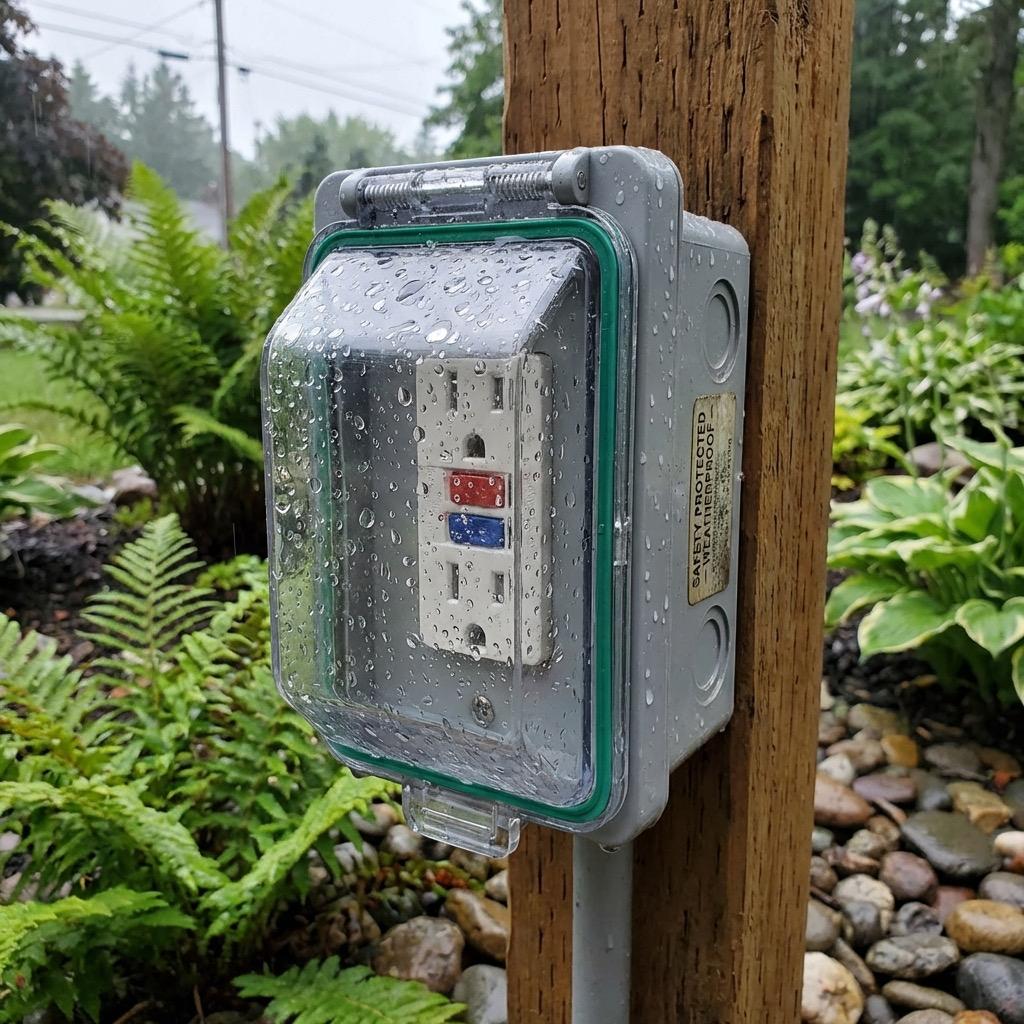
| Outdoors, crawl spaces and wet locations | Check the location-specific scope, equipment rules, environmental rating and required covers. |
A six-foot distance from a sink is not the only rule. Some locations require protection independently of sink distance, and specific equipment has its own provisions. Hardwired equipment, pools, spas, EV charging and outdoor HVAC need their applicable sections and manufacturer instructions reviewed. Exceptions and amendments should be checked for the actual project.
GFCI receptacle versus GFCI breaker
A GFCI receptacle can protect its own outlet and permitted downstream wiring connected through its protected load terminals. It does not protect wiring on its supply side. A GFCI breaker provides the intended protection from the panel for the connected circuit when correctly selected and installed. In either case, compatibility, accessibility and identification matter.
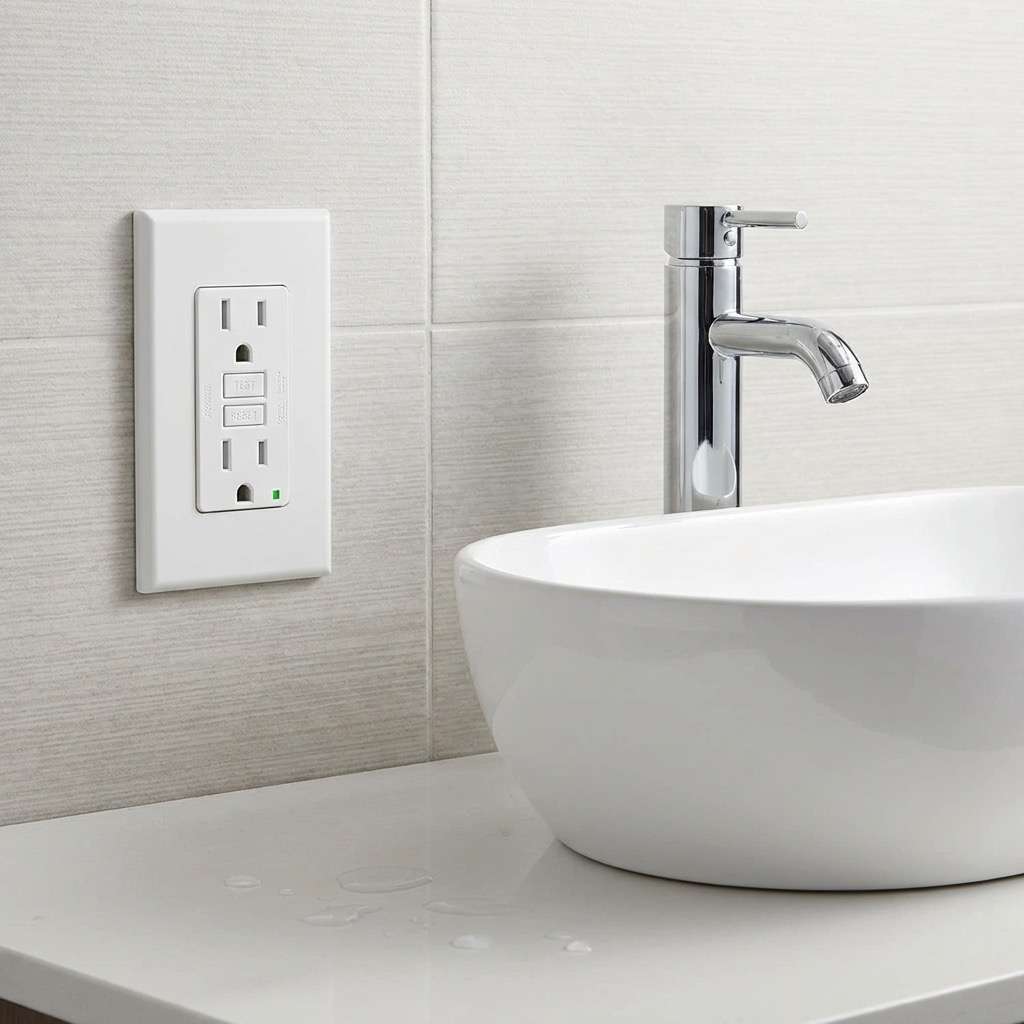
An outlet without TEST and RESET buttons may be protected by another device upstream. Conversely, seeing one GFCI in a room does not establish that every outlet in that room is protected. Ask the electrician to identify what each device protects and where it can be reset. This can reduce confusion when a garage or outdoor outlet loses power because of a device elsewhere.
How to perform the normal monthly user test
The CPSC home electrical safety checklist recommends monthly testing according to the manufacturer. For an accessible, dry, undamaged receptacle, the usual user test uses a working lamp to confirm that TEST removes power and RESET restores it. Follow the exact device instructions; some indicator lights and reset procedures differ.
- Check conditions first. Do not test a wet, hot, damaged or sparking device. Keep away and arrange help; suspected fire requires emergency action.
- Prepare for interruption. Account for equipment that will lose power. With a normal, safe outlet, use a working lamp as the indicator if the instructions call for it.
- Press TEST. Confirm that protected power is interrupted as described by the manufacturer.
- Press RESET. Confirm normal operation returns. If the test or reset does not behave as instructed, stop using the affected outlet and seek assessment.
Automatic self-testing does not mean all manufacturer user-test instructions can be ignored. Testing is also not a full inspection of the branch circuit or a certification of the home's grounding system.
Why a GFCI may not reset
Leviton GFTR1 instructions identify several possibilities, including no incoming power, incorrect line/load connections, or a device that cannot pass its internal test. An active fault or damaged connected equipment may also need investigation. Failure to reset does not by itself prove that replacing the receptacle will solve the problem.
Do not repeatedly force RESET or replace a protective device with an unprotected outlet to stop nuisance trips. A problem that appears only with one appliance may require appliance service; moisture or damaged wiring requires correction of that condition. Leave cover removal, connection testing and rewiring to a qualified electrician.
Older two-wire circuits and replacement work
A GFCI can provide protection without an equipment grounding conductor, and certain existing ungrounded receptacle replacement arrangements are permitted with appropriate labeling. That does not create a ground or satisfy every appliance's supply requirements. Never connect neutral to the receptacle grounding terminal as a shortcut.
Replacing a receptacle can trigger applicable replacement requirements even without a room renovation. An older installation's age is not a blanket exemption from correcting a hazardous condition. Ask which changes are required for the proposed work and which are additional recommendations.
What to include in a service request
Describe the affected outlets, whether the device trips or will not reset, connected equipment, and any moisture or visible damage. Do not recreate a fault for a photo. Choose troubleshooting for an existing GFCI problem or request a free estimate for planned installation work. Staff will review the details and discuss scheduling. For a burned odor or suspected fire, follow immediate safety steps first.