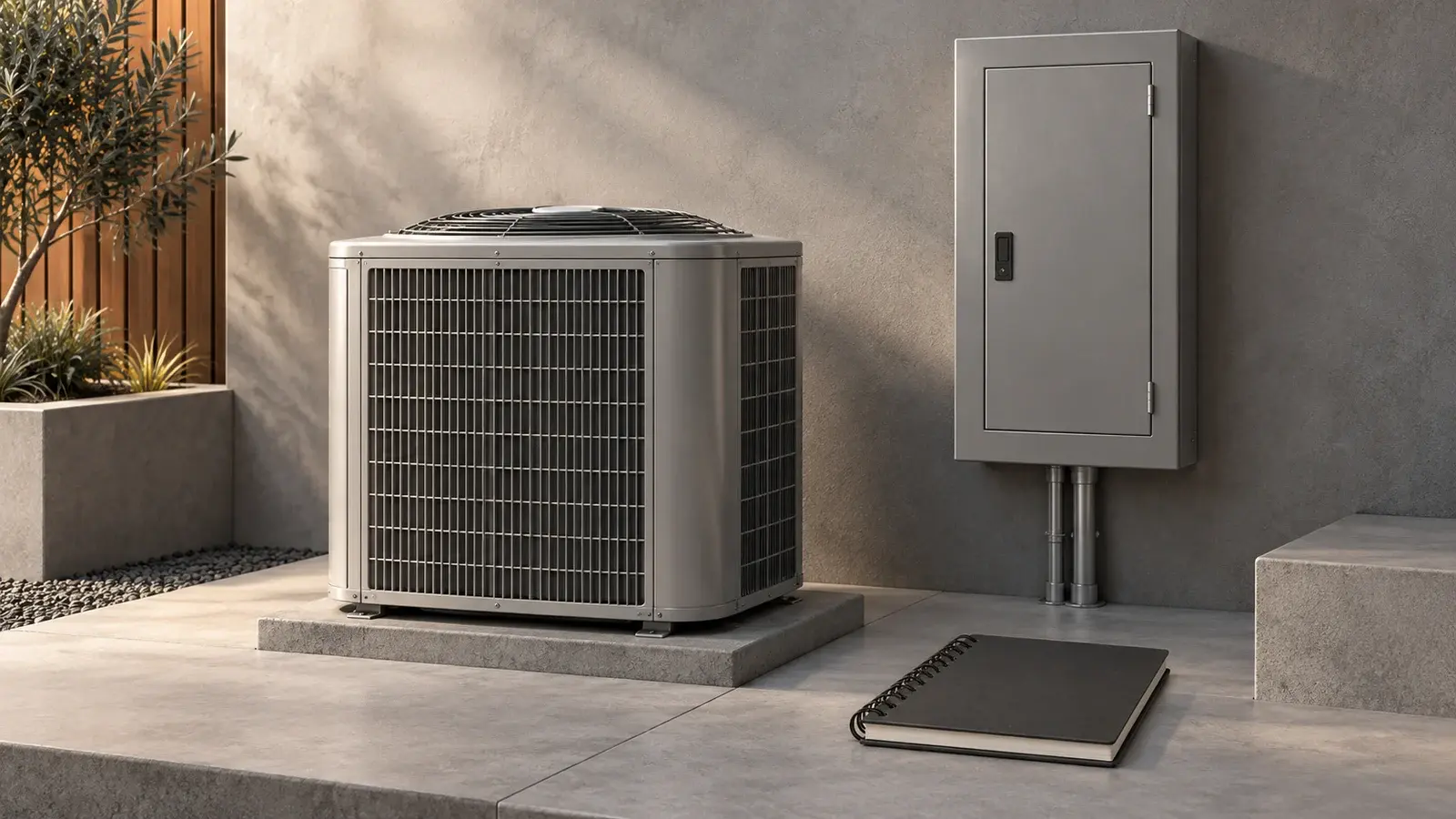

Before accepting a heat pump quote, ask for the electrical requirements of the actual system being proposed. Two systems with similar heating capacity can need different circuits. The outdoor unit is only part of the picture: the indoor air handler, optional electric heat and any retained equipment belong in the plan too.
Start with equipment documents, not a tonnage chart
Ask the HVAC contractor for model numbers and installation instructions for every powered component. Photograph existing equipment labels only where they are accessible without opening electrical compartments. A marketing sheet describing heating output is not a substitute for the electrical data.
| Component | Information needed | Why it matters |
|---|---|---|
| Outdoor heat pump | Model, voltage, phase, minimum circuit ampacity and maximum overcurrent protection | Establishes equipment-specific circuit requirements |
| Indoor air handler | Exact model and whether it has a separate electrical supply | Prevents an indoor circuit from being omitted |
| Electric backup heat | Selected heater-kit model, kW rating and required circuit arrangement | Can materially change electrical demand and scope |
| Existing equipment | What will stay, what will be disconnected and which circuits may be reused | Avoids counting removed equipment as an additional future load |
What MCA and maximum overcurrent protection mean
Minimum circuit ampacity (MCA) is a conductor-sizing requirement, not a statement of normal operating current. Maximum overcurrent protection identifies the largest permitted protective-device rating, subject to the equipment instructions. Those numbers can differ because motor equipment has specific circuit rules. Neither number by itself tells a homeowner which wire to buy.
Need a Panel Upgrade?
Outdated or overloaded electrical panels can present safety and capacity concerns. Our team evaluates 200-amp upgrades throughout Northern Virginia and confirms scheduling after reviewing the property. Call (571) 444-6886 to get started.
The North Carolina fire marshal’s explanation of heat pump nameplates illustrates that distinction. It is an older code interpretation, not a statement of current Virginia requirements. Your electrician must apply the actual equipment instructions and locally applicable rules, including wiring conditions, disconnects and required protection.
Do you need a 200-amp service?
A 100-amp service does not automatically rule out a heat pump, and a 200-amp panel label does not prove spare capacity. The evaluation needs to distinguish three questions:
- Electrical demand: Can the existing service and feeder supply the proposed combination of loads?
- Panel arrangement: Are suitable breaker positions and compatible components available?
- Condition: Is the existing equipment suitable for continued use and the proposed alteration?
A subpanel can create breaker space; it does not increase the capacity of the service feeding it. Conversely, unused breaker positions do not establish available electrical capacity. NYSERDA’s electrical service planning guide explains why an evaluation should consider existing equipment, proposed loads and future electrification together.
Coordinate the HVAC and electrical decisions
The HVAC contractor sizes heating and cooling equipment for the building. The electrician evaluates the electrical installation. These are related but different calculations. Ask the contractors to exchange the final equipment schedule before either quote assumes the other trade has covered the power supply.
For example, replacing an air conditioner with a heat pump is different from adding a heat pump while retaining all existing electric heating. Adding an electric backup heater can change the proposal again. Have the quote identify which scenario it covers, rather than accepting “electrical included” without a component list.
Also disclose a planned EV charger, induction range or other major change. The goal is a documented plan for the loads you actually intend to use. Equipment selection or an appropriate control strategy may offer alternatives in some homes; compatibility and acceptance need to be checked before promising that an upgrade can be avoided.
Compare quotes with the same scope
- Which indoor and outdoor circuits, disconnects and required protective devices are included?
- Is existing wiring being reused, and what will establish that it is suitable?
- Who handles permits, inspections and utility coordination if service work is needed?
- Does the price include wall access, trenching, patching or only electrical work?
- Who commissions the HVAC controls and confirms backup-heat operation?
- What happens if the final HVAC model changes after the electrical estimate?
Keep the final model list, permits and panel directory with the house records. See our panel upgrade cost guide if service work is proposed. For an electrical scope review, request a free project estimate and include the HVAC proposal and accessible equipment photos. Sending a request does not book an appointment.