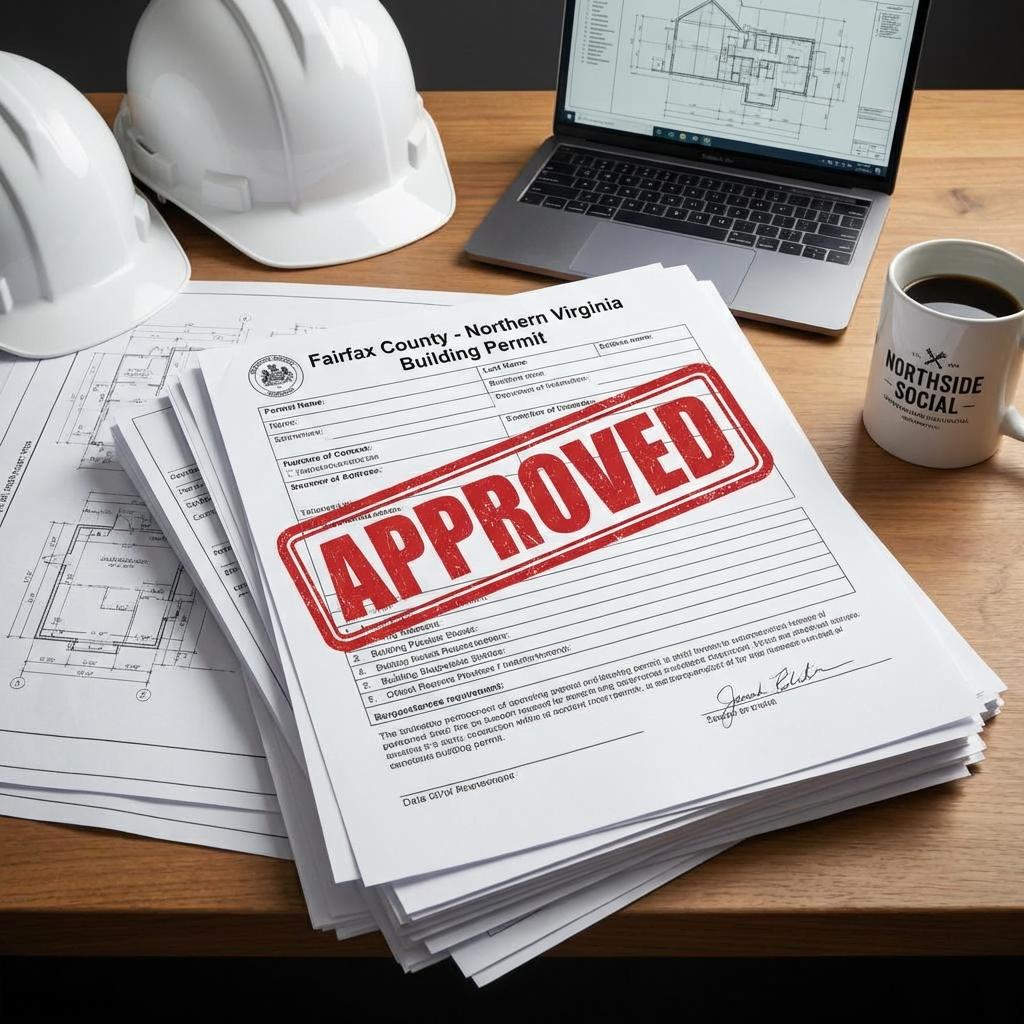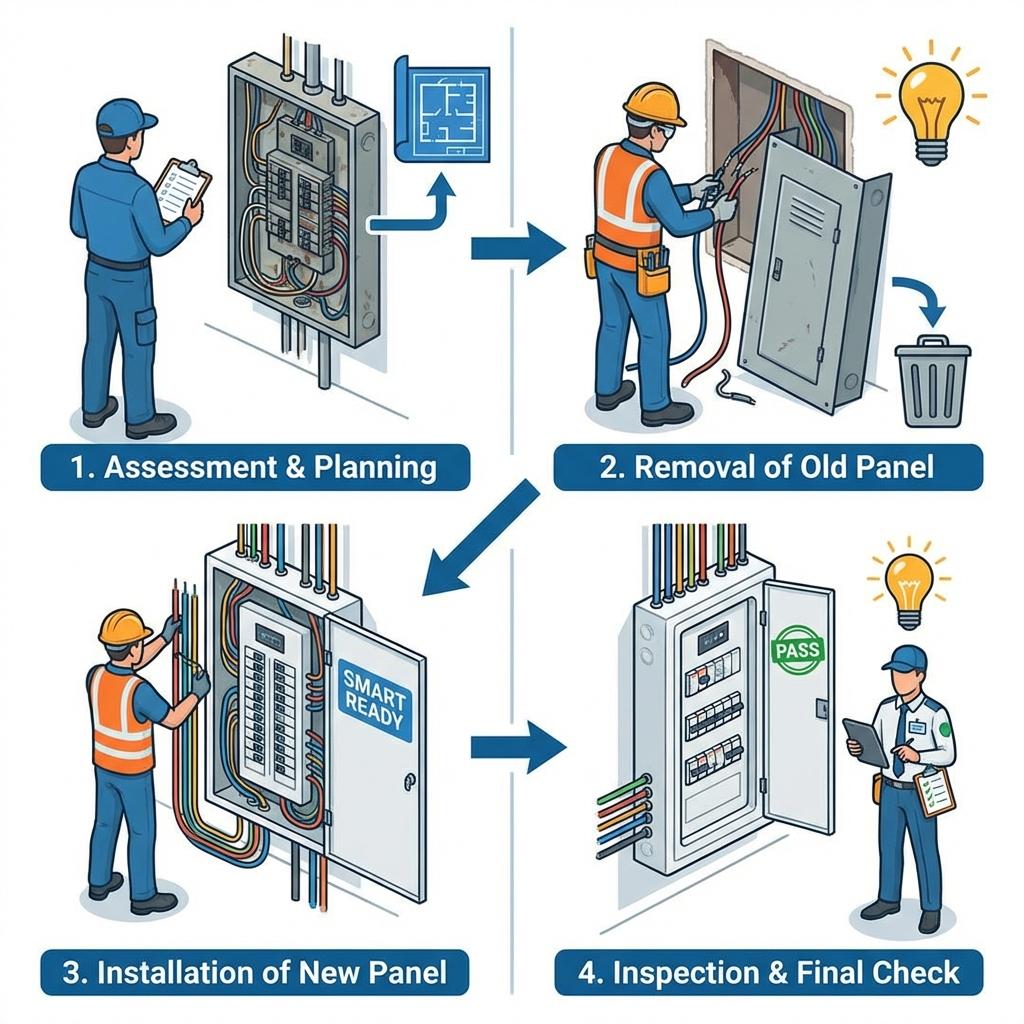

Every permitted panel upgrade requires the authority having jurisdiction to review the finished work. The visit length and outcome depend on the scope and conditions found, and knowing what the inspector is looking for -- grounding, bonding, AFCI/GFCI protection, labeling, and clearances -- takes the mystery out of the final step.
Key Takeaways
- Many straight panel changes need only a final inspection; rough-in inspections come into play when new circuits are run through open walls.
- Inspectors focus on grounding and bonding, AFCI/GFCI protection, breaker sizing, the circuit directory, working clearance, and the service entrance.
- Panels need 30 inches of width, 36 inches of depth, and about 6.5 feet of headroom kept clear in front of them.
- If an item is not approved, the contractor reviews the correction notice, addresses work attributable to the written scope, and requests reinspection.
- The authority having jurisdiction makes the final approval decision on its current schedule.
What Happens During a Service Panel Upgrade Inspection?
The inspector verifies that the completed work matches the permit and current code: grounding and bonding done correctly, AFCI/GFCI protection on the circuits that require it, breakers sized and listed for the panel, a legible circuit directory, required working clearance in front of the equipment, and sound service entrance work. Visit length and approval are determined by the authority and the conditions found; no first-visit approval is promised.
Need a Panel Upgrade?
Outdated or overloaded electrical panels can present safety and capacity concerns. Our team evaluates 200-amp upgrades throughout Northern Virginia and confirms scheduling after reviewing the property. Call (571) 444-6886 to get started.
Rough-In vs. Final Inspection
Electrical permits can involve two inspection stages, but most panel upgrades only need one:
- Rough-in inspection happens while wiring is still exposed -- before drywall closes. It applies when a job adds new branch circuits through open framing, such as an addition, a finished basement, or a kitchen renovation.
- Final inspection happens when the work is complete and energized. A straight panel change or heavy-up, where no walls are opened, typically goes directly to a single final inspection.
If your panel upgrade is part of a larger renovation, expect both stages; if it's a standalone service job, expect just the final.
What County Inspectors Actually Check
Grounding and Bonding
The most scrutinized part of any panel inspection. Inspectors verify the grounding electrode system (ground rods and the grounding electrode conductor), the bond to the water piping where required, the main bonding jumper, and that neutrals and grounds are separated correctly for the panel type. Older homes frequently need grounding brought up to current code as part of the upgrade.
AFCI and GFCI Protection
Current code requires arc-fault protection on most living-space circuits and ground-fault protection in wet and exterior locations. During a panel change, inspectors check that the new breakers provide the protection required for the circuits they serve.
Breaker Sizing and Listing
Every breaker must match its conductor size, and breakers must be listed for use in that specific panel -- mixed-brand breakers that fit physically but aren't approved for the panel are a common correction item.
Circuit Directory and Labeling
The panel must carry a legible, accurate circuit directory. Inspectors spot-check labels against actual circuits, and a hand-scrawled or missing directory can hold up approval.
Working Clearance
Panels need a clear working space: at least 30 inches of width, 36 inches of depth in front of the panel, and roughly 6.5 feet of headroom. A shelf, water heater, or stored boxes crowding the panel is one of the most common reasons an otherwise-perfect job gets flagged.
Service Entrance and Connections
On heavy-ups, the inspector also looks at the service entrance conductors, the meter base, weatherhead or underground connection, and proper connections and workmanship inside the panel.
Fairfax County vs. Montgomery DPS vs. Prince George's DPIE
The checklist above is broadly the same across the region, but each jurisdiction runs its own permit office with its own scheduling rhythm:
- Fairfax County, VA handles electrical permits and inspections through its Land Development Services department. As of mid-2026, Virginia enforces the 2020 NEC through the state building code -- confirm the current edition when your permit is filed.
- Montgomery County, MD runs permits through its Department of Permitting Services (DPS).
- Prince George's County, MD uses the Department of Permitting, Inspections and Enforcement (DPIE).
Scheduling windows, online booking systems, and the enforced code edition differ by county and change over time, so treat jurisdiction specifics as something your contractor confirms when pulling the permit rather than something to assume.
Clear the Path: The single easiest thing a homeowner can do before inspection day is clear the area around the panel -- 30 inches wide and 36 inches deep, floor to about 6.5 feet. Blocked working clearance is among the most common and most avoidable correction items.
How AJ Long Electric Handles Inspection Scheduling
Inspection logistics are part of the job, not your homework. On our panel upgrade jobs we pull the permit before work begins, request the inspection after the relevant work is ready, make sure the inspector has access to the panel, and are available for questions. The appointment follows the jurisdiction's current queue, and the authority determines whether approval or corrections are required. After approval, you'll get the inspection record for your files.
What Happens If the Inspection Fails?
An item that is not approved becomes a correction notice. The inspector identifies the item, the contractor reviews responsibility under the written scope, completes covered corrections, and requests reinspection through the jurisdiction's current queue. Correction scope and timing depend on the notice, equipment, access, and authority schedule. Unpermitted panel work has no independent inspection record and can create issues during insurance or resale review.
Planning a panel upgrade in Northern Virginia, suburban Maryland, or DC? AJ Long Electric has handled the permits and inspections on its panel jobs since 1996. Phones are answered 24/7 at (571) 444-6886.