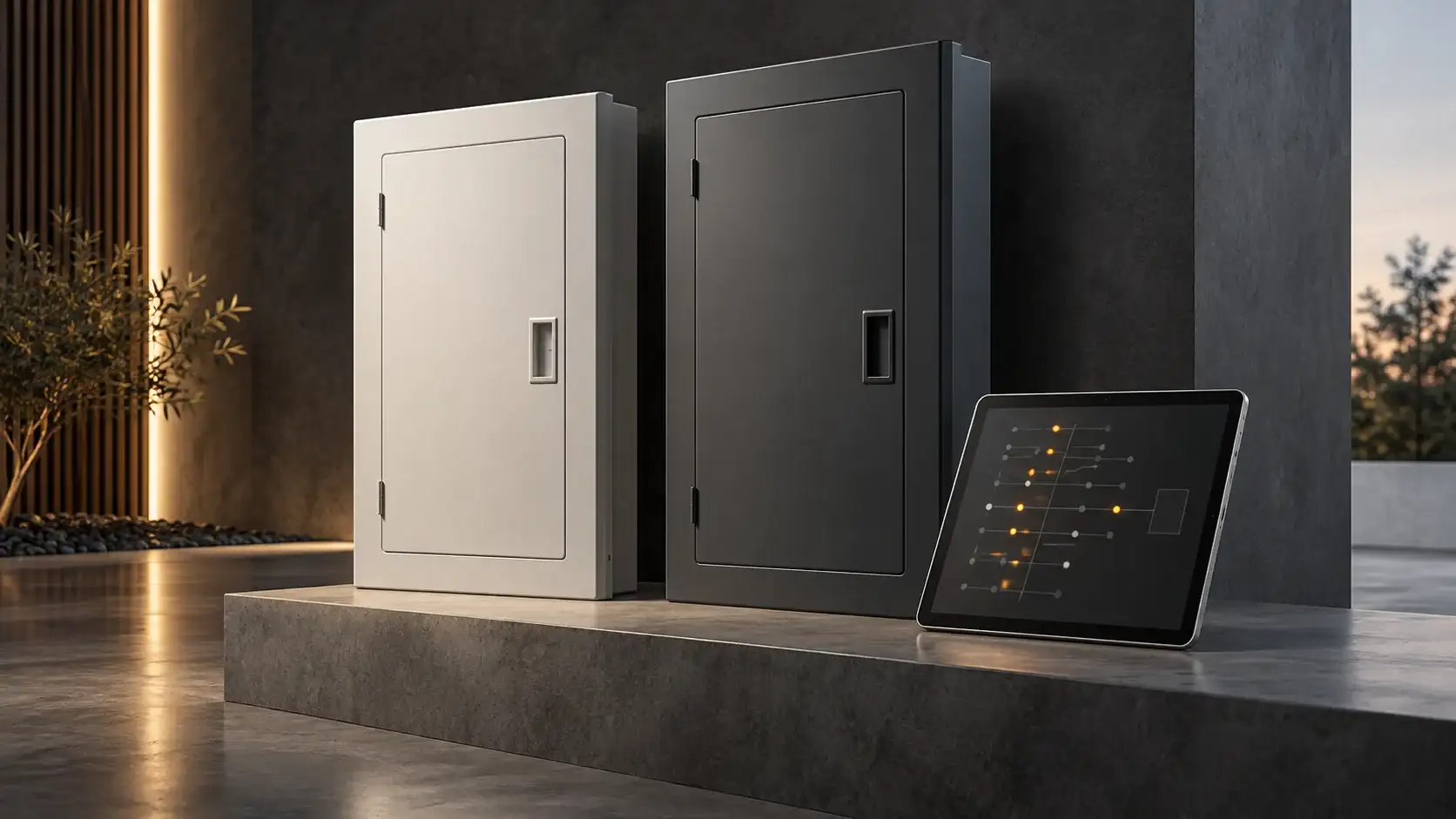

A standard listed load center may fit a project that needs capacity and circuit space. A compatible smart panel may fit when the exact listed equipment supports the requested circuit monitoring, outage load prioritization, or service-limit load-management functions.
Key Takeaways
- Standard 200A replacement or heavy-up: $3,500–$7,500.
- SPAN-class whole-panel installation: $7,500–$9,500 installed.
- Leviton-class smart load center or Eaton smart-breaker platform: $3,000–$5,000.
- A conventional panel with the proper bus rating and spaces can still be solar-ready, EV-ready, and battery-ready without app hardware.
Side-by-side comparison: Standard 200A vs Smart Breakers vs Whole-Home Smart Panel
Before comparing software features, compare the underlying electrical hardware. Every option must satisfy the Virginia Uniform Statewide Building Code electrical provisions, working-space clearances, grounding and bonding, and whole-home surge protection requirements.
Need a Panel Upgrade?
Outdated or overloaded electrical panels can present safety and capacity concerns. Our team evaluates 200-amp upgrades throughout Northern Virginia and confirms scheduling after reviewing the property. Call (571) 444-6886 to get started.
| Feature / Scope | Standard 200A Copper-Bus Panel | Smart-Breaker Load Center (Leviton / Eaton Class) | Whole-Home Smart Panel (SPAN Class) |
|---|---|---|---|
| Typical Installed Range | $3,500–$7,500 | $3,000–$5,000 | $7,500–$9,500 |
| Circuit Monitoring | None built in (separate CT monitor optional) | Per-circuit monitoring on equipped smart breakers | Built-in monitoring across internal bus circuits |
| Remote Circuit Control | Manual breaker operation at the enclosure | App control on circuits fitted with smart-control breakers | Integrated relay switching per internal circuit |
| EV & Service Load Management | Uses external listed EVSE load management or fixed circuit sizing | Depends on exact breaker/controller listing and manufacturer instructions | Supported when configured with compatible listed equipment and approved design |
| Battery Outage Prioritization | Fixed critical-loads subpanel or whole-panel transfer | Selective shedding on equipped smart breakers where supported | Dynamic circuit prioritization when paired with a compatible listed battery system |
When a standard 200-amp panel is the right choice
If your existing panel is aged, crowded with tandem breakers, or undersized at 100 or 150 amps, a standard 200-amp copper-bus replacement ($3,500–$7,500) solves the core electrical problem directly. We can specify a 225-amp busbar with a 200-amp main breaker to preserve documented load-side backfeed room for future solar, leave physical breaker spaces for a dedicated Level 2 EV charger, and install a critical-loads transfer path for a generator or battery. You do not need app-connected relays to have a safe, code-compliant, future-ready service.
When a smart panel or smart-breaker platform earns its keep
A smart panel becomes practical when active circuit control solves a real electrical or backup constraint:
- Constrained service capacity with multiple large electric loads: When an all-electric home combines heat pumps, an induction range, electric dryer, water heating, and one or two EV chargers on a 200-amp service—or on a townhome service where a utility conductor upsize is impractical—some exact smart-panel models support listed load-management functions when configured under their manufacturer instructions and the approved design.
- Flexible battery backup without a fixed critical-loads subpanel: Traditional battery installations force you to pick a fixed set of backed-up circuits at installation time. When paired with a compatible listed battery system, a whole-home smart panel lets you re-prioritize which circuits stay on during an outage and automatically sheds heavy loads when stored energy runs low.
- Targeted circuit visibility: If you only want monitoring and remote trip notifications on a handful of high-draw circuits (such as a sump pump, freezer, or EV circuit), a smart-breaker load center ($3,000–$5,000) lets you equip specific positions without replacing every branch circuit with an electronic relay module.
What to verify before ordering smart-panel hardware
Confirm four technical details before purchasing equipment:
- Exact compatibility with your battery or EVSE: Dynamic backup prioritization and EV load shedding only work across specific listed equipment combinations and firmware configurations. Never assume any smart panel talks to any battery or charger.
- Enclosure dimensions and working clearances: Smart panels are often taller and heavier than legacy 150-amp or 200-amp load centers and require a stable network connection (Ethernet, Wi-Fi, or cellular backup) at the panel location.
- Permit scope for the address: Replacing a main service panel or adding a smart panel in Fairfax County or neighboring jurisdictions requires an electrical permit and inspection based on the exact proposed work and address.
- Manual override and serviceability: Understand how physical branch breakers operate if the panel's communications module or home internet is offline.
Our quoted electrical installations include a five-year workmanship warranty from completion. Parts and equipment carry their manufacturer warranties.
See smart panels and standard panel upgrades, or request a free panel estimate to compare both options for your home.