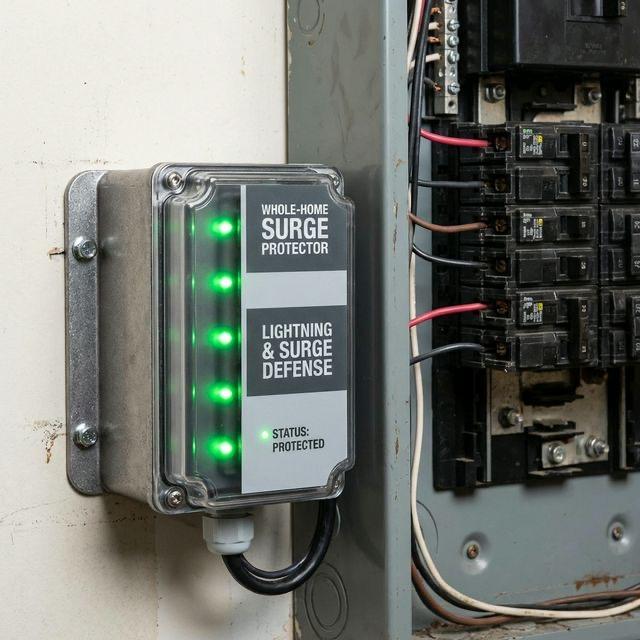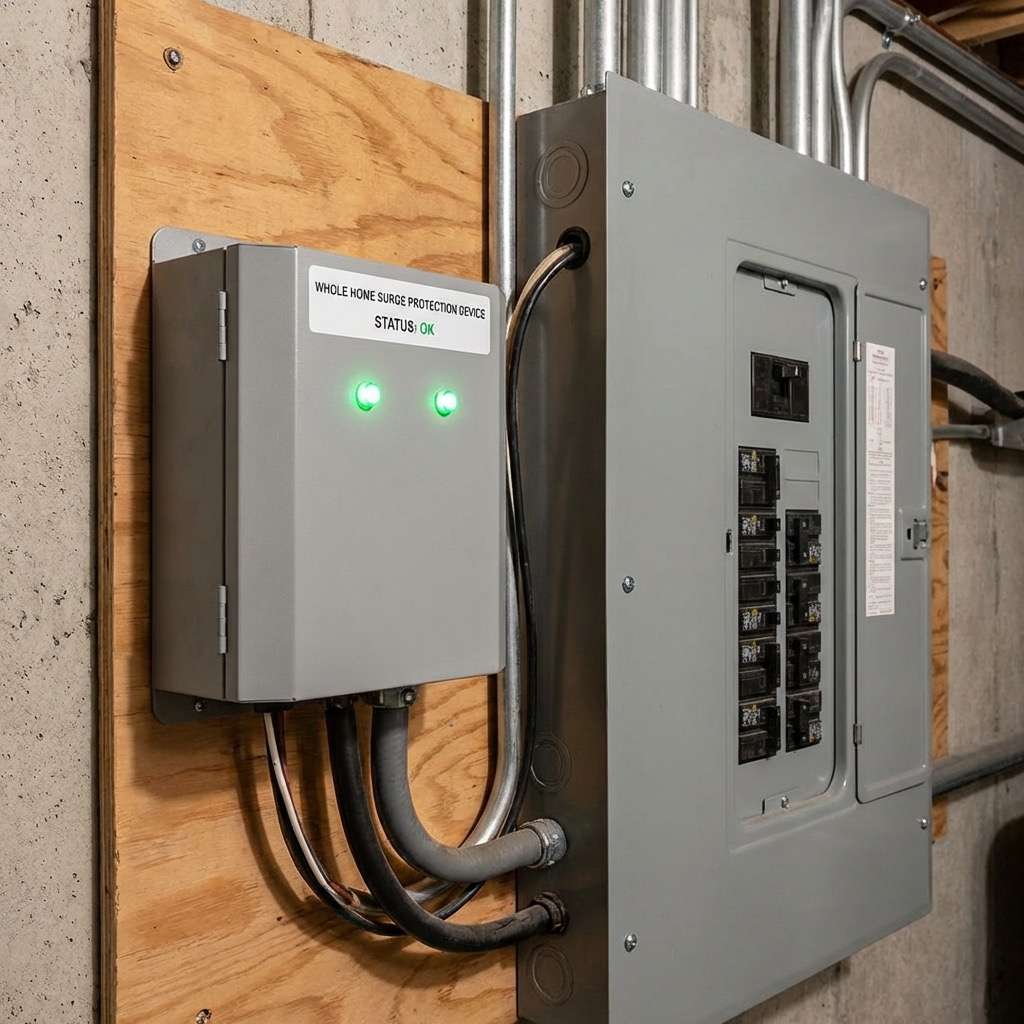

A whole-home surge protector is a protective layer at the electrical panel. The useful choice combines the actual panel, a compatible device and a suitable installation. It reduces exposure to certain transient events; it does not guarantee every appliance against damage.
Start with the system and the scope
- Match the device to the actual panel and connection requirements.
- Compare the whole specification and installation, not only a kA number.
- A panel device is the system-level layer, including for hardwired and 240-volt loads where a plug-in protector is not an option.
- After a storm, record what failed and use the installed model's status and replacement instructions.
What a panel surge protector does
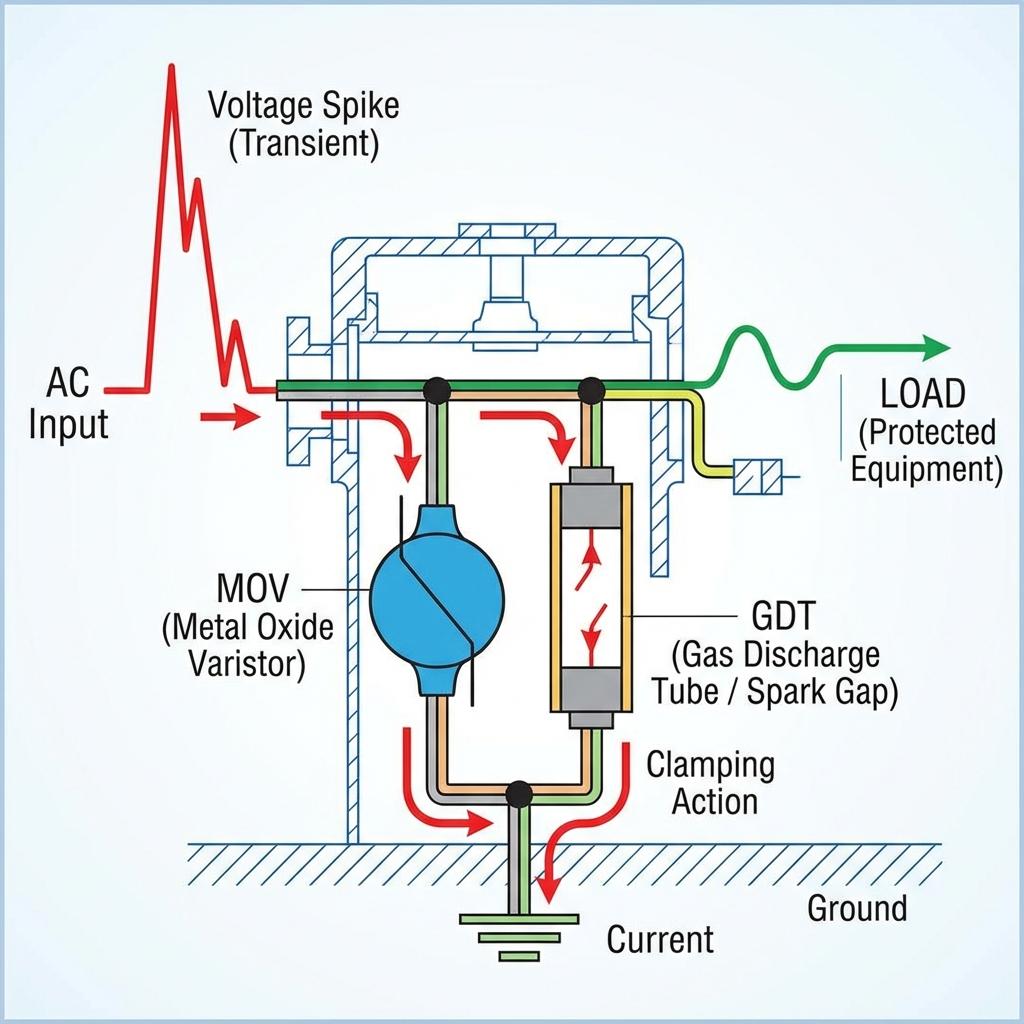
A surge protective device addresses certain brief transient overvoltage events. The connection and accessible grounding/bonding conditions are part of the installation review. Persistent voltage problems, outages and other incoming services need their own assessment; a panel device is not a backup power system or a lightning-protection guarantee.
Need a Panel Upgrade?
Outdated or overloaded electrical panels can present safety and capacity concerns. Our team evaluates 200-amp upgrades throughout Northern Virginia and confirms scheduling after reviewing the property. Call (571) 444-6886 to get started.
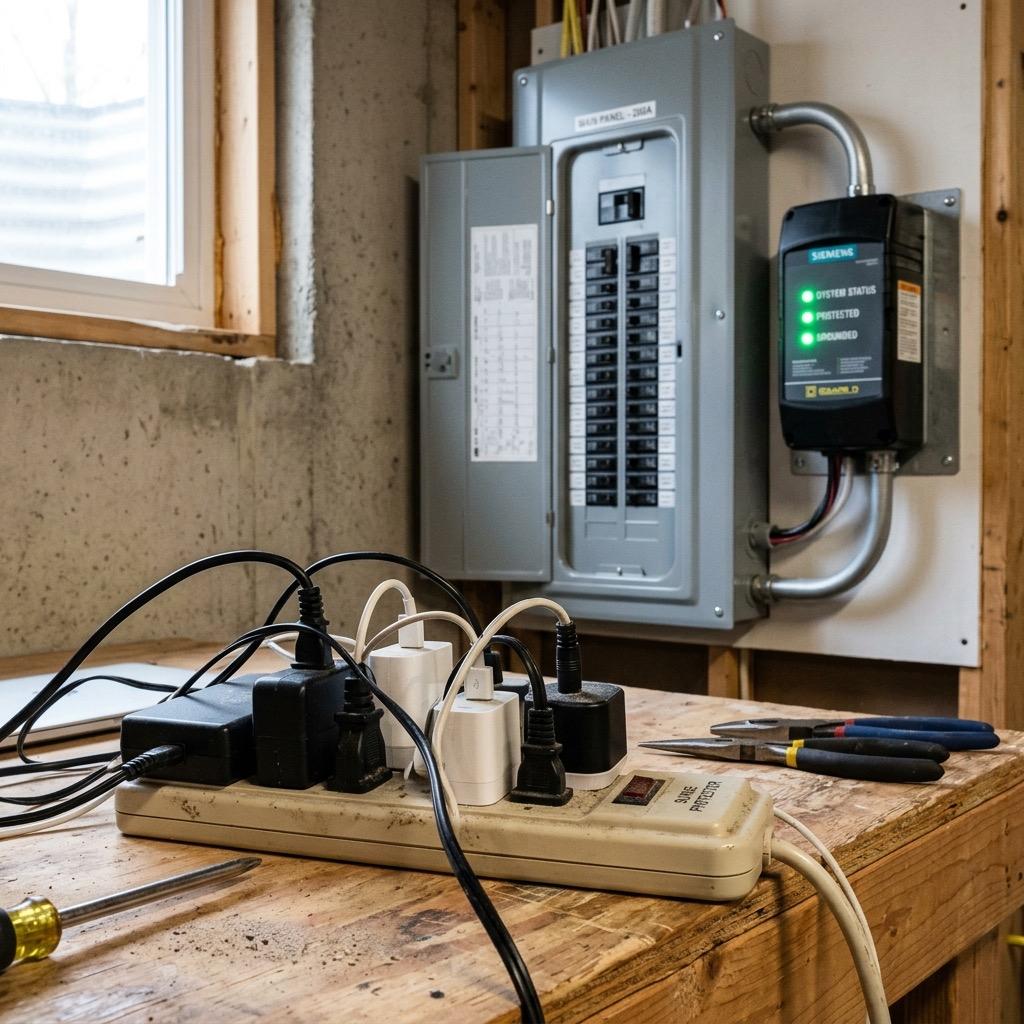
Point-of-use protection can be another layer for selected electronics when appropriate and used as directed. A power strip is not automatically a listed surge protector. Review the equipment and product instructions rather than assume every device connected anywhere on the property has the same protection.
Breaker-style or external panel device?
A compatible breaker-style protector occupies the panel locations specified for its exact equipment family. QO and Homeline are different families; physical fit is not enough. An externally mounted protector also needs a suitable connection, enclosure location and the specified protective arrangement.
Type 1 and Type 2 are application/listing descriptions, not a simple good/better ladder. Type 1 equipment can have load-side applications. Follow the selected model's current instructions and supplied label, including any revision differences in the literature.
How to compare the ratings
Read the rating basis, voltage protection rating, nominal discharge current and short-circuit current rating alongside the surge-current figure. A higher kA number alone does not prove a particular outcome. Do not use a universal minimum kA number, a fixed device lifespan or a per-inch performance percentage in place of the selected manufacturer's instructions.
The electrician should explain why the product and connection suit your actual system. Include additional panels, detached-building feeds, charging equipment and transfer equipment in that discussion. A new protector does not repair a damaged panel, create more connection space or increase service capacity.
Equipment a point-of-use protector cannot cover
Many loads with electronic controls are hardwired or on 240-volt circuits, such as heat pump and air handler controls, furnace and water heater boards, a well pump controller and often a range, dishwasher or EV charger. A plug-in protector is not an option for those, so a panel device is the system-level layer they have. List these loads when you discuss surge protection so the electrician knows what the panel device is meant to cover.
Surges that start inside the house
Not every surge comes from a storm or the utility. Motor and compressor loads, such as an air conditioner, refrigerator or well pump, create small transients when they switch on and off. A panel device acts on what passes through the panel, so it does less for a transient that starts on a branch circuit and reaches equipment on that same circuit first. That is why point-of-use protection near sensitive electronics stays useful after a panel device is installed.
After a storm or a suspected surge
Write down which equipment stopped working, when, and whether any breakers tripped. Check the protector's status indicator from outside the panel as its instructions describe, and leave protective covers in place. A storm alone does not prove the device failed, and a normal indicator does not prove every appliance was spared. If you smell burning, see scorching or a breaker will not stay on, stop using that equipment and request service.
Keep the protector's model and instructions with your electrical records, since indicator meanings and replacement steps vary by device. Our quoted electrical installations include a five-year workmanship warranty from completion. Parts and equipment carry their manufacturer warranties. Manufacturer connected-equipment claims have separate limits and procedures. They are not a promise of insurance coverage, an insurer discount or automatic reimbursement.
Installed cost and next steps
Installed cost, what a quote should list and how surge work fits into a panel replacement are covered in the whole-house surge protection cost guide.
Plan surge-protection installation. If there are unexplained trips or damaged equipment, describe those separately; breaker diagnosis and replacement is a different scope.