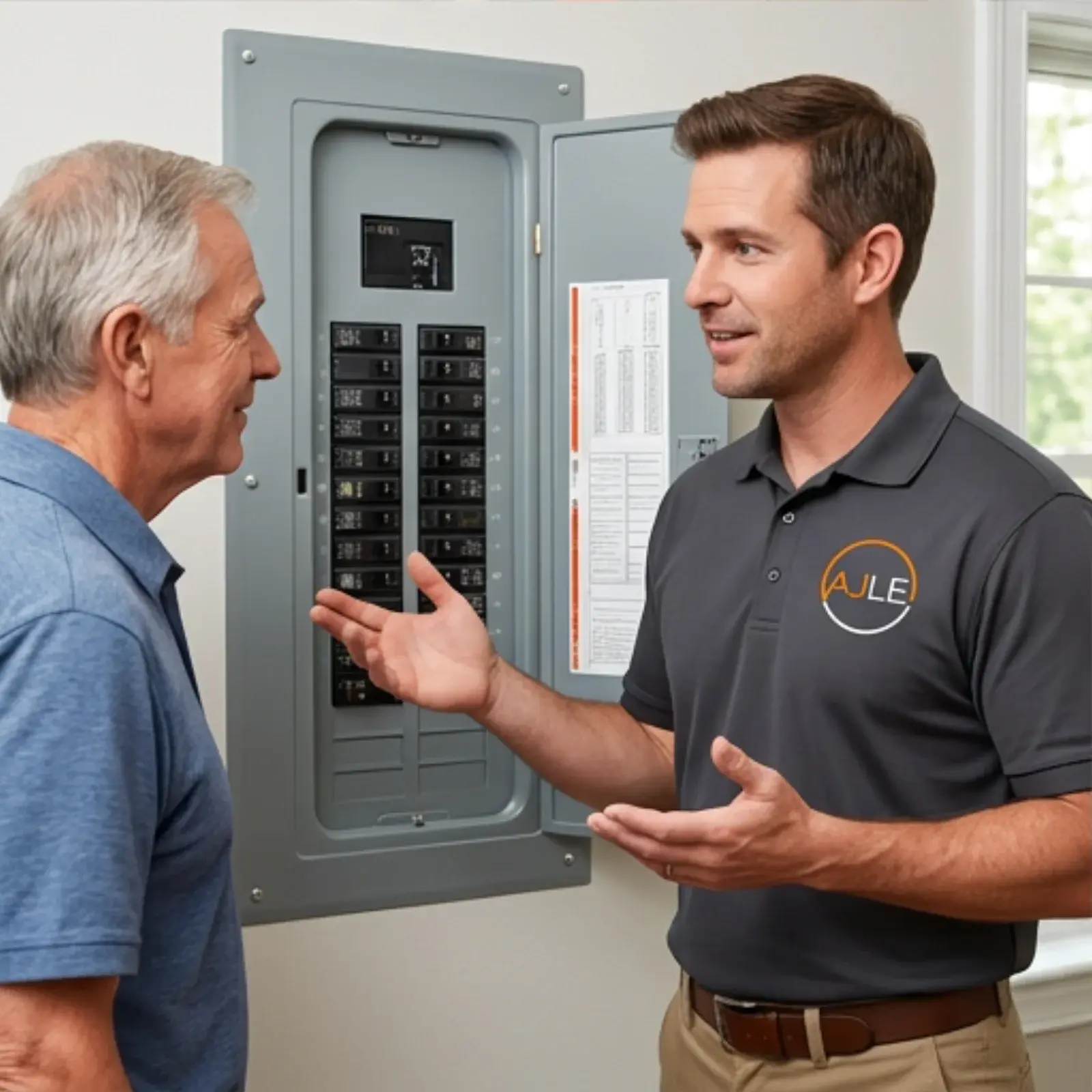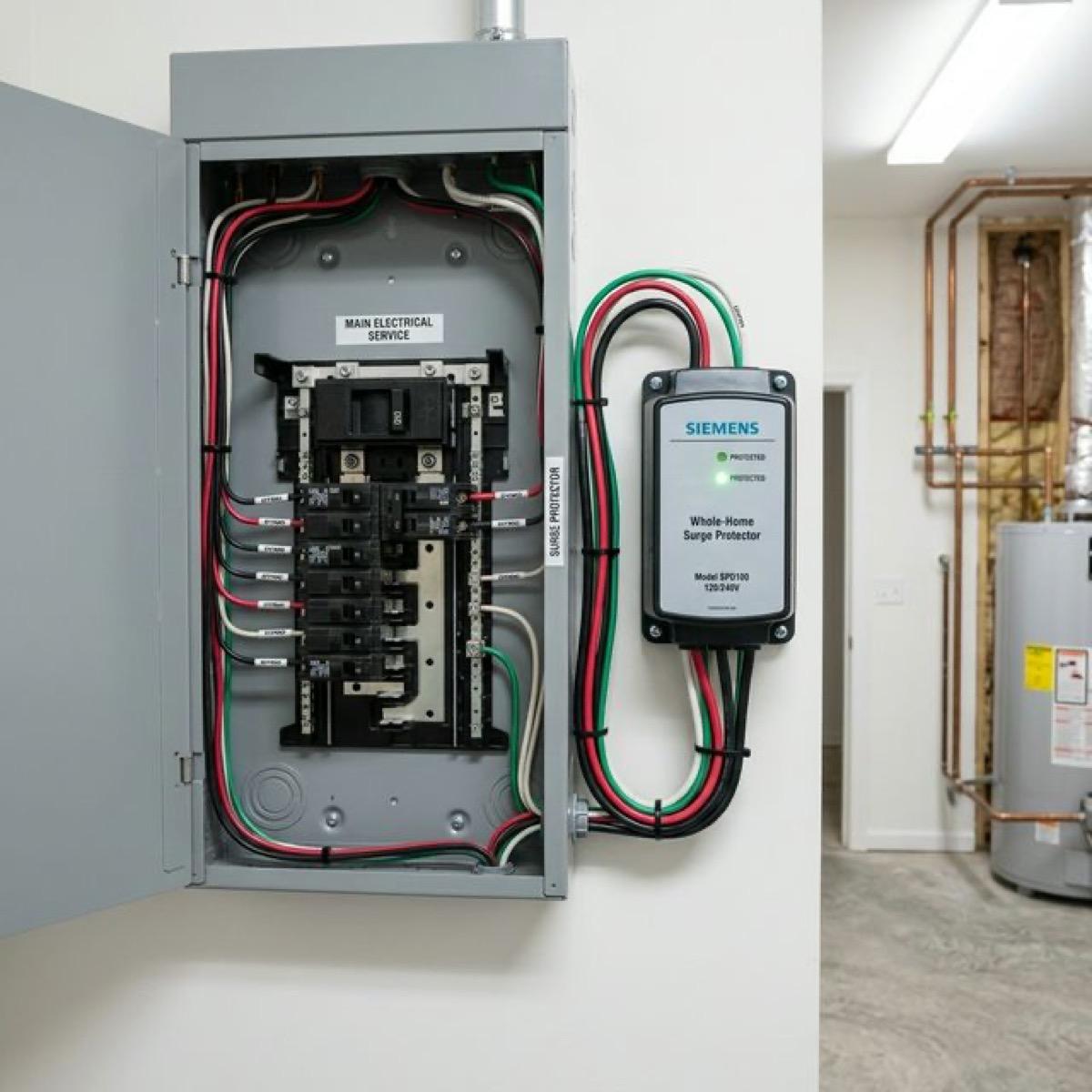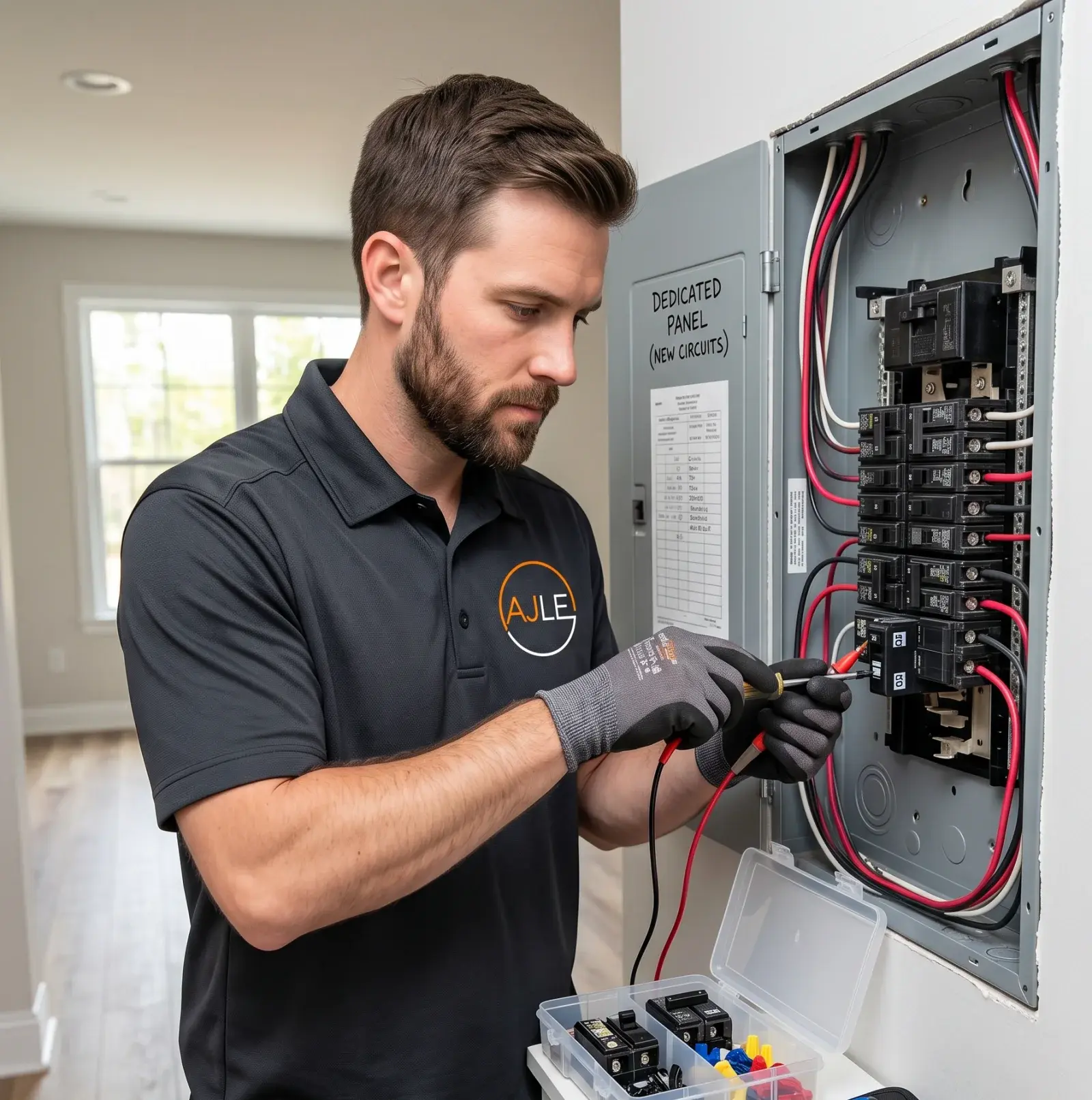
First distinguish replacement from diagnosis
A confirmed defective branch breaker is a defined part-and-installation project. A breaker that trips, will not reset or loses power has a symptom that still needs a cause. The circuit, an appliance, a connection or the protective function can be involved. Buying a replacement before that distinction is established can leave the original problem in place.
For a known replacement, the estimate needs the panel model, exact compatible device, protection type and existing installation conditions. For an unexplained fault, describe what happens and what was running. Do not remove a cover or keep resetting the breaker to collect information.
A retailer's breaker price is not an installed repair price. The proposal also defines the electrician's work, verification, fees and any corrections. Main-breaker work, damaged panel connections and unavailable compatible equipment need separate assessment.
What changes the breaker replacement scope?
Device type, panel compatibility and the actual findings change the work. A standard branch breaker, a GFCI breaker and a main breaker should not be compared as one interchangeable product. Several confirmed replacements can share setup, but each circuit still needs the right device and checks.
The written scope separates the known replacement from investigation or corrective wiring. If damage is discovered at the panel connection, stop treating the job as a simple part swap. The electrician should explain what changed and identify additional work before proceeding.
| Situation | Work to establish | Price basis |
|---|---|---|
| Repeated trips, cause unknown | Investigate the circuit, connected equipment and protective device. | Published diagnostic and repair time rate. We do not assume the breaker is the problem. |
| Confirmed standard branch breaker | Exact compatible device and defined replacement/testing work at a suitable panel. | Parts and installation quoted for that specific scope. |
| Existing GFCI, AFCI or dual-function device | Identify the protection type and the actual circuit/connection requirements. | The device and any wiring corrections are listed separately. |
| Several confirmed replacements | List each device and distinguish shared setup from additional work. | One written scope that lists each breaker. Diagnosis is not charged again for each one. |
| Main breaker, bus damage or unavailable parts | Assess equipment condition, isolation needs and the available repair paths. | Quoted as a separate project. |
Why the exact panel and device matter
A brand name and amperage are not enough to select a breaker. QO and Homeline are different Square D families; Eaton CH and BR are also different. Older equipment labels and previous alterations need to be read at the actual panel. Physical fit does not establish that a device is listed or classified for that use.
Some classified replacement breakers have specific permitted applications. That does not make every cross-brand device interchangeable. The estimate should identify the actual device and compatibility basis instead of promising a universal replacement.
Availability can change the options for older equipment. Matching listed or classified replacement breakers for Federal Pacific Stab-Lok, Zinsco and Pushmatic panels may be limited. For Federal Pacific Stab-Lok and Zinsco panels, we recommend replacing the panel rather than individual breakers. For Pushmatic and other older equipment, we propose a panel replacement when a suitable replacement part is not available. A higher part price alone does not prove that a panel replacement is necessary. If a broader change is recommended, ask what observed condition or equipment limitation makes it appropriate.
Standard, GFCI, AFCI and dual-function devices
These descriptions identify different protective functions. An existing GFCI or AFCI device needs its actual function, connections and circuit requirements reviewed. Combination AFCI and dual-function AFCI/GFCI do not mean the same thing. Do not compare specialty-device prices with a basic branch-breaker headline without accounting for that difference.
This is a repair-scope decision, not an automatic campaign to replace every device in the house. Existing protection, the work being performed and applicable requirements govern what is specified. A same-type replacement is not promised to cure an unexplained wiring or equipment fault.
Do not increase breaker amperage to prevent tripping. The circuit and equipment determine suitable protection; a larger handle rating does not upgrade the conductors or add service capacity.
How AJLE diagnosis and repair labor work together
Diagnostics and repairs cost $195 for the first 30 minutes, then $60 for each additional 15 minutes.
The published time rate covers troubleshooting and repair labor during the same visit. Finding the cause does not start a separate flat-rate repair labor charge. Parts and any separately quoted work are additional.
A pre-scoped replacement and a symptom-led service visit are different starting points. The former begins with an identified device and suitable conditions; the latter includes investigation. Ask the proposal to state which service is being purchased and what the quoted or timed labor includes. Do not automatically add a second flat repair-labor charge after diagnosis.
Parts, separately quoted corrective work and applicable visit charges remain distinct. The published diagnostic minimum is not a claim that every breaker can be supplied and installed for that amount, and a device-only estimate is not the total for an investigative visit.
Several breakers on one visit
Prepare a device list and explain why each replacement is proposed. The work can be scoped together once the actual equipment and conditions are established. Shared access and setup are different from the additional work on each circuit.
There is no automatic quantity discount or universal first/additional-device price. An unexplained trip on several circuits can also have a common cause that deserves investigation rather than several assumed part failures. Keep optional changes separate from repairs that are supported by findings.
When several new loads or circuit changes are planned, assess capacity as its own question. Replacing devices does not increase service capacity, and the number of spare panel spaces does not substitute for a load assessment.
When this becomes a larger panel project
Main-breaker problems, damaged bus connections, overheating, enclosure defects and unavailable suitable replacement parts can change the repair path. Isolation, utility coordination or a wider equipment replacement may be needed for the actual project. Those items do not belong inside an assumed standard-branch-breaker offer.
Ask for the observed finding, the proposed correction and the alternatives that remain suitable. Neither age alone nor a repeated trip proves the house needs a larger service. If a panel project is proposed, compare that scope with the panel service and cost guidance rather than treating it as an ordinary device replacement.
Compare the complete repair quote
Use the same device, diagnosed condition and installation assumptions for each provider. Confirm whether the price is for fault finding, a confirmed replacement or a larger repair. Ask what happens if the findings change. A low starting figure and an itemized project price are not directly comparable until the included work is clear.
| Compare | Look for | Clarify before comparing |
|---|---|---|
| Equipment | Exact model, who supplies it and compatible panel/connection | A generic device allowance without the actual model |
| Labor | Installation, checks and the boundary of the agreed work | A part-only price presented as an installed total |
| Diagnosis | Whether investigation is needed and how repair labor is handled | An unexplained trip treated as a confirmed failed part |
| Visit fees | Dispatch, minimums and any stated member benefit | An assumed fee credit that is absent from the written terms |
| Permits and access | Applicable permit coordination, building access and inspection responsibility | A promised approval time or universal permit exemption |
| Corrections and finish | Existing-condition repairs, wall work, disposal and exclusions | Necessary corrective work left outside the comparison |
| Warranty | Workmanship coverage versus manufacturer product terms | A product claim treated as blanket insurance or labor coverage |
Fees, warranty and preparing the request
Estimates are free for every service. Scheduled estimate visits and written project prices are free. Diagnostic and repair work is a separately priced service.
The $99 dispatch fee applies when you book a technician to come out for work. It is waived for members and is never charged for an estimate visit or written estimate. Troubleshooting is priced separately.
Our quoted electrical installations include a five-year workmanship warranty from completion. Parts and equipment carry their manufacturer warranties. Diagnostic and repair visits do not automatically extend that installation warranty to every existing component.
Send the property address, symptoms, safely accessible panel and breaker labels, any existing diagnosis and access requirements. Leave protective covers in place. Staff review the details and confirm the next step; submitting a request is not a confirmed appointment. For fire or an immediate threat to life, call 911 and keep clear of damaged equipment.
Continue to the Next Decision
Northern Virginia Considerations
Code Requirements
Match the actual panel listing or classification, circuit and applicable protective function. Do not increase amperage to stop trips.
Permit Information
The actual property, equipment and replacement or alteration scope determine the permit path. Building access approval is a separate step.
Typical Costs
Quoted after the cause and exact compatible replacement are established.
Local Tips
Confirm unit-owned versus building-owned equipment and management access before arranging a visit.
Frequently Asked Questions (6)
Why does a breaker cost more installed than on the store shelf?
The installed price covers the exact device listed for your panel, removing the old breaker, checking the bus connection and conductor, testing the circuit and the visit itself. Quoted after the cause and exact compatible replacement are established.
What does it cost to find out why a breaker keeps tripping?
Finding the cause is billed on the time rate. Diagnostics and repairs cost $195 for the first 30 minutes, then $60 for each additional 15 minutes. If the fix is a straightforward repair during that visit, the same clock covers it and parts are extra. Work that needs its own scope is priced before it starts.
Do GFCI, AFCI and dual-function breakers cost more to replace than standard breakers?
The device usually costs more, and its connections and circuit need checking, but it is priced the same way: once the exact compatible model is confirmed. We keep the protection the circuit already has rather than swapping in a cheaper standard breaker.
Is a main breaker replacement priced like a branch breaker?
No. Main-breaker work can need isolation from the utility supply and depends on the panel and available parts, so it is assessed and quoted on its own. If a replacement panel is the better fix, our 200A panel package is $3,500–$7,500.
Can I buy the breaker myself to lower the cost?
You can, if it is the exact model listed or classified for your panel and circuit. We check the part before installing it. The labor is the same either way, and the manufacturer's warranty covers the part.
Will I pay a dispatch fee for a breaker repair visit?
The $99 dispatch fee applies when you book a technician to come out for work. It is waived for members and is never charged for an estimate visit or written estimate. Troubleshooting is priced separately. Estimates are free for every service. Scheduled estimate visits and written project prices are free. Diagnostic and repair work is a separately priced service.
Authoritative Sources
- Eaton: classified replacement breakersA classified replacement has specific compatibility conditions; physical fit alone is insufficient.
- Fairfax County: residential electrical permitsCheck the property and defined work against the County permit process. Building or association permission is separate.
- Virginia DHCD: building codes in forceVirginia's 2021 Uniform Statewide Building Code adopted the 2020 NEC, effective January 18, 2024. That edition includes the surge rule in Section 230.67.