Loading services…

Residential project planning
Generator Connections in Lorton, VA
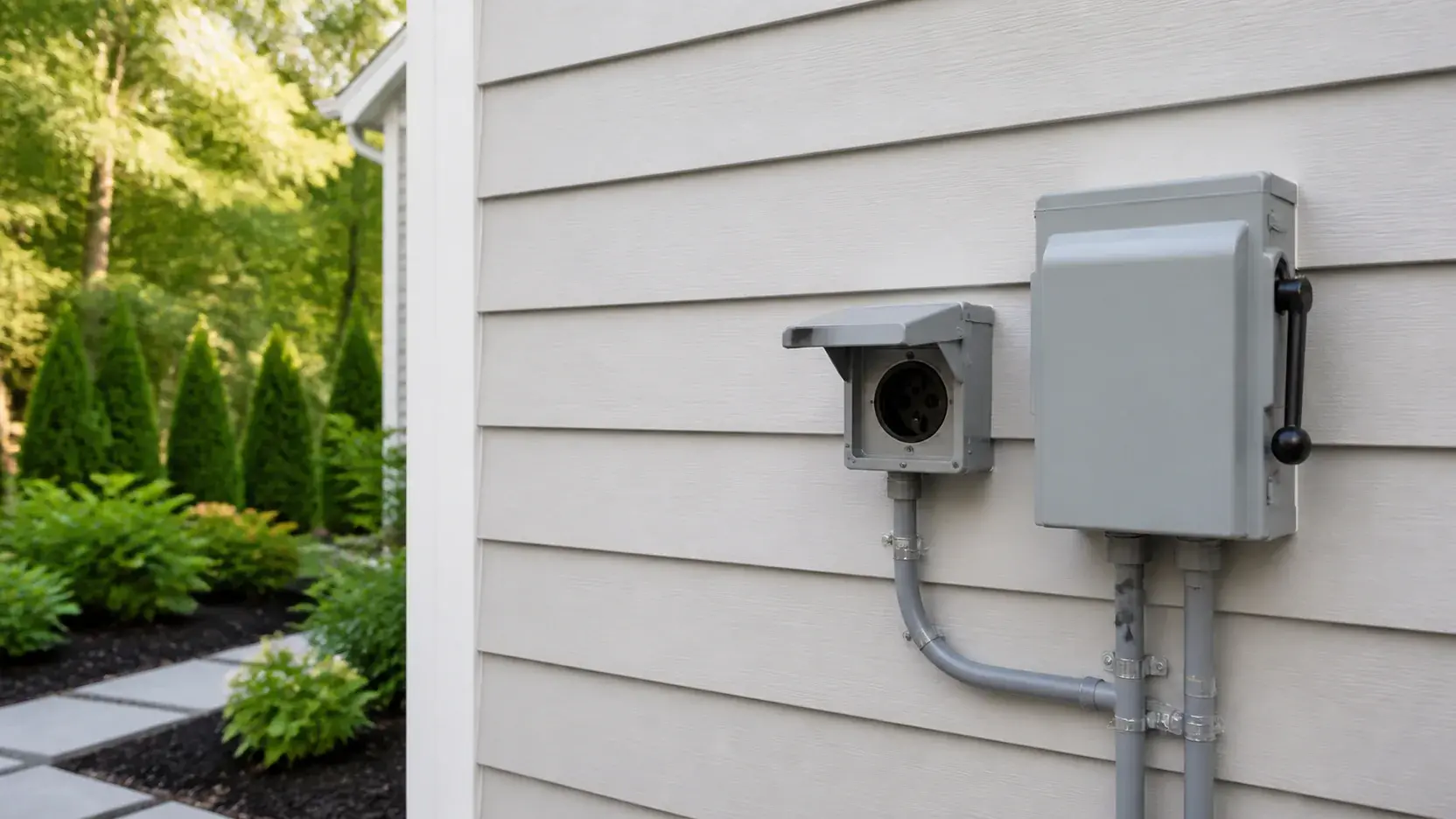
Generator connection work gives a homeowner a controlled way to supply selected circuits from compatible portable equipment. The electrical scope may include an inlet and a transfer switch or permitted interlock, plus planning for essential loads or battery-backup connections.
- Licensed & insured
- Family-owned since 1996
Field briefing / Lorton, VA
Project briefing
Jurisdiction confirmed by property address
- Project
- Generator Connections
- Map the panel and feeder relationship between structures before deciding where backup power enters the electrical system.
- Permit path
- Fairfax County Land Development Services
- Final jurisdiction is confirmed from the property address.
Scope first
What this project involves
Transfer method
Compare a manual transfer switch with an interlock based on the panel, selected circuits, and permitted configuration.
Loads and inlet location
Choose the essential loads to support and a practical outdoor inlet location with a workable circuit route.
Field view / Generator Connections
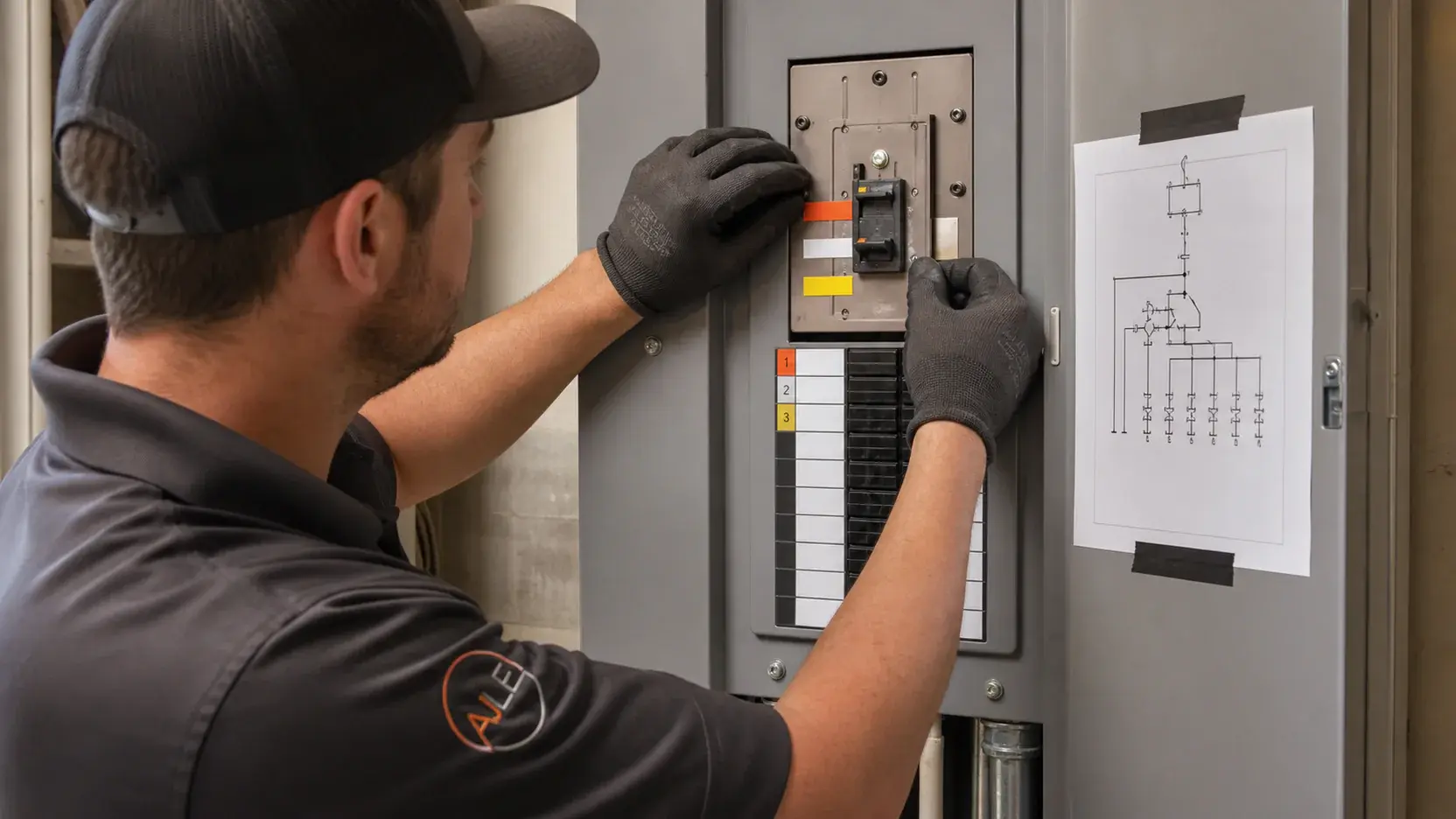
Representative field view for Generator Connections; final scope is confirmed at the property.Address-specific planning
What matters in Lorton
A Lorton connection for customer-owned portable backup equipment can hinge on where the important loads are served, especially when the main home and a detached structure do not share one convenient panel. The plan identifies the serving equipment before choosing an inlet route.
A Laurel Hill, Newington, or Mason Neck property may have an attached garage, an exterior panel, or a detached building reached by a feeder. We determine whether the desired circuits belong at the main panel or a downstream panel and avoid assuming one connection can serve separate structures. Inlet wiring, compatible manual transfer equipment, and battery interfaces follow the verified route. Fairfax County Land Development Services handles the electrical permit process.
Explore the Lorton service areaProject fit / review at the property
- A portable-equipment inlet serving essential circuits in the main residence
- A detached-structure review to identify the feeder and correct transfer location
- A compatible battery-backup connection planned from the panel that actually serves the selected loads
Local housing & wiring
Planning electrical work in Lorton
Generator hookups in Lorton center on a switchover a household can run alone in the dark. Crosspointe and Laurel Hill owners can ask for a labeled switching card at the panel so anyone at home can follow the same steps.
Lorton's 1990s colonials in Crosspointe and Laurel Hill, and the older townhomes and ramblers in Newington, are served by Dominion Energy, and an outage that runs past a day turns a freezer full of food, a finished basement sump and a gas furnace blower into real concerns. Most newer sections have underground service, so the trigger is usually a damaged feeder or a substation problem rather than a limb on the drop. Garages are deep and driveways are long, so we put the inlet where the owner will actually set the generator, often the garage side wall near the driveway apron, and keep the cord short. Pohick and Gunston-area houses on larger parcels may add a detached outbuilding with its own panel. The step-by-step labeling matters here: a teenager or a neighbor should be able to follow the switching order from the card at the panel. Fairfax County Land Development Services issues the permit.
Quote inputs
Scope and cost drivers
Typical published range for this work: $900-$2,500. The written Lorton proposal is project-specific.
Included in the defined scope
- Identify the circuits and essential loads the backup source is intended to serve
- Plan a compatible portable-generator inlet location and electrical route
- Install a manual transfer switch or interlock where the selected arrangement is permitted
- Plan compatible electrical connections for battery-backup equipment when included
What can change scope and cost
- Transfer equipment and panel compatibility
- Number and type of selected essential loads
- Inlet location and wiring route
- Electrical scope for a compatible battery-backup connection
Work sequence
From assessment to completion
- 01
Define loads
List the circuits the homeowner wants available during an outage.
- 02
Check compatibility
Review the panel, backup source requirements, and permitted transfer options.
- 03
Plan the connection
Select the transfer method, inlet location, circuit route, and electrical scope.
- 04
Install and test
Complete the electrical connection and test the transfer procedure and selected circuits.
Property-specific answers
Local questions
Can one Lorton inlet serve loads in a detached building?
It depends on how the detached structure is fed and where its overcurrent and disconnecting equipment are located. We review the feeder, panels, conductor path, and requested loads before defining a compliant connection point.
What is checked before selecting transfer equipment in Lorton?
We check the panel manufacturer and model, available arrangement, portable-equipment output, selected circuit demand, and whether a listed interlock is available. A manual transfer switch remains an option when the panel arrangement calls for it.
What should a switching card at my Lorton panel say?
It should follow the instructions for your installed interlock or transfer switch. A typical order is: generator outside with its breakers off, cord connected to the generator and the inlet, engine started, utility main off or the transfer switch set to generator, generator breaker on, then loads added one at a time. It should also list what not to run. We write it for your panel.
How do I know when it is safe to switch back to utility power?
First confirm utility power is back and steady, for example when neighbors' lights stay on and Dominion Energy reports the outage cleared. Then turn off the large loads and the generator breaker, return the interlock or transfer switch to utility, stop the engine, and only then disconnect the cord. Follow your equipment's own instructions where they differ. Never connect a generator to the house without transfer equipment, because it can energize lines and injure line workers.
Do Lorton houses on larger lots need a longer inlet cord?
Usually no. We place the inlet near the spot where you will actually run the generator, so a standard cord of modest length is enough. Longer cords raise voltage drop and are harder to store safely. Tell us where you plan to set the generator and we will site the inlet to match.
Related Services
Related Services in Lorton
Guides
Generator Connections Planning Guides
Expert electrical guides to help you make informed decisions.
Advanced
Backup Power Guide: Portable Generator Hookups vs. Battery Power Stations
Everything Northern Virginia homeowners need to know about backup power: safely connecting a portable generator with a transfer switch or interlock kit, or integrating listed battery equipment for documented loads.
18 min read
Read GuideIntermediate
Understanding Electrical Permits in Northern Virginia
Navigate the electrical permit process in Northern Virginia with confidence. Learn requirements for Fairfax County, Arlington, Alexandria, and surrounding areas.
12 min read
Read GuideNearby Generator Connections Service Areas
We also provide expert electrical services in these communities.
Next step / property-specific quote
Request a quote for Generator Connections in Lorton
Share the property address and project goal so the scope can be reviewed for your home.