Loading services…

Residential project planning
EV Charger Installation in Lorton, VA
Home EV charging work centers on a code-sized dedicated 240V circuit and the capacity available at the electrical panel. Planning covers a hardwired or receptacle-fed charger, cable reach, placement, and permit and inspection requirements.
- Licensed & insured
- Family-owned since 1996
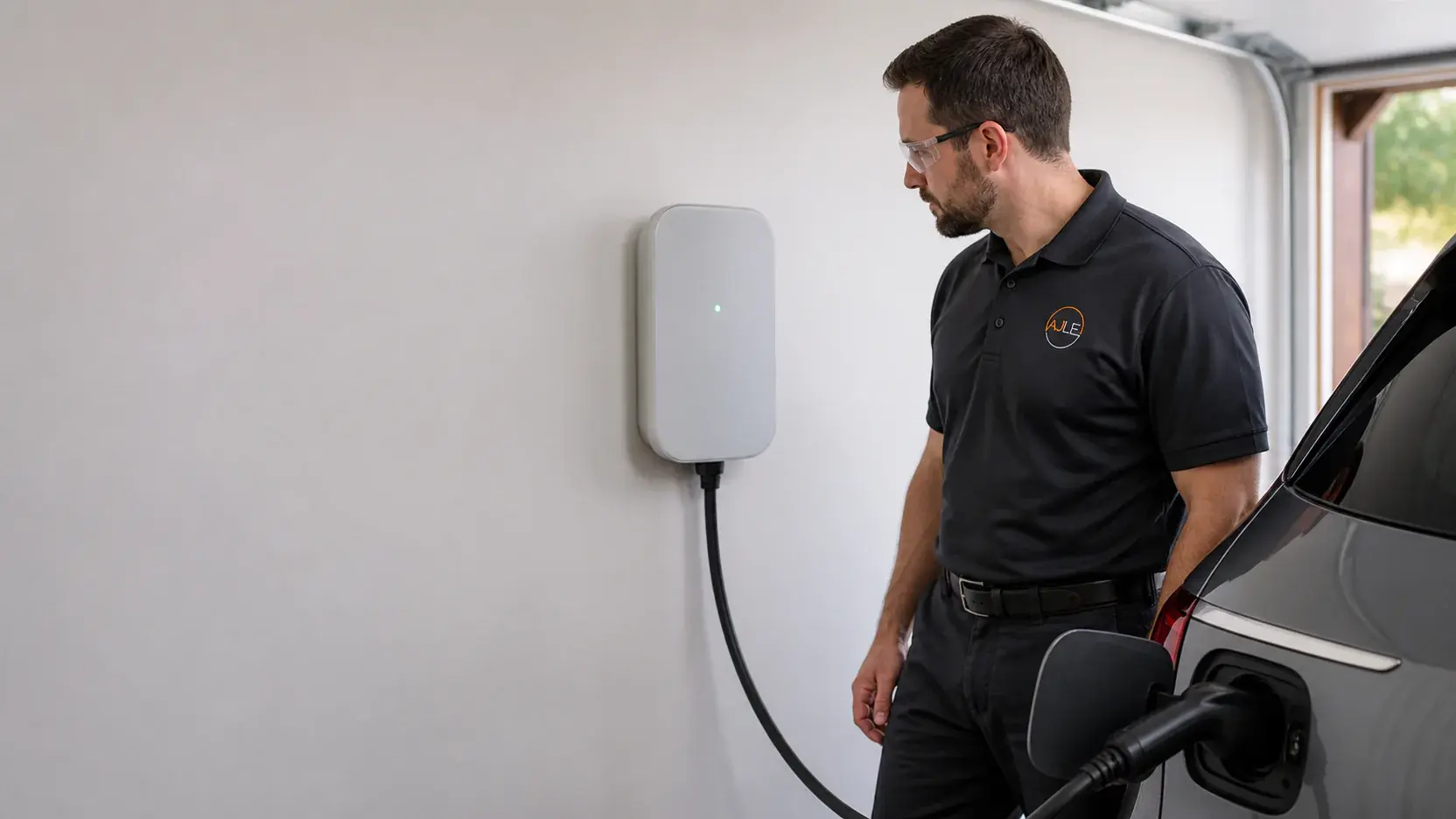
Field briefing / Lorton, VA
Project briefing
Jurisdiction confirmed by property address
- Project
- EV Charger Installation
- Compare the shortest electrical route with the parking position that gives reliable connector reach before selecting the final mount.
- Permit path
- Fairfax County Land Development Services
- Final jurisdiction is confirmed from the property address.
Scope first
What this project involves
Charging output
Choose an output that fits the vehicle, charging habits, circuit size, and available panel capacity.
Connection and placement
Choose hardwired or receptacle-fed equipment and place it indoors or outdoors with practical cable reach.
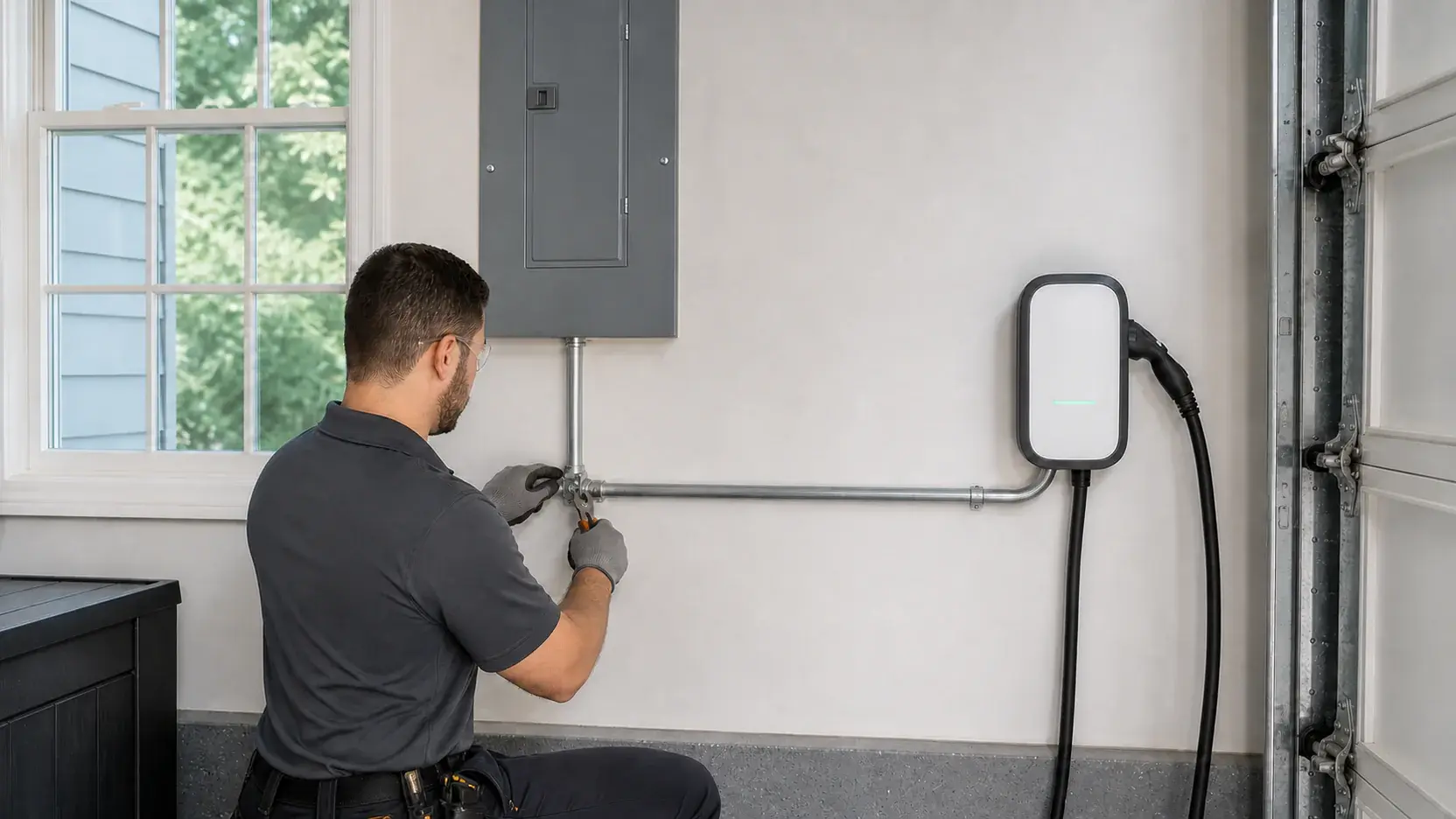
Field view / EV Charger Installation
Representative field view for EV Charger Installation; final scope is confirmed at the property.Address-specific planning
What matters in Lorton
For a Lorton EV charger, the distance between panel and parking can shape the project as much as charging output. We establish the vehicle position, connector reach, available panel capacity, and a serviceable circuit path before settling on equipment placement.
Laurel Hill, Newington, and Mason Neck represent different property settings, so attached-garage, driveway, carport, or detached-parking plans are evaluated at the specific address rather than inferred from the area. Longer exterior runs and exposed mounting points need an appropriate wiring method and equipment location. Fairfax County electrical and EV charging guidance supports the permit path when a covered new circuit or outlet is part of the scope.
Explore the Lorton service areaProject fit / review at the property
- A garage charger with a measured route from a remote panel location
- A driveway or detached-parking charger requiring outdoor routing and mounting
- A charging circuit sized to the vehicle's needs and the home's calculated capacity
Local housing & wiring
Planning electrical work in Lorton
An EV project in Lorton can start with a charger you already bought. Homeowners in Crosspointe, Lorton Station and Gunston may buy a unit online first, then ask whether the garage, the driveway and the panel can support it.
We connect customer-supplied listed equipment when it fits the vehicle, the circuit and the manufacturer's instructions. Before you buy, check the listing mark, whether it is hardwired or plug-in, its adjustable current, the connector type your car uses, the cable length and its outdoor rating. A cable that is a few feet short can force the mount to a different wall. When a Lorton home from the 1990s or 2000s already has a 200 amp panel, the work is mostly the route and the mounting. Driveway charging means a pedestal or a post, and lots near Mason Neck and Pohick can be large enough that a trench is needed. We call Virginia 811 for public utilities and ask you about private lines like irrigation. Fairfax County Land Development Services issues permits for the new circuit.
Quote inputs
Scope and cost drivers
Typical published range for this work: $1,200-$3,500 typical; long or detached runs up to $4,500. The written Lorton proposal is project-specific.
Included in the defined scope
- Review the charger requirements and desired parking location
- Calculate available panel capacity for the proposed charging load
- Plan and install a dedicated 240V circuit for hardwired or receptacle-fed equipment
- Coordinate the electrical permit and inspection for the installation
What can change scope and cost
- Circuit amperage and charger connection method
- Distance and route from the panel to the parking location
- Available panel capacity and related electrical work
- Indoor or outdoor mounting conditions
Work sequence
From assessment to completion
- 01
Review
Confirm the charger requirements, parking position, cable reach, and connection preference.
- 02
Calculate
Evaluate the panel and calculate whether it can support the charging load.
- 03
Route
Define the dedicated circuit path, mounting location, and permit scope.
- 04
Install and inspect
Install the circuit and connection, test the work, and coordinate the required inspection.
Property-specific answers
Local questions
Why does route length matter for a Lorton EV charger?
A longer route affects conductor sizing, wiring method, access, and the number of finished or outdoor areas crossed. Measuring it early makes the estimate reflect the actual path rather than a straight-line assumption.
How is outdoor exposure handled for Lorton parking?
We review rain exposure, mounting surface, physical protection, connector storage, and the path vehicles and people use around the cable. Equipment and wiring are selected for the confirmed location.
Can you install a charger I bought online for my Lorton home?
Yes, if it is listed, compatible with your car and suited to the circuit and mounting location. We check the model, the manufacturer's instructions and whether hardwired or plug-in installation is allowed. If the unit is not suitable, we say so and explain what would be, so you can return or swap it.
What should I check on a charger before buying it for a Lorton garage or driveway?
Look for a recognized listing mark, a connector that matches your car, adjustable current, an outdoor rating if it will be outside, and a cable long enough to reach the port from the parked position. Whether it hardwires or plugs in also matters. Send us the model and we will tell you what the install needs.
Do you locate underground lines before trenching a Lorton driveway?
We call Virginia 811 for public utility locates before digging. Private lines, such as irrigation, pet fences and landscape lighting, are not marked by 811, so we ask where they run and walk the route with you. If something is uncertain, we hand-dig near it or adjust the trench path.
Related Services
Related Services in Lorton
Guides
EV Charger Installation Planning Guides
Expert electrical guides to help you make informed decisions.
Intermediate
How to Prepare Your Home for EV Charger Installation
Everything you need to know to prepare your home for a Level 2 EV charger installation, from panel assessment to choosing the perfect charging location.
12 min read
Read GuideBeginner
How to Choose the Right EV Charger for Your Home
Compare home Level 2 EV chargers and learn how amperage, connector type (J1772 vs NACS), hardwired vs receptacle wiring, and panel load management affect your installation.
10 min read
Read GuideIntermediate
Solar-Ready Electrical Panel Upgrade Guide for Northern Virginia
A solar-ready panel is documented busbar capacity, backfeed space, and grounding — not modules on the roof. Plan it with EV and battery loads so you do not replace the panel twice.
9 min read
Read GuideNearby EV Charger Installation Service Areas
We also provide expert electrical services in these communities.
Next step / property-specific quote
Request a quote for EV Charger Installation in Lorton
Share the property address and project goal so the scope can be reviewed for your home.