Loading services…

Residential project planning
Generator Connections in Annandale, VA
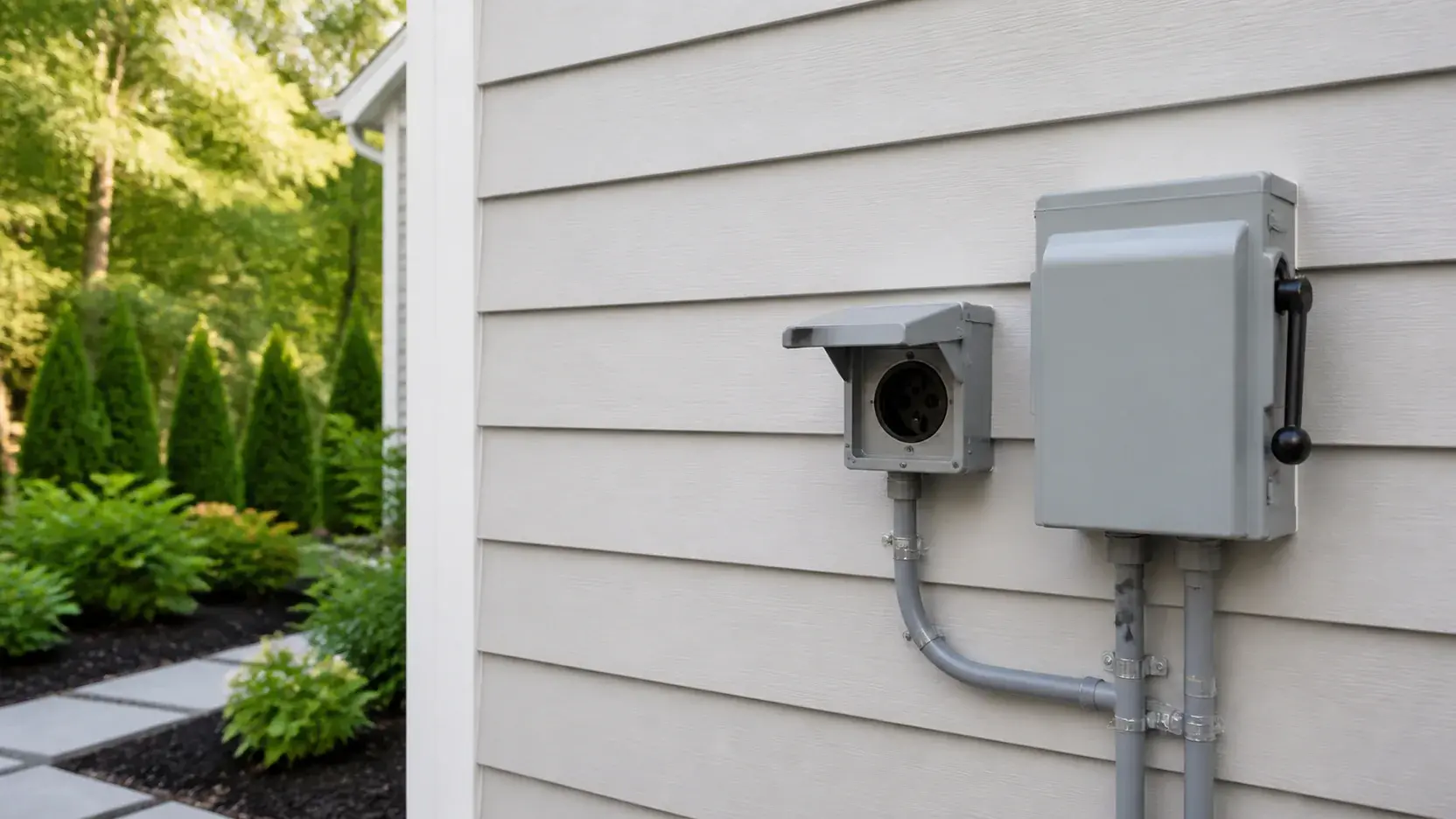
Generator connection work gives a homeowner a controlled way to supply selected circuits from compatible portable equipment. The electrical scope may include an inlet and a transfer switch or permitted interlock, plus planning for essential loads or battery-backup connections.
- Licensed & insured
- Family-owned since 1996
4.9 ★ on our Annandale, VA Google Profile (67+ Local Reviews)Backed by 1,463+ 4.9 ★ Reviews Across the DMV
7138 Little River Turnpike #305, Annandale, VA 22003Our long-standing Annandale local presence — serving the Annandale community for over two decades.
Field briefing / Annandale, VA
Project briefing
Jurisdiction confirmed by property address
- Project
- Generator Connections
- Verify circuit labels under controlled testing before relying on them for a backup-load plan.
- Permit path
- Fairfax County Land Development Services
- Final jurisdiction is confirmed from the property address.
Scope first
What this project involves
Transfer method
Compare a manual transfer switch with an interlock based on the panel, selected circuits, and permitted configuration.
Loads and inlet location
Choose the essential loads to support and a practical outdoor inlet location with a workable circuit route.
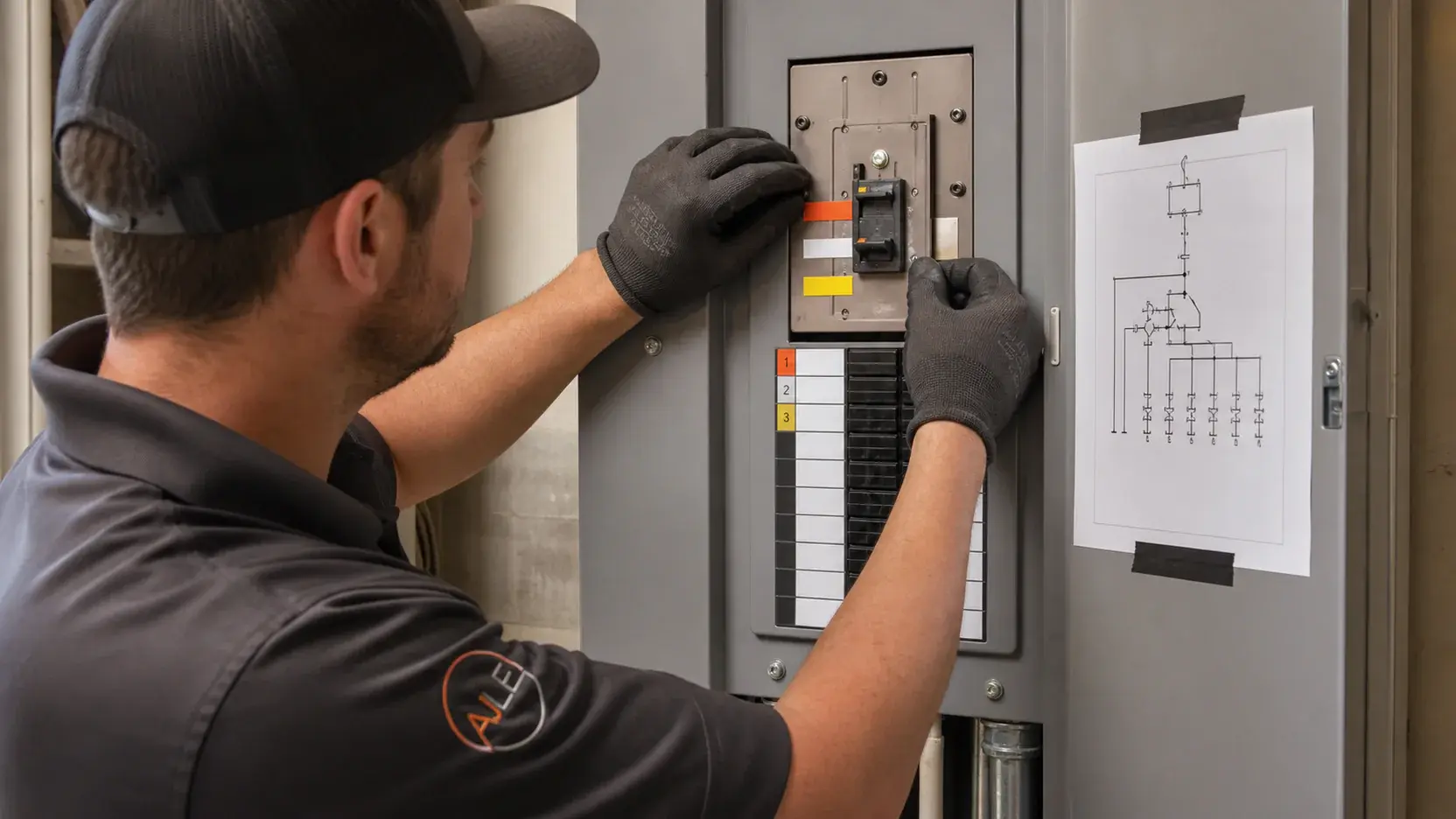
Field view / Generator Connections
Representative field view for Generator Connections; final scope is confirmed at the property.Address-specific planning
What matters in Annandale
An Annandale connection for customer-owned portable backup equipment needs a verified circuit list, because panel labels and prior renovation work do not always describe what a breaker actually serves. We trace the intended loads before selecting an inlet and transfer method.
A property in Ravensworth, Woodburn, or Sleepy Hollow Woods may have an inlet route that crosses finished or previously altered space or reaches a detached structure rather than an attached area. Accessible circuit tracing helps separate essential loads from unrelated devices, while a panel review establishes whether a permitted interlock is compatible or a manual transfer switch is the clearer approach. Fairfax County Land Development Services is the electrical permit authority.
Explore the Annandale service areaProject fit / review at the property
- Circuit tracing before assigning essential loads to manual transfer equipment
- A weather-suitable inlet with a route around finished or renovated areas
- A compatible battery-backup interface where the selected circuits and panel arrangement support it
Local housing & wiring
Planning electrical work in Annandale
Generator hookups in Annandale involve 1950s and 60s ramblers and splits on overhead lines under mature trees in Ravensworth and Woodburn. Older panels and unlabeled circuits are the usual hurdle.
Annandale's ramblers, Cape Cods and splits from the 1950s and early 1960s sit on streets with overhead service lines and mature trees, and many homes have been renovated in pieces over the decades. That leaves panels with unclear labels, circuits that feed odd combinations of rooms, and sometimes a second panel added for an addition. Putting a refrigerator, sump pump and furnace blower on a backup group means finding exactly which breakers serve them, and that is work we do before choosing the equipment. Lots near Little River Turnpike and Ossian Hall Park are often smaller, so the generator spot needs care to stay away from windows and fences. A manual transfer switch is the usual solution when the panel is old or crowded. Fairfax County Land Development Services is the permit authority, and Dominion Energy serves the area.
Quote inputs
Scope and cost drivers
Typical published range for this work: $900-$2,500. The written Annandale proposal is project-specific.
Included in the defined scope
- Identify the circuits and essential loads the backup source is intended to serve
- Plan a compatible portable-generator inlet location and electrical route
- Install a manual transfer switch or interlock where the selected arrangement is permitted
- Plan compatible electrical connections for battery-backup equipment when included
What can change scope and cost
- Transfer equipment and panel compatibility
- Number and type of selected essential loads
- Inlet location and wiring route
- Electrical scope for a compatible battery-backup connection
Work sequence
From assessment to completion
- 01
Define loads
List the circuits the homeowner wants available during an outage.
- 02
Check compatibility
Review the panel, backup source requirements, and permitted transfer options.
- 03
Plan the connection
Select the transfer method, inlet location, circuit route, and electrical scope.
- 04
Install and test
Complete the electrical connection and test the transfer procedure and selected circuits.
Property-specific answers
Local questions
Why trace circuits before an Annandale backup connection?
A label may be incomplete after years of device or room changes. Tracing confirms which breaker serves each requested load, whether circuits share unexpected devices, and which panel the transfer equipment must connect to.
Can compatible battery equipment use the same selected-load plan in Annandale?
The essential-load list is a useful starting point, but the battery output, connection method, panel arrangement, and manufacturer requirements still have to match. We define the electrical interface from those verified details.
Can I run a space heater from the generator in my Annandale rambler?
Usually not alongside the other loads. A portable space heater can draw about 1,500 watts, a large share of a mid-size generator's output, and it competes with the refrigerator and furnace blower. A gas furnace blower uses far less power to heat the whole house. We size the backup group so the essential loads fit and point out which plug-in loads would exceed it.
Is a manual transfer switch safer than an extension cord setup?
Yes. Extension cords through windows risk overheated cords, tripped breakers and carbon monoxide entering the house. A transfer switch with an outdoor inlet isolates the generator from the utility, keeps cords short, and lets you power hardwired loads such as the furnace blower that you cannot plug into a cord.
What do I do with a gas furnace on generator power?
A gas furnace needs only its blower and controls to run, which are low-wattage circuits and an ideal item for a backup group. The gas itself is not affected by the electrical outage. We wire the furnace circuit to the transfer group and confirm its load against your generator's rating.
Related Services
Related Services in Annandale
Guides
Generator Connections Planning Guides
Expert electrical guides to help you make informed decisions.
Advanced
Backup Power Guide: Portable Generator Hookups vs. Battery Power Stations
Everything Northern Virginia homeowners need to know about backup power: safely connecting a portable generator with a transfer switch or interlock kit, or integrating listed battery equipment for documented loads.
18 min read
Read GuideIntermediate
Understanding Electrical Permits in Northern Virginia
Navigate the electrical permit process in Northern Virginia with confidence. Learn requirements for Fairfax County, Arlington, Alexandria, and surrounding areas.
12 min read
Read GuideNearby Generator Connections Service Areas
We also provide expert electrical services in these communities.
Next step / property-specific quote
Request a quote for Generator Connections in Annandale
Share the property address and project goal so the scope can be reviewed for your home.