Loading services…

Residential project planning
Generator Connections in Vienna, VA
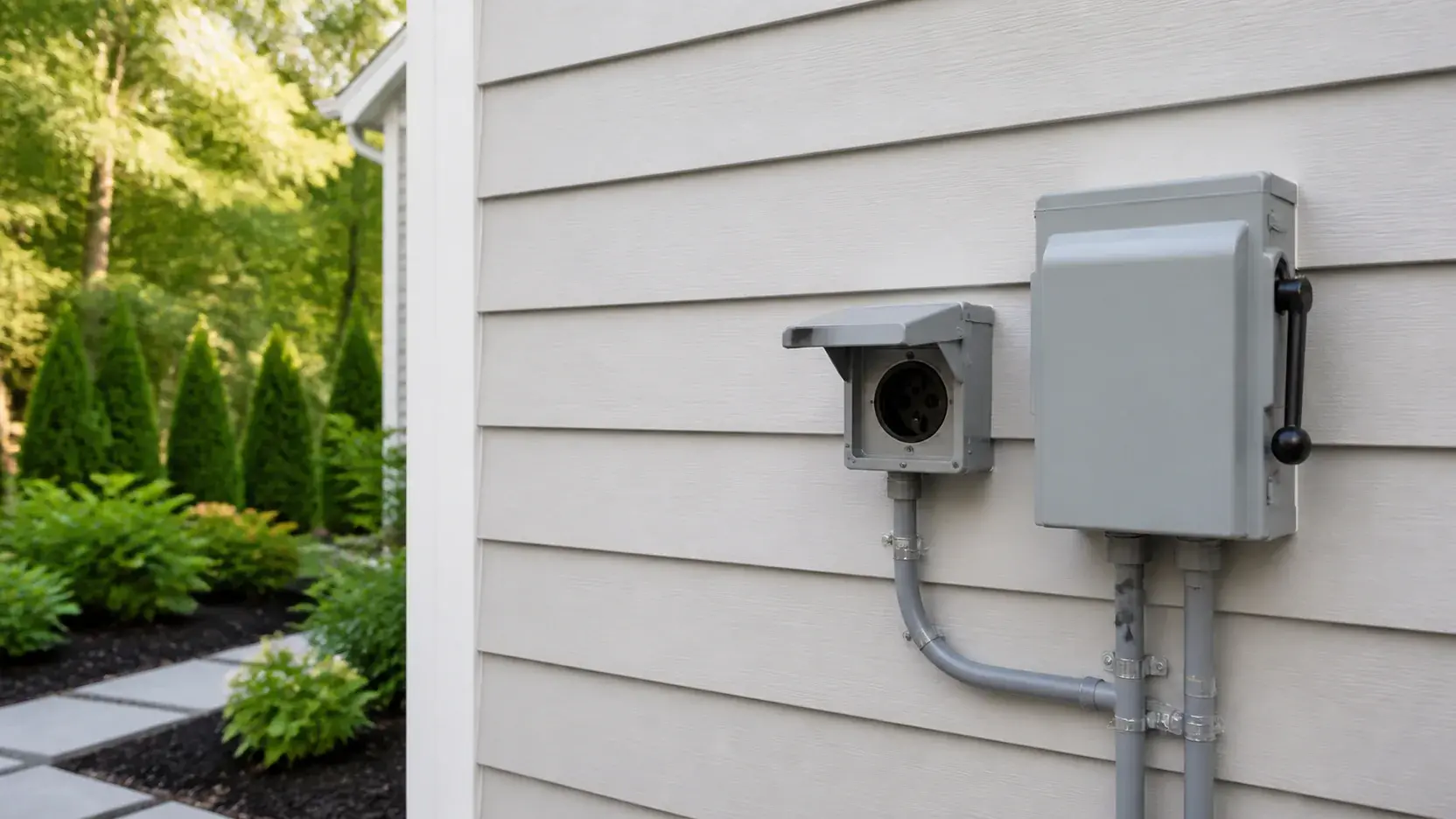
Generator connection work gives a homeowner a controlled way to supply selected circuits from compatible portable equipment. The electrical scope may include an inlet and a transfer switch or permitted interlock, plus planning for essential loads or battery-backup connections.
- Licensed & insured
- Family-owned since 1996
Field briefing / Vienna, VA
Project briefing
Jurisdiction confirmed by property address
- Project
- Generator Connections
- Confirm Town status and the panel-to-inlet path before finalizing transfer equipment or the approval sequence.
- Permit path
- Fairfax County Land Development Services is the building official; a separate Town of Vienna review follows when required for a property within town limits
- Final jurisdiction is confirmed from the property address.
Scope first
What this project involves
Transfer method
Compare a manual transfer switch with an interlock based on the panel, selected circuits, and permitted configuration.
Loads and inlet location
Choose the essential loads to support and a practical outdoor inlet location with a workable circuit route.
Field view / Generator Connections
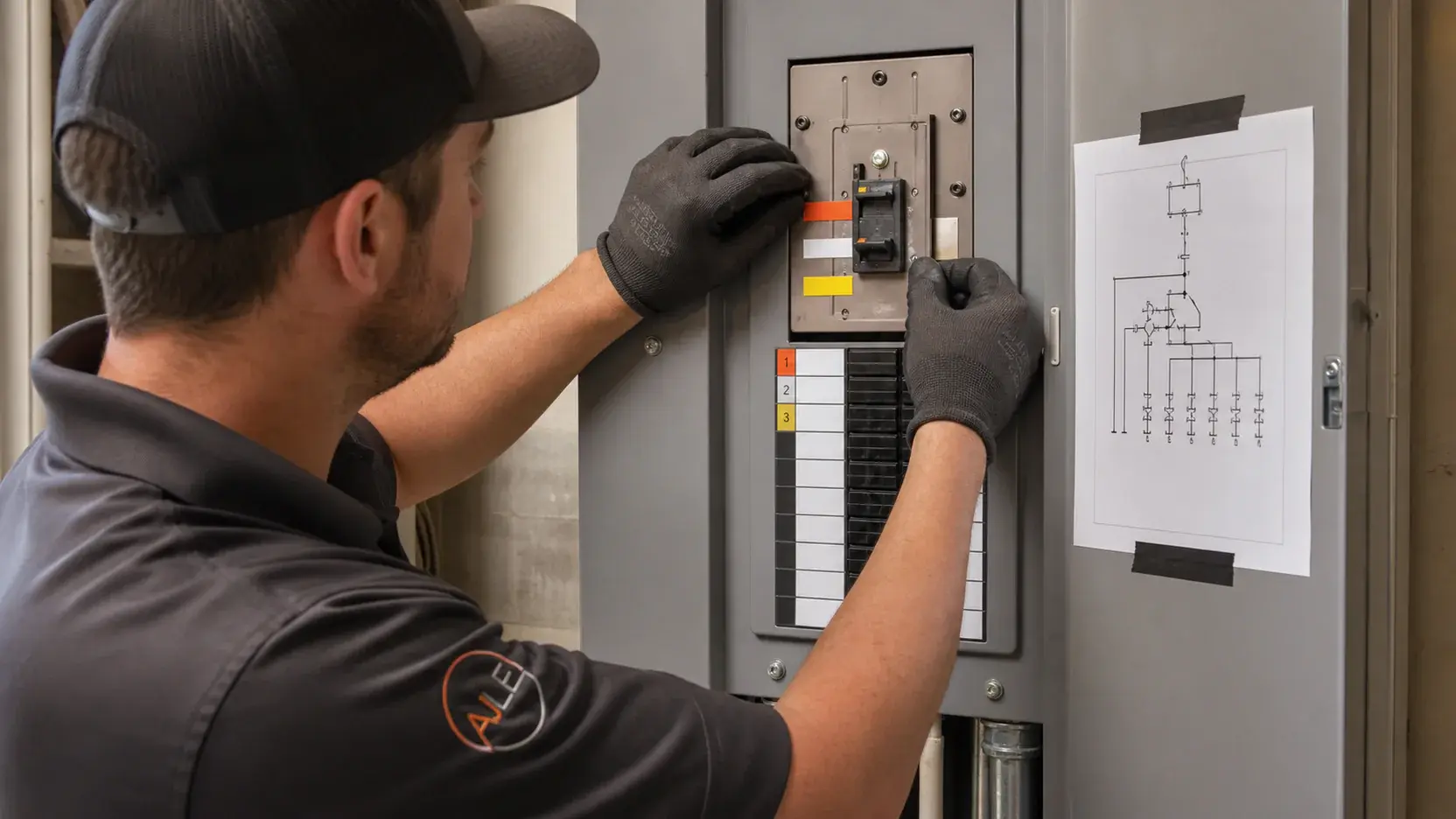
Representative field view for Generator Connections; final scope is confirmed at the property.Address-specific planning
What matters in Vienna
A Vienna backup-power connection needs an address-aware review before the inlet or transfer equipment is placed. Fairfax County remains the building official, while a property inside Town limits may add a separate Town review to the electrical plan.
A Vienna Woods, Wolf Trap Woods, or Tysons Woods property may put the panel in finished space or separate it from a detached garage or exterior connection wall. We confirm the Town boundary, map the route, identify essential circuits, and check compatibility between the customer-owned portable equipment and the proposed manual transfer method. Fairfax County handles the electrical permit, with Town of Vienna review when required for the property and scope.
Explore the Vienna service areaProject fit / review at the property
- A backup connection inside or outside Town limits requiring the review sequence confirmed
- An inlet route from a finished panel area to an attached or detached exterior location
- A compatible battery interface serving selected circuits under the verified panel arrangement
Local housing & wiring
Planning electrical work in Vienna
Generator hookups in Vienna often come down to rambler and split-level homes from the 1950s and 60s that still have overhead service drops. Vienna Woods and Windover Heights residents want a clean outage plan that fits a small yard and an older panel.
Vienna Woods and Windover Heights are full of ramblers, Cape Cods and splits built in the 1950s and 1960s, many of them with 100-amp panels in a utility room or garage and service lines that run overhead on poles. Overhead lines can come down in a wind storm. A portable generator with proper transfer equipment is one answer, but older panels often have no listed interlock kit, and a shared panel with tandem breakers can limit which circuits are easy to isolate. A manual transfer switch with its own small circuit group avoids those problems. Lots in Vienna are modest, so placement matters: the generator must sit well away from windows and the neighbor's property line, and the inlet box goes on the exterior wall closest to that spot. Fairfax County Land Development Services issues the electrical permit, and Town of Vienna review can apply inside town limits.
Quote inputs
Scope and cost drivers
Typical published range for this work: $900-$2,500. The written Vienna proposal is project-specific.
Included in the defined scope
- Identify the circuits and essential loads the backup source is intended to serve
- Plan a compatible portable-generator inlet location and electrical route
- Install a manual transfer switch or interlock where the selected arrangement is permitted
- Plan compatible electrical connections for battery-backup equipment when included
What can change scope and cost
- Transfer equipment and panel compatibility
- Number and type of selected essential loads
- Inlet location and wiring route
- Electrical scope for a compatible battery-backup connection
Work sequence
From assessment to completion
- 01
Define loads
List the circuits the homeowner wants available during an outage.
- 02
Check compatibility
Review the panel, backup source requirements, and permitted transfer options.
- 03
Plan the connection
Select the transfer method, inlet location, circuit route, and electrical scope.
- 04
Install and test
Complete the electrical connection and test the transfer procedure and selected circuits.
Property-specific answers
Local questions
How does an inlet reach a Vienna panel that sits in a finished room?
We look first for a path through an unfinished area, a closet, or the outside wall, and keep the run as short as the wall layout allows. If a finished wall or ceiling has to be opened, the estimate shows where and who restores it. The transfer equipment also needs clear working space at the panel.
How does a detached garage affect a Vienna backup plan?
We identify the feeder and panel serving the garage, then compare that arrangement with the loads in the main home. The result determines whether one transfer location fits or whether the requested scope needs to be divided.
Why won't an interlock work on my older Vienna panel?
An interlock is a mechanical plate made and listed for a specific panel model. Many 1950s and 1960s panels have no such kit, and using a homemade one is unsafe and a code violation. When no listed kit exists, a manual transfer switch is the correct alternative and works with almost any panel.
How close can a generator sit to my Vienna house?
Run it outdoors, on level ground, well away from windows, doors, vents and crawl space openings. Manufacturer instructions give a minimum distance, and many guides advise at least 20 feet. We put the inlet on the wall nearest a safe spot so you do not have to move the generator closer than it should be.
Does a 100-amp panel in a Vienna Woods rambler limit the generator setup?
Not directly. The transfer equipment is sized to the inlet, usually 30 or 50 amps, and the generator to the loads you choose. A 100-amp panel can feed a 30-amp backup group, but a crowded panel may have no room for the breaker an interlock needs, which points to a manual transfer switch. We check the space and the label before choosing.
Related Services
Related Services in Vienna
Guides
Generator Connections Planning Guides
Expert electrical guides to help you make informed decisions.
Advanced
Backup Power Guide: Portable Generator Hookups vs. Battery Power Stations
Everything Northern Virginia homeowners need to know about backup power: safely connecting a portable generator with a transfer switch or interlock kit, or integrating listed battery equipment for documented loads.
18 min read
Read GuideIntermediate
Understanding Electrical Permits in Northern Virginia
Navigate the electrical permit process in Northern Virginia with confidence. Learn requirements for Fairfax County, Arlington, Alexandria, and surrounding areas.
12 min read
Read GuideNearby Generator Connections Service Areas
We also provide expert electrical services in these communities.
Next step / property-specific quote
Request a quote for Generator Connections in Vienna
Share the property address and project goal so the scope can be reviewed for your home.