Loading services…

Residential project planning
Electrical Inspections in Falls Church, VA
A focused electrical inspection documents the condition of accessible components within an agreed scope. It can include panel examination, device testing, and written findings for a buyer, seller, or homeowner reviewing a specific safety concern.
- Licensed & insured
- Family-owned since 1996
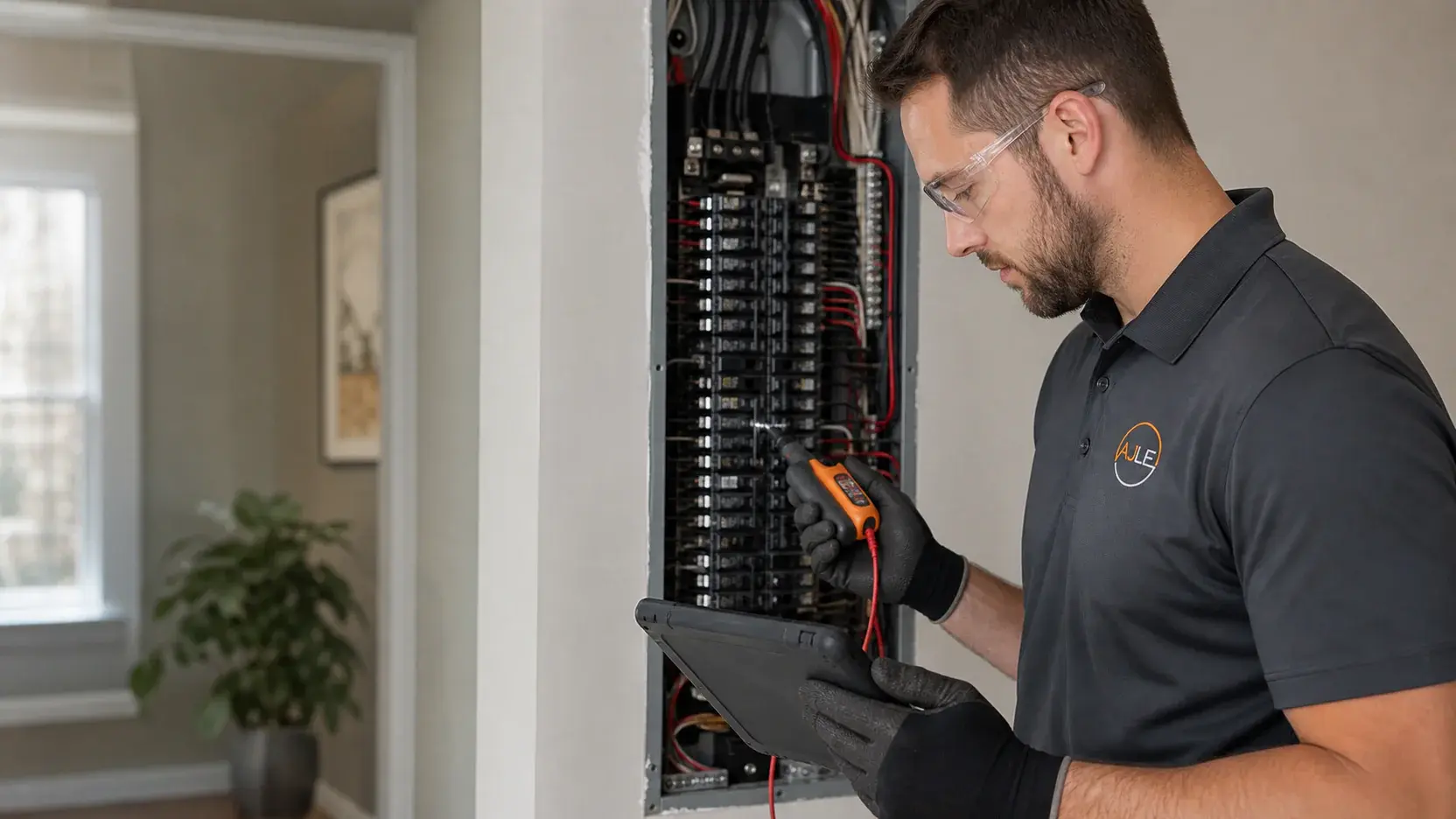
Field briefing / Falls Church, VA
Project briefing
Jurisdiction confirmed by property address
- Project
- Electrical Inspections
- Confirm the address boundary, intended decision, accessible equipment, and desired report detail before selecting tests or thermal imaging.
- Permit path
- City of Falls Church for City addresses; Fairfax County Land Development Services for nearby Falls Church postal addresses
- Final jurisdiction is confirmed from the property address.
Planning your project in Falls Church
Check the address and the addition together
For a Falls Church home with an addition, the mailing city does not establish where electrical permits would have been issued. Confirm jurisdiction, collect available records, and review the accessible transition between old and added spaces. The inspection can then identify the work needing correction or further investigation without attributing a wiring type to the entire neighborhood.
Before your estimate
Bring the address and addition drawings, plus any previous reports. Explain whether the inspection is for a purchase, a repair decision or a planned expansion.
The City's address finder explains that many Falls Church mailing addresses are actually in Fairfax County, including parts of the broader Seven Corners and Merrifield areas. Verify the address before applying city-specific project guidance.
Scope first
What this project involves
Inspection scope
Choose a buyer, seller, or safety-focused review and identify the systems or concerns to include.
Report depth and imaging
Decide how detailed the written findings should be and whether optional thermal imaging fits the question being investigated.
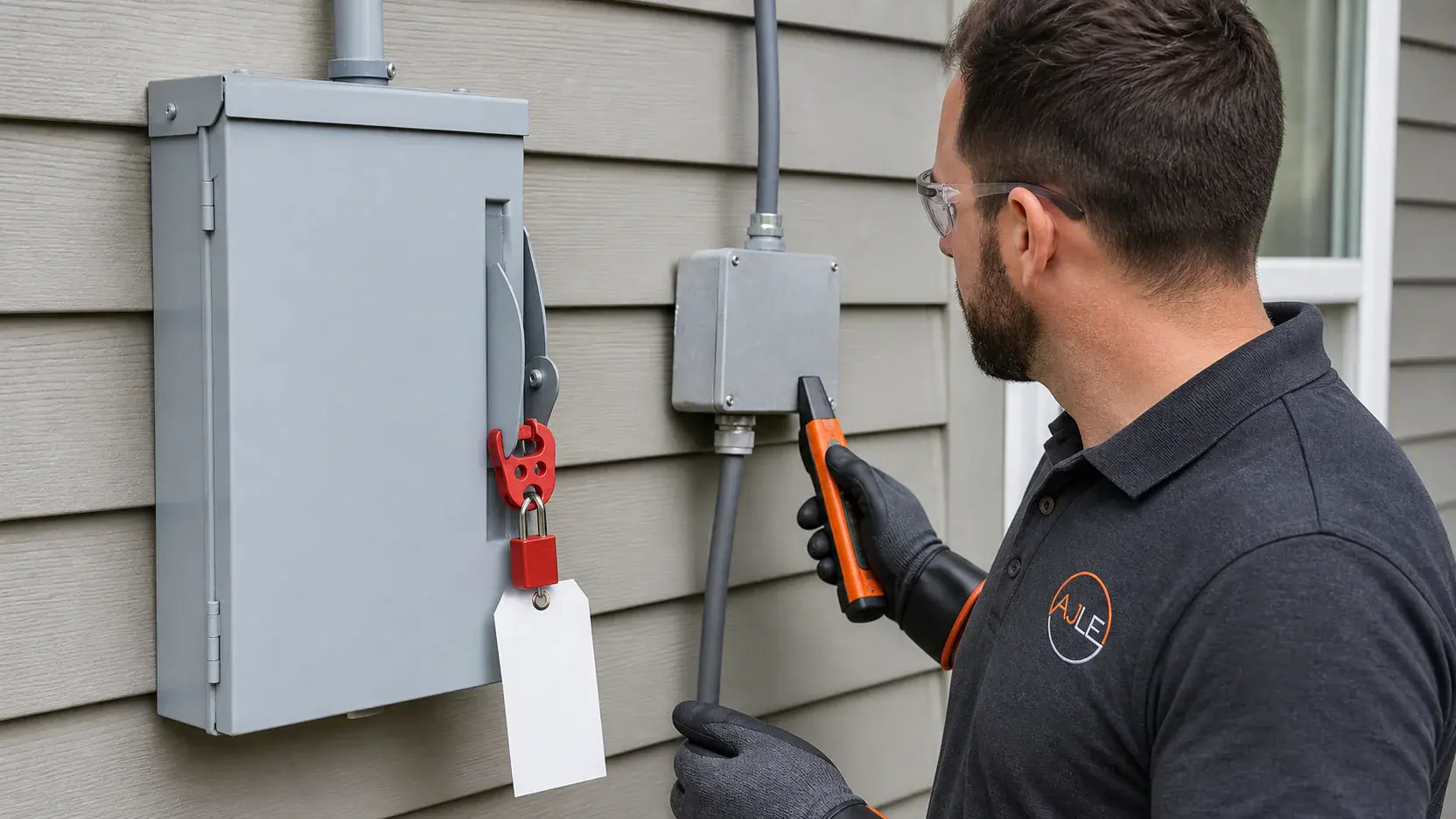
Field view / Electrical Inspections
Representative field view for Electrical Inspections; final scope is confirmed at the property.Address-specific planning
What matters in Falls Church
A Falls Church electrical inspection gives a buyer, seller, or homeowner a defined review of accessible electrical conditions. The first boundary to document is whether the address lies in the independent City or a nearby Fairfax County postal area.
Falls Church City, Pimmit Hills, and Seven Corners share a location name but not one authority or one property history. We compare documented age and known alterations with actual panel equipment condition, visible wiring, selected devices, and relevant circuits that can be accessed. The customer chooses the useful written-report depth; optional thermal imaging may support a specific panel or load question when operating conditions allow. Written findings state observations separately from limitations and next steps, and the service remains electrical rather than whole-home.
Explore the Falls Church service areaProject fit / review at the property
- Buyer electrical due diligence at a confirmed City or County address
- Seller documentation of accessible panels, devices, and alteration evidence
- Homeowner safety review focused on a reported circuit or equipment condition
Local housing & wiring
Planning electrical work in Falls Church
A Falls Church, VA electrical inspection can serve as a baseline before an addition, whether in a small bungalow in Falls Church City or a 1950s rambler near Pimmit Hills and Seven Corners.
Falls Church homes are smaller than many neighbors, which means a modest 100-amp service and a short list of circuits can be stretched when someone adds a bedroom, a second bath or a basement apartment. The inspection tells you how much capacity is really left. We open the panel, record the rating and what is connected, count the spaces left, test receptacles and ground-fault protection, and check whether the wiring in the basement and attic is grounded or still two-wire. Some of the older homes in the City have fabric-covered cable and ungrounded circuits. Others, nearer Seven Corners and Pimmit Hills, have 1950s and 1960s wiring with its own quirks, such as aluminum feeders to some appliances. The report also records the meter base and exterior service. Because Falls Church addresses can be inside the City or in the county, we use the street address to name the permit office if repair work follows.
Quote inputs
Scope and cost drivers
Included in the defined scope
- Define the buyer, seller, or safety-focused inspection scope before testing
- Examine accessible panel components and visible electrical conditions
- Test agreed outlets, devices, or circuits relevant to the scope
- Provide written findings with observed conditions and practical next steps
What can change scope and cost
- Size and depth of the agreed inspection scope
- Number of panels, circuits, and devices to examine
- Access to electrical equipment and tested areas
- Optional thermal imaging and reporting detail
Work sequence
From assessment to completion
- 01
Set the scope
Clarify the reason for the inspection and the accessible systems to review.
- 02
Examine
Inspect the panel and visible electrical conditions included in the scope.
- 03
Test
Check the agreed devices and circuits and use thermal imaging when selected and useful.
- 04
Document
Provide written findings that distinguish observed conditions from recommended next steps.
Property-specific answers
Local questions
How does a Falls Church customer choose the report depth?
Pick the depth that fits the decision. A short report can cover one panel or one problem circuit, and a fuller report can cover the accessible panels, selected rooms, and their devices. The depth and any optional thermal imaging are agreed before the visit, so the report covers what was asked.
How is actual condition established in a Falls Church inspection?
Documented property age and alteration history provide context, but observations come from accessible panels, equipment labels, visible wiring, selected devices, and circuit testing. The report identifies what was seen and keeps proposed next steps separate.
Will the report note ungrounded two-wire circuits in my Falls Church City bungalow?
Yes. We test receptacles for ground and polarity, and where a three-prong outlet sits on a two-wire circuit we mark it. The report separates circuits that are grounded, ungrounded but protected by a properly labeled GFCI, and ungrounded with no protection, so you can see what an addition or remodel would need to change.
Can an inspection tell me if my panel can handle a new addition?
It tells you the rating, how many spaces are open and how heavily existing circuits are used. It does not replace a load calculation, which an electrician does for the specific addition. The report gives the load calculation a head start.
Does my rental unit in the basement need its own panel check?
We can include a basement apartment panel or subpanel in the inspection. We record how it is fed, its grounding, alarms and circuit protection. Whether the unit is legal for rent is a zoning and building question for the City or county, not something our report decides.
Related Services
Related Services in Falls Church
Guides
Electrical Inspections Planning Guides
Expert electrical guides to help you make informed decisions.
Beginner
Home Electrical Safety Inspection Checklist
A comprehensive room-by-room electrical safety checklist every homeowner should review regularly to identify potential hazards.
10 min read
Read GuideIntermediate
Understanding Electrical Permits in Northern Virginia
Navigate the electrical permit process in Northern Virginia with confidence. Learn requirements for Fairfax County, Arlington, Alexandria, and surrounding areas.
12 min read
Read GuideNearby Electrical Inspections Service Areas
We also provide expert electrical services in these communities.
Next step / property-specific quote
Request a quote for Electrical Inspections in Falls Church
Share the property address and project goal so the scope can be reviewed for your home.