Loading services…

Residential project planning
Electrical Repair in Springfield, VA
Electrical repair begins by finding the cause of the problem before choosing a fix. Service can address outlets, switches, breakers, partial outages, and warning signs such as unusual heat or evidence of arcing, with the repair based on accessible findings.
- Licensed & insured
- Family-owned since 1996
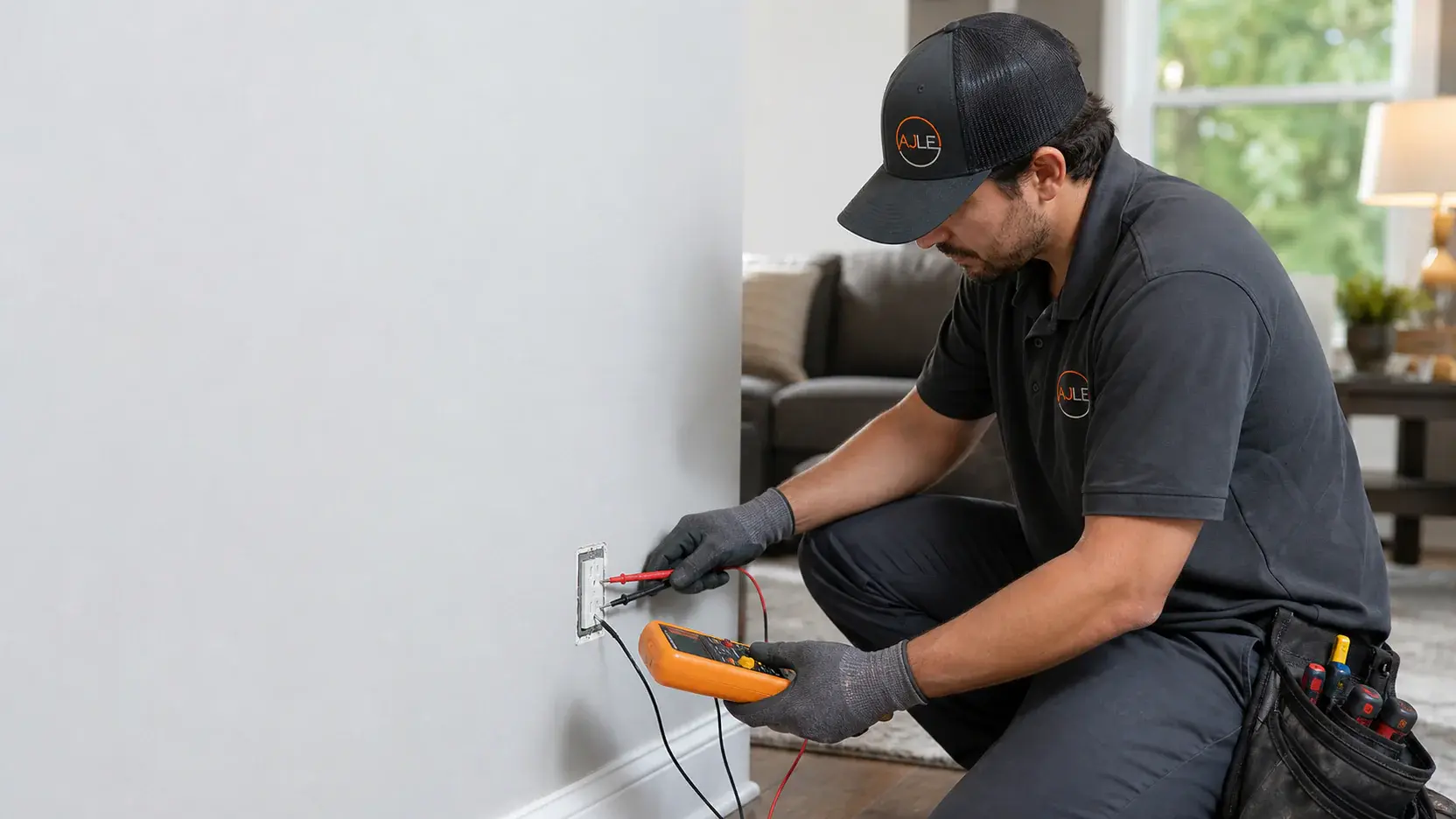
Field briefing / Springfield, VA
Project briefing
Jurisdiction confirmed by property address
- Project
- Electrical Repair
- Record which devices remain live and which load triggers the symptom; that boundary can narrow the circuit fault before intrusive access is considered.
- Permit path
- Fairfax County Land Development Services
- Final jurisdiction is confirmed from the property address.
- Local condition
- Springfield
- A West Springfield, Saratoga, or Cardinal Forest property may place panel access in a basement utility area while the failed devices sit beyond finished ceilings or walls. We compare conductor material and wiring method at accessible boxes with any dated device or panel replacement notes; differences guide circuit tracing and whether a device-only repair is supportable. We then test accessible receptacles, switches, GFCI devices, and breakers, using the circuit pattern to decide whether additional access is justified. Heat or arcing damage is isolated from use when safely reachable. Fairfax County Land Development Services is the permit authority for repair work that crosses into a permitted scope.
Planning your project in Springfield
Map a fault that crosses floor levels
When Springfield lights or outlets fail on more than one level, room names alone may not identify the circuit. Testing starts with the panel labeling and the pattern of affected devices. The fault may be localized even when it appears far apart in the house. An accurate map helps avoid replacing working devices or assuming the whole floor needs rewiring.
Before your estimate
Write down affected locations on each level and whether the symptom changes when an appliance runs. Do not remove covers to trace the circuit.
Springfield projects fall within Fairfax County's local planning framework. When a home has several floor levels or finished spaces above one another, the route between the electrical panel, switches and fixtures can drive the installation plan.
Scope first
What this project involves
Hazard or service issue
Separate conditions that require immediate shutoff or isolation from issues suitable for a normal service visit.
Access and repair path
Decide what diagnostic access is reasonable and whether the affected part should be repaired or replaced.
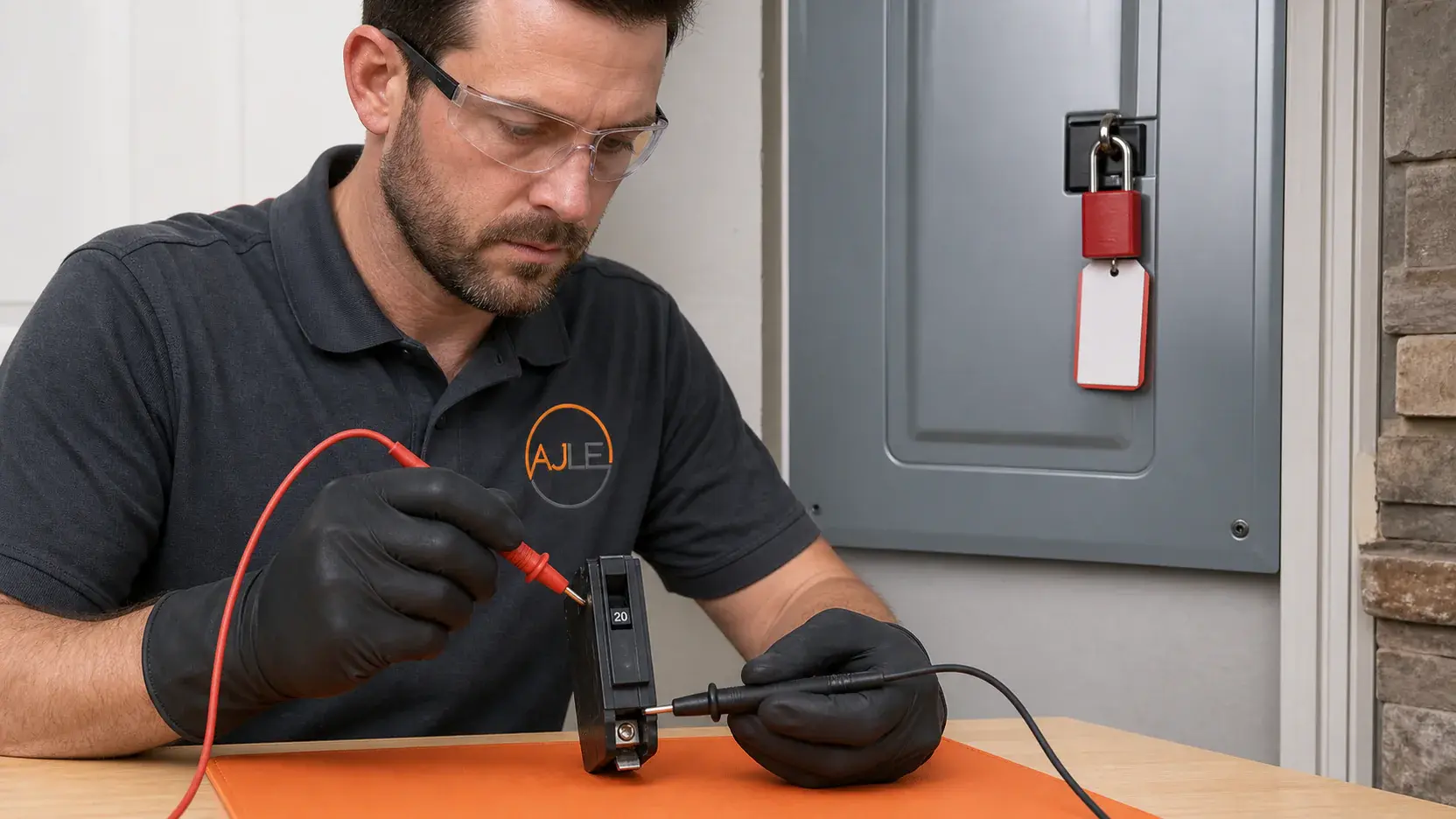
Field view / Electrical Repair
Representative field view for Electrical Repair; final scope is confirmed at the property.Address-specific planning
What matters in Springfield
A Springfield troubleshooting visit is scoped from the symptom outward: one dead receptacle calls for a different test sequence than repeated breaker trips or lights changing across several rooms. The affected circuit is identified before parts are selected.
A West Springfield, Saratoga, or Cardinal Forest property may place panel access in a basement utility area while the failed devices sit beyond finished ceilings or walls. We compare conductor material and wiring method at accessible boxes with any dated device or panel replacement notes; differences guide circuit tracing and whether a device-only repair is supportable. We then test accessible receptacles, switches, GFCI devices, and breakers, using the circuit pattern to decide whether additional access is justified. Heat or arcing damage is isolated from use when safely reachable. Fairfax County Land Development Services is the permit authority for repair work that crosses into a permitted scope.
Explore the Springfield service areaProject fit / review at the property
- A dead-device chain where the first failed point must be located
- A breaker that trips under a repeatable load and needs the circuit tested before replacement
- An accessible damaged connection requiring repair-versus-component-replacement review
Quote inputs
Scope and cost drivers
Typical published range for this work: Diagnostics and repairs cost $195 for the first 30 minutes, then $60 for each additional 15 minutes.. The written Springfield proposal is project-specific.
Included in the defined scope
- Document the reported symptoms and affected rooms or circuits
- Test accessible outlets, switches, breakers, and connections related to the problem
- Identify visible heat or arcing damage and make unsafe conditions clear
- Explain a repair or replacement path based on the diagnosis
What can change scope and cost
- Time and access needed to isolate the fault
- Number of affected devices, connections, or circuits
- Repairable condition versus replacement of damaged components
- Access behind finishes or inside equipment
Work sequence
From assessment to completion
- 01
Listen and assess
Review the symptoms and identify signs that call for immediate electrical safety steps.
- 02
Diagnose
Test the affected devices and circuit to narrow down the fault.
- 03
Explain options
Show the findings and compare repair with replacement when both are reasonable.
- 04
Repair and verify
Complete the authorized work and test the affected circuit or device.
Property-specific answers
Local questions
How is a string of dead Springfield outlets diagnosed?
We identify the breaker and any upstream GFCI protection, then test accessible devices from the last working point toward the first dead point. That sequence can locate a failed device or connection without assuming every outlet needs replacement.
Does a tripping Springfield breaker always need replacement?
No. Overload, a connected appliance, a branch-circuit fault, or panel damage can also cause tripping. The breaker and circuit are tested together so replacement does not hide the actual cause.
Related Services
Related Services in Springfield
Guides
Electrical Repair Planning Guides
Expert electrical guides to help you make informed decisions.
Nearby Electrical Repair Service Areas
We also provide expert electrical services in these communities.
Next step / property-specific quote
Request a quote for Electrical Repair in Springfield
Share the property address and project goal so the scope can be reviewed for your home.