Loading services…

Residential project planning
Electrical Repair in Alexandria, VA
Electrical repair begins by finding the cause of the problem before choosing a fix. Service can address outlets, switches, breakers, partial outages, and warning signs such as unusual heat or evidence of arcing, with the repair based on accessible findings.
- Licensed & insured
- Family-owned since 1996
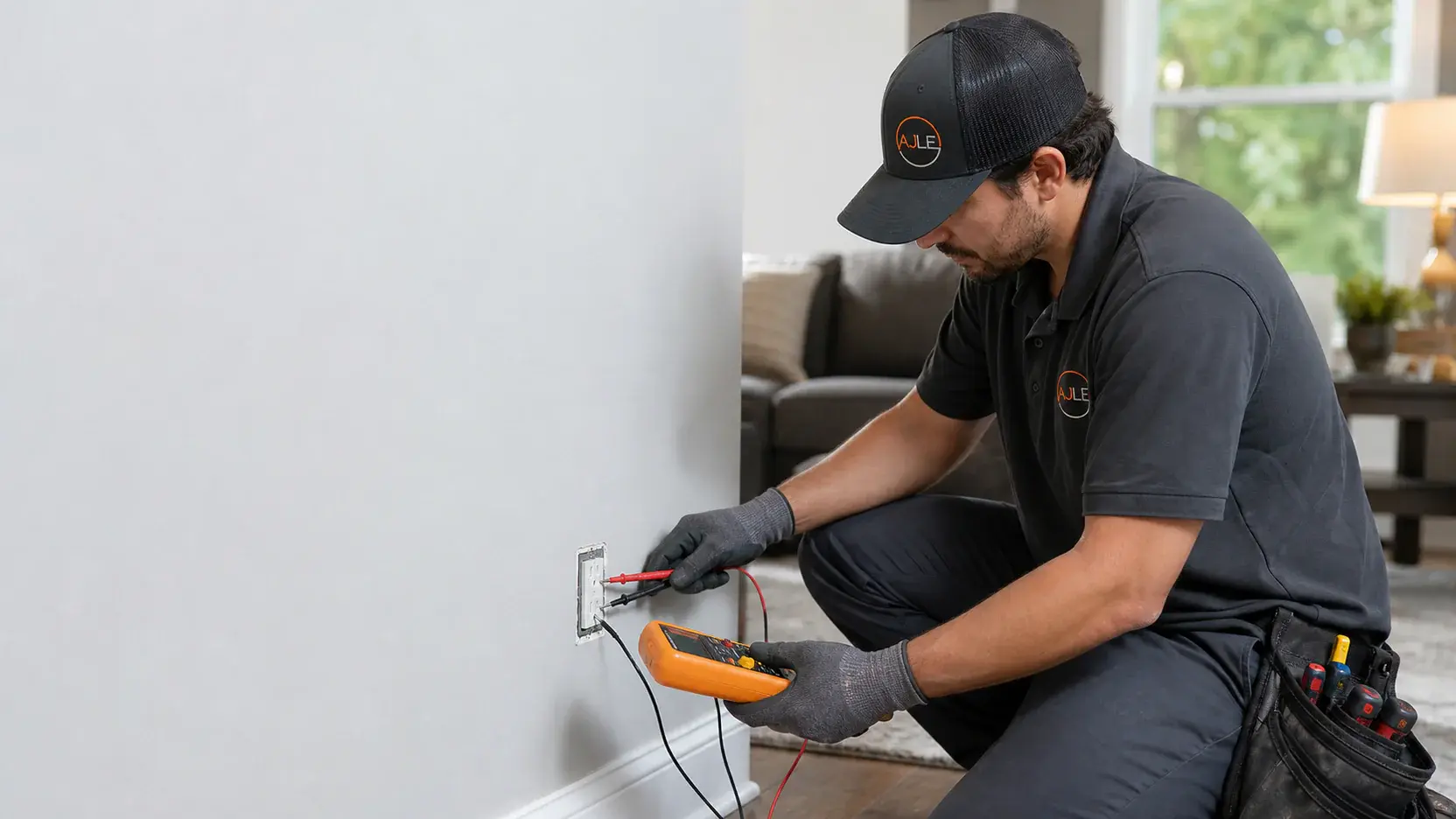
Field briefing / Alexandria, VA
Project briefing
Jurisdiction confirmed by property address
- Project
- Electrical Repair
- Separate the diagnosis from the jurisdiction check: test the affected circuit, then assign any permit requirement from the address and final scope.
- Permit path
- City of Alexandria Permit Center for City addresses; Fairfax County Land Development Services for the Alexandria postal area outside the independent city
- Final jurisdiction is confirmed from the property address.
Planning your project in Alexandria
Diagnose the fault without assuming every old wall hides it
For an Alexandria home with intermittent lights, record the affected fixture and controls before attributing the problem to the building's age. Accessible testing can distinguish a local connection, lamp or dimmer issue from a wider circuit concern. Where historic finishes limit access, discuss investigation openings and restoration responsibilities before more invasive work begins.
Before your estimate
Describe when the symptom appears and provide fixture information. Identify finishes to preserve and any known renovations affecting that room.
Alexandria's preservation guidance distinguishes locally regulated historic districts from National Register districts. Visible exterior alterations in local districts have a review path. Confirm the property boundary and designation; an Alexandria mailing address does not make every house an Old Town historic property.
Scope first
What this project involves
Hazard or service issue
Separate conditions that require immediate shutoff or isolation from issues suitable for a normal service visit.
Access and repair path
Decide what diagnostic access is reasonable and whether the affected part should be repaired or replaced.
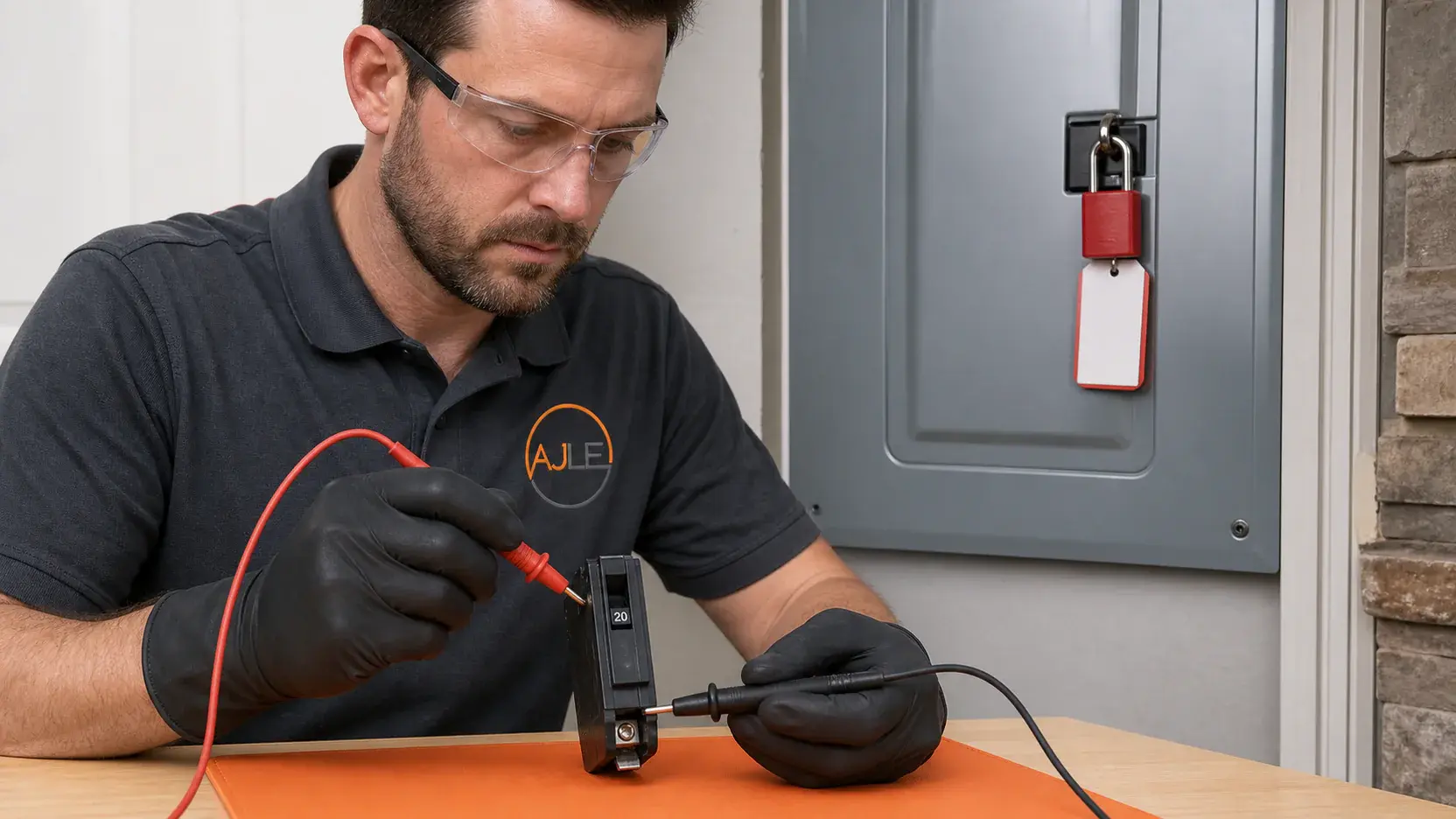
Field view / Electrical Repair
Representative field view for Electrical Repair; final scope is confirmed at the property.Address-specific planning
What matters in Alexandria
An Alexandria repair starts with the circuit symptom, but any permit planning starts with the exact address. The independent city and the surrounding Alexandria postal area use different authorities, while access and diagnosis remain property-specific.
An Old Town or Del Ray home may have finished surfaces or constrained device boxes, while a Kingstowne property may present a different panel and circuit route; none of those conditions is assumed without inspection. We compare device type and wiring method at accessible boxes with any dated panel label or phased electrical alterations; those differences guide tracing and the least disruptive access plan. We test accessible outlets, switches, breakers, and connections, isolate heat or arcing hazards when safely reachable, and explain when concealed access is needed. City properties use the City of Alexandria Permit Center; applicable postal-area properties outside the city use Fairfax County Land Development Services.
Explore the Alexandria service areaProject fit / review at the property
- An intermittent device or lighting fault in a finished interior area
- A partial outage requiring the serving circuit and panel components tested
- A repair-versus-replacement decision with City or County jurisdiction confirmed if needed
Local housing & wiring
Planning electrical work in Alexandria
Dead outlets and GFCIs that will not reset can show up anywhere in Alexandria's older housing, from Del Ray and Rosemont bungalows to Old Town rowhouses. AJ Long Electric troubleshoots these circuits one device at a time and explains what was found before any repair expands.
A lot of Alexandria houses were built between the 1920s and 1940s and rewired piecemeal since. Kitchens and baths were redone in the 1980s or 2000s with new GFCI outlets tied into old two-wire cable, so what is behind a plaster wall may be three generations of work. A GFCI that will not reset in these houses has several possible causes: a ground fault downstream, moisture in an old box, a device installed with its line and load wires reversed, or an old circuit that never had a ground reference. A plug-in tester can show an open ground on an older circuit and still mislead. We read the pattern: what else on that circuit loses power, what the GFCI does when nothing is plugged in, and what the voltage at the device tells us. Rowhouses in Old Town share walls and often have limited access, so we ask how the house was altered before opening plaster. Dedicated plans for those repairs are quoted separately if more is needed.
Quote inputs
Scope and cost drivers
Typical published range for this work: Diagnostics and repairs cost $195 for the first 30 minutes, then $60 for each additional 15 minutes.. The written Alexandria proposal is project-specific.
Included in the defined scope
- Document the reported symptoms and affected rooms or circuits
- Test accessible outlets, switches, breakers, and connections related to the problem
- Identify visible heat or arcing damage and make unsafe conditions clear
- Explain a repair or replacement path based on the diagnosis
What can change scope and cost
- Time and access needed to isolate the fault
- Number of affected devices, connections, or circuits
- Repairable condition versus replacement of damaged components
- Access behind finishes or inside equipment
Work sequence
From assessment to completion
- 01
Listen and assess
Review the symptoms and identify signs that call for immediate electrical safety steps.
- 02
Diagnose
Test the affected devices and circuit to narrow down the fault.
- 03
Explain options
Show the findings and compare repair with replacement when both are reasonable.
- 04
Repair and verify
Complete the authorized work and test the affected circuit or device.
Property-specific answers
Local questions
What if an Alexandria device box is too small for the replacement part?
A shallow or crowded box in an older Old Town or Del Ray wall may not hold a larger device and its connections safely. We check the box size and what is inside it before choosing the part. Where it falls short, the options are a slimmer listed device, a box extension, or a deeper box, and they are explained before any wall is opened.
How is finish access handled for an Alexandria wiring fault?
We first use accessible panels, device boxes, attics, utility areas, and test points to narrow the fault. If a concealed section remains implicated, the likely opening and repair alternatives are discussed before access is made.
Why won't the GFCI in my Alexandria bathroom reset?
A GFCI that will not reset can be failed, wired with line and load reversed, or protecting a circuit that has a ground fault, moisture, or a damaged splice. It can also fail to reset simply because power is not reaching it. The electrician tests incoming voltage first, then disconnects the load side to isolate the cause.
Is troubleshooting different in an Old Town rowhouse?
The method is the same, but access is tighter. Shared walls, plaster, and past alterations mean we ask for panel location, previous work, and any basement or attic access before the visit. We avoid opening finished surfaces until testing says it is needed.
Should I replace the GFCI myself if it keeps tripping?
Replacing a tripping GFCI often just repeats the symptom because the device is doing its job. Something downstream is leaking current. Pulling it out of the wall without finding that cause also removes the protection in a wet location, so diagnosing first is safer.
Related Services
Related Services in Alexandria
Guides
Electrical Repair Planning Guides
Expert electrical guides to help you make informed decisions.
Nearby Electrical Repair Service Areas
We also provide expert electrical services in these communities.
Next step / property-specific quote
Request a quote for Electrical Repair in Alexandria
Share the property address and project goal so the scope can be reviewed for your home.