
Key Takeaways
- The 100-amp label alone does not answer whether an EV charger fits.
- Driving needs and charging time help determine a useful output.
- Service capacity, panel spaces, and solar interconnection are separate questions.
- Plan likely future work without promising compatibility with unspecified equipment.
Start with the energy you need overnight
A charger does not need to operate at its highest advertised output to be useful. Start with the energy normally used between charging sessions, the time the car is parked, and the vehicle's AC charging capability. Include occasional short turnarounds or unusually long trips separately from the normal routine.
Ready to Install a Home EV Charger?
Our licensed electricians evaluate panel capacity, circuit routing, equipment requirements, and permit needs for home EV charging. Call (571) 444-6886 or request an estimate online.
For an arithmetic example, a constant 3.8-kilowatt supply over eight hours provides 30.4 kilowatt-hours before charging losses and vehicle use during charging. That is not a promised battery gain or driving range. Actual delivered energy depends on the vehicle, temperature, equipment, interruptions, and losses. The example shows why time available matters alongside maximum power.
If the car is parked for a long overnight window, a lower approved output may meet the routine. If it returns nearly empty and leaves again soon, a different arrangement may be needed. Use vehicle energy records where available rather than treating a generic miles-per-hour charging claim as a design calculation.
What the electrician checks on a 100-amp system
| Question | Why it matters |
|---|---|
| What is the actual service and equipment rating? | The panel's appearance or available spaces do not establish the complete service capacity. |
| What loads are already present? | Heating, cooling, cooking, water heating, and other equipment affect the applicable load assessment. |
| Is the equipment in suitable condition? | Charging controls cannot repair damaged or unsuitable electrical equipment. |
| Where will the charger and circuit go? | Distance, access, detached structures, and finish restoration change the installation scope. |
| What charging output meets the need? | The configured output must suit both the electrical design and household use. |
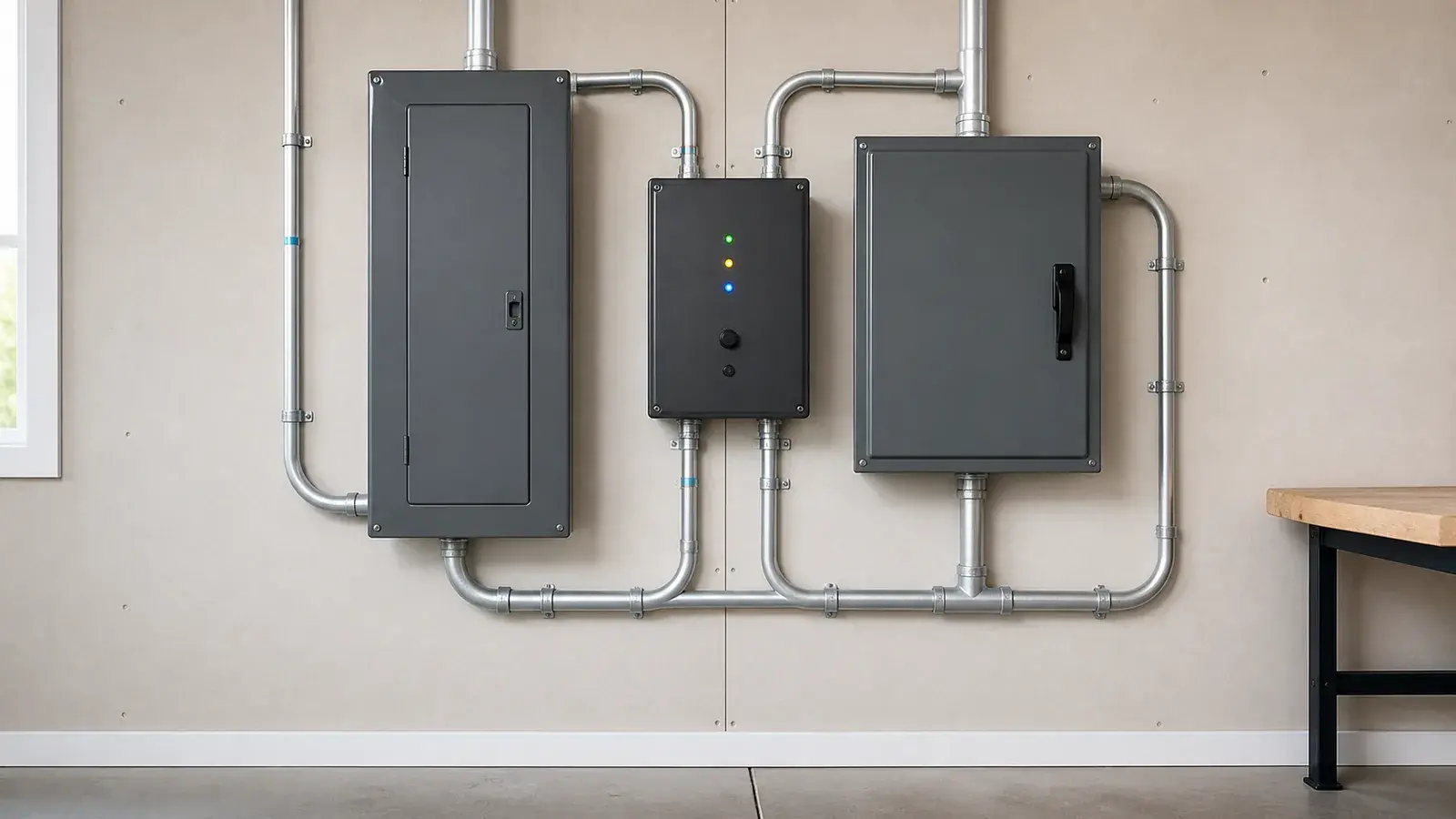
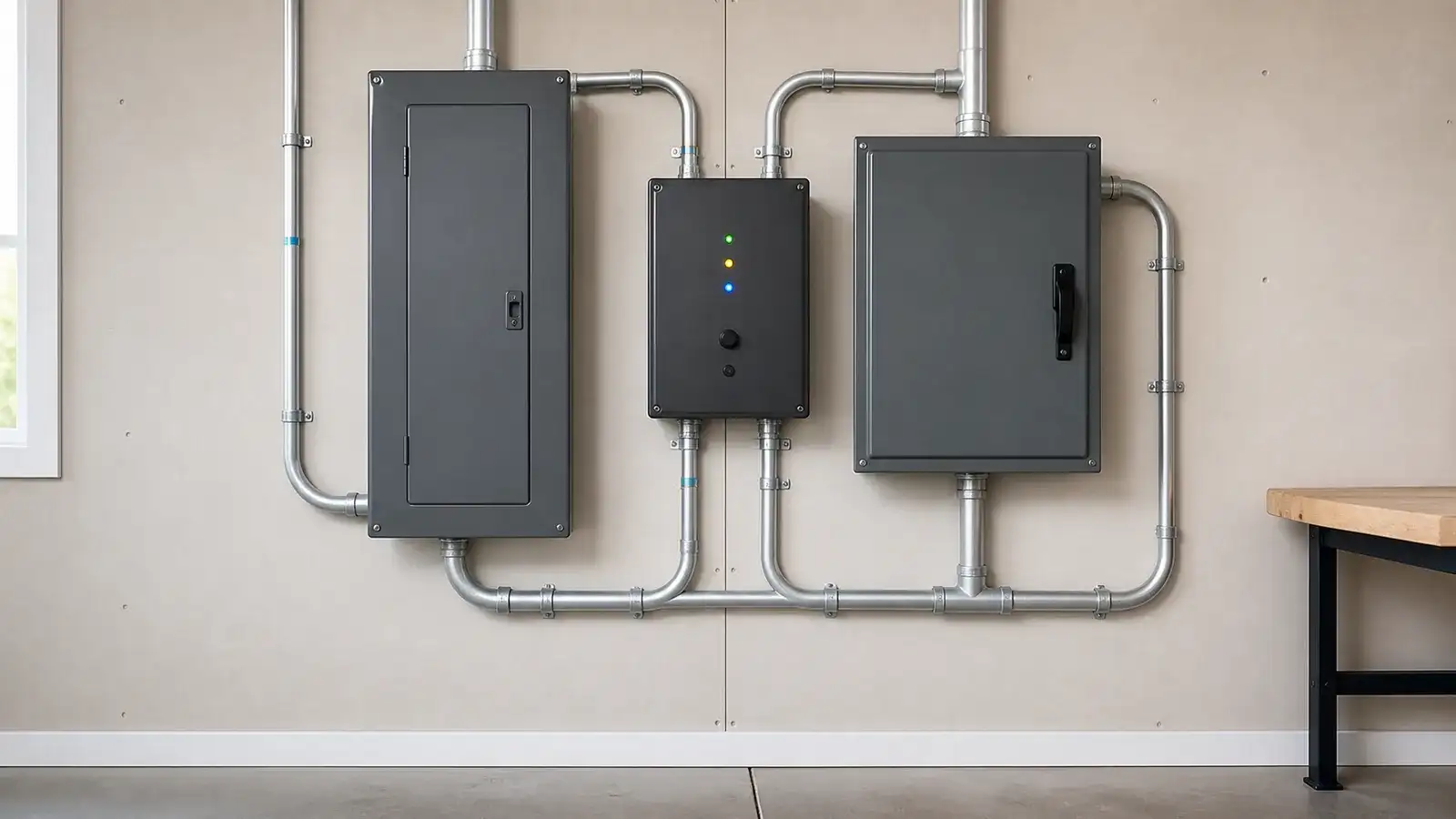
A load assessment is not a sum of every breaker handle. Nor should a homeowner remove the panel cover to count connections. Provide accessible labels and closed-panel photos, then let the electrician identify the equipment and assess the work safely.
Compare three possible paths
Keep the service and use a suitable fixed output. This may be possible where the applicable load calculation and equipment support the configured charger. Circuit protection, wiring, settings, and installation instructions must agree. The vehicle app's temporary limit should not be confused with an installer-controlled design setting.
Keep the service and use approved management. Compatible equipment may adjust or pause charging while other household loads use capacity. Assess how much charging time remains during the actual routine, and verify the required monitoring and controls. See load management versus a service upgrade for that comparison.
Upgrade the service or correct other equipment limits. This may be appropriate when the evaluated loads and desired performance cannot be met by a suitable existing-service design, or other equipment work is independently needed. Ask for the full scope; a larger panel enclosure is not by itself a larger electrical service.
Future solar is a separate connection problem
The EV charger consumes electricity. A solar inverter supplies electricity when operating. These roles create different design questions. Do not add an unspecified future solar rating to the EV load as though both were ordinary appliances, and do not subtract expected sunny-day production to promise overnight charging capacity.
The future generation design must address the actual equipment, panel and bus ratings, main protection, connection method, utility requirements, and adopted rules. The Department of Energy solar permitting overview explains the separate local inspection and utility connection steps. An empty breaker position is useful information but not proof that the proposed connection is permitted. A 200-amp upgrade also does not automatically approve every future solar system.
If future equipment is still undecided, preserve accurate records of what is installed now and identify decisions that remain open. Panel location, access, usable routing space, and documented equipment ratings can be useful planning inputs. Avoid paying for a promise that an unspecified later installation will need no changes.
Keep batteries and backup expectations distinct
A future battery adds its own charging, output, controls, and backup-circuit decisions. Solar on the roof does not automatically mean the home or EV charger will have power during a utility outage. That behavior depends on the installed system and its approved operating modes, as explained in the Department of Energy inverter guide.
For an EV project today, describe future solar or battery goals as design inputs rather than included services or guaranteed capabilities. The present quote should clearly identify what will be installed, what the system will do, and what will require another assessment later.
Plan the route and approvals before buying hardware
The Department of Energy charging-infrastructure overview explains charging equipment and installation considerations. For a specific home, check vehicle compatibility, manufacturer instructions, electrical capacity, local permits, and any property approvals before assuming a charger can be placed wherever convenient.
A garage location, outdoor parking space, and detached structure can require different routes and work. Identify proposed wall penetrations, access restrictions, and finish repairs. The electrician can then compare realistic electrical scopes instead of quoting only a charger connection.
Prepare a useful request
Send your address, vehicle model, daily charging pattern, parking location, major electric appliances, and future equipment goals. Include safe photos of the closed panel and accessible route. Request a free EV or panel project estimate; staff will review the information and discuss timing. You do not need to decide that a 200-amp upgrade is required before requesting the assessment.