
Key Takeaways
- The terminal listing controls; counting wires alone is not a complete diagnosis.
- Do not remove the panel cover to investigate an inspection finding yourself.
- A properly designed splice, separate breaker, approved tandem, or added capacity may be appropriate for different situations.
- The repair should address conductor protection and circuit function, not merely make the panel look tidy.
What does “double-tapped breaker” mean?
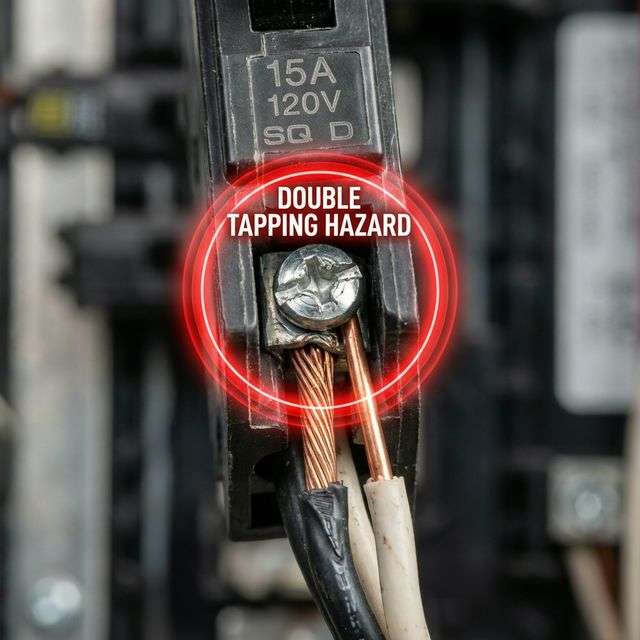
Inspection reports often use the phrase for two conductors landed at one breaker terminal. The consequential question is whether that terminal is identified for both conductors. An unsuitable connection may clamp unevenly, loosen, or overheat. Conductors with incompatible sizes or materials can also fall outside a terminal's listing even when more than one conductor is allowed.
Need a Panel Upgrade?
Outdated or overloaded electrical panels can present safety and capacity concerns. Our team evaluates 200-amp upgrades throughout Northern Virginia and confirms scheduling after reviewing the property. Call (571) 444-6886 to get started.
For a concrete example, Schneider Electric identifies certain 10–30 amp QO and QOB breakers for two copper conductors in specified sizes. Its guidance excludes QOT and several protective-function suffixes. That does not authorize two wires on every Square D breaker. The exact catalog number, label, conductor material and size, and installation instructions matter.
What should be checked before calling it a violation?
Give the electrician the inspection report and any existing photographs. They should identify the panel and breaker, examine the terminal instructions, and determine what the conductors serve. A photograph may not show the markings, wire condition, or whether the circuits share a neutral. The QO/Homeline installation instructions illustrate why equipment-specific documentation matters.
Leave the dead front in place. Turning off the main breaker does not necessarily de-energize incoming service conductors, and other supplies may be present. Safe inspection and repair require establishing the supply arrangement and appropriate precautions before accessing internal parts.
Why an unapproved connection needs correction
An improper termination can create localized heating or arcing. Discoloration, damaged insulation, a burned odor, or audible arcing require prompt assessment; suspected fire requires evacuation and emergency response first. Do not assume that a breaker will trip before every bad connection becomes hazardous.
Two conductors do not inherently defeat the breaker's overcurrent function. The electrician must still verify that the breaker protects the connected conductors and that the combined load and circuit arrangement are permitted. Replacing it with a larger breaker to stop trips is not a valid shortcut.
Possible repairs and when each makes sense
| Approach | What must be established |
|---|---|
| Keep a permitted two-conductor termination | The exact terminal is listed for both conductors and the installation otherwise complies. |
| Use an appropriate splice and one conductor to the breaker | The circuit may legitimately share the protection; connector, conductor sizing, enclosure space and applicable rules are satisfied. |
| Provide separate breaker protection | Suitable listed breaker positions, conductor arrangement, capacity and required protection are available. |
| Use a listed tandem where permitted | The panel label permits that breaker type in that specific position; required circuit functions are maintained. |
| Add a subpanel or replace equipment | Space, condition or broader project needs justify the additional scope. |
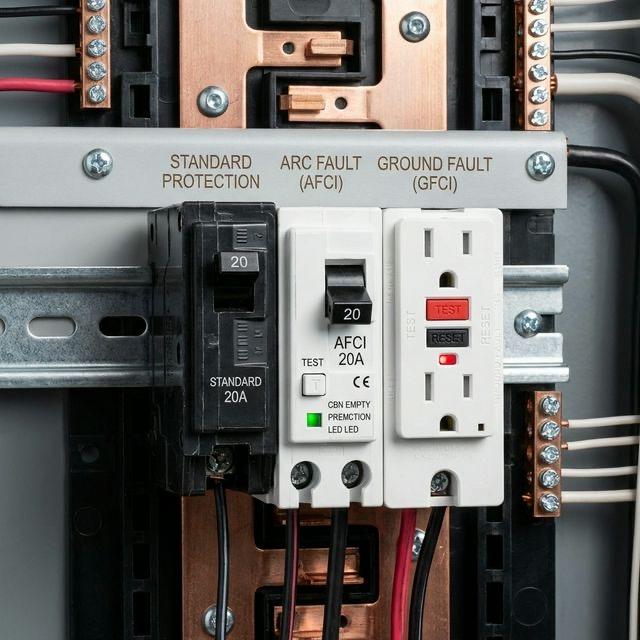
A splice is not automatically a cure: it does not create circuit capacity or resolve a shared-neutral design problem. A tandem is not a universal substitute for a two-pole breaker, common disconnect, or required AFCI/GFCI protection. The UL panelboard application guide explains the importance of panel markings and permitted breaker configurations.
Does a full panel mean the service must be upgraded?
Usable breaker positions and available service capacity are different. A subpanel can add positions without increasing the service rating. Conversely, an empty position does not establish that a new load fits the existing service. Panel condition, compatible equipment, load assessment and planned work determine whether replacement is justified.
Ask for a repair option and an explanation of any proposed larger project. A full panel replacement is not required solely because an inspector circled two wires, and a new panel does not automatically bring every concealed circuit in the house to current code.
Neutral and grounding terminals are a separate check
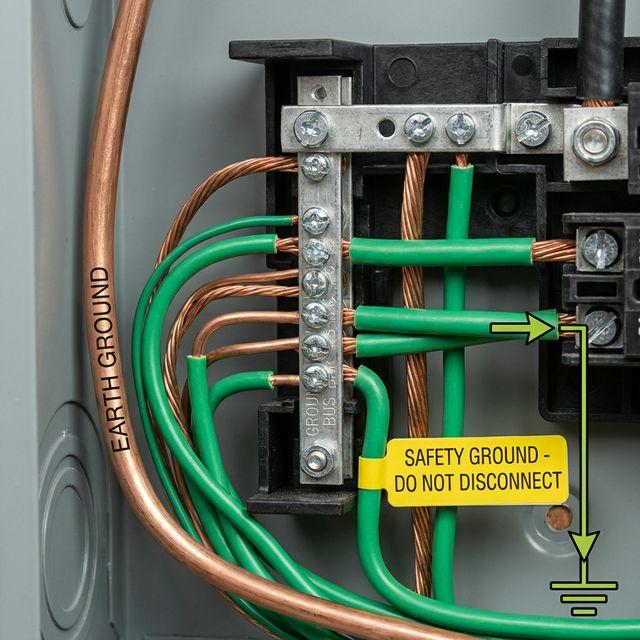
The rules for grounded neutral conductors are not interchangeable with permissions for equipment grounding conductors or breaker terminals. Do not assume a bar accepts multiple neutrals because a ground terminal accepts multiple conductors. The electrician should check those markings and the panel's role as service or downstream equipment. See our grounding and bonding guide for that distinction.
What to request for a home-inspection repair
Ask for the finding, verified equipment requirements, proposed repair, any permit or inspection requirements, and documentation of completed work. Avoid a generic “panel is safe” statement that exceeds what was examined. Buyer, lender and insurer requirements vary; this finding alone does not determine coverage or loan approval.
Send AJ Long Electric the inspection report and request a review. For an existing fault needing testing, choose troubleshooting. For a planned quoted installation, request a free estimate. The written scope should distinguish the immediate correction from optional additional work.