
Key Takeaways
- A ground rod does not replace equipment grounding conductors and bonding.
- Downstream panels normally keep neutral conductors isolated from the enclosure and equipment grounding conductors.
- A panel upgrade should include review of existing grounding and bonding, not just replacement of the box.
- Shocks, tingling, damaged wiring, and unusual voltage behavior need assessment; they do not diagnose a bad ground rod by themselves.
Grounding and bonding are related, but different
A grounding electrode system connects the electrical system to earth through permitted electrodes, such as qualifying concrete-encased electrodes, metal water piping, or rods. Its roles include limiting certain imposed voltages and establishing a relationship to earth. The required electrodes and connections depend on what is present and the applicable code.
Need a Panel Upgrade?
Outdated or overloaded electrical panels can present safety and capacity concerns. Our team evaluates 200-amp upgrades throughout Northern Virginia and confirms scheduling after reviewing the property. Call (571) 444-6886 to get started.
Bonding joins conductive parts that should remain at the same electrical potential and provides continuity for the equipment grounding path. When a live conductor contacts a bonded metal enclosure, the effective fault-current path returns to the supply source so the protective device can operate. Soil resistance can limit current; simply connecting a metal box to a rod is not a reliable substitute for that path.
Schneider Electric's system-grounding design guidance explains the main bonding jumper and the return path for ground-fault current. These concepts are central to understanding why a grounding electrode and a branch-circuit grounding conductor are not interchangeable.
Where neutral and ground connect
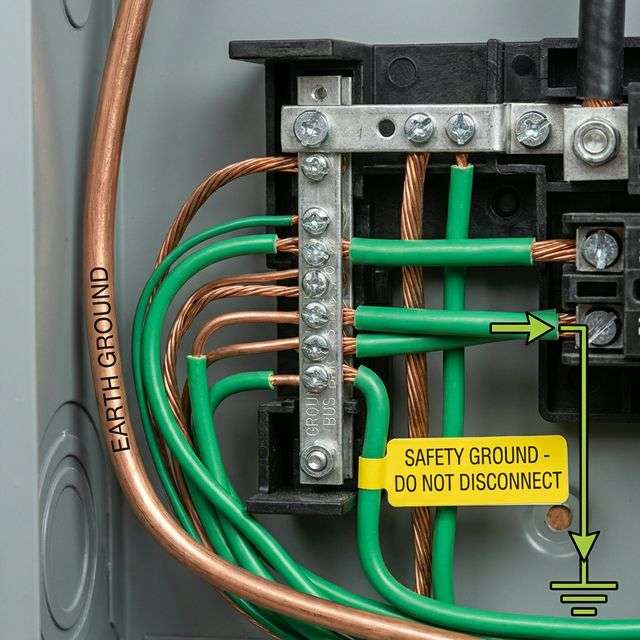
In a typical utility-supplied residential service, the grounded neutral conductor is bonded at the service equipment as required by the system design. A downstream feeder-supplied panel normally has an isolated neutral bar and an equipment grounding bar bonded to the enclosure. Schneider's subpanel neutral and ground guidance describes that separation.
The panel with the biggest breaker is not necessarily the service bonding point. A house can have an exterior service disconnect ahead of its indoor panel. In that arrangement, treating the indoor panel as though it were service equipment can create an improper additional neutral-to-ground connection. Generators and other separately derived supplies can introduce further design considerations.
An incorrect downstream bond can put normal neutral current on paths intended for equipment grounding. Conversely, a missing required service bond can compromise fault clearing. Do not remove or add a bonding screw based only on a diagram found online. The electrician needs to identify the supply arrangement and follow the equipment instructions.
Ground rods, water pipes, and other electrodes
Not every home uses an identical two-rod arrangement. The code addresses which qualifying electrodes present at the building must be connected, when supplemental electrodes are required, and specific exceptions for particular electrode types. A resistance value used in a rod-electrode rule is not a universal pass/fail number for the entire home's grounding and bonding system.
Metal water piping can have electrode and bonding requirements depending on its construction and continuity. Plastic pipe replacements, filters, and other changes may affect that continuity. A clamp on a convenient pipe near the panel does not prove the installation meets the applicable location and connection requirements. The electrician should identify the actual piping, accessible entry point, existing connections, and any required supplemental electrode.
For Virginia projects, start with the adopted Virginia code context: the 2021 Virginia codes incorporate the 2020 NEC. Article 250 of the NEC addresses grounding and bonding, with residential provisions and amendments also relevant to the job. Electrode selection and conductor sizing need a project-specific review.
What a panel grounding review should cover
- Supply arrangement: location of the service disconnect and any generators, solar equipment, or other supplies.
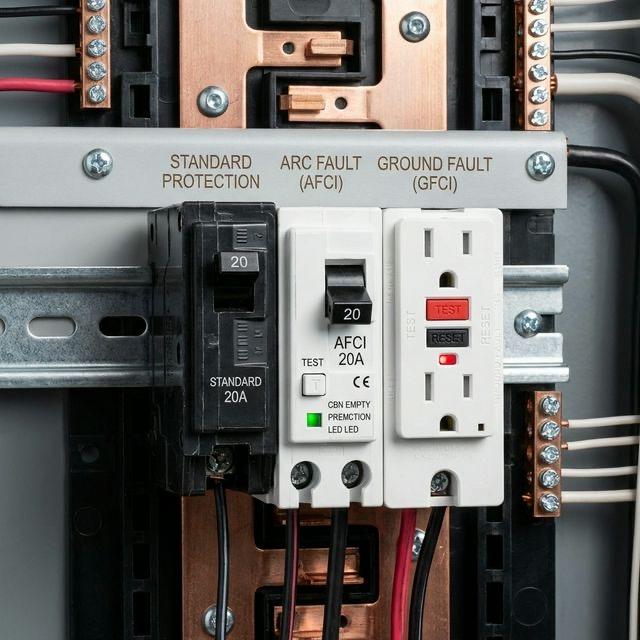
- Neutral and grounding bars: correct isolation or bonding for that panel's role, listed terminal use, and conductor connections.
- Equipment grounding path: continuity through applicable feeders, raceways, boxes, and branch circuits.
- Electrodes and piping: qualifying electrodes, accessible connections, protection from damage, and changes to metal piping.
- Condition and documentation: corrosion, loose or damaged components, equipment instructions, labeling, permits, and inspection scope.
This is more than a visual check for a green wire. A receptacle tester provides limited information and does not certify the whole system. Appropriate testing and interpretation depend on the installation. Photos can help plan a visit, but cannot establish that concealed wiring or an electrode connection is sound.
Can GFCI protection fix an ungrounded outlet?
A GFCI can provide shock protection without creating an equipment grounding conductor. Certain replacement arrangements for existing ungrounded receptacles are permitted with the required protection and labeling, but they do not turn a two-wire circuit into a grounded circuit. Equipment that requires a grounding connection still needs the appropriate supply.
Never connect a receptacle's neutral to its grounding terminal as a shortcut. That can place exposed conductive parts at an unsafe potential under fault conditions and mislead simple testers. Have the electrician evaluate the permitted replacement or rewiring options for the actual circuit.
When to request an assessment
Stop using equipment that shocks or tingles when touched, and seek qualified help. Flickering lights, damaged outlets, and repeated trips also deserve investigation, but can have causes unrelated to the grounding electrodes. A suspected fire requires emergency action first; a website request is not an emergency response channel.
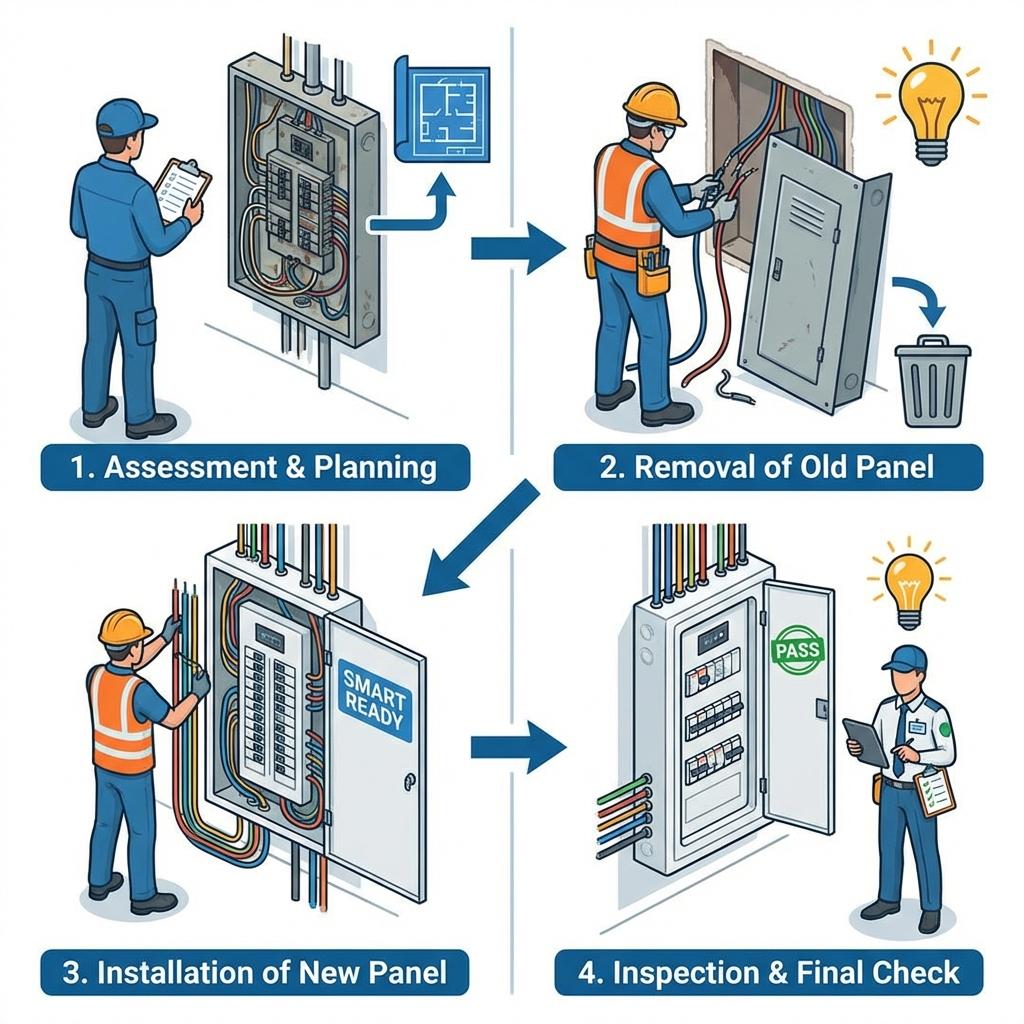
If you are planning a panel replacement, ask the quote to identify included grounding and bonding corrections and any conditions that require further inspection. Our panel upgrade service page explains the broader scope. Request a free estimate for planned installation work, or choose troubleshooting for an existing fault. Keep covers closed when collecting photos for the request.