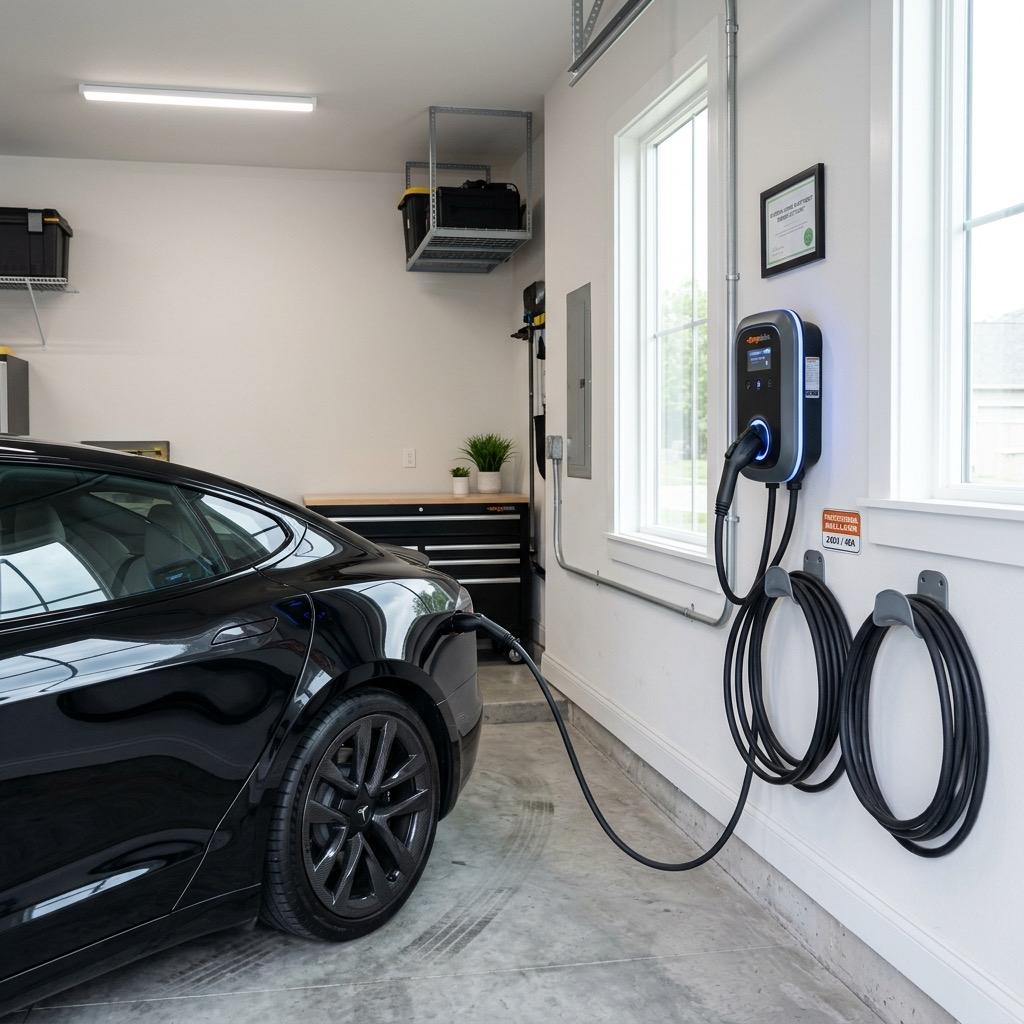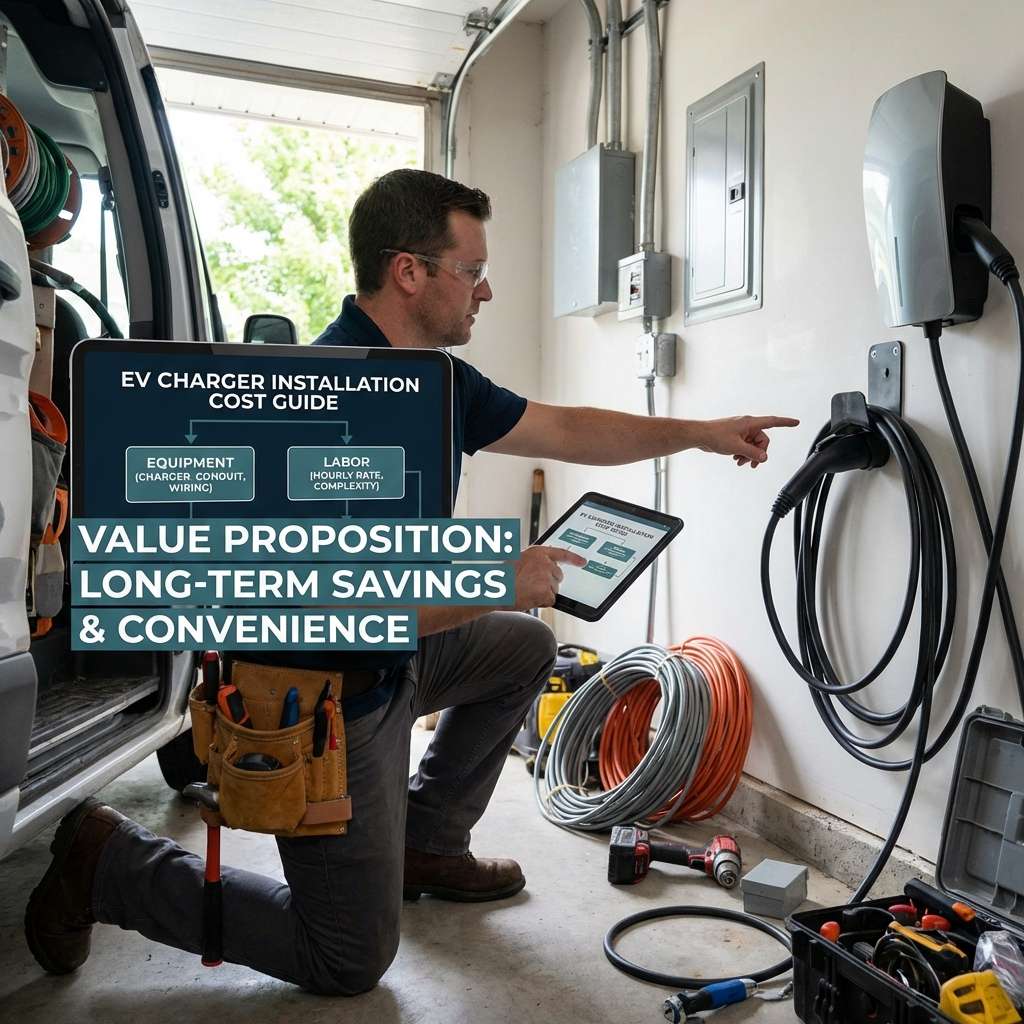

A typical Level 2 circuit and hookup in Northern Virginia is $1,200–$3,500; only long, detached, outdoor, trenched, or otherwise complex routes reach $1,200–$4,500. The final price depends on panel capacity, routing, mounting location, permit needs, and the selected equipment. EVSE hardware is separate and itemized when AJ Long Electric supplies it.
Key Takeaways
- A typical Level 2 circuit and hookup is $1,200–$3,500
- Only long, detached, outdoor, trenched, or otherwise complex routes reach $1,200–$4,500
- EVSE hardware is separate and itemized when supplied
- If a 200-amp panel upgrade is required, the published panel range is $3,500–$7,500
- Section 30C is unavailable for property placed in service after June 30, 2026; verify current IRS guidance and consult a tax professional
Understanding EV Charging Levels
Before diving into costs, it helps to understand the charging options available. Level 1 charging uses a standard 120V household outlet and adds only 3-5 miles of range per hour. This works for plug-in hybrids but is impractical for fully electric vehicles. Level 2 charging uses a 240V circuit (similar to a dryer outlet) and adds 25-40 miles of range per hour, making it the sweet spot for home charging. Most Northern Virginia EV owners can fully charge their vehicle overnight with a Level 2 charger.
Ready to Install a Home EV Charger?
Our licensed electricians evaluate panel capacity, circuit routing, equipment requirements, and permit needs for home EV charging. Call (571) 444-6886 or request an estimate online.
Why Level 2 Is the Standard for Home Installation
Level 2 chargers deliver enough power to fully charge most EVs in 6-10 hours, meaning you plug in when you get home and wake up to a full battery. This eliminates range anxiety and the need for frequent trips to public charging stations. For commuters traveling the I-66, I-495, or Dulles Toll Road corridors daily, home Level 2 charging is the most convenient and cost-effective solution.
Cost Components Breakdown
EVSE Hardware Is Separate
The charger unit is not a second installation band. Homeowners may provide compatible listed EVSE, or AJ Long Electric can itemize compatible listed hardware separately on the proposal. Compare configured amperage, connector, listing, weather rating, load-management support, warranty, and current equipment price before selecting a unit.
When selecting a charger, consider amperage output. A 32-amp charger provides about 25 miles of range per hour, while a 48-amp unit delivers approximately 37 miles per hour. The 48-amp option requires a 60-amp circuit breaker (per the 80% continuous load rule), while the 32-amp charger needs only a 40-amp breaker. This distinction affects wiring costs and panel capacity requirements.
Dedicated Electrical Scope
A dedicated 240V circuit is required for a Level 2 charger installation. The circuit and hookup stay within the $1,200–$3,500 typical band, while only long, detached, outdoor, trenched, or otherwise complex routes reach $1,200–$4,500. The written proposal documents the conductor route, wiring method, protection, connection, and permit scope.
Installation and Commissioning
On-site time depends on the route, access, wiring method, mounting surface, panel condition, and selected equipment. The work includes the documented circuit, connection, required electrical checks, and a customer walkthrough. Permit and inspection timing is controlled by the jurisdiction and is not a guaranteed turnaround.
Tip: If a panel upgrade is already required, coordinate the EV circuit in the same load calculation and proposal. Combined planning may reduce duplicate access or coordination, but each scope remains itemized and no savings outcome is guaranteed.
Installation Scenarios and Pricing
Your total installation cost depends heavily on your home's specific situation. Here are the most common scenarios we encounter across Northern Virginia homes.
| Scenario | Typical Cost | What's Involved |
|---|---|---|
| Typical circuit and hookup | $1,200–$3,500 | Dedicated circuit, connection, and permit scope based on the site. |
| Long, detached, or outdoor route | $1,200–$4,500 | Longer routing, exterior work, or trenching documented in the proposal. |
| 200-amp panel upgrade also needed | $3,500–$7,500 | Separate panel scope based on a load calculation and site conditions. |
Townhouse and Condo Considerations
Townhouse owners in communities across Fairfax and Loudoun counties face unique challenges. Many HOAs have specific requirements for EV charger installations, including aesthetic standards and electrical work approvals. Some older townhome developments have shared electrical infrastructure that complicates individual installations. If you live in a townhouse, check your HOA guidelines before scheduling an installation and factor in any required approval timelines.
Do You Need a Panel Upgrade
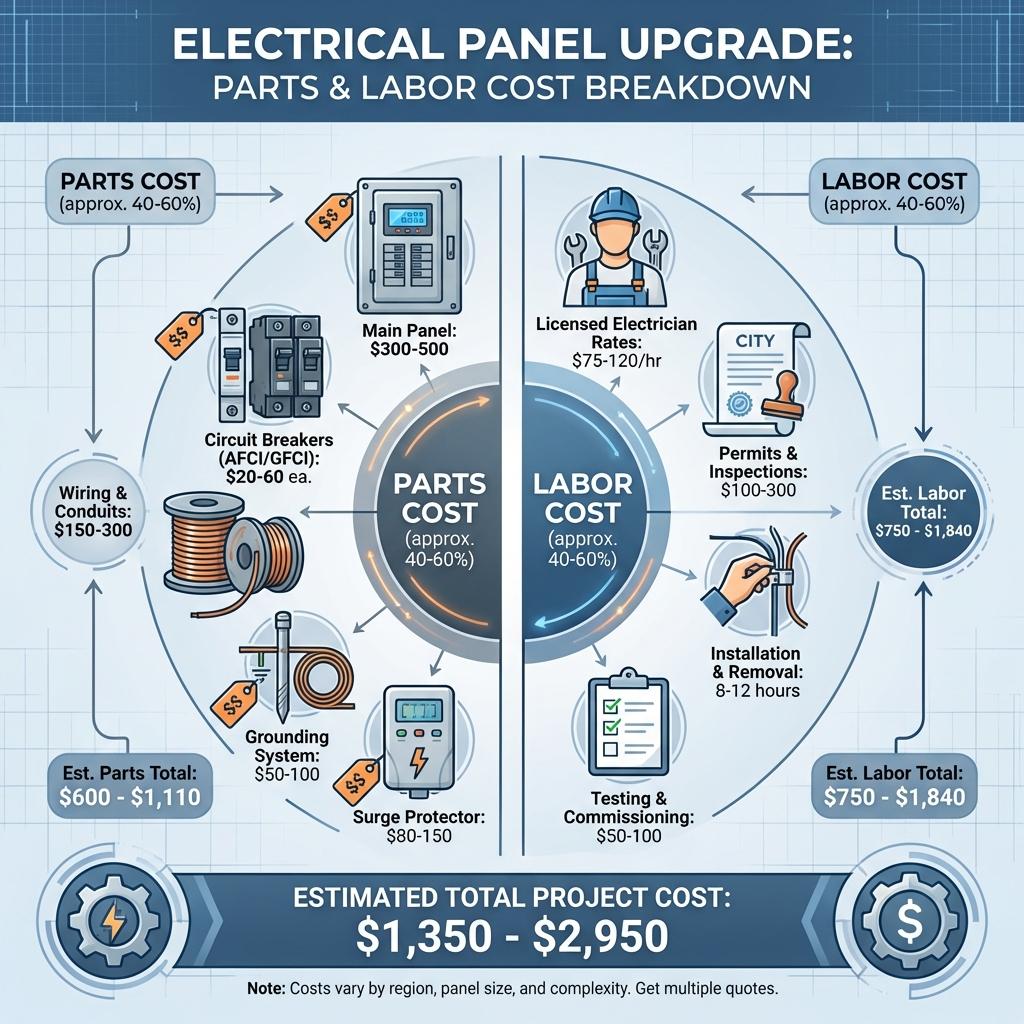
A Level 2 EV charger requires a 40-amp or 60-amp circuit breaker, which consumes significant panel capacity. If your home has a 100-amp panel (common in homes built before the 1990s), you may not have enough spare capacity for the charger without upgrading. Signs that a panel upgrade may be necessary include:
- Your panel currently has no open breaker slots
- You have a 100-amp main breaker
- Your panel already supports a large central AC unit, electric range, and electric dryer
- You experience breaker trips when running multiple large appliances
An experienced electrician can perform a load calculation to determine whether your existing panel can support an EV charger. In some cases, a load management device can be installed to share capacity between the charger and other large loads, avoiding a full panel upgrade.
Good to Know: Many newer homes in Loudoun and Prince William counties were built with 200-amp panels that have ample capacity for an EV charger circuit. If your home was built after 2000, there is a good chance you will not need a panel upgrade.
Tax Credits and Rebates
The federal Alternative Fuel Vehicle Refueling Property Credit under Internal Revenue Code Section 30C is unavailable for property placed in service after June 30, 2026. Property placed in service on or before that deadline was subject to the former credit rules, including census-tract eligibility and residential limits. Consult current IRS guidance and a qualified tax professional when reviewing a pre-deadline installation; AJ Long Electric does not provide tax advice.
State and Utility Incentives
Virginia does not currently offer a state-level tax credit for EV charger installation, but Dominion Energy periodically offers rebate programs for residential EV charging equipment. Check Dominion's website or ask your electrician about current incentive programs. Some Northern Virginia municipalities also offer incentives as part of their sustainability initiatives.
Calculating Your Net Cost
For property placed in service on or before the June 30, 2026 deadline, any credit calculation depended on the former Section 30C rules and the taxpayer's eligibility. Over the life of a charger, charging costs also vary with mileage, vehicle efficiency, utility rate, and charging schedule, so compare those inputs rather than assuming a fixed net cost or savings amount.
Choosing the Right Electrician for EV Charger Installation
Not all electricians have experience with EV charger installations. Look for a contractor who has completed multiple EV charger projects, understands the specific electrical code requirements for electric vehicle supply equipment (EVSE), and is familiar with the various charger brands and their installation requirements. They should also be knowledgeable about load calculations and panel capacity assessments.
AJ Long Electric installs listed Level 2 EV charging equipment after evaluating panel capacity, circuit routing, load management options, equipment instructions, and local permit requirements. The project-specific proposal separates the electrical installation from EVSE hardware when the homeowner supplies the charger.
Ready to charge your EV at home? Contact AJ Long Electric at (571) 444-6886 to request an installation assessment and written proposal.