
A 200-amp panel upgrade in Northern Virginia is published at $3,500–$7,500. The written proposal identifies the service equipment, permit, utility coordination, access, and documented extras included in the project.
Key Takeaways
- A 100A-to-200A panel upgrade in Northern Virginia uses the $3,500–$7,500 public range
- The defined public scope includes the permit, fireman's disconnect, basic surge protection, and Dominion coordination
- Same-amperage 200A replacements remain within the same public range; 400A service is quoted per project
- The written proposal documents site-specific service, grounding, access, and equipment scope
- Insurance treatment varies by carrier; no premium reduction is guaranteed
Average Panel Upgrade Costs by Type
The total cost of your panel upgrade depends primarily on the amperage change involved and whether the service entrance needs modification. Here are the current price ranges for the most common panel upgrade scenarios in Northern Virginia.
Need a Panel Upgrade?
Outdated or overloaded electrical panels can present safety and capacity concerns. Our team evaluates 200-amp upgrades throughout Northern Virginia and confirms scheduling after reviewing the property. Call (571) 444-6886 to get started.
- 100A to 200A upgrade: $3,500–$7,500
- 200A same-amperage replacement: within $3,500–$7,500
- 400A service: quoted per project
- Service or meter work: included in the project scope or listed as a documented extra
- Subpanel Addition (60A-100A): $800-$1,800
Most homes in the Fairfax and Prince William County areas built before the 1990s have 100-amp or 150-amp service, which is often insufficient for modern electrical demands. Today's homes with central air conditioning, electric vehicle chargers, home offices, and modern kitchen appliances frequently require a full 200-amp service to operate safely and efficiently.
Cost Breakdown Components
Materials
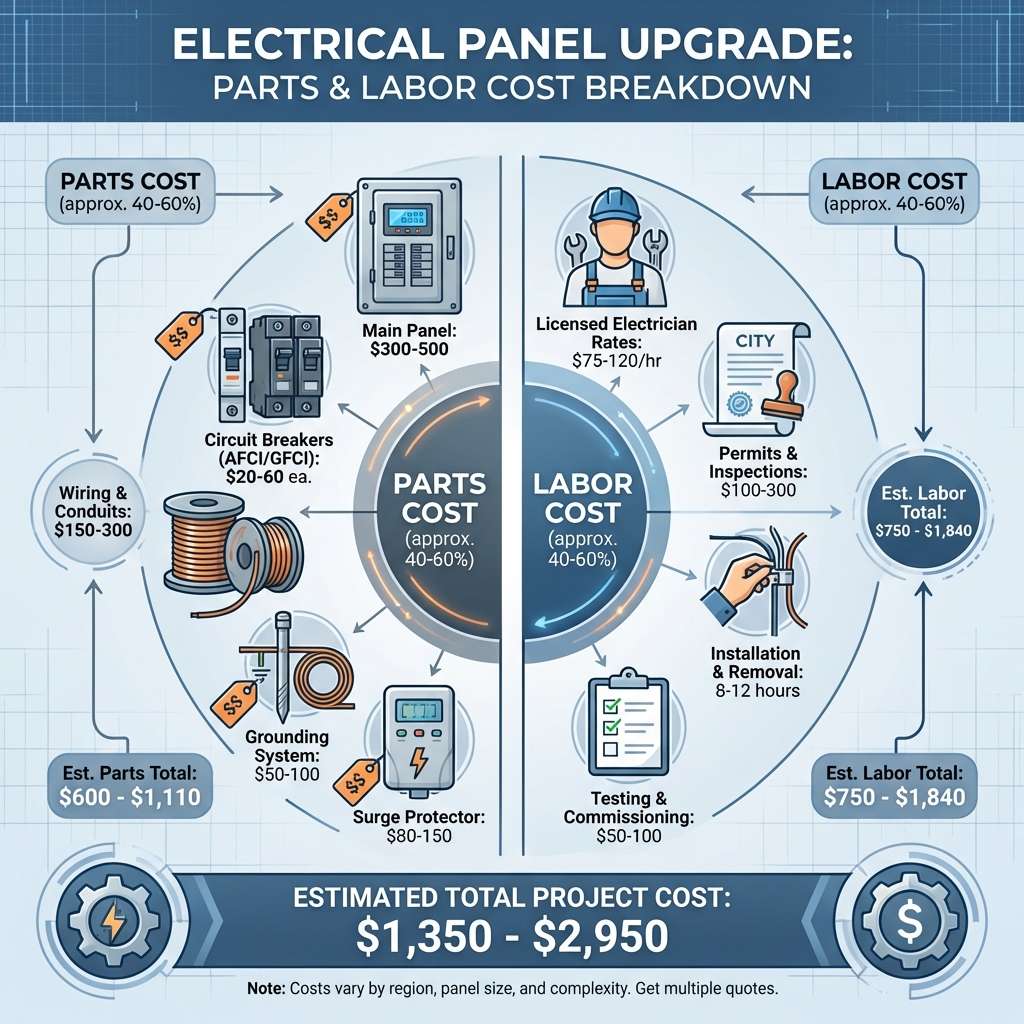
The proposal identifies the listed panel, breakers, service equipment, grounding and bonding materials, fireman's disconnect, basic surge protection, and other components required for the approved design. These components are not published as competing partial-installation bands.
Labor
Professional installation typically takes 4-8 hours for a straightforward panel swap and 8-12 hours when the service entrance also needs upgrading. The work includes safely disconnecting power, removing the old panel, mounting and wiring the new panel, transferring all existing circuits, installing new breakers, labeling every circuit, and performing a thorough safety test. Experienced electricians methodically document and label every wire before disconnection to ensure accurate reconnection in the new panel.
Permit and Inspection
The applicable electrical permit and required inspection are included in the defined 200-amp public scope. The jurisdiction sets its fee and inspection process; the proposal identifies the responsible permit authority.
Utility Coordination
If the service entrance or meter equipment is in scope, the serving utility must coordinate the disconnect and reconnect. Dominion coordination is included in the defined public 200-amp scope; the utility controls its schedule and any utility-side work.
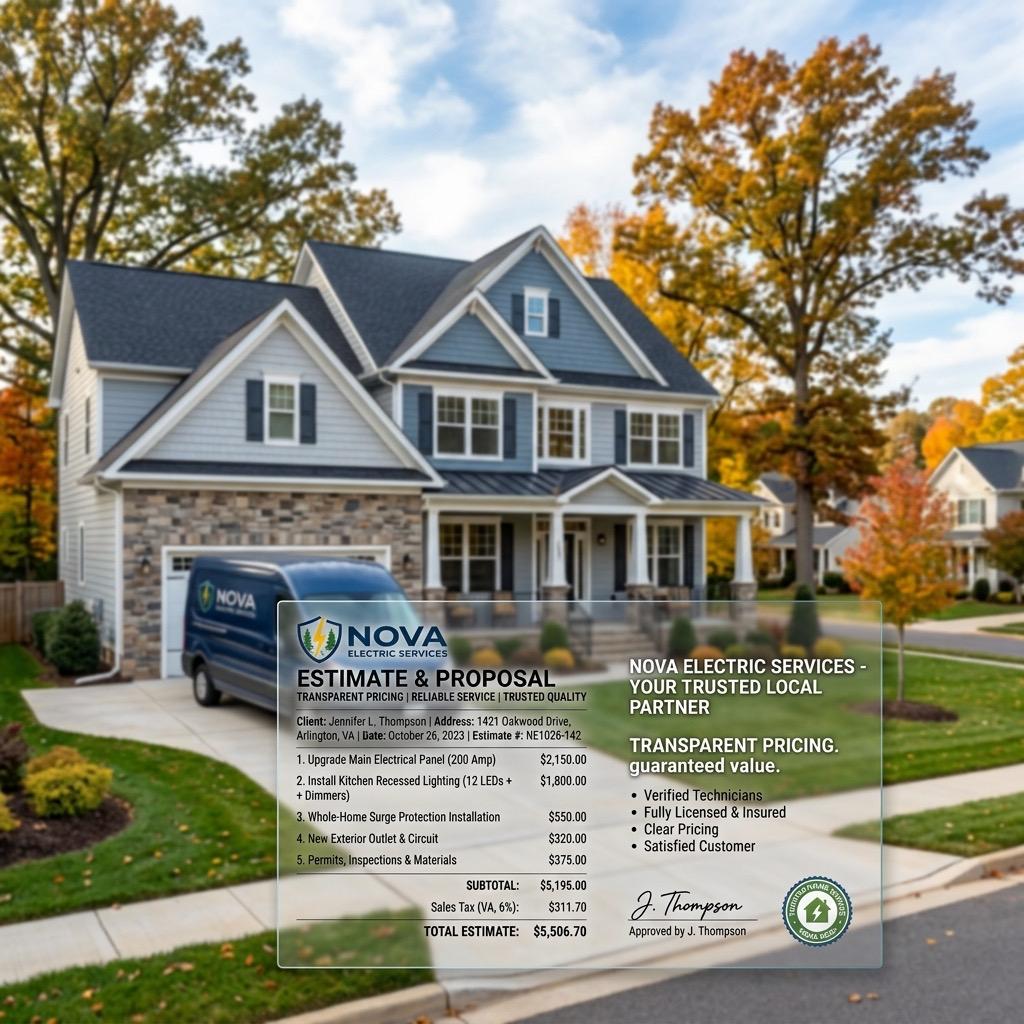
When these components are combined, the published 200-amp range remains $3,500–$7,500. The written proposal identifies service-entrance changes, grounding corrections, difficult access, and any other documented extras.
Good to Know: In most Northern Virginia jurisdictions, the electrician handles all permit applications and utility coordination as part of their service. You should not need to visit a county office or call Dominion Energy yourself. Ask your contractor to confirm this is included in their quote.
Factors That Increase Costs
Several conditions can push your panel upgrade cost above the typical range. Being aware of these factors helps you anticipate potential additions to your quote.
- Service entrance work: The proposal documents whether conductors, raceway, mast, meter equipment, or utility-side work applies while keeping the 200-amp public range consistent.
- Long distance from meter to panel: In some older Northern Virginia homes, the meter is on the front of the house while the panel is in the basement at the rear. Running new service entrance cable across this distance increases material and labor costs.
- Grounding system updates needed: Modern code requires two ground rods and a connection to the home's water main. Older homes may have inadequate grounding that must be brought up to current standards.
- Subpanel additions: If you are adding circuits for a workshop, finished basement, or detached garage, a subpanel may be needed in addition to the main panel upgrade.
- Difficult access or old home construction: Homes with stone foundations, limited basement clearance, or panels located in tight closets require additional labor time.
Federal Pacific and Zinsco Panels
If your home has a Federal Pacific Electric (FPE) Stab-Lok panel or a Zinsco panel, replacement is especially urgent. These panels have well-documented failure rates where breakers fail to trip during overloads, creating serious fire hazards. Many insurance companies in the Northern Virginia area now require replacement of these panels as a condition of coverage. While the replacement cost is the same as a standard upgrade, the urgency factor means this should be prioritized in your home improvement budget.
The Panel Upgrade Process
Step 1: Assessment and Quoting
A licensed electrician visits your home to evaluate your current panel, service entrance, grounding, and overall electrical needs. They will discuss your planned usage, including any future additions like EV chargers or hot tubs, to ensure the new panel accommodates your needs.
Step 2: Permitting
Your electrician pulls the required electrical permit from your local jurisdiction. In Fairfax County, permits are available online through the Land Development Services portal. Review timing depends on the jurisdiction's current queue and the submitted scope.
Step 3: Installation Day
Power is disconnected by the electrician (or Dominion Energy if the meter base is being replaced). The old panel is removed, the new panel is mounted and wired, all circuits are transferred and tested, and power is restored. The work window is confirmed after the site condition, permit path, utility coordination, service scope, and access are reviewed.
Step 4: Inspection
A county electrical inspector visits to verify the installation meets code. Your electrician should be present to address any questions. Once the inspection passes, the permit is closed and you have documentation that the work was done properly, which is valuable when selling your home.
Tip: Schedule your panel upgrade during mild weather months. While the work can be done year-round, losing power for several hours is more comfortable in spring or fall than during a Northern Virginia summer heat wave or winter cold snap.
ROI and Insurance Savings
A permitted panel upgrade provides documented capacity and modern listed equipment, but insurance treatment varies by carrier and policy. Ask your insurer whether the completed work affects underwriting or premiums; AJ Long Electric does not guarantee an insurance discount.
Additionally, a modern electrical panel is a strong selling point when listing your home. Real estate agents in Fairfax, Arlington, and Loudoun counties report that buyers increasingly ask about panel capacity, especially those who own electric vehicles or plan to install one. A 200-amp panel with space for future circuits signals a well-maintained home and eliminates a common negotiation point during inspections.
Get Your Panel Upgrade Quote from AJ Long Electric
AJ Long Electric provides written panel-upgrade scopes that identify the equipment, service conditions, permit work, utility coordination, and documented extras included in the proposal. Contact us at (571) 444-6886 to request a panel assessment and project-specific quote.