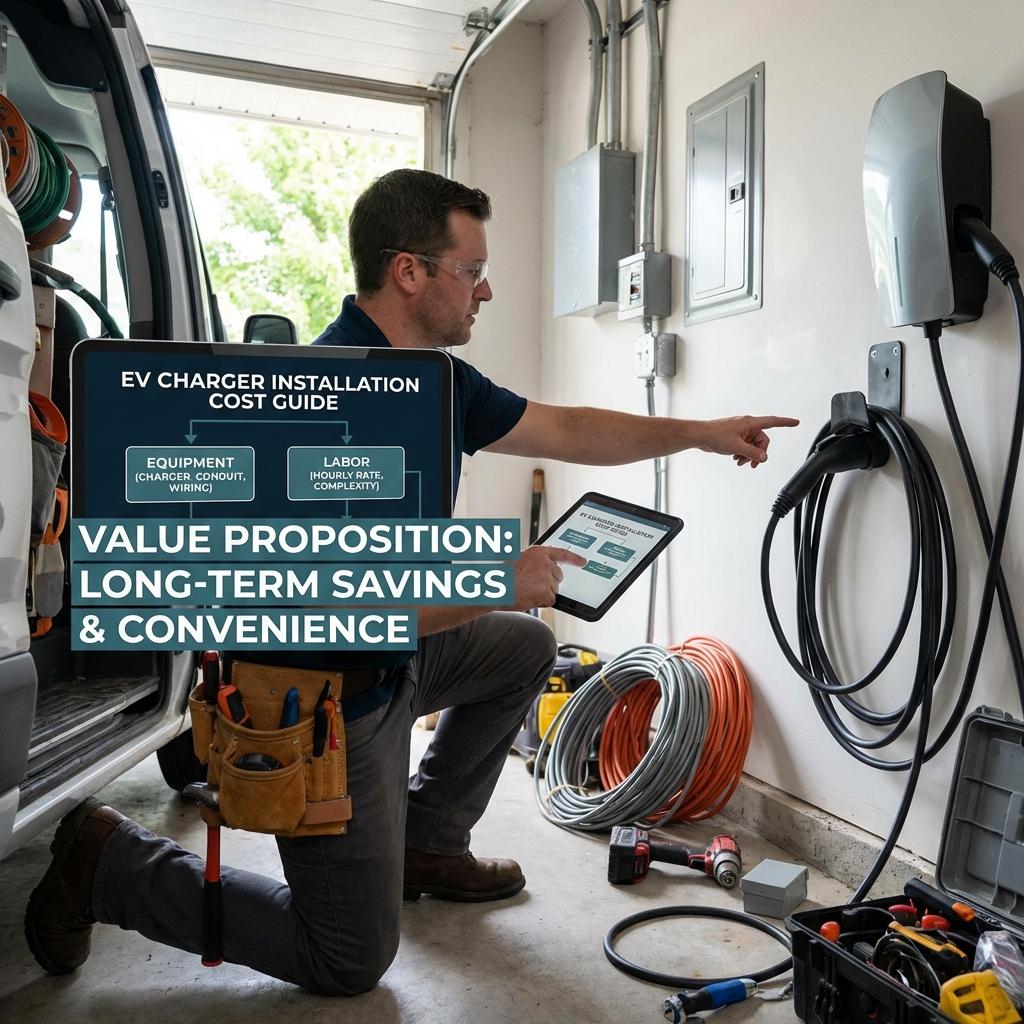

A typical residential Level 2 circuit and hookup in Northern Virginia is $1,200–$3,500; only long, detached, outdoor, trenched, or otherwise complex routes reach $1,200–$4,500. EVSE hardware is separate and itemized when AJ Long Electric supplies it. Commercial charging requires a separate engineered and utility-coordinated quote.
Key Takeaways
- A typical Level 2 circuit and hookup is $1,200–$3,500
- Only long, detached, outdoor, trenched, or otherwise complex routes reach $1,200–$4,500
- EVSE hardware is separate and itemized when supplied
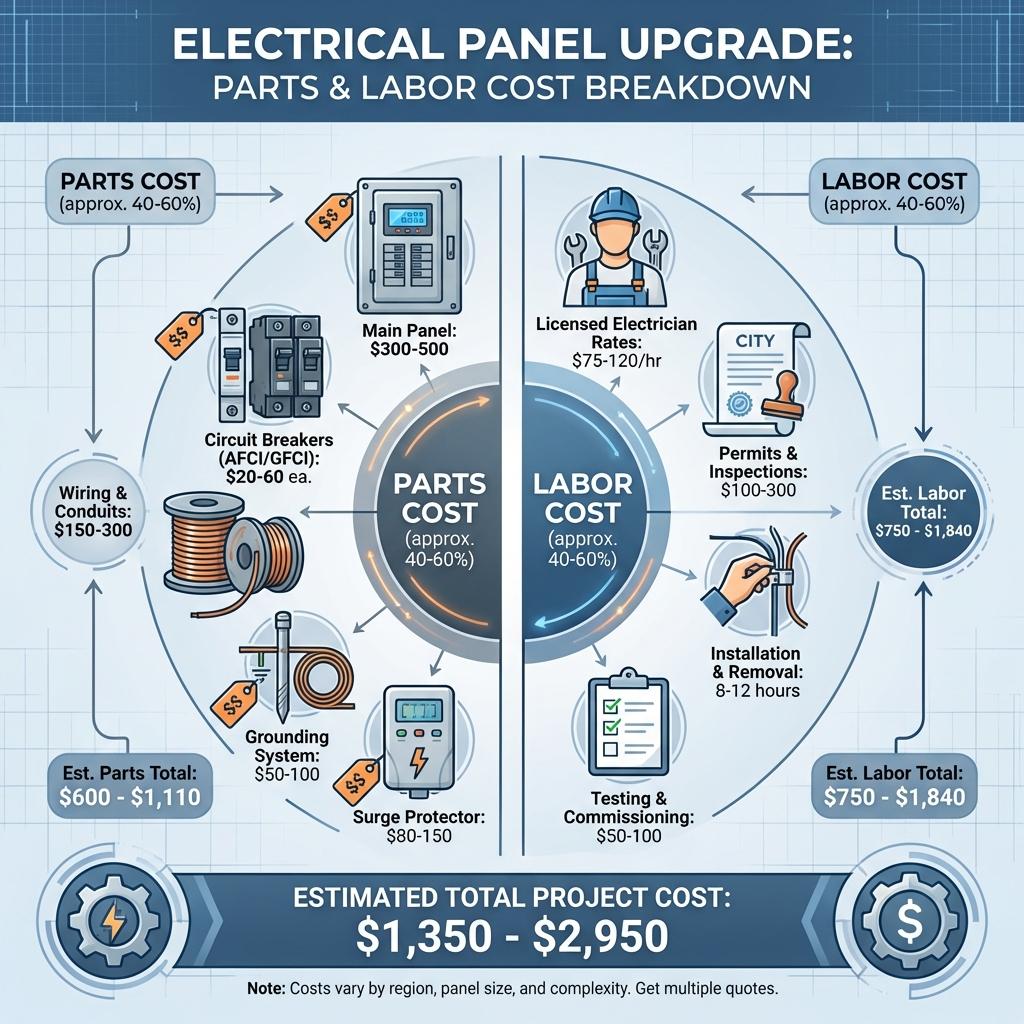
- A required 200-amp panel upgrade is a separate $3,500–$7,500 scope
- Section 30C is unavailable for property placed in service after June 30, 2026; verify current IRS guidance
- Utility rate programs and equipment eligibility change; confirm current written terms directly
Level 1 EV Charging: Cost and Use Cases
Level 1 charging uses a compatible 120V outlet and delivers about 3-5 miles of range per hour. An existing outlet still needs to be evaluated for condition, circuit loading, and required protection. Any repair, replacement, or new 120V circuit is quoted as its own electrical scope rather than presented as a competing Level 2 installation band.
Ready to Install a Home EV Charger?
Our licensed electricians evaluate panel capacity, circuit routing, equipment requirements, and permit needs for home EV charging. Call (571) 444-6886 or request an estimate online.
| Level 1 Scenario | Electrical Scope | Daily Range Added (8 hrs) | Best For |
|---|---|---|---|
| Existing compatible outlet | Condition, loading, and protection reviewed | 24-40 miles | PHEVs, occasional EV users |
| New or corrected outlet/circuit | Quoted as documented scope | 24-40 miles | Where the vehicle and equipment instructions allow Level 1 |
Level 2 EV Charging: The Standard for Home Installation
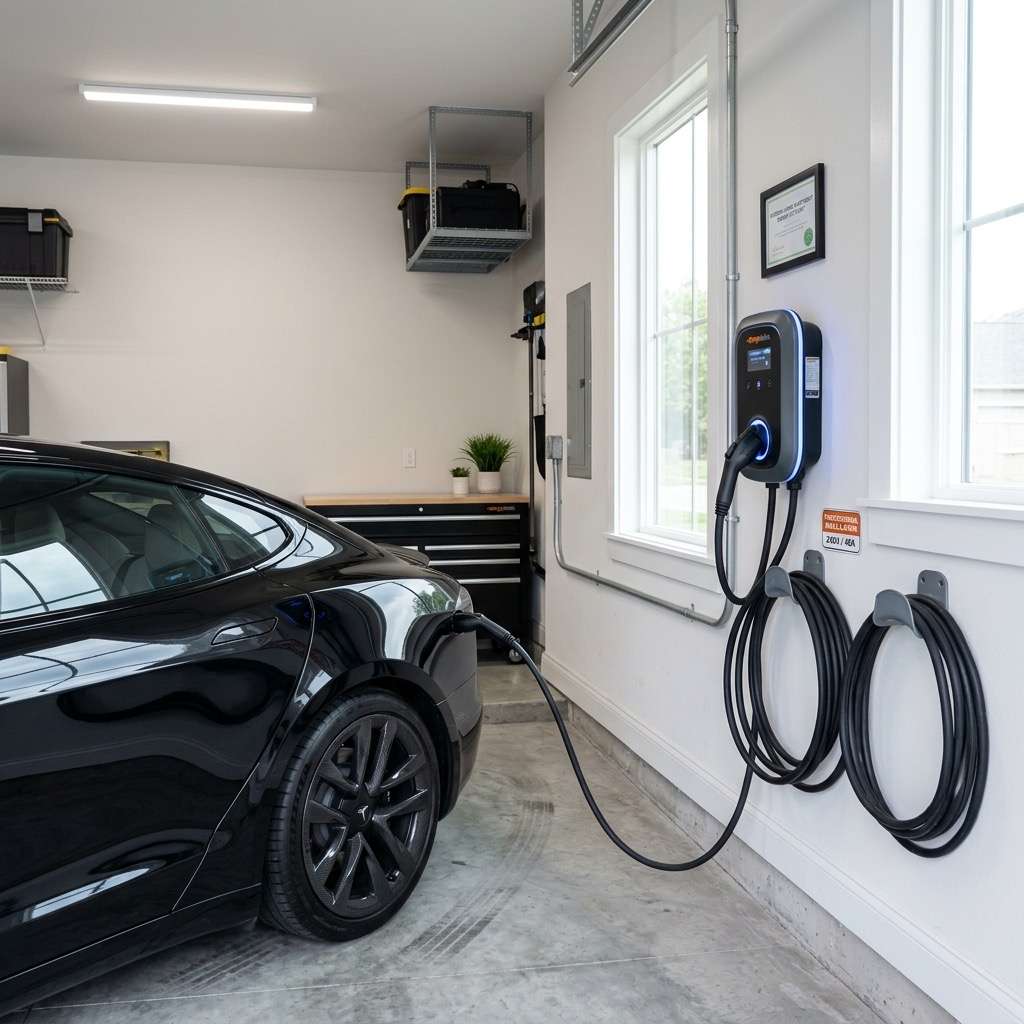
Level 2 chargers are the right choice for the vast majority of Northern Virginia EV owners. They use a 240V dedicated circuit (like a dryer outlet) and deliver 20-45 miles of range per hour depending on the charger's amperage output. A 32-amp charger adds roughly 25 miles/hour; a 48-amp charger adds 37 miles/hour. Most commuters traveling the I-66, Dulles Toll Road, or I-95 corridors with 50-100 mile daily round trips can charge a full EV overnight with Level 2.
A typical Level 2 circuit and hookup is $1,200–$3,500; only long, detached, outdoor, trenched, or otherwise complex routes reach $1,200–$4,500. EVSE hardware is separate. If a load calculation establishes that a 200-amp panel upgrade is required, that panel work is a separate $3,500–$7,500 scope.
| Level 2 Scenario | Circuit and Hookup | EVSE Hardware | Other Scope |
|---|---|---|---|
| Typical residential route | $1,200–$3,500 | Separate and itemized when supplied | Site-specific permit included in defined scope |
| Long, detached, outdoor, trenched, or otherwise complex route | $1,200–$4,500 total band | Separate and itemized when supplied | Route and restoration responsibilities documented |
| Panel upgrade required | EV scope stays separately identified | Separate and itemized when supplied | $3,500–$7,500 as a separate 200A panel scope |
Tip: If a panel upgrade is already planned, coordinate the EV circuit in the same load calculation and written proposal. Combined planning may reduce duplicate access or coordination, but no fixed savings is guaranteed.
Level 2 EVSE Hardware
EVSE hardware is separate from the circuit-and-hookup band. Compare the current equipment price, listing, configured amperage, connector, weather rating, load-management support, warranty, and manufacturer instructions. The written proposal identifies whether the homeowner or AJ Long Electric supplies the listed unit.
Level 3 DC Fast Charging: Commercial Applications Only
DC fast charging requires three-phase utility service, engineered equipment, load studies, site and accessibility design, and utility coordination. Residential Level 2 bands do not apply; commercial DCFC and multi-unit charging are quoted per project after the serving utility and design inputs are reviewed.
Good to Know: Virginia SCC regulations require that DCFC stations in public-facing applications meet specific network and ADA compliance standards. Loudoun County has been particularly active in incentivizing commercial EV charging at business parks and retail centers through its Economic Development office programs.
Tax Credits and Incentives in 2026
The Alternative Fuel Vehicle Refueling Property Credit under IRC Section 30C is unavailable for property placed in service after June 30, 2026. Property placed in service on or before that deadline was subject to the former rules, including census-tract eligibility, applicable limits, and IRS Form 8911 requirements. Consult current IRS guidance and a qualified tax professional when reviewing a pre-deadline installation; AJ Long Electric does not provide tax advice.
Utility rate programs and equipment eligibility change. Verify current written terms directly, then compare mileage, vehicle efficiency, charging losses, standard and off-peak rates, and charging schedule. Those inputs determine any operating-cost difference; no fixed savings or payback outcome is guaranteed.
Get Your EV Charger Installed by AJ Long Electric
AJ Long Electric installs compatible listed EVSE across Fairfax, Arlington, Loudoun, and Prince William counties. We evaluate panel capacity, routing, equipment instructions, permit requirements, utility steps, and HOA documentation needs before quoting the work. Call (571) 444-6886 to request an installation quote.