
A voltage surge can damage EVSE electronics and may affect connected equipment. A licensed electrician can review the service, grounding and bonding, panel, existing surge protective devices, selected EVSE, manufacturer instructions, and local requirements, then quote any additional protection as documented project scope. No device eliminates all surge risk or guarantees that equipment will not be damaged.
Key Takeaways
- Voltage transients can originate from lightning, utility events, equipment switching, and power restoration.
- Protection is designed as a system that includes grounding and bonding, properly selected listed SPDs, conductor routing, panel configuration, and equipment instructions.
- Whole-house, circuit-level, and built-in protection have different ratings and installation requirements.
- Additional protection is quoted after the existing system and selected equipment are reviewed.
- No SPD provides absolute protection or a guaranteed damage-prevention outcome.
Understanding Power Surges
A power surge is a brief spike in voltage that exceeds the normal 240 volts delivered to your home. Surges can last microseconds to milliseconds, but in that brief window, the elevated voltage can overwhelm and destroy sensitive electronic components. Modern EV chargers contain microprocessors, communication modules, and power management circuits that are vulnerable to surge damage.
Ready to Install a Home EV Charger?
Our licensed electricians evaluate panel capacity, circuit routing, equipment requirements, and permit needs for home EV charging. Call (571) 444-6886 or request an estimate online.
How Surges Damage Equipment
When a voltage transient reaches EVSE, it can stress circuit boards, communication modules, and power electronics. Damage and repair scope depend on the event, equipment design, protective devices, grounding, vehicle, and warranty or insurance terms; do not assume a universal repair cost or that an SPD eliminates the risk.
Common Surge Sources in Northern Virginia
Understanding where surges come from helps you appreciate the importance of protection in the Northern Virginia area.
Lightning
Northern Virginia averages 30-40 thunderstorm days per year, concentrated in the summer months of June through August. A direct lightning strike to your home or a nearby utility line delivers massive voltage spikes that can destroy any unprotected electronics. Even lightning striking within a mile of your home can induce surges through the power lines. During an active thunderstorm season, the cumulative risk over years of EV ownership is significant.
Utility Grid Switching
Dominion Energy and other utilities routinely switch loads between transmission lines, substations, and transformers as part of normal grid management. Each switching event can create brief voltage spikes that ripple through the distribution system. These events are invisible to homeowners but occur frequently, creating low-level surges that accumulate stress on electronic components over time.
Large Appliance Cycling
Inside your own home, large motor-driven appliances generate surges when they cycle on and off. Central air conditioning compressors, well pumps, sump pumps, and even refrigerator compressors create momentary voltage spikes on your home's wiring. These internal surges are smaller than external events but occur many times daily, creating chronic stress on sensitive electronics throughout your home.
Power Restoration After Outages
When power returns after an outage, the initial voltage is often unstable, with surges and fluctuations as the grid stabilizes. Northern Virginia experiences occasional outages from summer storms, winter ice events, and the rare derecho. Each power restoration event is a potential surge opportunity. If your EV charger is connected and waiting when power returns, it receives whatever voltage the grid delivers in those first unstable moments.
Good to know: The majority of the power surges that stress home electronics originate inside the home, not from external events like lightning. Your own air conditioning, appliances, and HVAC equipment create small voltage spikes every time they cycle on and off. This is why whole-house surge protection is valuable year-round, not just during thunderstorm season.
Surge Protection Options
Effective surge protection uses a layered approach, with protection at multiple points between the utility service and your EV charger.
Whole-House Surge Protection (Type 1 or Type 2 SPD)
A whole-house surge protective device (SPD) installs at your main electrical panel, between the utility service and all of your home's circuits. It monitors the incoming voltage and diverts excess energy to ground when a surge is detected. This protects every circuit in your home, including your EV charger, computers, smart home devices, and appliances.
Whole-house SPDs are classified as Type 1 (installed before the main breaker, on the utility side) or Type 2 (installed after the main breaker, on the load side). Type 2 devices are the most common for residential installations and provide excellent protection against both external and internal surges.
The SPD model and installation scope depend on the service, panel listing, available spaces, grounding and bonding, conductor routing, manufacturer instructions, permit requirements, and existing protection. Additional surge-protection work is documented and quoted for the project rather than advertised as a component price band.
Point-of-Use Surge Protection
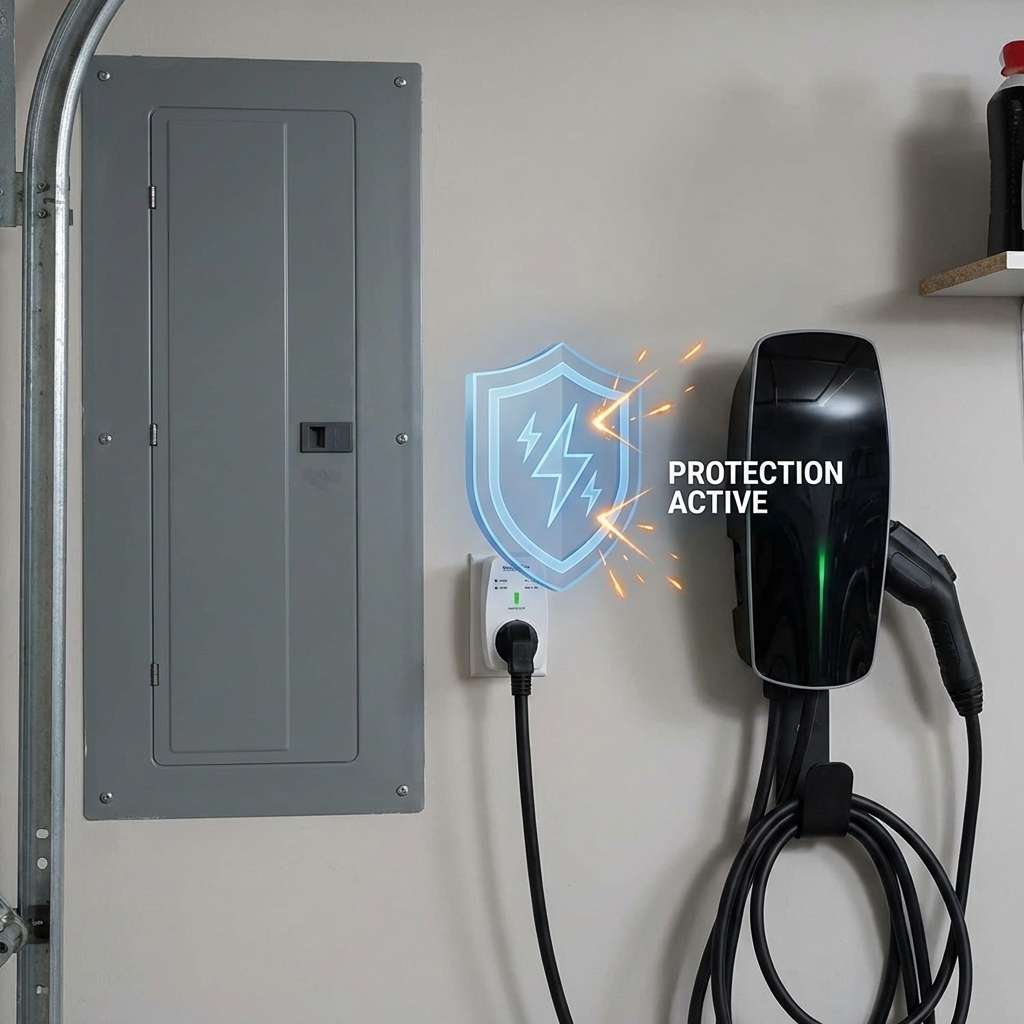
A listed circuit-level SPD may provide another layer when it is compatible with the circuit, EVSE, connection method, enclosure, manufacturer instructions, and local requirements. Equipment and installation are selected and quoted after that review; protection performance is rating- and event-specific.
Built-In Charger Protection
Some EV chargers include built-in surge protection components. The ChargePoint Home Flex, for example, includes basic surge protection in its internal circuitry. However, built-in protection is typically rated for smaller surge events and may not withstand large surges from lightning or major grid events. We recommend external surge protection even for chargers with built-in features.
The Layered Protection Approach
The most effective strategy combines multiple layers of protection.
Layer 1: Whole-House SPD at the Main Panel
This catches the majority of surge energy before it reaches any circuit in your home. It is your primary defense against lightning, utility grid events, and power restoration surges.
Layer 2: Point-of-Use SPD at the EV Charger
This catches any residual surge energy that makes it past the whole-house SPD, as well as internally generated surges from appliances on adjacent circuits. It provides targeted protection for your most valuable charging investment.
Layer 3: Built-In Charger Protection
If your charger includes built-in surge protection, it serves as the final layer of defense, handling the smallest residual surge events.
Layering compatible protection can reduce exposure under specified conditions, but actual performance depends on device ratings, installation, grounding, conductor length, event magnitude, and equipment. It does not make risk negligible or guarantee no damage.
Design note: Ask the electrician to document the existing SPD, grounding and bonding, panel listing, selected EVSE, manufacturer requirements, and any proposed protection. Additional equipment is separately scoped; no device guarantees protection for every connected load or event.
Surge Protection and Insurance
Coverage, exclusions, deductibles, documentation, and claim effects vary by insurer and policy. Review the current policy with the carrier; AJ Long Electric does not interpret insurance coverage or guarantee that an SPD prevents a claim.
Installation During EV Charger Setup
An EV charging project is a practical time to inspect existing surge protection and document any proposed changes. The added work window and price depend on the panel, service, grounding, selected equipment, permit, inspection, and access. Bundling work does not guarantee a savings amount or completion time.
Protect Your EV Charging Investment
AJ Long Electric can inspect the service, panel, grounding and bonding, existing SPDs, selected EVSE, and manufacturer requirements, then document any proposed surge-protection work. No equipment prevents every event or guarantees that connected electronics will not be damaged. Contact (571) 444-6886 to request an assessment.