
Winter charging is easier to plan when you separate three questions: how much energy the next trip needs, how much the car can receive while parked and how the vehicle prepares for departure. A single percentage for “winter range loss” cannot answer all three.
More energy needed and slower charging are different effects
Cabin heating, battery conditioning and winter driving conditions can increase energy use. A cold battery can also accept charge more slowly. Meanwhile, the installed circuit, charger setting, vehicle's AC limit and any sharing controls place their own limits on delivery.
FuelEconomy.gov's cold-weather overview reports substantial effects in its referenced tests and identifies cabin heat as a major factor. Those test results are not a prediction for every current EV or a fixed Northern Virginia winter penalty. Use your own vehicle's recent energy display and manual when planning a specific trip.
Measure a cold week instead of guessing from summer range
Record miles driven, average consumption, arrival charge, departure charge and the time actually connected. Include a normal workday and a longer trip if possible. Note outdoor parking, especially cold nights and unusually heavy cabin heating. This helps distinguish a daily charging shortfall from a one-off arrival with a nearly empty battery.
Ready to Install a Home EV Charger?
Our licensed electricians evaluate panel capacity, circuit routing, equipment requirements, and permit needs for home EV charging. Call (571) 444-6886 or request an estimate online.
As an illustrative calculation, 40 miles at 0.30 kWh per mile requires 12 kWh for driving. The same mileage at a measured winter consumption of 0.40 kWh per mile requires 16 kWh. These are assumptions, not estimates for a particular model. Charging losses and conditioning outside the recorded driving figure can increase the energy drawn at the wall.
If the real battery replenishment rate averaged 4 kW, adding that 16 kWh would take roughly four hours. Do not substitute the charger's nameplate power for a measured battery rate without accounting for the difference. Check the vehicle's completion estimate and leave room for changes in weather and schedule.
Use the vehicle's departure and conditioning guidance
Preconditioning while connected can reduce the battery energy needed to warm the vehicle before driving. Controls and behavior differ: a cabin heat command does not guarantee identical battery preparation on every model, and available wall power may not cover all simultaneous needs.
For example, the Model Y cold-weather instructions describe scheduled preconditioning, plugging in while parked and possible limits when the battery is cold. Follow the manual for your vehicle and software rather than applying one fixed warm-up timer to every EV.
Check both the vehicle schedule and charger schedule. If their allowed windows do not overlap, plugging in earlier may not add charging time. Balance departure readiness with any utility pricing window; do not assume an extra warm-up charging session will always save energy or money.
For two EVs, test the harder night
Enter each vehicle's winter energy use and actual common parking window in the two-EV planner. Compare normal days with both drivers returning later or using more energy. Shared power that works comfortably in mild weather may leave less margin on that harder night.
The planner is an estimate, not a thermal simulation. Battery conditioning, changing charge acceptance and different arrival times can make an actual session behave differently. If the result barely fits, discuss more charging time, a different handoff or an equipment assessment instead of treating the displayed result as a guaranteed departure charge.
Protect access to outdoor equipment
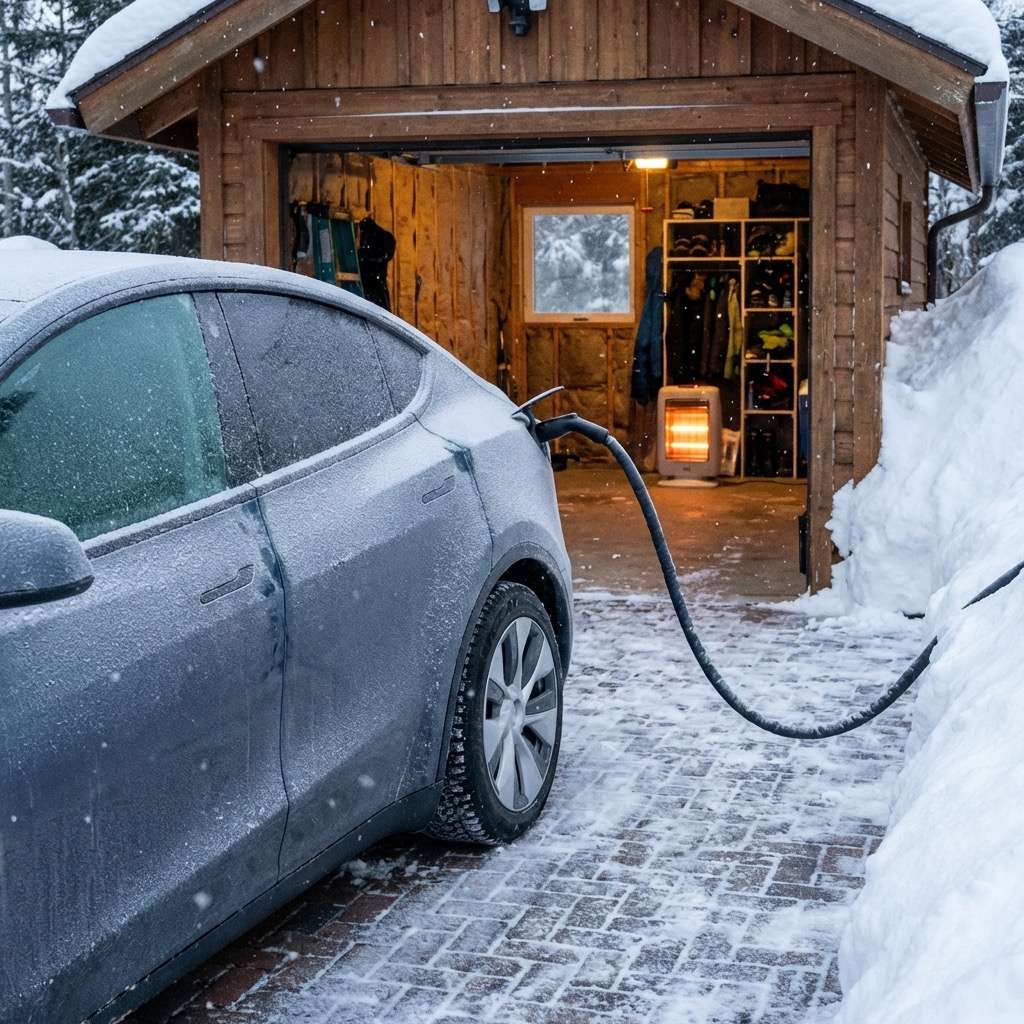
Use charging equipment within its specified environmental limits. Keep the route to it clear and manage the cable so it is not run over, buried by snow removal or pulled tight. Outdoor-rated equipment is not permission to use damaged connectors or equipment exposed to flooding.
If ice prevents normal connection or release, follow the manufacturer's thawing and release instructions. Do not force the connector, insert tools into contacts or pour water into the charge port. Garage parking may moderate conditions, but the temperature difference varies by building and weather.
Know when to investigate a slow session
Check the displayed charging status, target, schedule and any load-sharing activity before concluding the circuit is undersized. Record the vehicle and charger messages, outside conditions and whether the behavior continues in milder weather. That information helps separate a vehicle limit, configuration issue and installation concern.
Repeated breaker trips, damaged connections, burning odors or fault messages should not be dismissed as ordinary winter behavior. Stop using affected equipment and have the appropriate professional evaluate it. A larger breaker or higher app setting is not a remedy for an unexplained fault.
Keep a backup for the exceptional trip
For a long winter drive, use the vehicle's route guidance and verify compatible charging stops, with an alternative if a location is unavailable. Follow the manufacturer's navigation-based battery preparation instructions where supported. A successful daily commute does not establish enough margin for every cold-weather road trip.
If overnight charging repeatedly falls short, request a free electrical installation estimate using the records from your cold-week check. The decision should reflect actual energy needs and a capacity assessment, not a universal promise about winter charging speed.