
What if you could cover more of your home with a smaller portable generator, or stretch a battery power station's runtime further? Load management makes this possible by intelligently managing how power is distributed across your circuits. Here's how it works and whether it's right for you.
Key Takeaways
- Compatible load management may control selected non-critical circuits to keep the approved backup source within its ratings.
- Functions, priorities, sensing, delays, shedding, restart behavior, and supported loads depend on the exact listed equipment, settings, and approved design.
- Any effect on supported duration must be calculated from the documented loads, usable capacity or fuel, equipment limits, and operating conditions.
- Product examples do not establish universal functions, compatibility, certification, or a product relationship.
What Is Load Management?
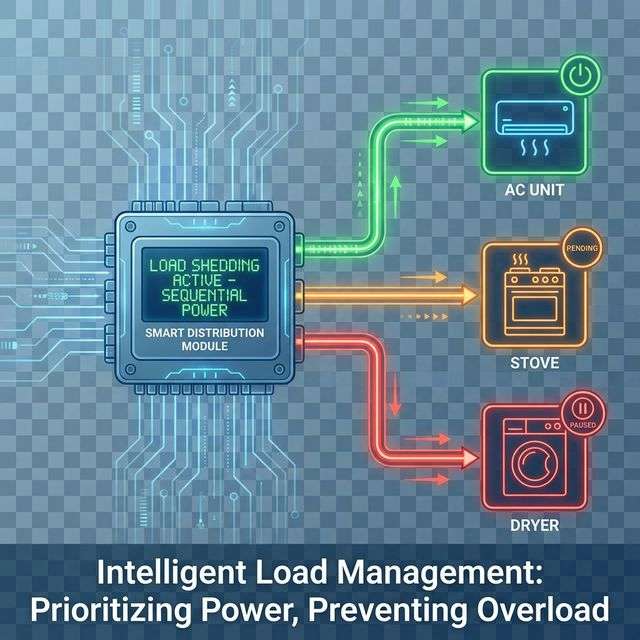
Compatible load management may monitor an approved backup source and control selected circuits according to programmed limits. Actual sensing, delay, shedding, restart behavior, supported loads, and effect on duration depend on the exact listed equipment, settings, load calculation, and operating conditions.
Need a Panel Upgrade?
Outdated or overloaded electrical panels can present safety and capacity concerns. Our team evaluates 200-amp upgrades throughout Northern Virginia and confirms scheduling after reviewing the property. Call (571) 444-6886 to get started.
How It Works
- The system monitors total load in real time
- When load approaches the source's capacity, it temporarily sheds designated "sheddable" circuits
- After load decreases or higher-priority needs are met, shed loads are restored
- The process is automatic and usually unnoticeable
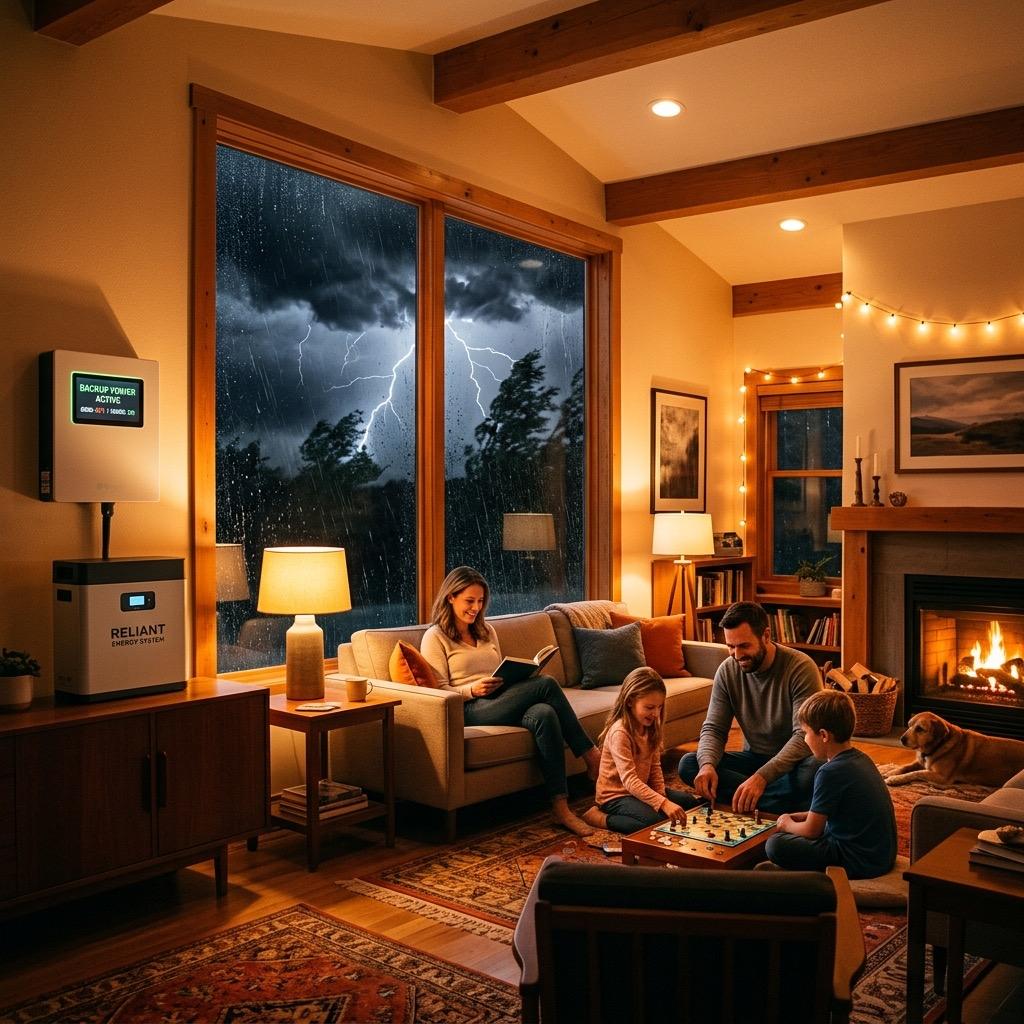
Battery Bonus: On a battery power station, load management does double duty - it prevents the inverter from overloading AND conserves your stored kWh so the battery lasts longer through an outage. A smart home panel shedding the dryer and pool pump can add hours of runtime to your essentials.
Types of Load Management
Priority-Based Load Shedding
Circuits are assigned priority levels:
- Priority 1: configured as non-sheddable within the approved design (refrigerator, sump pump, security, or other selected loads)
- Priority 2: shed only if necessary (some HVAC, lighting)
- Priority 3: first to shed (EV charger, pool pump, dryer)
Battery Smart Home Panels
Integrated panels like the EcoFlow Smart Home Panel and Bluetti EP900 can:
- Monitor individual circuit loads
- Apply the documented control logic supported by the exact equipment and commissioned settings
- Prioritize essential circuits during an outage
- Provide app-based visibility and control of every managed circuit
Simple Load Controllers
Basic add-on devices control specific high-draw circuits for a portable generator setup:
- Air conditioner delay timers
- Water heater load controllers
- Pool pump schedulers
Common Applications
Air Conditioning Management
Central AC is typically the largest load. Load management can:
- Delay AC start during high-demand periods
- Alternate between multiple AC zones
- Shed AC temporarily when other large loads start
- Limit runtime during peak demand
Electric Water Heater Control
Water heaters can wait—they hold temperature for hours:
- Shed during AC operation
- Heat water during low-demand periods
- Coordinate with other high-draw appliances
EV Charger Management
EV charging is ideal for load management:
- Reduce charging rate during peak loads
- Pause charging when other loads need power
- Resume when capacity is available
- Still provide meaningful charge during extended outages
Pool and Spa Equipment
- Lowest priority—can wait hours or days
- Run during periods of low demand
- Schedule for off-peak hours
The Benefit
Smaller Generator, Lower Cost
A home that would need a large portable generator can often run its essentials on a smaller one with load management, saving on equipment and fuel - while a battery's kWh stretch further.
Longer Battery Runtime
By shedding non-essential loads, a battery power station's stored energy goes toward what matters - extending how long your refrigerator, sump pump, and lights stay powered before a recharge.
Limitations to Consider
Not Instantaneous
Load shedding takes a moment to respond. A very rapid load increase may still trip the source before shedding occurs.
Comfort Trade-offs
- Brief periods without AC during load spikes
- Delayed hot water after heavy use
- Slower EV charging rates
System Complexity
- More components mean more potential failure points
- Programming and configuration required
- May need adjustment as household needs change
Who Benefits Most?
Good Candidates
- Homes with loads that naturally cycle (AC, water heater)
- Budget-conscious homeowners using a smaller generator
- Battery owners wanting to stretch runtime
- Homes with EV charging or multiple sheddable loads
Not Ideal For
- Homes relying on medical equipment without device-manufacturer compatibility and a separate emergency plan
- Those expecting interruption-free power on every circuit
- Homes with few sheddable loads
Professional Assessment
At AJ Long Electric, we analyze your specific situation to determine how load management fits your backup power:
- Identify sheddable vs. critical loads
- Size a smaller portable generator or right-size battery capacity
- Recommend a battery smart home panel if it makes sense
- Design appropriate circuit prioritization
Contact us to request a backup-power assessment and project-specific recommendation.